
Dashboard clock identification
Discussion


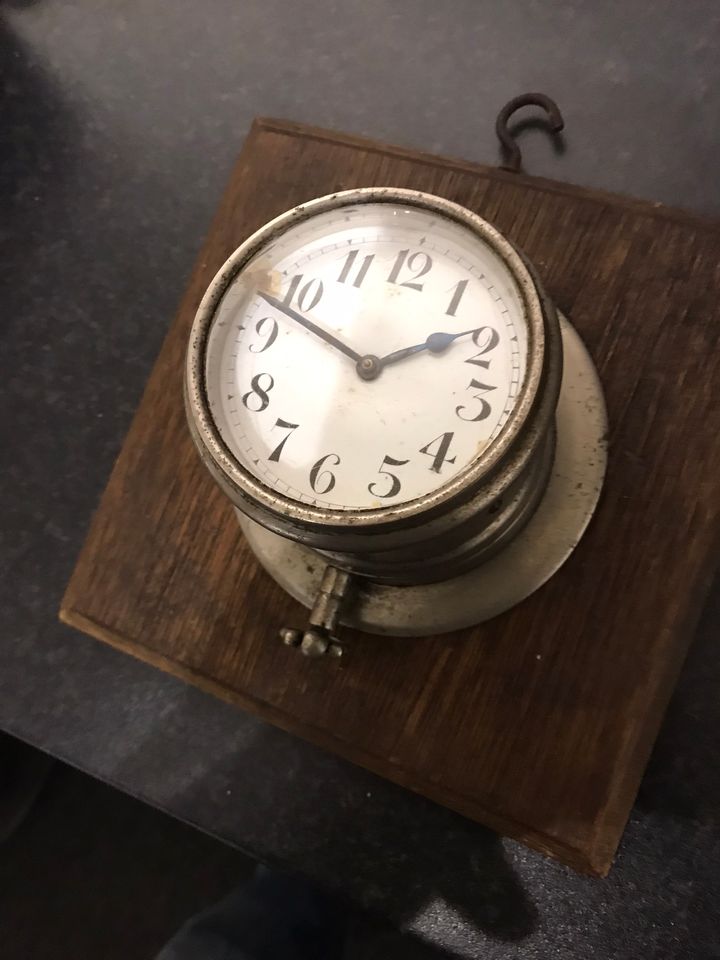
Can anyone identify this clock? It's at least 95 years old and belonged to my grandfather - In the 30's he was a chauffeur for a well-to-do Doctor in Southampton for whom he drove a Willys. Apparently he had a room at the back of the garage where the cars were kept and this was mounted on the wall. My father (aged 100!) is sure that the clock came from a car dashboard - I thought it looked more like a Marine Clock . . . There is no brand name or other markings that I can see. Unforunately ,the clock dosesn't wind. Anyone have any ideas of its possibly origin?
Many thanks
Many thanks
Edited by restoman on Wednesday 3rd December 20:28
Clocks of this era weren't specific to vehicle manufacturers. They were made by clock makers for use in cars, so I'm afraid it's very unlikely you will be able to identify whatever car it came from.
Generally they were 8 day movements or whatever and designed to be fitted into a dash panel with the winder on an extension that poked down below the dash for winding.
It's a nice period piece and should be straightforward to revive with the appropriate attention of a suitable horologist.
It's likely to have been made by one of the big known names, like Smiths.
Generally they were 8 day movements or whatever and designed to be fitted into a dash panel with the winder on an extension that poked down below the dash for winding.
It's a nice period piece and should be straightforward to revive with the appropriate attention of a suitable horologist.
It's likely to have been made by one of the big known names, like Smiths.
larrylamb11 said:
Clocks of this era weren't specific to vehicle manufacturers. They were made by clock makers for use in cars, so I'm afraid it's very unlikely you will be able to identify whatever car it came from.
Generally they were 8 day movements or whatever and designed to be fitted into a dash panel with the winder on an extension that poked down below the dash for winding.
It's a nice period piece and should be straightforward to revive with the appropriate attention of a suitable horologist.
It's likely to have been made by one of the big known names, like Smiths.
Thank youGenerally they were 8 day movements or whatever and designed to be fitted into a dash panel with the winder on an extension that poked down below the dash for winding.
It's a nice period piece and should be straightforward to revive with the appropriate attention of a suitable horologist.
It's likely to have been made by one of the big known names, like Smiths.
Agree with larryl on this one. Definitely a car clock - marine clocks tend to have bulky cases and wind through an aperture in the dial face.
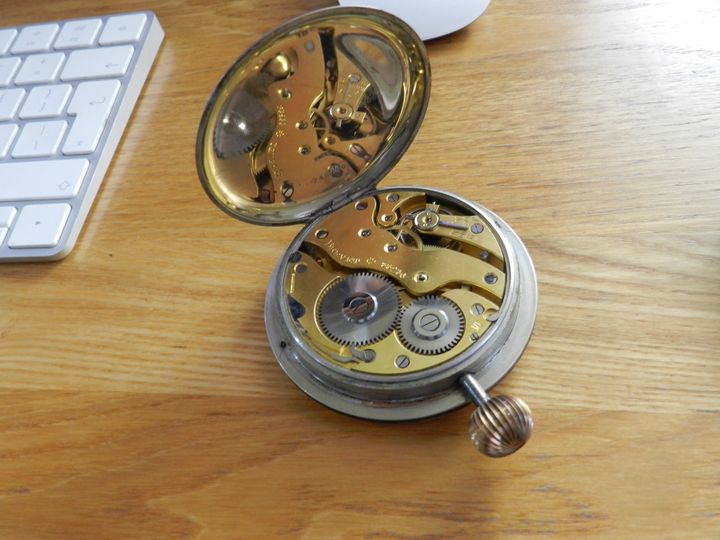
OP - depending on design you might find 3 or 4 (very) small screws on the side of the casing that hold the movement in place. If so you should be able to liberate the movement and identify the maker. With those bold Arabic numerals and with an American (Willys) connection I think it could itself be a product of the USA - maybe a Waltham.
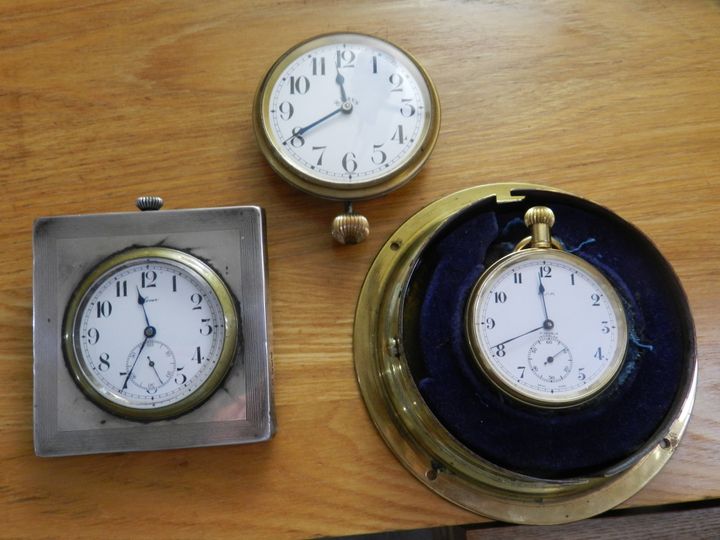
As time went on automobilists went for more modest-sized clocks - often adapted pocket watches held in place by brass/silver mountings. Funnily enough I picked up 3 such examples at auction last week :
OP - depending on design you might find 3 or 4 (very) small screws on the side of the casing that hold the movement in place. If so you should be able to liberate the movement and identify the maker. With those bold Arabic numerals and with an American (Willys) connection I think it could itself be a product of the USA - maybe a Waltham.
As time went on automobilists went for more modest-sized clocks - often adapted pocket watches held in place by brass/silver mountings. Funnily enough I picked up 3 such examples at auction last week :
Edited by moffspeed on Thursday 4th December 11:46
moffspeed said:
Agree with larryl on this one. Definitely a car clock - marine clocks tend to have bulky cases and wind through an aperture in the dial face.
OP - depending on design you might find 3 or 4 (very) small screws on the side of the casing that hold the movement in place. If so you should be able to liberate the movement and identify the maker. With those bold Arabic numerals and with an American (Willys) connection I think it could itself be a product of the USA - maybe a Waltham.
As time went on automobilists went for more modest-sized clocks - often adapted pocket watches held in place by brass/silver mountings. Funnily enough I picked up 3 such examples at auction last week :
Thank you - I will investigate furtherOP - depending on design you might find 3 or 4 (very) small screws on the side of the casing that hold the movement in place. If so you should be able to liberate the movement and identify the maker. With those bold Arabic numerals and with an American (Willys) connection I think it could itself be a product of the USA - maybe a Waltham.
As time went on automobilists went for more modest-sized clocks - often adapted pocket watches held in place by brass/silver mountings. Funnily enough I picked up 3 such examples at auction last week :
Edited by moffspeed on Thursday 4th December 11:46
Edited by restoman on Thursday 4th December 22:21
Gassing Station | Classic Cars and Yesterday's Heroes | Top of Page | What's New | My Stuff