
Black Plates on 1970s Cars
Discussion


See it so often now and it sets my teeth on edge! Hate it!
I know they changed the law allowing it on pre 1980 cars (I think), but it's just so wrong. It looks so wrong, because it is so wrong!
Seeing cars with 'P', 'R' & 'S' registered black plates just makes me climb the walls. They should be yellow and white.
Nothing newer than 1971 should have black plates.
Sorry, rant over! It just makes me mad!
I know they changed the law allowing it on pre 1980 cars (I think), but it's just so wrong. It looks so wrong, because it is so wrong!
Seeing cars with 'P', 'R' & 'S' registered black plates just makes me climb the walls. They should be yellow and white.
Nothing newer than 1971 should have black plates.
Sorry, rant over!
It just makes me mad! vixen1700 said:
See it so often now and it sets my teeth on edge! Hate it!
I know they changed the law allowing it on pre 1980 cars (I think), but it's just so wrong. It looks so wrong, because it is so wrong!
Seeing cars with 'P', 'R' & 'S' registered black plates just makes me climb the walls. They should be yellow and white.
Nothing newer than 1971 should have black plates.
Sorry, rant over! It just makes me mad!
Me as well. I remember, changing the black and white plates on my Dads 1969 capri to yellow and white plates in 1971. The black and white ones made it look old. No one in their right mind ran black and white plates after 1970.I know they changed the law allowing it on pre 1980 cars (I think), but it's just so wrong. It looks so wrong, because it is so wrong!
Seeing cars with 'P', 'R' & 'S' registered black plates just makes me climb the walls. They should be yellow and white.
Nothing newer than 1971 should have black plates.
Sorry, rant over!
It just makes me mad!  No registration letter.
 Seeing an old car evokes twinges of nostalgia and it is great to see these cars again.
However, they often go to great pains to keep these old cars original and then turn up with a completely wrong black and silver plate that could never have been fitted back then.
Of course it is their car and they can do what they like but loophole plates really grate and imho don't look better or "classy". Reflective plates were for safety and back then, just about every car was "upgraded" to reflective in a bid to look newer. I actually don't take photos of loophole-plated cars as they just look wrong.
Confession: Back in the late 70s, I legally stuck "posh" shiny black and silver plates on my 1972 Viva 1800. They stayed temporarily before I began to loathe them and put reflective back on.
However, they often go to great pains to keep these old cars original and then turn up with a completely wrong black and silver plate that could never have been fitted back then.
Of course it is their car and they can do what they like but loophole plates really grate and imho don't look better or "classy". Reflective plates were for safety and back then, just about every car was "upgraded" to reflective in a bid to look newer. I actually don't take photos of loophole-plated cars as they just look wrong.
Confession: Back in the late 70s, I legally stuck "posh" shiny black and silver plates on my 1972 Viva 1800. They stayed temporarily before I began to loathe them and put reflective back on.
They were always permitted on pre 1973 cars, but the re-introduction of the rolling Historics category in 2014 allowed them by accident to also roll fwd. You're right that the DVLA finally stopped it in 2020 at pre-1980 cars. I put some on a 1976 Triumph Toledo, they looked OK IMHO but the car was dark green. 
What's even worse are the ones I've seen on late 1980s cars, they just look ridiculous, and have to be swapped at MoT time anyway.
What's even worse are the ones I've seen on late 1980s cars, they just look ridiculous, and have to be swapped at MoT time anyway.
LuS1fer said:
Turbobanana said:
Not for me. I would still want to see a reflective plate if the car was originally registered after 1973. It's a "forced" look.LuS1fer said:
Turbobanana said:
Not for me. I would still want to see a reflective plate if the car was originally registered after 1973. It's a "forced" look.The Fulvia was launched in 1965 and, details apart, looked the same on discontinuation in 1976. Mine is a 1974, but you can't know that from looking at it.
Inside DVLA says: "Since April 2015 vehicles manufactured before 1 January 1975 can display the older style plates.", so I'm within my rights.
Given that the vast majority on Fulvias would have been registered before the 1973 black & silver plates cut off, it looks "right".
Where I wholly agree with you is when these plates are fitted to, say, a Mk3 Capri or a Golf GTI, cars that were launched after 1973.
Turbobanana said:
I think that's okay; the majority of that model would originally have had black/silver plates when they were new and with that 3x3 number plate it doesn't seem out of place to me. However, generally 1973-onwards cars [I know that Lancia is '74] don't look 'right' to me on black/silver plates.When the stag was introduced in 1970 they had some 60s type colours like Damson, (creamy) White, Royal Blue and tbh I think they look good with black/white plates but when they brought in 70s type colours in 1973 with the Mk2 like Mimosa Yellow,Java Green , Tahiti Blue the yellow/ white plates suited them better.
In my opinion, the only ones that look right on early cars are the black with raised white or silver digits such as those on my friends TR6
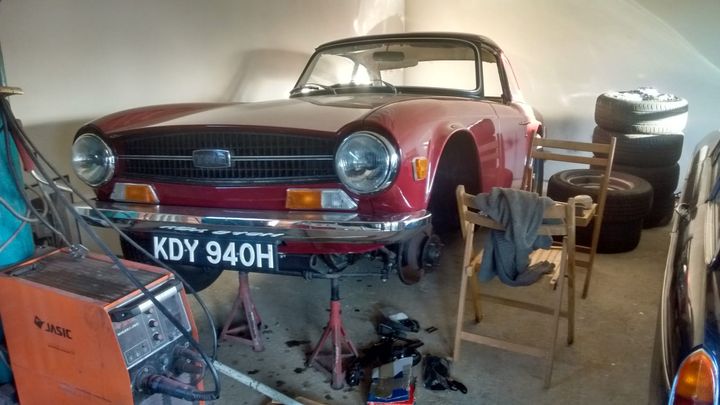
In the early 70's most cars were coming out with white and yellow plates with raised digits and these look more correct for that era but soon after most people changed to the smooth perspex ones as they were probably cheaper. If you want to make your early 70's car look more classic, these are the ones to get not the pressed black silver ones.
More worse for me is a classic on modern perspex plates with the blue GB or UK side panel and wrong smaller font
In the early 70's most cars were coming out with white and yellow plates with raised digits and these look more correct for that era but soon after most people changed to the smooth perspex ones as they were probably cheaper. If you want to make your early 70's car look more classic, these are the ones to get not the pressed black silver ones.
More worse for me is a classic on modern perspex plates with the blue GB or UK side panel and wrong smaller font
Turbobanana said:
I respect your view, but the lines are blurred.
The Fulvia was launched in 1965 and, details apart, looked the same on discontinuation in 1976. Mine is a 1974, but you can't know that from looking at it.
Inside DVLA says: "Since April 2015 vehicles manufactured before 1 January 1975 can display the older style plates.", so I'm within my rights.
Given that the vast majority on Fulvias would have been registered before the 1973 black & silver plates cut off, it looks "right".
Where I wholly agree with you is when these plates are fitted to, say, a Mk3 Capri or a Golf GTI, cars that were launched after 1973.
I agree with you there, it's why I put some on a 1976 Triumph, it had been in production for years ('70 to '76, the Toledo). That must have been a very old page you looked at! It rolled forward every year at 40 y.o. until 2020. Here's advice from Footman James on it:The Fulvia was launched in 1965 and, details apart, looked the same on discontinuation in 1976. Mine is a 1974, but you can't know that from looking at it.
Inside DVLA says: "Since April 2015 vehicles manufactured before 1 January 1975 can display the older style plates.", so I'm within my rights.
Given that the vast majority on Fulvias would have been registered before the 1973 black & silver plates cut off, it looks "right".
Where I wholly agree with you is when these plates are fitted to, say, a Mk3 Capri or a Golf GTI, cars that were launched after 1973.
https://www.footmanjames.co.uk/blog/black-and-silv...
Turbobanana said:
LuS1fer said:
Turbobanana said:
Not for me. I would still want to see a reflective plate if the car was originally registered after 1973. It's a "forced" look.The Fulvia was launched in 1965 and, details apart, looked the same on discontinuation in 1976. Mine is a 1974, but you can't know that from looking at it.
Inside DVLA says: "Since April 2015 vehicles manufactured before 1 January 1975 can display the older style plates.", so I'm within my rights.
Given that the vast majority on Fulvias would have been registered before the 1973 black & silver plates cut off, it looks "right".
Where I wholly agree with you is when these plates are fitted to, say, a Mk3 Capri or a Golf GTI, cars that were launched after 1973.
I recognise my cut off point is rather arbitrary though and is perhaps down to cars I saw in period. The Lancia was always a rare and exotic thing and seldom seen out and about - for more familiar stuff I may be more prescriptive. The Jaguar XJ6 is another design from the 1960s and while a Series I looks good with black and silver 'plates, they really jar for me when put on an XJ6 Series II to the point they can spoil an otherwise lovely car.
dbdb said:
Turbobanana said:
LuS1fer said:
Turbobanana said:
Not for me. I would still want to see a reflective plate if the car was originally registered after 1973. It's a "forced" look.The Fulvia was launched in 1965 and, details apart, looked the same on discontinuation in 1976. Mine is a 1974, but you can't know that from looking at it.
Inside DVLA says: "Since April 2015 vehicles manufactured before 1 January 1975 can display the older style plates.", so I'm within my rights.
Given that the vast majority on Fulvias would have been registered before the 1973 black & silver plates cut off, it looks "right".
Where I wholly agree with you is when these plates are fitted to, say, a Mk3 Capri or a Golf GTI, cars that were launched after 1973.
I recognise my cut off point is rather arbitrary though and is perhaps down to cars I saw in period. The Lancia was always a rare and exotic thing and seldom seen out and about - for more familiar stuff I may be more prescriptive. The Jaguar XJ6 is another design from the 1960s and while a Series I looks good with black and silver 'plates, they really jar for me when put on an XJ6 Series II to the point they can spoil an otherwise lovely car.
vixen1700 said:
See it so often now and it sets my teeth on edge! Hate it!
I know they changed the law allowing it on pre 1980 cars (I think), but it's just so wrong. It looks so wrong, because it is so wrong!
Seeing cars with 'P', 'R' & 'S' registered black plates just makes me climb the walls. They should be yellow and white.
Nothing newer than 1971 should have black plates.
Sorry, rant over! It just makes me mad!
Really irritates me. I know they changed the law allowing it on pre 1980 cars (I think), but it's just so wrong. It looks so wrong, because it is so wrong!
Seeing cars with 'P', 'R' & 'S' registered black plates just makes me climb the walls. They should be yellow and white.
Nothing newer than 1971 should have black plates.
Sorry, rant over!
It just makes me mad! As does the recent fad of fitting whitewall tyres on thing like Mercedes W114s. No. No. No. No. No.

AC43 said:
vixen1700 said:
See it so often now and it sets my teeth on edge! Hate it!
I know they changed the law allowing it on pre 1980 cars (I think), but it's just so wrong. It looks so wrong, because it is so wrong!
Seeing cars with 'P', 'R' & 'S' registered black plates just makes me climb the walls. They should be yellow and white.
Nothing newer than 1971 should have black plates.
Sorry, rant over! It just makes me mad!
Really irritates me. I know they changed the law allowing it on pre 1980 cars (I think), but it's just so wrong. It looks so wrong, because it is so wrong!
Seeing cars with 'P', 'R' & 'S' registered black plates just makes me climb the walls. They should be yellow and white.
Nothing newer than 1971 should have black plates.
Sorry, rant over!
It just makes me mad! As does the recent fad of fitting whitewall tyres on thing like Mercedes W114s. No. No. No. No. No.
However - all 9 E-Types that he has in stock are on WWs.
That can’t be right surely ?
Gassing Station | Classic Cars and Yesterday's Heroes | Top of Page | What's New | My Stuff