
Intriguing old mystery car
Discussion


Here’s what ChatGPT thinks:
This is a fascinating photograph. Based on the styling, I’d say the car is most likely a luxury European touring car from the late 1920s or very early 1930s. My best estimate is:
Most likely: Mercedes-Benz Type 630 or 680 “Tourenwagen” (1927–1932)
Reasons:
There are a few other cars with a similar appearance:
Unfortunately, the photograph is just low enough in resolution that the most useful identifying features are blurred:
One clue from the photograph
The mountainous setting and the people greeting the occupants makes me wonder whether this was taken during an official visit or royal procession. Cars like the Mercedes 630/680 and Hispano-Suiza H6 were frequently used by governments and royalty throughout Europe.
If I had to put a probability on it:
1. Mercedes-Benz 630/680 Tourenwagen — ≈60%
2. Hispano-Suiza H6 — ≈20%
3. Renault Reinastella — ≈10%
4. Other large European luxury tourer — ≈10%
If you happen to know:
This is a fascinating photograph. Based on the styling, I’d say the car is most likely a luxury European touring car from the late 1920s or very early 1930s. My best estimate is:
Most likely: Mercedes-Benz Type 630 or 680 “Tourenwagen” (1927–1932)
Reasons:
- The tall, narrow radiator with a gently rounded top is very characteristic of Mercedes-Benz of this era.
- The large separate headlamps mounted on a crossbar are typical of high-end German cars from the late 1920s.
- The long bonnet suggests a very large displacement six- or eight-cylinder engine.
- The large touring body (open Tourenwagen) was commonly used for ceremonial occasions and VIP transport.
- The disc wheels and substantial proportions are consistent with the Mercedes 630/680.
There are a few other cars with a similar appearance:
- Hispano-Suiza H6 (particularly if the photo was taken in southern Europe)
- Renault Reinastella
- Steyr XXX series touring car
- Minerva AK
- Rolls-Royce Phantom I (less likely, as the radiator shape doesn’t quite match)
Unfortunately, the photograph is just low enough in resolution that the most useful identifying features are blurred:
- radiator badge
- mascot (if fitted)
- wheel centres
- number plate
- bonnet louvre arrangement
One clue from the photograph
The mountainous setting and the people greeting the occupants makes me wonder whether this was taken during an official visit or royal procession. Cars like the Mercedes 630/680 and Hispano-Suiza H6 were frequently used by governments and royalty throughout Europe.
If I had to put a probability on it:
1. Mercedes-Benz 630/680 Tourenwagen — ≈60%
2. Hispano-Suiza H6 — ≈20%
3. Renault Reinastella — ≈10%
4. Other large European luxury tourer — ≈10%
If you happen to know:
- where the photograph was taken (country or town),
- roughly what year it was taken, or
- if you have a higher-resolution scan,
 ! I'd say likely 60% NOT a Mercedes.The Buick looks a good shout - look at the slight dips in either top side of the radiator shell, reminiscent of a Packard. The Merc had a pointed radiator which is noticeably absent.
Gemini reckons.......
The vehicle is very likely a FIAT from that era—most notably matching the proportions and design of models like the Fiat 521 or Fiat 525 (produced between 1928 and 1931).
Key Identifying Features:
The Radiator Badge: The prominent circular emblem at the top center of the chrome radiator grille perfectly matches the iconic round laurel-wreath logo that FIAT used on its vehicles from 1925 to 1931.
Front Fascia: It features large, standalone chrome headlights stabilized by a straight horizontal tie-bar running between the sweeping front fenders.
Bumper: It is equipped with a period-correct, spring-steel double-bar (split-bar) front bumper.
The vehicle is very likely a FIAT from that era—most notably matching the proportions and design of models like the Fiat 521 or Fiat 525 (produced between 1928 and 1931).
Key Identifying Features:
The Radiator Badge: The prominent circular emblem at the top center of the chrome radiator grille perfectly matches the iconic round laurel-wreath logo that FIAT used on its vehicles from 1925 to 1931.
Front Fascia: It features large, standalone chrome headlights stabilized by a straight horizontal tie-bar running between the sweeping front fenders.
Bumper: It is equipped with a period-correct, spring-steel double-bar (split-bar) front bumper.
pubrunner said:
Looks like a day out for the Von Trapp family choir.https://www.youtube.com/watch?v=yV9H7aWgPv8
nicanary said:
Buick series 50 badge (1931/35).
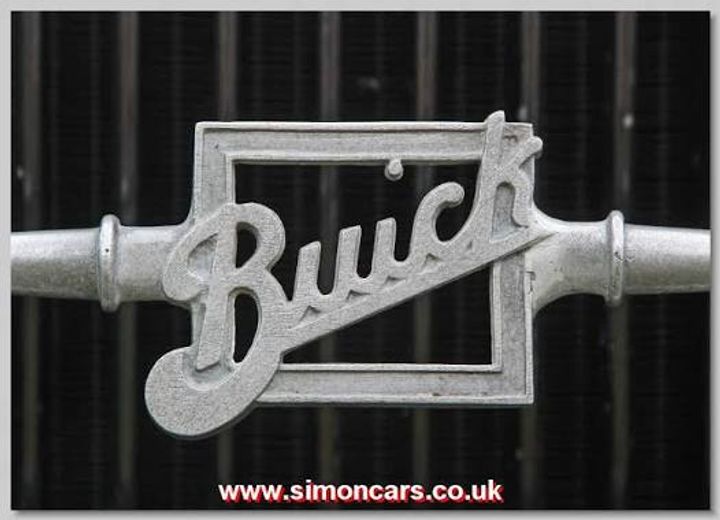
Looks like the one in the photo.
It does seem strange that fanatic German national socialists would drive a car from the decadent Americans.
Thanks for that pic - I'm as sure as I can be, that it is a Buick . . . . . . . and it must have been a rare beast anywhere in Europe.Looks like the one in the photo.
It does seem strange that fanatic German national socialists would drive a car from the decadent Americans.
It looks like an Alpine setting, and I think it could be Switzerland - American cars have always been popular there, and they didn't have much of a domestic car manufacturing scene.
I always find the results of AI requests almost laughable. It's a complete waste of time. Google Images is your friend as long as you know enough about old cars to enter the right sort of request words.
I always find the results of AI requests almost laughable. It's a complete waste of time. Google Images is your friend as long as you know enough about old cars to enter the right sort of request words.

I think the plate is Italian. The "I" someone mentioned is, I think, actually a "1", which was the province of Alessandria.
Wikipedia link
Wikipedia link
Turbobanana said:
I think the plate is Italian. The "I" someone mentioned is, I think, actually a "1", which was the province of Alessandria.
Wikipedia link
It says that system of registration plates only ran up to 1927. This car is later than that so I don't think it would apply to it, they would have moved to the later type by the early 1930s.Wikipedia link
Gassing Station | Classic Cars and Yesterday's Heroes | Top of Page | What's New | My Stuff