
Lippisch P.13a - PM Model 1/72
Discussion


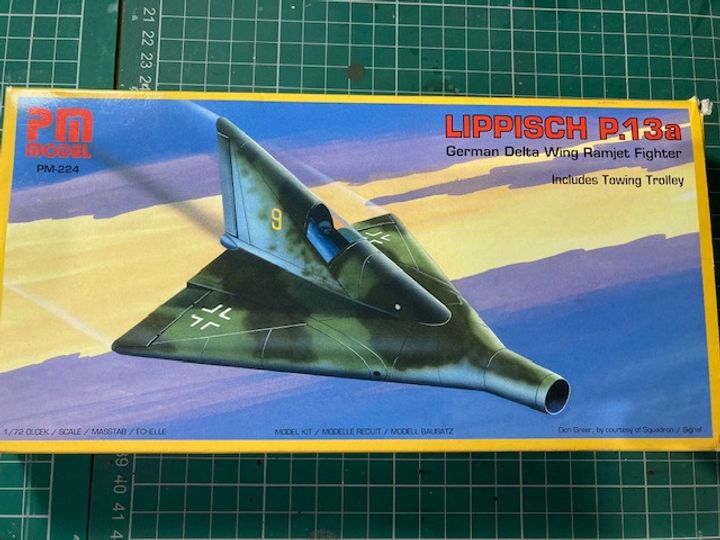
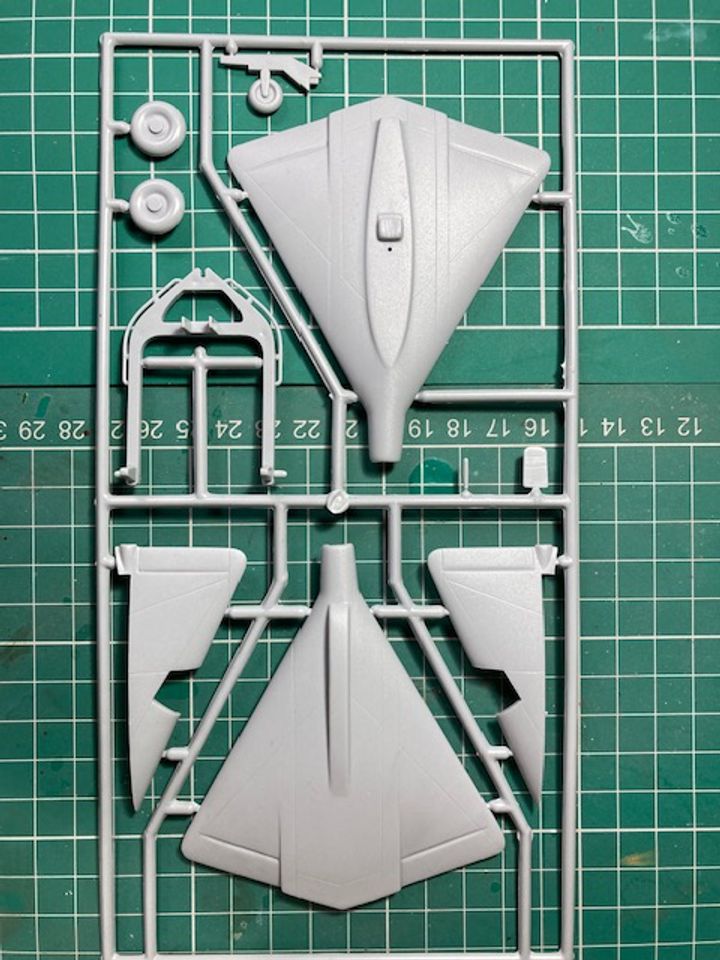
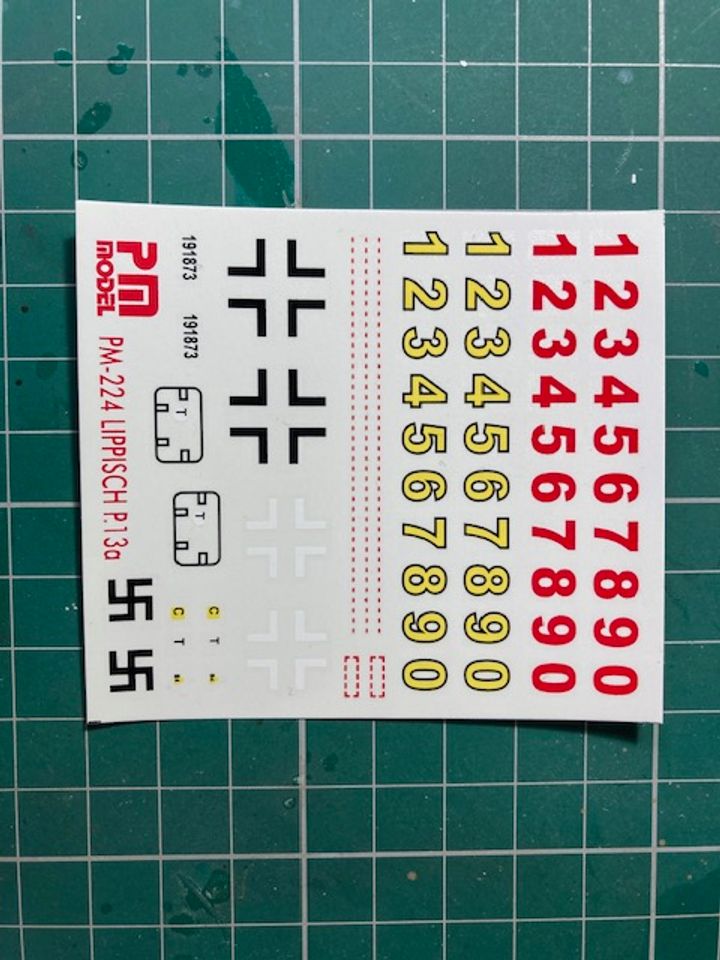
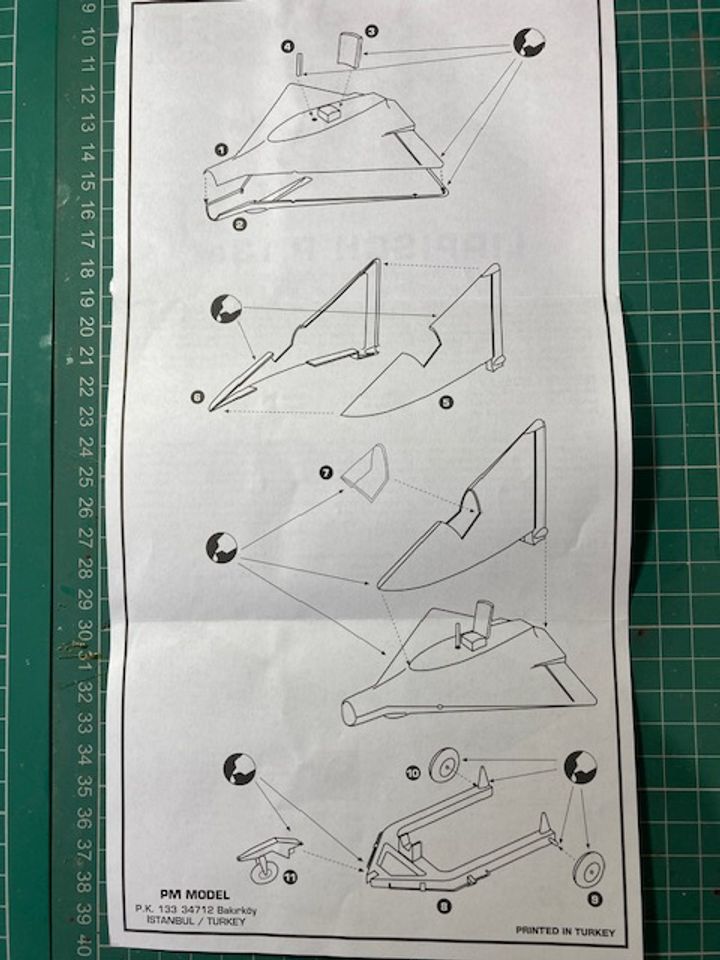
This is one I decided to build as a "quickie" It certainly qualifies as a simple kit as the parts count (excluding the decal sheet) comes to the grand total of 11 - and that is including the ground handling and take-off trolley.
I quite like PM Models. They are produced in Turkey and are very basic. They remind me a bit of FROG models from the 1970s. Some of their kits are a bit dubious accuracy wise but they have picked very unusual but interesting subjects over the years - such as this one.
Dr Alexander Lippisch was a bit of an aerodynamic genius and was very enthusiastic about two concepts, doing away with the tailplane in general and the benefits of the delta wing . Germany was the only country that possessed supersonic wind tunnels in the 1930s and 1940s and a number of papers had been published before the war showing the advantages to be had in the transonic regions of flight (600 mph to 750 mph) by sweeping the leading edge of the wing back. The delta allowed this sweepback concept to be used AND the dropping of the need for a tailpane.
Lippisch was involved in a number of projects. The most important one was the tailess rocket plane concept which eventually led to the Messerschmitt Me163 Komet interceptor.
His delta research work resulted in the P.13a. Various small scale glider versions were flown but for the actual production aircraft, it was proposed that it would be powered by a rather bonkers coal fueled jet engine (as if the delta design wasn't radical enough).
Like many German projects, it never actually came to fruition but Lippisch's work was strongly influential after the war and inspired later aircraft such as the Convair family of delta wing jets (XF-92, F-102, F106, B-58 etc), the SAAB Draken and the Dassualt Mirage III. I expect it also influenced the British Fairey Delta 2.
I quite like PM Models. They are produced in Turkey and are very basic. They remind me a bit of FROG models from the 1970s. Some of their kits are a bit dubious accuracy wise but they have picked very unusual but interesting subjects over the years - such as this one.
Dr Alexander Lippisch was a bit of an aerodynamic genius and was very enthusiastic about two concepts, doing away with the tailplane in general and the benefits of the delta wing . Germany was the only country that possessed supersonic wind tunnels in the 1930s and 1940s and a number of papers had been published before the war showing the advantages to be had in the transonic regions of flight (600 mph to 750 mph) by sweeping the leading edge of the wing back. The delta allowed this sweepback concept to be used AND the dropping of the need for a tailpane.
Lippisch was involved in a number of projects. The most important one was the tailess rocket plane concept which eventually led to the Messerschmitt Me163 Komet interceptor.
His delta research work resulted in the P.13a. Various small scale glider versions were flown but for the actual production aircraft, it was proposed that it would be powered by a rather bonkers coal fueled jet engine (as if the delta design wasn't radical enough).
Like many German projects, it never actually came to fruition but Lippisch's work was strongly influential after the war and inspired later aircraft such as the Convair family of delta wing jets (XF-92, F-102, F106, B-58 etc), the SAAB Draken and the Dassualt Mirage III. I expect it also influenced the British Fairey Delta 2.
I actually completed the model today. The pictures shown above were taken a couple of weeks ago).
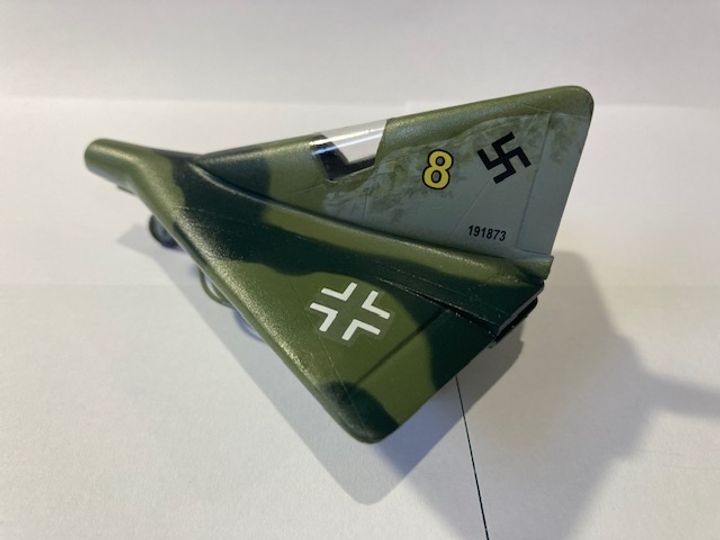
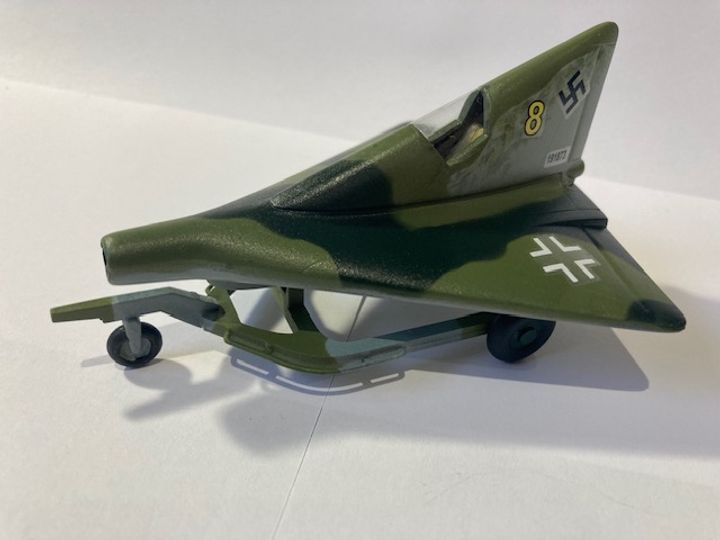
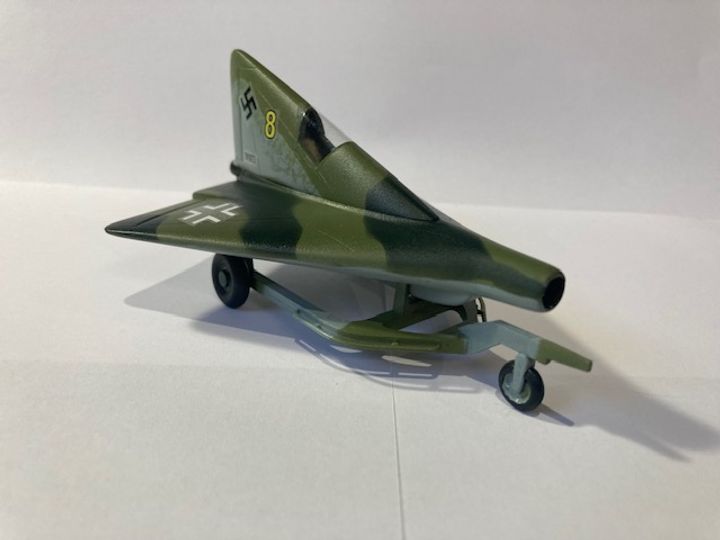
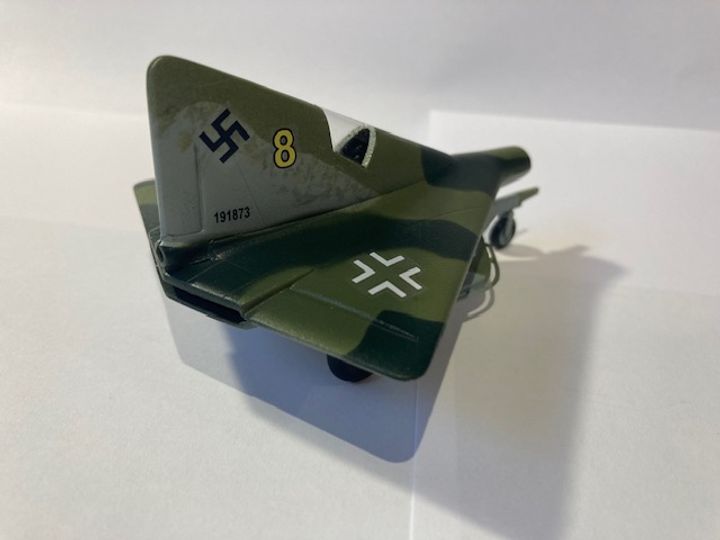
Even though there were only 11 components in this kit, I managed to lose one - the canopy. I replaced this with judicously placed Sellotape which was then "glossed up" using Gauzy Glass Coat.
I use this technique when doing wing leading edge landing light covers as I think it works better than the clear plastic covers provided in most kits. However, this is the biggest aperture I have attempted to cover using this technique.
Even though there were only 11 components in this kit, I managed to lose one - the canopy. I replaced this with judicously placed Sellotape which was then "glossed up" using Gauzy Glass Coat.
I use this technique when doing wing leading edge landing light covers as I think it works better than the clear plastic covers provided in most kits. However, this is the biggest aperture I have attempted to cover using this technique.
hidetheelephants said:
Crikey, that looks like it would have killed as many pilots as the 163.
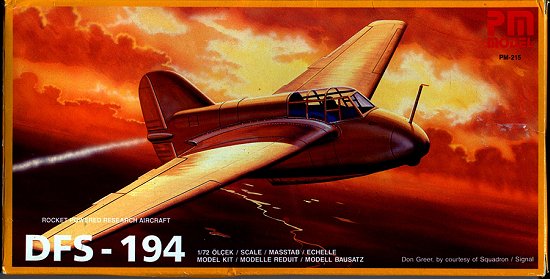
A glider version was flown - fairly succesfully too. Lippisch's DFS 194 was the forerunner of the Me163 and flew quite well. The 163 was a pretty good flyer too, from an aerodynamic point of view. All its problems stemmed from the rocket motor and volatile fuels used.

Eric Mc said:
Might be down to spark erosion, which is one way of cutting steel moulds.
Academy uses this technique too.
I'm surprised you didn't sand it smooth - it would have looked more realistic and the decals would have sat better. But you know more about plastic modelling than me...!Academy uses this technique too.
Looks like they may have based their kit on the photo here: https://en.wikipedia.org/wiki/Lippisch_P.13a (actually that might BE the kit!)
Edited by Simpo Two on Sunday 3rd May 21:45
Gassing Station | Scale Models | Top of Page | What's New | My Stuff