
Big, big engine (not the usual, have a look)
Discussion


Howdy chaps,
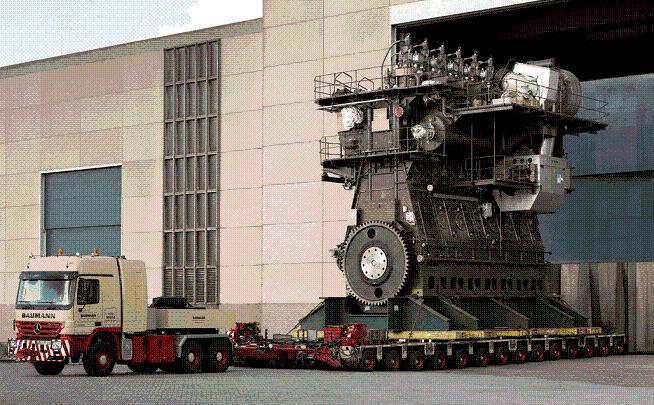
I'm sure you've all seen this photo and the ones that follow:
Well, I've been on a yacht forum lately (dreaming, mostly) and came across photos of another very large engine being overhauled. Here are the pics:
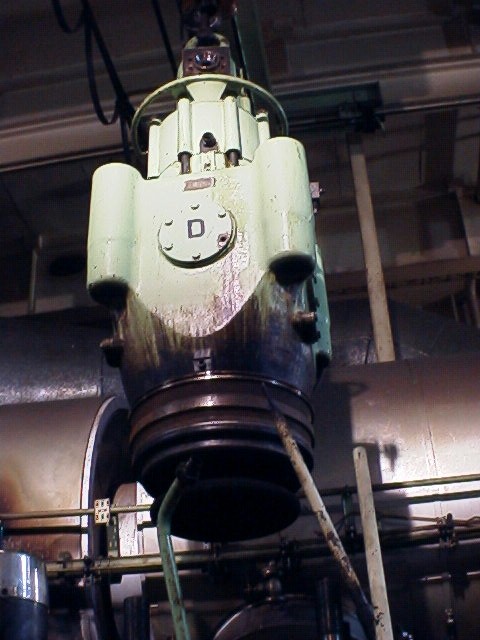
Removing exhaust valve ^
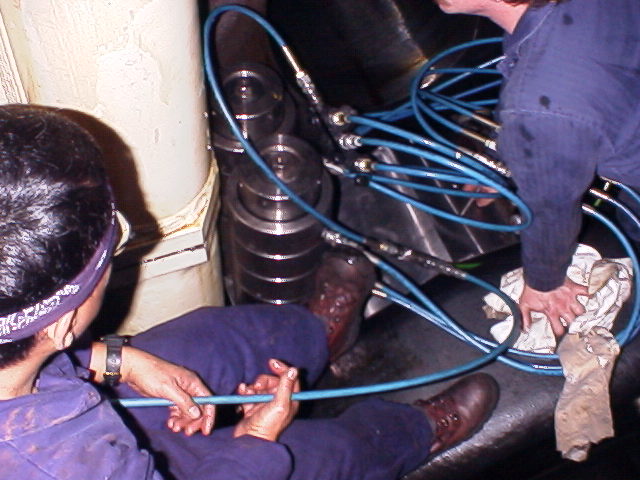
Removing bolts on main bearing cap ^
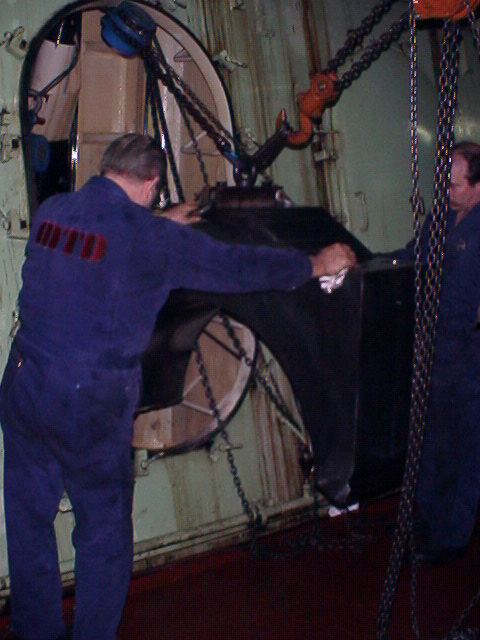
Removing bearing cap ^
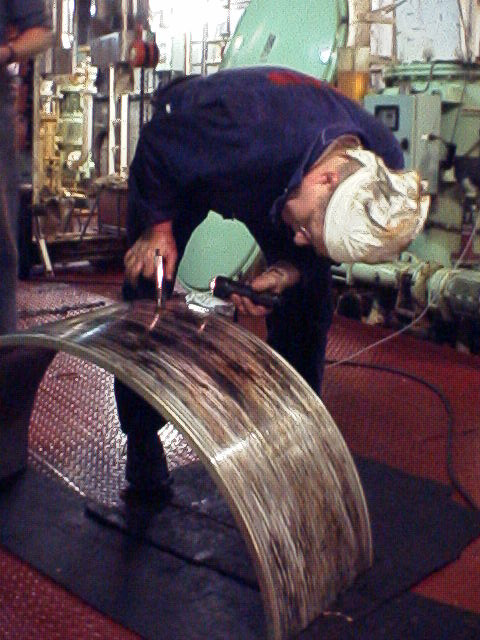
Giant bearing ^
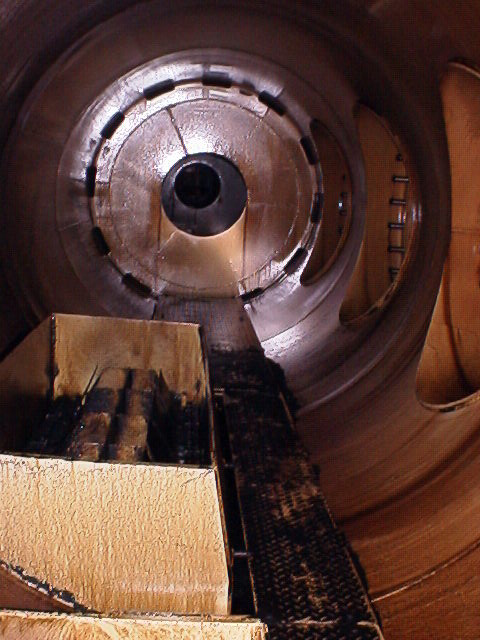
"Inlet manifold: The tunnels on the right are the air inlets to the cylinders. That is a walkway down the center, the openings at the end are the connection to the other sections of the manifold" ^
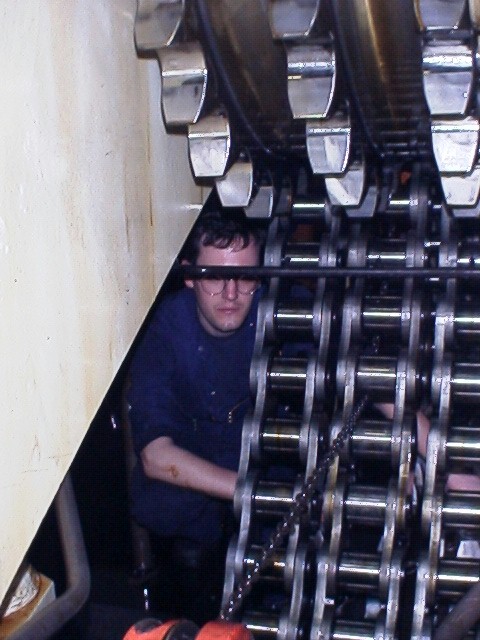
Timing chain ^
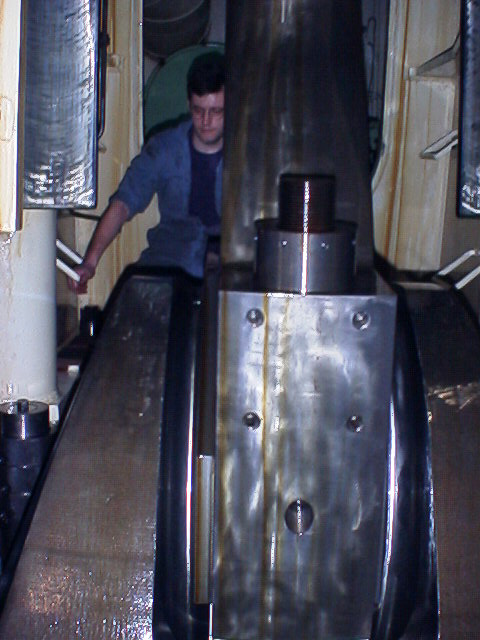
Lower end of connecting rod ^
Source for those interested: http://www.yachtforums.com/forums/technical-discus...
Enjoy!
I'm sure you've all seen this photo and the ones that follow:
Well, I've been on a yacht forum lately (dreaming, mostly) and came across photos of another very large engine being overhauled. Here are the pics:
Removing exhaust valve ^
Removing bolts on main bearing cap ^
Removing bearing cap ^
Giant bearing ^
"Inlet manifold: The tunnels on the right are the air inlets to the cylinders. That is a walkway down the center, the openings at the end are the connection to the other sections of the manifold" ^
Timing chain ^
Lower end of connecting rod ^
Source for those interested: http://www.yachtforums.com/forums/technical-discus...
Enjoy!


Some facts on the 14 cylinder version:
Total engine weight:
2300 tons (The crankshaft alone weighs 300 tons.)
Length:
89 feet
Height:
44 feet
Maximum power:
108,920 hp at 102 rpm
Maximum torque:
5,608,312 lb/ft at 102rpm
Even at its most efficient power setting, the big 14 consumes 1,660 gallons of heavy fuel oil per hour.
Total engine weight:
2300 tons (The crankshaft alone weighs 300 tons.)
Length:
89 feet
Height:
44 feet
Maximum power:
108,920 hp at 102 rpm
Maximum torque:
5,608,312 lb/ft at 102rpm
Even at its most efficient power setting, the big 14 consumes 1,660 gallons of heavy fuel oil per hour.
That's incredible.
I've seen quite a few pictures of marine engines but they always provoke the same response from me which goes a little like this "F K ME THAT'S BIG!"
I vaguely remember seeing a picture of a chap stood ontop of a piston with a brush sweeping the top of it. I'll see if I can find it
I've seen quite a few pictures of marine engines but they always provoke the same response from me which goes a little like this "F
K ME THAT'S BIG!" I vaguely remember seeing a picture of a chap stood ontop of a piston with a brush sweeping the top of it. I'll see if I can find it
MotorsportTom said:
That's incredible.
I've seen quite a few pictures of marine engines but they always provoke the same response from me which goes a little like this "FK ME THAT'S BIG!"
I vaguely remember seeing a picture of a chap stood ontop of a piston with a brush sweeping the top of it. I'll see if I can find it
I have something in common with marine engines...I've seen quite a few pictures of marine engines but they always provoke the same response from me which goes a little like this "F
K ME THAT'S BIG!" I vaguely remember seeing a picture of a chap stood ontop of a piston with a brush sweeping the top of it. I'll see if I can find it
BOOM BOOM!
Roger Dodger said:
Some facts on the 14 cylinder version:
Total engine weight:
2300 tons (The crankshaft alone weighs 300 tons.)
Length:
89 feet
Height:
44 feet
Maximum power:
108,920 hp at 102 rpm
Maximum torque:
5,608,312 lb/ft at 102rpm
Even at its most efficient power setting, the big 14 consumes 1,660 gallons of heavy fuel oil per hour.
I've seen that spec before, I always wonder how many of those ships it would take to move a small island. Total engine weight:
2300 tons (The crankshaft alone weighs 300 tons.)
Length:
89 feet
Height:
44 feet
Maximum power:
108,920 hp at 102 rpm
Maximum torque:
5,608,312 lb/ft at 102rpm
Even at its most efficient power setting, the big 14 consumes 1,660 gallons of heavy fuel oil per hour.
5 million lb/ft of torque is kinda serious stuff

AUDIHenry said:
"Inlet manifold: The tunnels on the right are the air inlets to the cylinders. That is a walkway down the center, the openings at the end are the connection to the other sections of the manifold" ^
!
That is known as the scavenge space.
To the right is the inlet into the under piston area and the scavenge ports.
Infront of you is the outlet from the auxilary blower which provides boost air at low RPM as the main turbos don't have enough power at low revs to provide enough scavenge air
The box on the floor is the outlet from the intercoller which is sea water cooled.
Behind you is either another auxy blower dependant on engine size or the access door.
The rest of it is pretty much accurate
(ex marine engineer)
thinfourth2 said:
almost right
That is known as the scavenge space.
To the right is the inlet into the under piston area and the scavenge ports.
Infront of you is the outlet from the auxilary blower which provides boost air at low RPM as the main turbos don't have enough power at low revs to provide enough scavenge air
The box on the floor is the outlet from the intercoller which is sea water cooled.
Behind you is either another auxy blower dependant on engine size or the access door.
The rest of it is pretty much accurate
(ex marine engineer)
Thanks! What is the typical lifespan of these engines before requiring a rebuild?That is known as the scavenge space.
To the right is the inlet into the under piston area and the scavenge ports.
Infront of you is the outlet from the auxilary blower which provides boost air at low RPM as the main turbos don't have enough power at low revs to provide enough scavenge air
The box on the floor is the outlet from the intercoller which is sea water cooled.
Behind you is either another auxy blower dependant on engine size or the access door.
The rest of it is pretty much accurate
(ex marine engineer)
thinfourth2 said:
AUDIHenry said:
"Inlet manifold: The tunnels on the right are the air inlets to the cylinders. That is a walkway down the center, the openings at the end are the connection to the other sections of the manifold" ^
!
That is known as the scavenge space.
To the right is the inlet into the under piston area and the scavenge ports.
Infront of you is the outlet from the auxilary blower which provides boost air at low RPM as the main turbos don't have enough power at low revs to provide enough scavenge air
The box on the floor is the outlet from the intercoller which is sea water cooled.
Behind you is either another auxy blower dependant on engine size or the access door.
The rest of it is pretty much accurate
(ex marine engineer)
AUDIHenry said:
Thanks! What is the typical lifespan of these engines before requiring a rebuild?
That depends on what you class as a rebuildTypically pistons are overhauled at 10,000 hours (14 months non stop running)
Main bearings can reach 50,000 hours no problem but you measure crankshaft delections to indicate bearing condition. The top of a main bearing can last the life of a ship which is 20 years plus.
What you have to remember is once it is in the ship it is almost never removed. It is very rare to remove and engine as it involve cutting either the top off or cutting the side out of the ship to get it out. The one behind the lorry is a small engine. If you have damage such as a damaged crank then you machine stuff in place. To machine a crank pin you get a machine that clamps onto the crank and it grinds the crank while crawling round it.
750turbo said:
E30M3SE said:
thinfourth2 said:
(ex marine engineer)
What sort of vessel would such an engine be/have been fitted to?The worlds largest engine is in the emma mearsk which is not the worlds biggest ship . Or think of it another way.
The empire state building lying on its side and going past you at 30mph to give you a rough idea of sizes and speeds involved with the Emma Mearsk
Edited by thinfourth2 on Friday 12th August 11:48
attym3 said:
How do they even test those figures? It must be one crazy rolling road!
Mark
A very very very big dynoMark
The engine is built on a test rig and attached to a dyno and then run on test.
Once the test is finished it is taken apart and sent to the ship and rebuilt.
Once installed on the ship the power is measured in two basic ways
Firstly the twist of the propshaft is measured using either strain guages or using two toothed wheels. The material and size of the shaft is known (diameter being about 3foot) so if you place two toothed wheels on the shaft you can measure the amount of twist in the shaft while running which gives you the torque. You know the RPM and quick calculation and bingo you have power.
The other way is you measure the pressure in the clyinder over a stroke. You know the angle of the crank in relation to the pressure. some clever maths and bingo you have the produced power in the clyinder. This allows you to know total power produced and it allows you to power balance the units so they all produce the same power. The shape of the graph also shows you running problems such as worn piston rings, leaking exhaust valves, incorrect timing etc.
Gassing Station | Boats, Planes & Trains | Top of Page | What's New | My Stuff