
Discussion


Squirt fuel into the rear of the jet engine to increase thrust.
But this can only work if there is unburned O2 coming through the engine surely? (Note not Shirley). Which led me to wonder what percentage of the available oxygen is burned in a typical jet? I guess turbofans have better reheat potential as there is more unburnt oxygen available?
But this can only work if there is unburned O2 coming through the engine surely? (Note not Shirley). Which led me to wonder what percentage of the available oxygen is burned in a typical jet? I guess turbofans have better reheat potential as there is more unburnt oxygen available?
The max power output of a Turbofan engine is limited by (amongst over things) what is known as Turbine Inlet Temperature (TIT).
Exceeding the maximum value would cause engine damage, so to prevent this, at maximum thrust fuel flow is restricted. So at maximum thrust, it is not available oxygen that limits the power but fuel flow. Thus meaning that oxygen is left over from combustion, this "left-over" oxygen is then used for the afterburner process.
I have no idea what percentage of oxygen is left from combustion but you are right that Turbofans are more efficient than Turbojets, they can be as much as 15% more efficient.
Exceeding the maximum value would cause engine damage, so to prevent this, at maximum thrust fuel flow is restricted. So at maximum thrust, it is not available oxygen that limits the power but fuel flow. Thus meaning that oxygen is left over from combustion, this "left-over" oxygen is then used for the afterburner process.
I have no idea what percentage of oxygen is left from combustion but you are right that Turbofans are more efficient than Turbojets, they can be as much as 15% more efficient.
Edited by TheTurbonator on Wednesday 1st January 06:22
Edited by TheTurbonator on Wednesday 1st January 06:24
Modern engines run with max turbine temperatures in the region of 1800-2000K. Guessing stochiometric temperatures to be in the low to mid 2000s makes me think that there's probably 20% ish spare oxygen in the core. However, that's at take off, turbine temps are much lower at cruise, with the engine throttled back there would be more spare oxygen. But... Most of the available oxygen is actually in the unburnt bypass air, so you could have anything from an extra 20% to an extra 1000% of available spare oxygen for the afterburner, depending on engine type. Unfortunately you then need the nozzles and stuff to accelerate all this burning oxygen to turn it into thrust...
Edited by Mave on Wednesday 1st January 12:52
One thing worth considering is that the cores of modern turbine sections run hotter than the melting point of the materials used to make/grow/construct the turbine blades.
That is the very secret/expensive "magic" bit.
Anyway on Topic.
http://www.youtube.com/watch?v=yJGDmThP_BY
That is the very secret/expensive "magic" bit.
Anyway on Topic.
http://www.youtube.com/watch?v=yJGDmThP_BY
Edited by Mojocvh on Wednesday 1st January 15:57
Mojocvh said:
One thing worth considering is that the cores of modern turbine sections run hotter than the melting point of the materials used to make/grow/construct the turbine blades.
That is the very secret/expensive "magic" bit.
Anyway on Topic.
http://www.youtube.com/watch?v=yJGDmThP_BY
The hotter the gas stream the more efficient the engine can run. The manufacture of the HT blades is very interesting, (as is the extremely expensive process of applying the ceramic coating to the blades)That is the very secret/expensive "magic" bit.
Anyway on Topic.
http://www.youtube.com/watch?v=yJGDmThP_BY
Edited by Mojocvh on Wednesday 1st January 15:57
If you click on the picture you can make out the microscopic holes to allow cooling air to pass through.
http://www.rolls-royce.com/about/technology/materi...
Max_Torque said:
Surely, in terms of afterburners there is one clear leader:
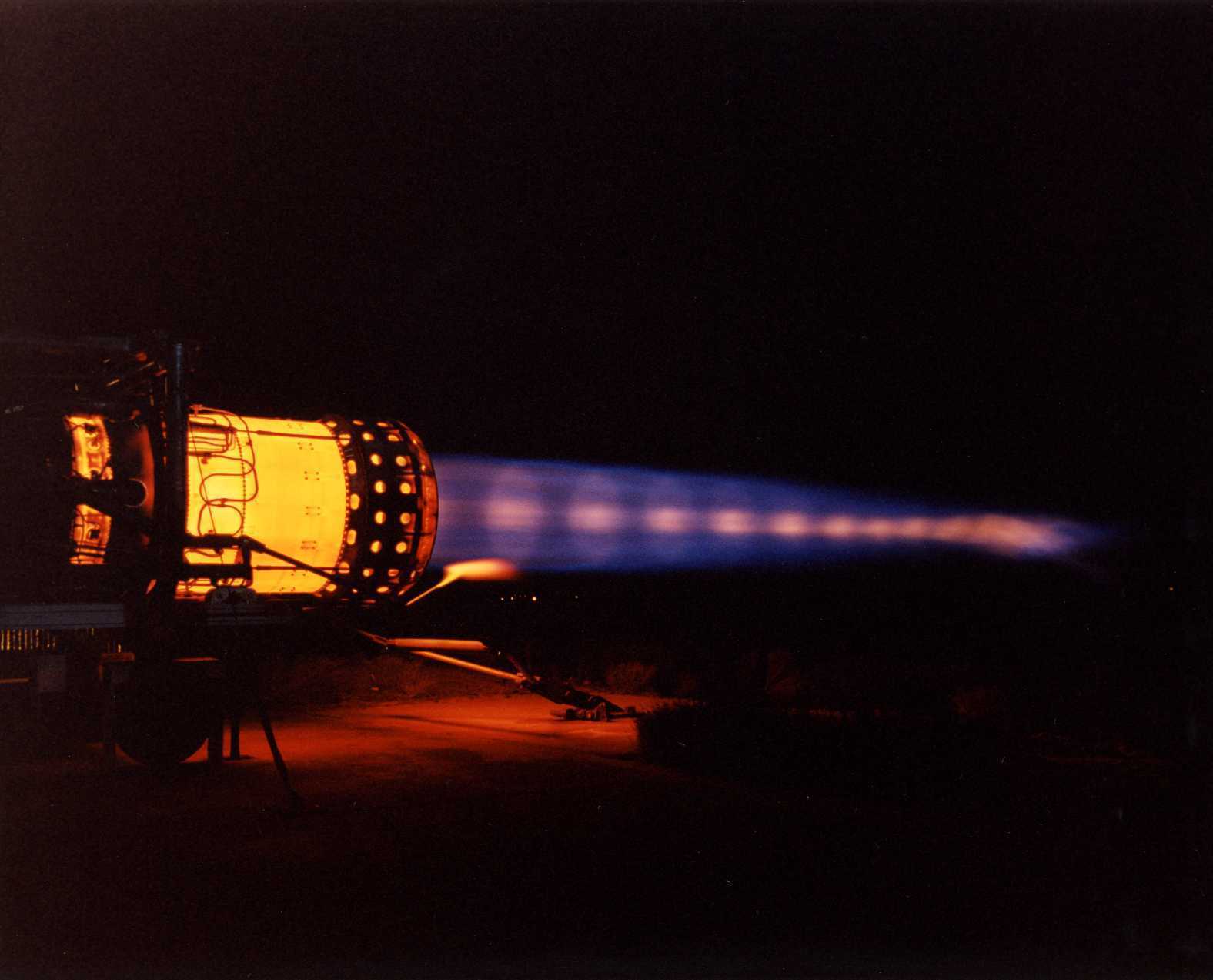
The P&W J-58 as fitted to the SR-71 and it's derivatives!
(iirc, still the only jet engine rated for cruise under continuous afterburning operation)
That's a nice standing wave going on there in the exhaust gas!The P&W J-58 as fitted to the SR-71 and it's derivatives!
(iirc, still the only jet engine rated for cruise under continuous afterburning operation)
AER said:
Max_Torque said:
Surely, in terms of afterburners there is one clear leader:
The P&W J-58 as fitted to the SR-71 and it's derivatives!
(iirc, still the only jet engine rated for cruise under continuous afterburning operation)
That's a nice standing wave going on there in the exhaust gas!The P&W J-58 as fitted to the SR-71 and it's derivatives!
(iirc, still the only jet engine rated for cruise under continuous afterburning operation)
Tango13 said:
AER said:
Max_Torque said:
Surely, in terms of afterburners there is one clear leader:
The P&W J-58 as fitted to the SR-71 and it's derivatives!
(iirc, still the only jet engine rated for cruise under continuous afterburning operation)
That's a nice standing wave going on there in the exhaust gas!The P&W J-58 as fitted to the SR-71 and it's derivatives!
(iirc, still the only jet engine rated for cruise under continuous afterburning operation)

dr_gn said:
Tango13 said:
AER said:
Max_Torque said:
Surely, in terms of afterburners there is one clear leader:
The P&W J-58 as fitted to the SR-71 and it's derivatives!
(iirc, still the only jet engine rated for cruise under continuous afterburning operation)
That's a nice standing wave going on there in the exhaust gas!The P&W J-58 as fitted to the SR-71 and it's derivatives!
(iirc, still the only jet engine rated for cruise under continuous afterburning operation)
Most Javelins didn't have 'burner, IIRC it was only the FAW Mk8 and FAW Mk9.
As Mave said, it was a HP Fuel pump problem. The pumps couldn't keep up with the fuel flow demands of the engines at maximum RPM at low level, thus leading to a reduction in thrust. Indeed with the early AFRCU and BCU (Air Flow Ratio Control Unit, Barometric Control Unit), selecting full throttle at low level would lead to a flame out.
As Mave said, it was a HP Fuel pump problem. The pumps couldn't keep up with the fuel flow demands of the engines at maximum RPM at low level, thus leading to a reduction in thrust. Indeed with the early AFRCU and BCU (Air Flow Ratio Control Unit, Barometric Control Unit), selecting full throttle at low level would lead to a flame out.
Edited by Ginetta G15 Girl on Thursday 2nd January 19:18
Brother D said:
The hotter the gas stream the more efficient the engine can run. The manufacture of the HT blades is very interesting, (as is the extremely expensive process of applying the ceramic coating to the blades)
If you click on the picture you can make out the microscopic holes to allow cooling air to pass through.
http://www.rolls-royce.com/about/technology/materi...
I've watched this many times. There is a section on the blade perforations.If you click on the picture you can make out the microscopic holes to allow cooling air to pass through.
http://www.rolls-royce.com/about/technology/materi...
22.30
Clever stuff.
http://www.youtube.com/watch?v=VfomloUg2Gw
Edited by TVR1 on Thursday 2nd January 20:22
Ginetta G15 Girl said:
Most Javelins didn't have 'burner, IIRC it was only the FAW Mk8 and FAW Mk9.
As Mave said, it was a HP Fuel pump problem. The pumps couldn't keep up with the fuel flow demands of the engines at maximum RPM at low level, thus leading to a reduction in thrust. Indeed with the early AFRCU and BCU (Air Flow Ratio Control Unit, Barometric Control Unit), selecting full throttle at low level would lead to a flame out.
But was it the HP pumps or the fuel feeds to them? I'm only slightly amazed that rolls couldn't supply the required on unit fuel supply.As Mave said, it was a HP Fuel pump problem. The pumps couldn't keep up with the fuel flow demands of the engines at maximum RPM at low level, thus leading to a reduction in thrust. Indeed with the early AFRCU and BCU (Air Flow Ratio Control Unit, Barometric Control Unit), selecting full throttle at low level would lead to a flame out.
Edited by Ginetta G15 Girl on Thursday 2nd January 19:18
Mojocvh said:
But was it the HP pumps or the fuel feeds to them? I'm only slightly amazed that rolls couldn't supply the required on unit fuel supply.
The engines in the Javelin were Armstrong Siddeley Sapphires not RRs.As I understand it it it was the HP Pump output. Apparently the pumps fitted to the Sapphire engines in the Javelin were fixed stroke pumps.
Edited by Ginetta G15 Girl on Thursday 2nd January 23:27
Gassing Station | Boats, Planes & Trains | Top of Page | What's New | My Stuff