
ww2 grass airfields ?
Discussion


steveo3002 said:
often wondered how they managed a grass airstrip during the wet months on the ww2 airfields
cant hardly drive a car over grass without trashing it so imagine the grass would have been a muddy slop ? how did they cope?
AIUI the airfields had steel grills in them to reinforce the ground. That made them sturdy enough for the big bombers.cant hardly drive a car over grass without trashing it so imagine the grass would have been a muddy slop ? how did they cope?
Are you thinking of Pieced Steel Planking. This wasn't used so much on normal grass airfields but more on advanced landing grounds, particularly after the invasions of mainland Europe (Italy in 1943 and France in 1944).
Up until the advent of the RAF four engined heavies, the RAF had expected that grass airfields would be sufficient for their larger aircraft. The largest bombers the RAF had before 1940 were the twin engined Hampden, Wellington and Whitley. All of these aircraft could cope quite well with the grass airfields of the day. Even when the four engined Stirling was being specified in 1936 it was expected that it would be flying out of existing or planned grass airfields.
I have pictures in a book on the Whitley showing tests being undertaken at Farnborough to see how heavy they could make the aeroplane without it becoming impractical to taxy or move about on a grass surface. They locked the undercarriage in teh down position and fixed a steel beam between the two sets of wheels.
They also experimented with larger, low pressure tyres on a Whitley - so it's clear that they were beginning to get concerned as the weight of bomber aircraft began to increase.
The Manchester was designed with the ability to use a catapult when heavilly laden. The system was tested at Farnborough but never used operationally.
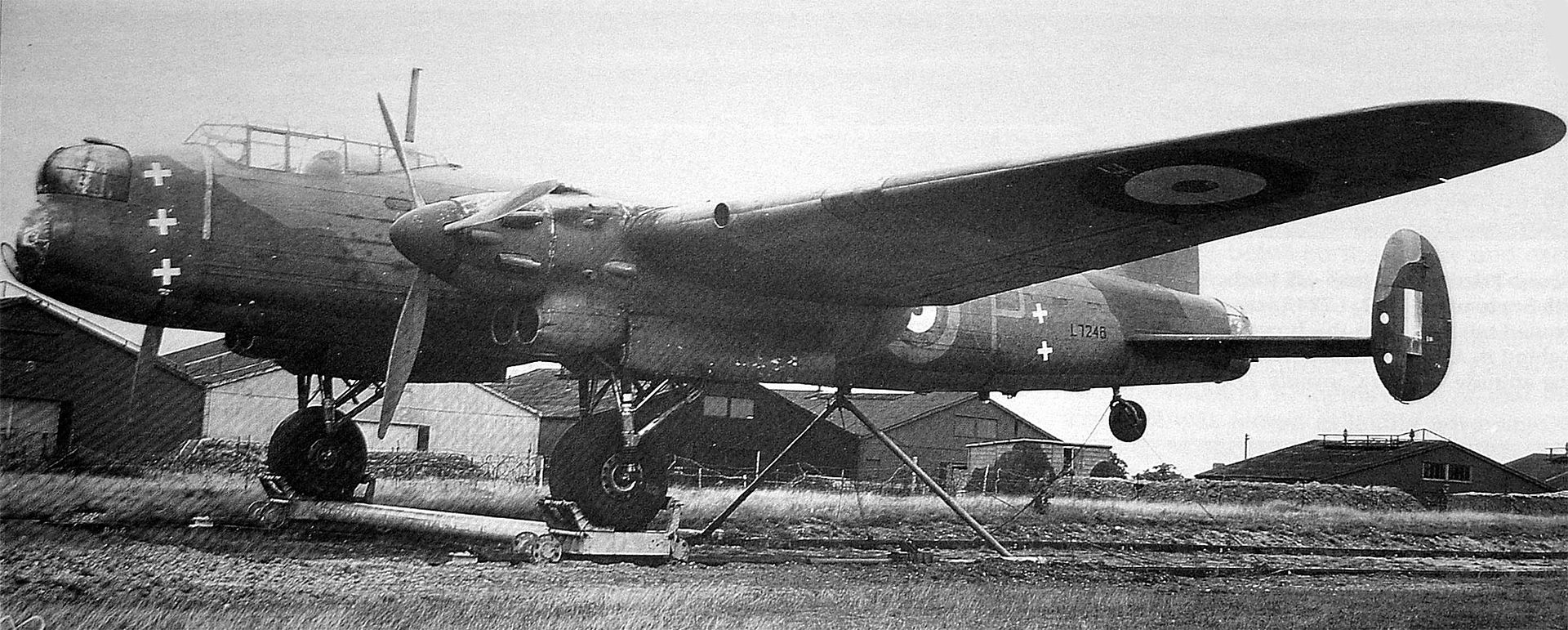
By the time these larger aircraft were entering service, it was realised that maybe the best solution was to just switch over to hard runways and perimeter tracks.
Up until the advent of the RAF four engined heavies, the RAF had expected that grass airfields would be sufficient for their larger aircraft. The largest bombers the RAF had before 1940 were the twin engined Hampden, Wellington and Whitley. All of these aircraft could cope quite well with the grass airfields of the day. Even when the four engined Stirling was being specified in 1936 it was expected that it would be flying out of existing or planned grass airfields.
I have pictures in a book on the Whitley showing tests being undertaken at Farnborough to see how heavy they could make the aeroplane without it becoming impractical to taxy or move about on a grass surface. They locked the undercarriage in teh down position and fixed a steel beam between the two sets of wheels.
They also experimented with larger, low pressure tyres on a Whitley - so it's clear that they were beginning to get concerned as the weight of bomber aircraft began to increase.
The Manchester was designed with the ability to use a catapult when heavilly laden. The system was tested at Farnborough but never used operationally.
By the time these larger aircraft were entering service, it was realised that maybe the best solution was to just switch over to hard runways and perimeter tracks.
Interestingley the RAF had identified the shortcomings of the grass bomber airfields as early as 1939, but it wasn't until August 1942 that the Air Ministry laid down the specification for Bomber airfields with hard runways - What became known as 'Class A' airfields having a main runway of 6000ft and 2 subsidiary runways of 4200ft.
Indeed, 99 Sqn operating the Wellington 1C (and who took part in the first Berlin raid on 25/26 Aug 1940) were detached from their home base of RAF Mildenhall to operate off the 'Rowley Mile' at Newmarket racecourse throughout 1940/41. Apparently this was the longest stretch of grass available at the time and the only one capable of supporting Wellingtons operating at max AUW.
75 Sqn also Stirlings from Newmarket Heath through 1942/43.
Indeed, 99 Sqn operating the Wellington 1C (and who took part in the first Berlin raid on 25/26 Aug 1940) were detached from their home base of RAF Mildenhall to operate off the 'Rowley Mile' at Newmarket racecourse throughout 1940/41. Apparently this was the longest stretch of grass available at the time and the only one capable of supporting Wellingtons operating at max AUW.
75 Sqn also Stirlings from Newmarket Heath through 1942/43.
grumpy52 said:
I am surprised how many grass airfields are in my area of South East Kent .I know of three within a 10 mile radius ,even better if you consider half of that area is sea .
Possibly more than that .
One was an emergency field to one side of the famous White Cliffs.
possibly a bit of a thread hijack, but where in Kent are you? I live in Hawkinge and quite fancy going and having a look around the old WWII airstrip here, but I am not sure if it is worth it as apparently a lot of it has been built over?Possibly more than that .
One was an emergency field to one side of the famous White Cliffs.
FourWheelDrift said:
There's probably a Google Earth xml that lists all of them somewhere.
https://www.google.com/maps/d/viewer?mid=zTfk3beDM...Menu has the option to download the underlying KML source for viewing in Google Earth.

grumpy52 said:
I am surprised how many grass airfields are in my area of South East Kent .I know of three within a 10 mile radius ,even better if you consider half of that area is sea .
Possibly more than that .
One was an emergency field to one side of the famous White Cliffs.
Fighter bases primarily though, so much lighter aircraft?Possibly more than that .
One was an emergency field to one side of the famous White Cliffs.
davepoth said:
steveo3002 said:
often wondered how they managed a grass airstrip during the wet months on the ww2 airfields
cant hardly drive a car over grass without trashing it so imagine the grass would have been a muddy slop ? how did they cope?
AIUI the airfields had steel grills in them to reinforce the ground. That made them sturdy enough for the big bombers.cant hardly drive a car over grass without trashing it so imagine the grass would have been a muddy slop ? how did they cope?
Whether it is down to the grid or just good drainage I don't know, but Waltham generally stays open when many other grass airfields are closed due to waterlogging - the areas around the pumps can take a bit of a beating, and have had plastic reinforcement mesh laid down in recent years.
deadtom said:
Eric Mc said:
Hawkinge was a bit more substantial than an "airstrip".
Thanks for the info, that's really helpful and encouraging for people like me who actually want to learn more about the RAF and WWII
However, if you want more information, I'm happy to give it. Hawkinge was originally laid down as a satellite airfield for the major fighter base at Biggin Hill (similar to RAF West Hampnett - Goodwood's relationship with RAF Tangmere). Biggin Hil was a vital cog in the overall defence structure of the southern UK and it was known that it would bear the brunt of any attacks on London and its environs. It was also known that Biggin Hill itself would come under direct attack - which it did.
The satellite airfield system allowed the RAF to disperse their aircraft away from major airfields and to give them better security. Originally, satellite airfields tended to have minimal facilities but many, like Hawkinge, quickly developed more permanent structures such as perimeter tracks, airfield defensive positions, hangars etc,.
Hawkinge itself became vital as an emergency landing field due to its closeness to the coast.
Satellite airfields were airfields close to and administered by a parent airfield. You've already mentioned Westhampnett administered by Tangmere, another example would be Fowlmere administered by Duxford.
However, Hawkinge is over 60 miles from Biggin Hill so the idea that it was in some way a satellite is patently untrue.
Hawkinge lay within Sector D of No 11 Group, ie the Hornchurch Sector, so it was nothing to do with Biggin Hill whatsoever.
In fact Hawkinge was opened in 1915 as RFC Folkstone with 3 Bessoneau (canvas) hangars to be used as a 'ferry field' for aircraft being dispatched to the Western Front. The field had seen avaiation as early as 1910 when the Dutchman W B Megone started building his own aircraft there.
Renamed RAF Hawkinge the airfield was expanded in the winter of 1918/19 with the construction of 4 Belfast Truss hangars (similar to those at Old Sarum and Duxford), and a brick built technical site - the airfield being used as an aircraft acceptance and storage park. Number 4 hangar burnt down in August 1933.
In 1923 it became the hub of the newly formed 'Air Defence of Great Britain Command' which had grown out of the 'Home Defence Force' under the direction of Lord Salisbury. Later Hawkinge was expanded as part of the Post 1934 Expansion Period with a purpose built domestic site including an E Class Officers' Mess.
Hawkinge never received any metalled runways and was closed as an operational airfield in 1945. Post WW2 it soldiered on as a WAAF training centre as well as becoming the 'Home Command' Gliding Centre for the Air Training Corps. The site was finally sold off by the MOD in 1964 with most of the buildings being buldozed by the end of the decade.
Sadly little now remains save for the Kent Battle of Britain Museum which occupies the site of the former No 4 Hangar - most of the airfield having become a housing estate. There are a few pillboxes and a couple of Seco huts on the original southern and western boundaries. The foundations of the original hangars, the Officers' Mess and some barrack blocks are still visible on Google Earth.
Interestingly Hawkinge saw a minor reprieve in 1969 where it stared (alongside Duxford) in Hary Saltzman's film The Battle of Britain.
However, Hawkinge is over 60 miles from Biggin Hill so the idea that it was in some way a satellite is patently untrue.
Hawkinge lay within Sector D of No 11 Group, ie the Hornchurch Sector, so it was nothing to do with Biggin Hill whatsoever.
In fact Hawkinge was opened in 1915 as RFC Folkstone with 3 Bessoneau (canvas) hangars to be used as a 'ferry field' for aircraft being dispatched to the Western Front. The field had seen avaiation as early as 1910 when the Dutchman W B Megone started building his own aircraft there.
Renamed RAF Hawkinge the airfield was expanded in the winter of 1918/19 with the construction of 4 Belfast Truss hangars (similar to those at Old Sarum and Duxford), and a brick built technical site - the airfield being used as an aircraft acceptance and storage park. Number 4 hangar burnt down in August 1933.
In 1923 it became the hub of the newly formed 'Air Defence of Great Britain Command' which had grown out of the 'Home Defence Force' under the direction of Lord Salisbury. Later Hawkinge was expanded as part of the Post 1934 Expansion Period with a purpose built domestic site including an E Class Officers' Mess.
Hawkinge never received any metalled runways and was closed as an operational airfield in 1945. Post WW2 it soldiered on as a WAAF training centre as well as becoming the 'Home Command' Gliding Centre for the Air Training Corps. The site was finally sold off by the MOD in 1964 with most of the buildings being buldozed by the end of the decade.
Sadly little now remains save for the Kent Battle of Britain Museum which occupies the site of the former No 4 Hangar - most of the airfield having become a housing estate. There are a few pillboxes and a couple of Seco huts on the original southern and western boundaries. The foundations of the original hangars, the Officers' Mess and some barrack blocks are still visible on Google Earth.
Interestingly Hawkinge saw a minor reprieve in 1969 where it stared (alongside Duxford) in Hary Saltzman's film The Battle of Britain.
Ginetta G15 Girl said:
Satellite airfields were airfields close to and administered by a parent airfield. You've already mentioned Westhampnett administered by Tangmere, another example would be Fowlmere administered by Duxford.
However, Hawkinge is over 60 miles from Biggin Hill so the idea that it was in some way a satellite is patently untrue.
Yes, "satellite" was the wrong word. How could I have made such a blatant error. I apologise profusely for telling you all a complete pack of lies.However, Hawkinge is over 60 miles from Biggin Hill so the idea that it was in some way a satellite is patently untrue.
I will self flagellate for the next week using a copy of "Battle of Britain Airfields" by Philip J Birtles in punishment.
Gassing Station | Boats, Planes & Trains | Top of Page | What's New | My Stuff