
Discussion


What were the pros and cons of a rotating turret as on a Lancaster as opposed to fixed position with moveable guns as on Boeings and post war Tupolevs?
The fact that a Lancaster gunner couldn't wear his parachute seems a pretty major issue, and surely it took longer to move the entire turret than just move the guns, but the possible field of fire looks greater with the turret. Arguably the rear gunner was primarily a look out in any case, at least on night bombers.
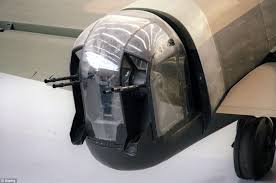
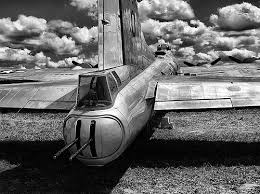
The fact that a Lancaster gunner couldn't wear his parachute seems a pretty major issue, and surely it took longer to move the entire turret than just move the guns, but the possible field of fire looks greater with the turret. Arguably the rear gunner was primarily a look out in any case, at least on night bombers.
The power operated turret was very much a British enthusiasm in the 1930s (although I think the idea was originally French). Two UK companies embraced the technology, Boulton and Paul and Frazer Nash. For a while, it seemed that the Air Ministry wanted "Turrets with Everything".
Whilst they could be seen to offer advantages to bombers, the push to put them on heavy fighters turned out to be misguided - the two examples that reached production being Boulton Paul's own Defiant and the Blackburn Roc (which was actually built by Boulton Paul and fitted with one of their turrets).
The Air Ministry also seriously considered turret versions of the Beaufighter and Mosquito - but these versions did not enter production
As the war progressed, the love affair with the turret faded a bit and even some of the heavy bombers dropped some of their turret positions - notably the Halifax and the Stirling, which both lost their nose turrets.
The Lancaster retained its nose turret throughout the war.
The main advantage of the turret on bombers was not so much the defensive fire they could bring to bear, but the excellent look out posts they gave - especially the rear turret and the mid upper turret. Many bombers were saved by keen sighted gunners spotting German night fighters before the German aeroplane was able to get into position to fire. And the best defence was not to fire back but to warn the pilot to take extreme evasive manoeuvers (such as the "corkscrew") to put the German off his aim.
The fact that the turrets were powered allowed the gunners to swivel from side top side to increase the arc of sky they could keep an eye on.
This book is worth a read if you can get hold of it -
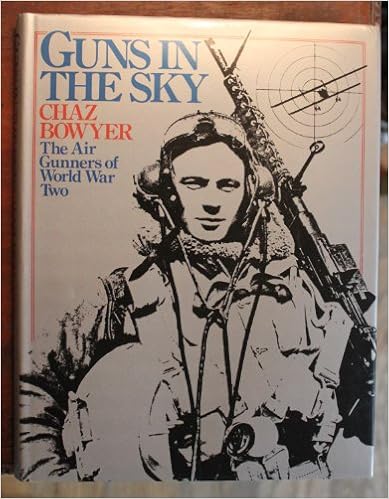
Whilst they could be seen to offer advantages to bombers, the push to put them on heavy fighters turned out to be misguided - the two examples that reached production being Boulton Paul's own Defiant and the Blackburn Roc (which was actually built by Boulton Paul and fitted with one of their turrets).
The Air Ministry also seriously considered turret versions of the Beaufighter and Mosquito - but these versions did not enter production
As the war progressed, the love affair with the turret faded a bit and even some of the heavy bombers dropped some of their turret positions - notably the Halifax and the Stirling, which both lost their nose turrets.
The Lancaster retained its nose turret throughout the war.
The main advantage of the turret on bombers was not so much the defensive fire they could bring to bear, but the excellent look out posts they gave - especially the rear turret and the mid upper turret. Many bombers were saved by keen sighted gunners spotting German night fighters before the German aeroplane was able to get into position to fire. And the best defence was not to fire back but to warn the pilot to take extreme evasive manoeuvers (such as the "corkscrew") to put the German off his aim.
The fact that the turrets were powered allowed the gunners to swivel from side top side to increase the arc of sky they could keep an eye on.
This book is worth a read if you can get hold of it -
Edited by Eric Mc on Friday 9th September 09:08
Eric Mc said:
As the war progressed, the love affair with the turret faded a bit and even some of the heavy bombers dropped some of their turret positions - notably the Halifax and the Stirling, which both lost their nose turrets.
The Lancaster retained its nose turret throughout the war.
An even Avro ditched nose turrets for the Lincoln.The Lancaster retained its nose turret throughout the war.
The field of fire is limited further than may be expected without turrets - in practical terms, deflection shooting is hard enough as it is without being offset from the guns themselves when aiming off any direction than direct astern. The Cheyenne tail on the B17 there in your photograph was not their original design, and ironically is closer to a turret than what they started with which was 2 Browning .50s poking out the back and letter-box type windows to look out. The gunner could hardly get his head behind the gunsight when aiming off.
The B24 Liberator used powered turrets up front, on top, below and behind on the J model.
One of the biggest disadvantages of the powered turret is their weight - often at unhelpful extremities of the airframe!
The B24 Liberator used powered turrets up front, on top, below and behind on the J model.
One of the biggest disadvantages of the powered turret is their weight - often at unhelpful extremities of the airframe!
williamp said:
I'm sure Eric will know, but wasnt it possible for a rear gunner in the lancaster to turn the turret hard to the side, open the back door and then fall out (with parachute), giving a very quick getaway in emergency??
It might have varied a bit between versions. But generally there was no room for the parachute in the turret. The gunner had to retrieve it from the rear fuselage before jumping.There was the case of a gunner of a burning Lanc who found his parachute was already on fire so jumped without it from 18,000 feet. Fortunately some trees and a snow drift broke his fall.
Eric Mc said:
This book is worth a read if you can get hold of it -
£3 on Amazonhttps://www.amazon.co.uk/dp/046004429X
(or £60 if you want a brand new copy...)

Dr Jekyll said:
What were the pros and cons of a rotating turret as on a Lancaster as opposed to fixed position with moveable guns as on Boeings and post war Tupolevs?
The fact that a Lancaster gunner couldn't wear his parachute seems a pretty major issue, and surely it took longer to move the entire turret than just move the guns, but the possible field of fire looks greater with the turret. Arguably the rear gunner was primarily a look out in any case, at least on night bombers.
This is probably a question which involves more effort to get the right answer than the right answer is worth knowing.The fact that a Lancaster gunner couldn't wear his parachute seems a pretty major issue, and surely it took longer to move the entire turret than just move the guns, but the possible field of fire looks greater with the turret. Arguably the rear gunner was primarily a look out in any case, at least on night bombers.
Eric Mc said:
As the war progressed, the love affair with the turret faded a bit and even some of the heavy bombers dropped some of their turret positions - notably the Halifax and the Stirling, which both lost their nose turrets.
The Lancaster retained its nose turret throughout the war.
You forget the B17 interestingly. The love affair with the turret on that never faded and with the B-17E, F amd G they made about 12 000.The Lancaster retained its nose turret throughout the war.
http://www.zen141854.zen.co.uk/b17.jpg
Nice to dig out my 1959 Famous Bombers of the Second World War by William Green again. Go on, ask me a question about the Savoia-Marchetti Sparviero ! Actually, please don't

Well here's another interesting point in that case.
The ball turret for the B17 was so small only small airmen could get in it, also it provided a lot of drag.
Hence why the B-36 plane of 1949 had 6 low drag remotely operated turrets. Which, like the bomber, were soon outdated.
The ball turret for the B17 was so small only small airmen could get in it, also it provided a lot of drag.
Hence why the B-36 plane of 1949 had 6 low drag remotely operated turrets. Which, like the bomber, were soon outdated.
Edited by Gandahar on Friday 9th September 15:52
My grandfather applied to be an air gunner, but his older brother forbade it, on the basis that the family had already lost enough members and he wasn't going to lose his little brother. I think everyone was aware of the terrible attrition rate. He joined the dental corps instead!
And the Yorkshire Air Museum has a collection of gun turrets.
And the Yorkshire Air Museum has a collection of gun turrets.
Gandahar said:
Well here's another interesting point in that case.
The ball turret for the B17 was so small only small airmen could get in it, also it provided a lot of drag.
Hence why the B-36 plane of 1949 had 6 low drag remotely operated turrets. Which, like the bomber, were soon outdated.
The B-29's centralised turret control system predated the B-36, and saw action. There's a nice YouTube video somewhere of a restored system being demonstrated outside the aircraft.The ball turret for the B17 was so small only small airmen could get in it, also it provided a lot of drag.
Hence why the B-36 plane of 1949 had 6 low drag remotely operated turrets. Which, like the bomber, were soon outdated.
Edited by Gandahar on Friday 9th September 15:52
Gassing Station | Boats, Planes & Trains | Top of Page | What's New | My Stuff