
WW2 RAF roundels
Discussion


Read an interesting snippet in todays Times about the RAF and RAAF dropping the Red out of the roundel in the Far East Campaigns during WW2 to stop misidentification. Also, it claimed that the American Spitfires and also some British aircraft were marked with a US "Star" and a Union Jack on the tail.
I would ask then if it was possible that a British Aircraft, belonging to a British Unit would be showing what appeared to be US markings?. What was the reason behind this, if so?.
This is something I've never considered or even seen before and find it fascinating.
I would ask then if it was possible that a British Aircraft, belonging to a British Unit would be showing what appeared to be US markings?. What was the reason behind this, if so?.
This is something I've never considered or even seen before and find it fascinating.
During Operation Torch, British roundels were replaced with the US star roundel. The main reasons were:
1. Reduce risk of friendly fire as our roundel was very similar to Vichy French Air Force's.
2. It was thought that the French might not fire on 'US' aircraft but certainly would on British aircraft as vengeance for Mers el-Kebir and other attacks on Vichy forces.
1. Reduce risk of friendly fire as our roundel was very similar to Vichy French Air Force's.
2. It was thought that the French might not fire on 'US' aircraft but certainly would on British aircraft as vengeance for Mers el-Kebir and other attacks on Vichy forces.
All true - apart from the Union Jack on the tail. As far as I know, tail markings, if carried, generally consisted of the normal red white and blue fin flash - or white and blue.
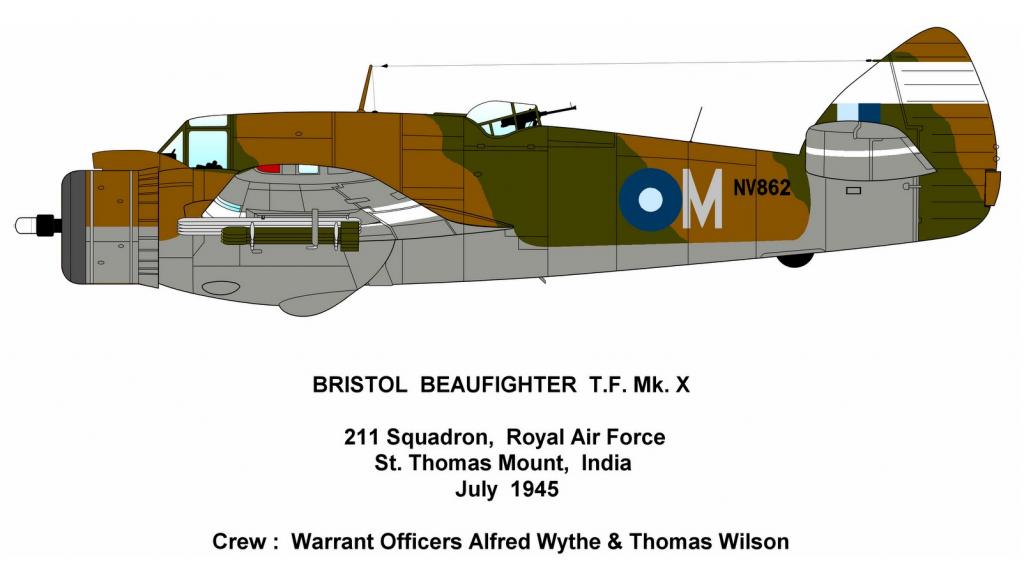
In the far east the red was deleted from the RAF and Australian markings because there was fear that a red dot in the roundel might cause confusion as the Japanese marking (the Honimaru) was a red disk.
This is a model I built of an Australian Spitfire Mk VIII showing the modified roundels -

The Americans also had to modify their markings. Pre the end of 1941, US markings also had a red dot in the centre
Here's a Wildcat model I also built depicting a US Navy machine in mid 1941 colours-

By 1942 the aircraft were camouflaged and the red centres removed -

In 1942, the British and the Americans took part in the first large scale combined operation of the war, Operation Torch, the landings in North Africa. To ensure American anti-Aircraft gunners didn't fire on British aircraft they didn't recognise, it was decided that the British aircraft taking part would carry American style roundels -

In the far east the red was deleted from the RAF and Australian markings because there was fear that a red dot in the roundel might cause confusion as the Japanese marking (the Honimaru) was a red disk.
This is a model I built of an Australian Spitfire Mk VIII showing the modified roundels -
The Americans also had to modify their markings. Pre the end of 1941, US markings also had a red dot in the centre
Here's a Wildcat model I also built depicting a US Navy machine in mid 1941 colours-
By 1942 the aircraft were camouflaged and the red centres removed -
In 1942, the British and the Americans took part in the first large scale combined operation of the war, Operation Torch, the landings in North Africa. To ensure American anti-Aircraft gunners didn't fire on British aircraft they didn't recognise, it was decided that the British aircraft taking part would carry American style roundels -
Edited by Eric Mc on Saturday 18th March 22:23
Simpo Two said:
Eric Mc said:
All true - apart from the Union Jack on the tail.
Union flag; the jack is what it flies from 
It is often stated that the Union Flag should only be described as the Union Jack when flown in the bows of a warship, but this is a relatively recent idea. From early in its life the Admiralty itself frequently referred to the flag as the Union Jack, whatever its use, and in 1902 an Admiralty Circular announced that Their Lordships had decided that either name could be used officially. Such use was given Parliamentary approval in 1908 when it was stated that “the Union Jack should be regarded as the National flag”.
Cdr Bruce Nicolls OBE RN (Retd)
One of the BBMF Hurricanes is in the '44 SE Asia Command scheme:
http://www.raf.mod.uk/bbmf/theaircraft/hurricanepz...
http://www.raf.mod.uk/bbmf/theaircraft/hurricanepz...
Hi Eric
I've made 2 airfix 1/72 models recently (hurricane and a Messerschmitt 109), purely as an experiment and to see if my abilities were up to the task. I confess also to having had a look in the "scale model" subforum and have been really blown away by the quality and hard work people put into them.
Are Airfix / Revell 1/72 models a good starting point, also, do you know of a reliable and accurate resource which has different paint patterns / roundels for the different theatres? (I take it Ebay is a good place to obtain different roundels?).
I know I'm slighty veering off topic but it is kind of in the same ball park!.
I've made 2 airfix 1/72 models recently (hurricane and a Messerschmitt 109), purely as an experiment and to see if my abilities were up to the task. I confess also to having had a look in the "scale model" subforum and have been really blown away by the quality and hard work people put into them.
Are Airfix / Revell 1/72 models a good starting point, also, do you know of a reliable and accurate resource which has different paint patterns / roundels for the different theatres? (I take it Ebay is a good place to obtain different roundels?).
I know I'm slighty veering off topic but it is kind of in the same ball park!.
texaxile said:
Hi Eric
I've made 2 airfix 1/72 models recently (hurricane and a Messerschmitt 109), purely as an experiment and to see if my abilities were up to the task. I confess also to having had a look in the "scale model" subforum and have been really blown away by the quality and hard work people put into them.
Are Airfix / Revell 1/72 models a good starting point, also, do you know of a reliable and accurate resource which has different paint patterns / roundels for the different theatres? (I take it Ebay is a good place to obtain different roundels?).
I know I'm slighty veering off topic but it is kind of in the same ball park!.
I'll let Eric reply on the kits as I don't build 1/72 aircraft, but recent Airfix kits in general have improved dramatically.I've made 2 airfix 1/72 models recently (hurricane and a Messerschmitt 109), purely as an experiment and to see if my abilities were up to the task. I confess also to having had a look in the "scale model" subforum and have been really blown away by the quality and hard work people put into them.
Are Airfix / Revell 1/72 models a good starting point, also, do you know of a reliable and accurate resource which has different paint patterns / roundels for the different theatres? (I take it Ebay is a good place to obtain different roundels?).
I know I'm slighty veering off topic but it is kind of in the same ball park!.
www.hannants.co.uk is a great source for decals (and kits) with a good Search system.
Airfix was revived in 2006 when they were bought by Hornby. Most of the kits they've produced since then have been extremely buildable - if a bit fiddly here and there.
Pre-2006 it's a mixed bag. They had a kind of a golden period from about 1974 to 1980 but even those kits would not be up to modern standards.
Revell are broadly similar - with their "modern" period beginning in the mid 1990s with any kits from that period on being pretty acceptable.
Many mainstream kit manufacturers have long histories dating back to the early 1950s and some kits from these earlier periods are still in production - so you do need to do your homework. I find this website pretty good if you want to trace a models provenance -
https://www.scalemates.com/
As for decals, there are as many specialist decal manufacturers as there are kit manufacturers. I often use decals from these specialist companies rather than from the kit. Modern kit decals are usually pretty good but if you have bought an old kit the decals may not be that good. I sometimes use specialist decals just to produce something different.
Pre-2006 it's a mixed bag. They had a kind of a golden period from about 1974 to 1980 but even those kits would not be up to modern standards.
Revell are broadly similar - with their "modern" period beginning in the mid 1990s with any kits from that period on being pretty acceptable.
Many mainstream kit manufacturers have long histories dating back to the early 1950s and some kits from these earlier periods are still in production - so you do need to do your homework. I find this website pretty good if you want to trace a models provenance -
https://www.scalemates.com/
As for decals, there are as many specialist decal manufacturers as there are kit manufacturers. I often use decals from these specialist companies rather than from the kit. Modern kit decals are usually pretty good but if you have bought an old kit the decals may not be that good. I sometimes use specialist decals just to produce something different.

So was the 'no red' roundel with added bars yet another confusion-avoidance device?

Website credit... https://www.flyinglegends.com/aircraft/supermarine...
I thought I'd read somewhere, in the deep and distant past, that taking out the red wasn't always enough to avoid confusion with the Japanese, because shape is more important than colour in recognition terms. The external shape of the US star is circular, so the Americans, and the British (FAA at least) in the Pacific Theatre added bars to redefine the shape of their aircraft markings, thereby making them far more recognisable at distance...
Website credit... https://www.flyinglegends.com/aircraft/supermarine...
I thought I'd read somewhere, in the deep and distant past, that taking out the red wasn't always enough to avoid confusion with the Japanese, because shape is more important than colour in recognition terms. The external shape of the US star is circular, so the Americans, and the British (FAA at least) in the Pacific Theatre added bars to redefine the shape of their aircraft markings, thereby making them far more recognisable at distance...
Gassing Station | Boats, Planes & Trains | Top of Page | What's New | My Stuff