
Nuclear Planes
Discussion


Following on from this comment:
in this thread:
https://www.pistonheads.com/gassing/topic.asp?h=0&...
and not wanting to derail it, I would like to know what the propulsive effort was in the nuclear planes, ie, how did/do they work?
Did the reactor heat water, make steam, turn turbine, provide thrust? If so, how compact was the reactor unit and was it really a viable solution (not with standing the nuclear accident aspects) space wise?
TooMany2cvs said:
J4CKO said:
They did try developing nuclear planes in the fifties but they didnt really work.
They worked. It was just that they twigged that plane crashes might be even less fun than currently, together with the shielding needed for the reactor.https://www.pistonheads.com/gassing/topic.asp?h=0&...
and not wanting to derail it, I would like to know what the propulsive effort was in the nuclear planes, ie, how did/do they work?
Did the reactor heat water, make steam, turn turbine, provide thrust? If so, how compact was the reactor unit and was it really a viable solution (not with standing the nuclear accident aspects) space wise?
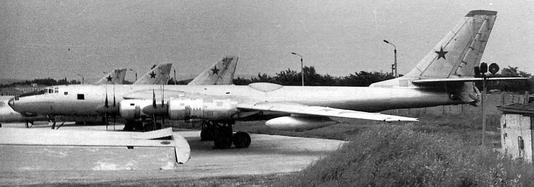
No nuclear planes were actually ever built. The nearest they got to it was flying a lightweight nuclear reactor in a specially converted B-36 (christened NB-36). The reactor did not power the engines. They were powered in the normal way.

The actual nuclear bomber proposal would have looked like this -

The test work carried out with the NB-36 highlighted all sorts of problems - the chief one being weight, a lot of which was connected with the shielding required to protect the crew from radiation. And, has already been mentioned, the genuine worry about what would happen in the event of a crash.
In a genuine nuclear powered aircraft, the engines would be modified jet engines but the heat for the jets would be generated from the nuclear reactor rather than kerosene.
The actual nuclear bomber proposal would have looked like this -
The test work carried out with the NB-36 highlighted all sorts of problems - the chief one being weight, a lot of which was connected with the shielding required to protect the crew from radiation. And, has already been mentioned, the genuine worry about what would happen in the event of a crash.
In a genuine nuclear powered aircraft, the engines would be modified jet engines but the heat for the jets would be generated from the nuclear reactor rather than kerosene.
S6PNJ said:
and not wanting to derail it, I would like to know what the propulsive effort was in the nuclear planes, ie, how did/do they work?
There were two types, the direct air cycle where the reactor was in the engine and the indirect air cycle where the reactor was outside. Director air cycle meant that as well as the radiation issue for the flight crew (needing lead shielding) it also spewed radiation out of the engine onto everything it would have flown over.America was working on both systems.
Direct air cycle.

A different direct air cycle design

^^^^^
Just noticed the indirect diagram is another version of a direct air cycle, the indirect (as reminded to me by watching the video clip below) has 2 airways one enclosed within the reactor and the other connected to the jet engine and the heat is transferred as the image below.

Edited by FourWheelDrift on Friday 13th October 13:57
Eric Mc said:
In a genuine nuclear powered aircraft, the engines would be modified jet engines but the heat for the jets would be generated from the nuclear reactor rather than kerosene.
Thanks Eric, a question from the quote above - how would the reactor provide the heat for the jets? Kerosene burns and expands the air rapidly due to the controlled 'explosion'. The nuclear heat can only (?) come from heating a suitable fluid (nuclear core: heat exchanger: liquid) and this cannot heat air (air: heat exchanger: propulsive effort in engine) sufficiently fast enough to provide sufficient power for an aero engine surely?Or have I got my aero 'fluid' dynamics ar*e about face?
S6PNJ said:
Thanks Eric, a question from the quote above - how would the reactor provide the heat for the jets? Kerosene burns and expands the air rapidly due to the controlled 'explosion'. The nuclear heat can only (?) come from heating a suitable fluid (nuclear core: heat exchanger: liquid) and this cannot heat air (air: heat exchanger: propulsive effort in engine) sufficiently fast enough to provide sufficient power for an aero engine surely?
Or have I got my aero 'fluid' dynamics ar*e about face?
Isn't the rate of heating of the air separate from how you heat it? The faster you heat it, the faster it expands, whether thats direct from the reactor, or via an intermediary fluid? Both of which would seem slower than burning it to me. But then if you heat it slower presumably you can design the turbines around that speed and it might remove the need for a gear box to get a slow bypass fan on the front.Or have I got my aero 'fluid' dynamics ar*e about face?
All you need to know here Planes that never flew. The atomic bomber.
S6PNJ said:
Thanks Eric, a question from the quote above - how would the reactor provide the heat for the jets? Kerosene burns and expands the air rapidly due to the controlled 'explosion'. The nuclear heat can only (?) come from heating a suitable fluid (nuclear core: heat exchanger: liquid) and this cannot heat air (air: heat exchanger: propulsive effort in engine) sufficiently fast enough to provide sufficient power for an aero engine surely?
Or have I got my aero 'fluid' dynamics ar*e about face?
In a gas turbine the combustion is a constant pressure process, actually there's a slight pressure drop of around 5% between the compressor and the combustor to prevent reverse flow of hot gas.Or have I got my aero 'fluid' dynamics ar*e about face?
Simpo Two said:
I can't see how just having something very hot propels an aeroplane directly; as said you need something to expand rapidly somewhere, ie combustion.
The combustion process doesn't cause an expansion, the combustion is a constant pressure process in jet engines. The air has already been compressed and combustion is used to add energy to the compressed air so that it has the ability to do more work than was done compressing it. As I said earlier the compressed air leaving the compressor is actually at a higher pressure, albeit only a few percent, than the air leaving the combustor. If this were not the case, hot combustion gases could travel outside the combustor and melt things. Remember a fluid flows from high to low pressure.See The Brayton Cycle for more information
It's not the hot gas that propels the aircraft, it's the fact you're allowing that high pressure, hot gas to expand through a nozzle and in doing so reaches very high speeds. This is what creates thrust. In a perfect, frictionless, lossless universe a compressor would supply just enough compressed air, to power the turbine driving the compressor. But this would be perpetual motion and we don't have the luxuries of living in a perfect world so we need to add energy to the compressed air to allow it to do useful work.
Just to further add, the huge increase in temperature also means the turbine can do more work. Euler's Turbomachinery equation shows that you can extract the maximum power from a turbine if the difference in temperature between the air in front and behind is also at a maximum. Which is why turbines are designed to operate in temperatures above their melting points.
Edited by Fugazi on Friday 13th October 16:41

Simpo Two said:
I can't see how just having something very hot propels an aeroplane directly; as said you need something to expand rapidly somewhere, ie combustion.
In any engine it's the addition of heat that makes it work. The fact that combustion occurs in the process of generating heat is only secondary. A solar Stirling cycle engine proves this, being a heat engine without combustion.You could have a solar powered gas turbine if you could concentrate the solar energy enough.
I recall a design for a nuclear powered global endurance cruise missile. The plan being it would fly over enemy territory spewing radioactive exhaust and dropping the odd bomb now and again.
That would have been just lovely.
https://en.m.wikipedia.org/wiki/Project_Pluto
That would have been just lovely.
https://en.m.wikipedia.org/wiki/Project_Pluto
Mr E said:
I recall a design for a nuclear powered global endurance cruise missile. The plan being it would fly over enemy territory spewing radioactive exhaust and dropping the odd bomb now and again.
That would have been just lovely.
https://en.m.wikipedia.org/wiki/Project_Pluto
Blimey.That would have been just lovely.
https://en.m.wikipedia.org/wiki/Project_Pluto
The bit no ones every mentioned, and i suspect the massive elephant in the room for nuclear propulsion of things like aircraft, is how you can actually effectively and dynamically throttle the output?
Conventional reactors are made up of hundreds (thousands for fixed installations) of tonnes of structure and coolant, so changing the control rod position changes the Neutron Flux, and generates more heat, but that heat turns into a relatively slow increase in temperature due to all that mass. An airborne reactor would have to either be very dynamically throttled our have its output dispersed in some way that doesn't generate thrust in order to control the plane in typical flying conditions surely?
Conventional reactors are made up of hundreds (thousands for fixed installations) of tonnes of structure and coolant, so changing the control rod position changes the Neutron Flux, and generates more heat, but that heat turns into a relatively slow increase in temperature due to all that mass. An airborne reactor would have to either be very dynamically throttled our have its output dispersed in some way that doesn't generate thrust in order to control the plane in typical flying conditions surely?
Max_Torque said:
The bit no ones every mentioned, and i suspect the massive elephant in the room for nuclear propulsion of things like aircraft, is how you can actually effectively and dynamically throttle the output?
Conventional reactors are made up of hundreds (thousands for fixed installations) of tonnes of structure and coolant, so changing the control rod position changes the Neutron Flux, and generates more heat, but that heat turns into a relatively slow increase in temperature due to all that mass. An airborne reactor would have to either be very dynamically throttled our have its output dispersed in some way that doesn't generate thrust in order to control the plane in typical flying conditions surely?
Well, chain reactions have been known to release energy quite quickly...Conventional reactors are made up of hundreds (thousands for fixed installations) of tonnes of structure and coolant, so changing the control rod position changes the Neutron Flux, and generates more heat, but that heat turns into a relatively slow increase in temperature due to all that mass. An airborne reactor would have to either be very dynamically throttled our have its output dispersed in some way that doesn't generate thrust in order to control the plane in typical flying conditions surely?
Max Torque is right - the neutron reactions take a long time to build in a controlled manner, so that rules only control of the nuclear reaction out as the throttling method, I'd guess they would aim for a combination of reaction and airflow throttling to control it, but then you run into the cooling envelope of the reactor.
Project Pluto above is a bit frightening, that really is commitment to a MAD-weapon.
Project Pluto above is a bit frightening, that really is commitment to a MAD-weapon.
Gassing Station | Boats, Planes & Trains | Top of Page | What's New | My Stuff