
WWII aircraft - cost of production
Discussion


Interesting document showing the wartime cost of production for US aircraft types from 1939 to 1945.
I am not clever enough to include an image of the pdf doc, but here is the link:
https://ww2aircraft.net/forum/threads/us-world-war...
Interesting that costs reduced over time - I guess as factories became more efficient? Or as government buyers drove harder bargains?
and that you could produce four Mustangs for the cost of a single Black Widow.
and that a C-46 was two and a half times more expensive than a C-47.
I guess the prices shown are what the US government had to pay for the aircraft, I wonder what profit margin the manufacturers worked on?
I am not clever enough to include an image of the pdf doc, but here is the link:
https://ww2aircraft.net/forum/threads/us-world-war...
Interesting that costs reduced over time - I guess as factories became more efficient? Or as government buyers drove harder bargains?
and that you could produce four Mustangs for the cost of a single Black Widow.
and that a C-46 was two and a half times more expensive than a C-47.
I guess the prices shown are what the US government had to pay for the aircraft, I wonder what profit margin the manufacturers worked on?
The more of a particular machine that's built, the lower the unit cost can be. With aircraft, a huge amount is spent on design, prototype testing, creation of jigs and tooling and in World War 2, constructing whole factories.
Once the production models start rolling off the line, all that cost can start to be recouped although it can take a few years before the particular model begins to create a profit for the company.
The B-29 was one of the most complicated weapons systems devised at that time and I'm not surprised it was an expensive aircraft to buy - even by 1940s standards.
Once the production models start rolling off the line, all that cost can start to be recouped although it can take a few years before the particular model begins to create a profit for the company.
The B-29 was one of the most complicated weapons systems devised at that time and I'm not surprised it was an expensive aircraft to buy - even by 1940s standards.
The UK made use of shadow factories because the aircraft manufacturers in Britain were just not big enough pre-war to be able to build aicraft in the quantity needed.
In the US, massive brand new factories were built by the government and then loaned to the manufacturers to enable mass production. Ford had a brand new factory built at Detroit, Willows Run where they made B-24s.
Bell had a massive factory built for them in Atlanta where they built B-29s.
In the US, massive brand new factories were built by the government and then loaned to the manufacturers to enable mass production. Ford had a brand new factory built at Detroit, Willows Run where they made B-24s.
Bell had a massive factory built for them in Atlanta where they built B-29s.
Ayahuasca said:
I wonder if wartime aircraft, etc producers pulled the same stunts that today's defence contractors do - charging a hundred pounds for a rivet costing 50 pence or such like..? Or were they held to special wartime costs?
Most of that cost is due to tracibilty so probably not. Eric Mc said:
In the US, massive brand new factories were built by the government and then loaned to the manufacturers to enable mass production. Ford had a brand new factory built at Detroit, Willows Run where they made B-24s.
The astonishing 3.5m sq ft Willow Run plant was actually the other way around, sort of, in that Henry Ford insisted that the factory it was funded and built by Ford (the airfield area was farmland owned by Henry Ford) and then sold back to the US Govt, which would then lease the factory back to Ford for the B-24 production for the duration of the war.
williamp said:
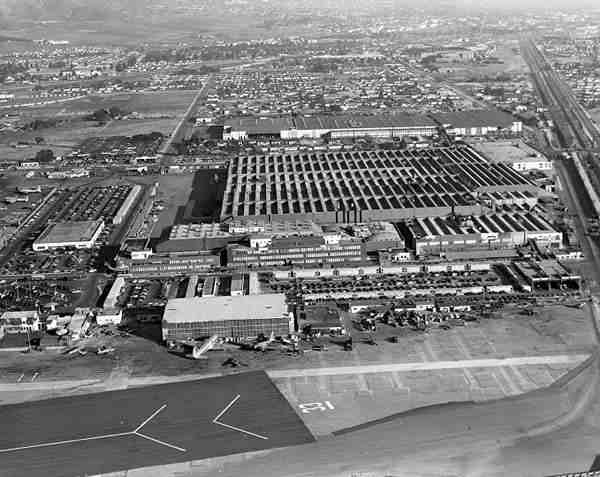
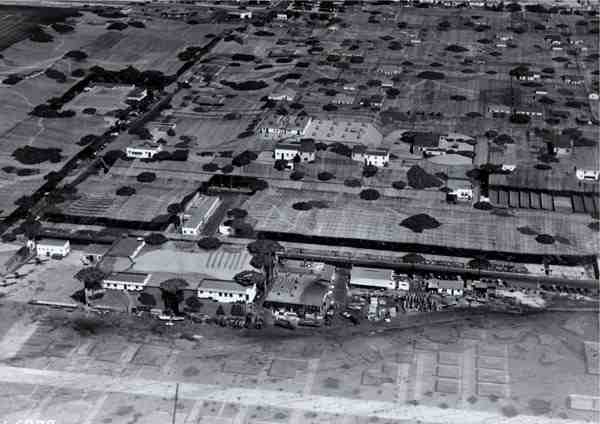
Another interetsing fact about the US factories is that they were camouflarged: all of it!
That's amazing, I never realised it could be done so well. I was expecting the normal army foliage camouflage not fake houses and fields.Having said that I can't imagine there were many/any bombing raids over the US so what was the point?
cb31 said:
That's amazing, I never realised it could be done so well. I was expecting the normal army foliage camouflage not fake houses and fields.
Although I have to agree it is impressive, I suspect the wider picture with a 2 mile 
cb31 said:
williamp said:
Another interetsing fact about the US factories is that they were camouflarged: all of it!
That's amazing, I never realised it could be done so well. I was expecting the normal army foliage camouflage not fake houses and fields.Having said that I can't imagine there were many/any bombing raids over the US so what was the point?
https://en.wikipedia.org/wiki/Bombardment_of_Fort_...
https://en.wikipedia.org/wiki/Lookout_Air_Raids
https://en.wikipedia.org/wiki/Amerika_Bomber
I also believe in the months after Pearl Harbour there was some concern (from the public) that Japan might try to invade California. I wonder if the camouflage was put in place as much as anything to reassure the American public?
Zetec-S said:
I also believe in the months after Pearl Harbour there was some concern (from the public) that Japan might try to invade California. I wonder if the camouflage was put in place as much as anything to reassure the American public?
This and the subsequent camo of aircraft factories around the LA area in particular, was as a result of the Ellwood Oil Field attack not long after Pearl Harbor.https://en.wikipedia.org/wiki/Bombardment_of_Ellwo...
Gassing Station | Boats, Planes & Trains | Top of Page | What's New | My Stuff