
Re-engining commercial aircraft
Discussion


This article linked from Flightradar got me thinking: https://www.cnbc.com/2026/10/24/spirit-airlines-pl...
35 Pratt & Whitney GTF fitted A320 Neos have apparently been scrapped, some less than 4 years old. I’ve also seen reports of some of the ex-Norwegian 787s at Prestwick with the troublesome Rolls Royce engines being scrapped at a few years old as well, so the question is: how difficult/expensive is it to, for example, fit CFM engines on a P&W A320? I know the USAF fitted newer engines on the KC-135s and some other aircraft, is it one of these things that is possible but just isn’t economical, especially with all the spare parts you could extract by scrapping the aircraft?
35 Pratt & Whitney GTF fitted A320 Neos have apparently been scrapped, some less than 4 years old. I’ve also seen reports of some of the ex-Norwegian 787s at Prestwick with the troublesome Rolls Royce engines being scrapped at a few years old as well, so the question is: how difficult/expensive is it to, for example, fit CFM engines on a P&W A320? I know the USAF fitted newer engines on the KC-135s and some other aircraft, is it one of these things that is possible but just isn’t economical, especially with all the spare parts you could extract by scrapping the aircraft?
It's mostly that they're worth more as parts than specific engine issues - and any problems or slightly iffy history/early build number and the decision is easy. The value is ultimately in all the bits, not the hull.
Seems insane but there you are. There's been stuff scrapped that was basically brand new.
Seems insane but there you are. There's been stuff scrapped that was basically brand new.
It's all about the economics.
One of the biggest re-engining programmes outside the military arena was the replacement of older generation Pratt and Whitney JT3D turbofans with more modern CFM 56s turbofans on the Douglas DC-8 62 and 63 family (becoming 72 and 73 models respectively).
It enabled those converted DC-8s to have useful economic lives into the early 2000s.
Look at the reputed cost to re-engineer the B52 bomber fleet with new RR engines. Requires new engine pods, that effects the airflow over the wing so alterations there.
Supposedly the most expensive re-engined aircraft modifications in aviation history. You just know £2B is nowhere near right either. It’s going to cost way more.
Supposedly the most expensive re-engined aircraft modifications in aviation history. You just know £2B is nowhere near right either. It’s going to cost way more.
bergclimber34 said:
Did they not do that with the the 707, replacing old turbojets with fans, certainly not all were done you still see the odd military 707 with jets I think or very old turbofans
The 707 family has had numerous different engines over its long life. The very first models of 707 and the miklitary KC-135 (which is quite a different aeroplane in many ways) were fitted with the Pratt and Whitney J57/JT3C turbojet engine (J57 is the military designation, JT3C is the civil designation).Later versions of the civil 707 were fitted with the Pratt and Whitney JT3D low bypass turbofan and also the Rolls Royce Conway low bypass turbofan.
In the early 1980s, as 707s were being retired from civil use, the USAF bought up a lot of old 707 airframes andused their JT3D turbofans to re-engine a large part of the KC-135 fleet, Later, more KC-135s were re-engined with the CFM56 high bypass turbofan.
As far as I am aware, none of the KC-135s left in service use their original J57s.
The 707 family also went through a lot of wing shape development. Don't forget that the erly 707s were at the dawn of jet airliner technology and it took a few goes to get an efficient wing shape for the design.
bergclimber34 said:
Did they not do that with the the 707, replacing old turbojets with fans, certainly not all were done you still see the odd military 707 with jets I think or very old turbofans
Yep I was crew in RAF sentry E3-D. We had CFM56 instead of the original 707 P&W. Whilst the CFM were quieter and more efficient, it did pose some challenges. The CFM is considerably bigger in diameter. This means the engines hung closer to the ground.
This caused problems, along with the radome support legs causing weather cocking in crosswinds. This meant we had lower crosswind limits and only 4deg or back angle when landing in heavier fuel stares before scraping an engine cowling.
I think in my 9 years in E3D, we had 4 or 5 scrapes. Bearing in mind to generate all the power for the radar our CFM had 2x 90KVA generators hung on the bottom of the engine.
Could be an expensive scrape.
MB140 said:
Yep I was crew in RAF sentry E3-D. We had CFM56 instead of the original 707 P&W.
Whilst the CFM were quieter and more efficient, it did pose some challenges. The CFM is considerably bigger in diameter. This means the engines hung closer to the ground.
This caused problems, along with the radome support legs causing weather cocking in crosswinds. This meant we had lower crosswind limits and only 4deg or back angle when landing in heavier fuel stares before scraping an engine cowling.
I think in my 9 years in E3D, we had 4 or 5 scrapes. Bearing in mind to generate all the power for the radar our CFM had 2x 90KVA generators hung on the bottom of the engine.
Could be an expensive scrape.
Boeing did look at the possibility of running a civilian re-engining programme for the airliner variants of the later 707s using CFM56s - in a similar manner to the way late profuction Douglas DC-8s received CFM56s. However, as you point out above, the short undercarriage of the 707 made the fitting of CFM56s a bit more problematic on the 707 and it was one of the reasons why the programme didn't go beyond a single test aicraft. Whilst the CFM were quieter and more efficient, it did pose some challenges. The CFM is considerably bigger in diameter. This means the engines hung closer to the ground.
This caused problems, along with the radome support legs causing weather cocking in crosswinds. This meant we had lower crosswind limits and only 4deg or back angle when landing in heavier fuel stares before scraping an engine cowling.
I think in my 9 years in E3D, we had 4 or 5 scrapes. Bearing in mind to generate all the power for the radar our CFM had 2x 90KVA generators hung on the bottom of the engine.
Could be an expensive scrape.
The DC-8 had a taller undercarriage than the 707 and this made the DC-8 re-engining programme less compex and more feasible.
Austin Prefect said:
There are plenty of C47s re engined with turboprops. But that involves a lot of modification and is essentially using a legal loophole to build effectively brand new C47s without having to recertify a new design.
The nmost successful has been the Basler conversions. There have been quite a few turboprop DC-3 attempts over the decades - Basler BT-67
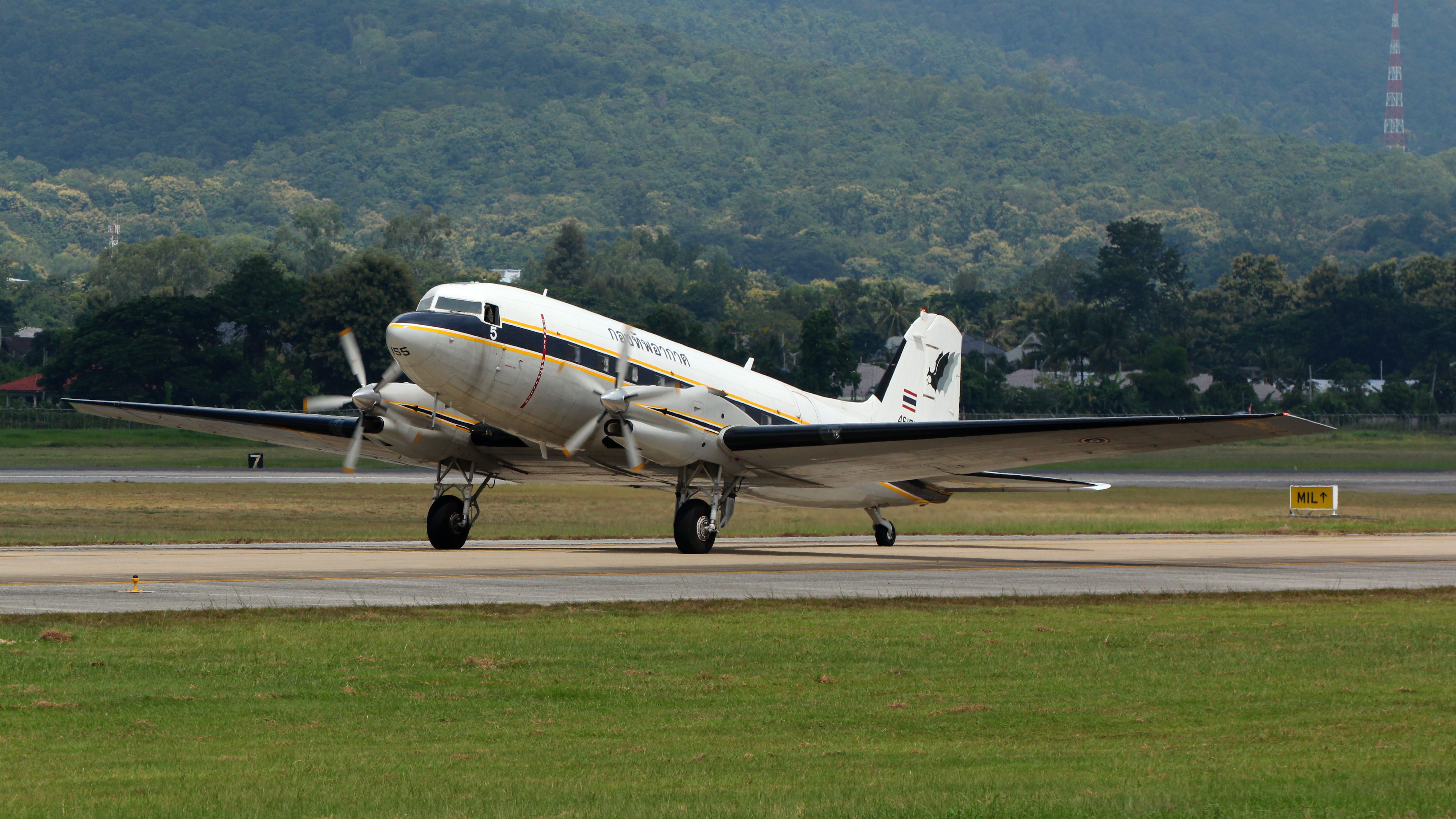
Conroy Tri-Turbo DC-3

Dart Dakota

JoshSm said:
It's mostly that they're worth more as parts than specific engine issues - and any problems or slightly iffy history/early build number and the decision is easy. The value is ultimately in all the bits, not the hull.
Seems insane but there you are. There's been stuff scrapped that was basically brand new.
All those Nimrods for one.Seems insane but there you are. There's been stuff scrapped that was basically brand new.
bergclimber34 said:
I am sure I saw footage from FRA a few years back that shows a USAF 707 with older engines, they were much much narrower, might be something else, but you can usually tell a fan by the width of the intakes
There are still some 707s (NOT KC-135 tankers) flying with the low bypass Pratt & Whitney JT3D turbofans. These would include a number of Boeing AWACs type aircraft which are essentially Boeing 707-320Cs kitted out with sophisticated AEW radar suite.This is a USAF AWACS which carries the JT3Ds

This is an RAF E-3 Sentry which is effectively the same but it is a later production model fitted witrh the CFM56

Regarding the C-135 family, they started out looking like this, with the J57 -

Some were re-engined with JT3Ds -
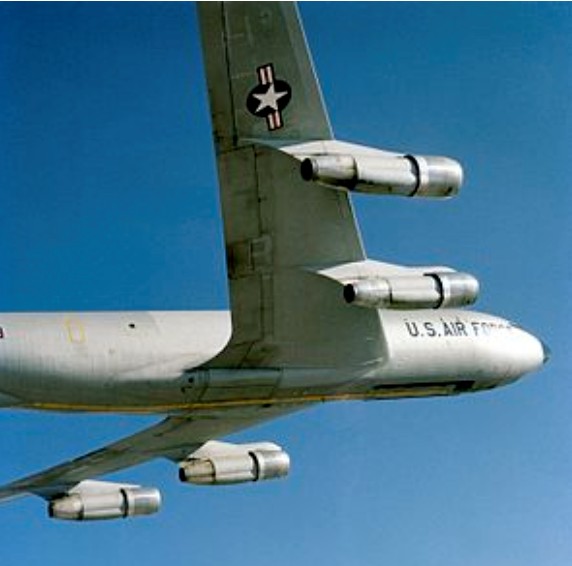
And now the vast bulk still in service have the CFM56s -

The USAF has traditionally used its own designations for the jet emgines it has used over the years, which can cause a bit of confusion.
Military - J57 = Civil - JT3C (turbojet)
Military - TF33 = Civi - JT3D (turbofan)
Military - CFM56 = Civil - CFM56
I assume the reason why the CFM56 did notr get a separate military designation is that it was not devloped under any sort of US military contract and was co-developed with SNECMA in France for civil purposes.
The turbofan TF33/JT3D was very smokey by today’s standards but the pure turbojet J57/JT3C was VERY Smokey - especially when they used their water injection system for take off.
There’s a clip on You Tube from the movie “A Gathering of Eagles” which shows a mass take off of early model B-52s which shows how much smoke the J57s could create.
There’s a clip on You Tube from the movie “A Gathering of Eagles” which shows a mass take off of early model B-52s which shows how much smoke the J57s could create.
I have seen a few older B52 models, not that old mind, and they do smoke a lot, maybe they wont at all with the RR engines!!
I always wonder why some engines smoke a lot.
The J79 used by lots of planes smokes like mad, the Mig29 engine also does quite a lot, in fact a lot of Russian stuff does, even props.
The Bucc used to smoke a bit even the Harrier, yet you never saw a smokey LIghtning!!
As for the worst has to be the early TSR2 flights that engine was sooty as hell!!
bergclimber34 said:
I have seen a few older B52 models, not that old mind, and they do smoke a lot, maybe they wont at all with the RR engines!!
I always wonder why some engines smoke a lot.
The J79 used by lots of planes smokes like mad, the Mig29 engine also does quite a lot, in fact a lot of Russian stuff does, even props.
The Bucc used to smoke a bit even the Harrier, yet you never saw a smokey LIghtning!!
As for the worst has to be the early TSR2 flights that engine was sooty as hell!!
Older jet engines were limited in how high their peak turbine and exhaust temperatures could be, due to material and machining limits. So at high thrust levels (and high fuel flows) they incompletely burned a lot of the fuel, which resulted in smoke. Some engines deliberately ran a 'rich' fuel flow to reduce those peak temperatures (like how piston engines run very rich at full power so the excess fuel carries away some of the heat), and where water injection was used it dropped the combustion temperature even more, leading to less complete combustion (even more smoke) but more thrust due to the increase in mass being moved through the engine. I always wonder why some engines smoke a lot.
The J79 used by lots of planes smokes like mad, the Mig29 engine also does quite a lot, in fact a lot of Russian stuff does, even props.
The Bucc used to smoke a bit even the Harrier, yet you never saw a smokey LIghtning!!
As for the worst has to be the early TSR2 flights that engine was sooty as hell!!
Modern multi-stage high-bypass turbofans not only move a lot of air through and around the engine core and allow different stages of the engine to turn at their optimal speed so there's adequate air supply without sacrificing efficiency, but have materials and tolerances to withstand much higher internal and exhaust temperatures so every drop of fuel is burned as thoroughly and as cleanly as possible.
Even things like oil seal technology has improved since the 1950s and 1960s - the old seals used to pass an amount of lubricating oil into the turbine or jet pipe at low thrust levels, which was then burned off as smoke on takeoff as the exhaust heated up. Modern pressurised seals don't do that to anything like the same extent (if at all).
It's not impossible as stated and in some cases the engines might be the same size so no issues.
However it's all economics, if you can sell your plane now for 50 million in parts and buy one with the engine you want for 60 million unless you can get a conversion for 10 million it makes no sense. To replace an engine means all new software (or a very expensive STC), parts, down time and labour. New engines aren't cheap. Cowls are expensive so all the parts to convert are often more than the cost to buy a plane with the engine you want and there a running a weird hybrid when you want to sell. The USAF did it because they couldn't buy a new plane easily.
However it's all economics, if you can sell your plane now for 50 million in parts and buy one with the engine you want for 60 million unless you can get a conversion for 10 million it makes no sense. To replace an engine means all new software (or a very expensive STC), parts, down time and labour. New engines aren't cheap. Cowls are expensive so all the parts to convert are often more than the cost to buy a plane with the engine you want and there a running a weird hybrid when you want to sell. The USAF did it because they couldn't buy a new plane easily.
I suppose that would then make the converted plane harder to sell down the line further increasing the chances of an early encounter with a digger. Given that Airbus build slots are like gold dust it just seems bizarre that even some CFM Neos have gone for scrap but I guess it’s all down to the spares in the withdrawn aircraft. Thanks all!
Gassing Station | Boats, Planes & Trains | Top of Page | What's New | My Stuff