
Byebye NASA Constellation and return to the Moon...
Discussion


From the US Budget:
http://www.whitehouse.gov/omb/budget/fy2011/assets...
http://www.whitehouse.gov/omb/budget/fy2011/assets...
budget.gov said:
TERMINATION: CONSTELLATION SYSTEMS PROGRAM
National Aeronautics and Space Administration
The Administration proposes to cancel the Constellation Systems program intended to return astronauts
to the Moon by 2020 and replaces it with a bold new approach that embraces the commercial space industry,
forges international partnerships, and develops the game-changing technologies needed to set the stage for
a revitalized human space flight program and embark on a 21st Century program of space exploration.
Funding Summary
(In millions of dollars)
-3,466
Justification
The National Aeronautics and Space Administration (NASA) initiated the Constellation Systems program in 2005 to develop rockets, capsules and other systems to return astronauts to the Moon and eventually send them to Mars and beyond. Initially, the first major elements of the program were planned to come online no later than 2012. By early 2009, however, the program was behind schedule, could not achieve its goals without multi-billion dollar budget increases, and was not clearly aimed at meeting today’s national priorities. Costs for the program had grown by billions of dollars and the first elements of the system were not projected to be available until 2015. In April, 2009, the Congressional Budget Office estimated that NASA’s budget would need to be increased by about $2.5 billion per year to maintain current schedules, and that even then the International Space Station -- scheduled for completion in 2010 -- would need to be abandoned in 2016 to free up funding for Constellation.
1 In May 2009, the Administration commissioned an independent blue-ribbon panel to review NASA’s human spaceflight programs and plans. The review found that the Constellation program would not be able to land astronauts on the Moon until well into the 2030s -- more than 10 years later than planned -- without large budget increases.2 The review also noted that investment in a well-designed and adequately funded space technology program is critical to enable progress in exploration, that increased international cooperation could lead to substantial benefits, and that commercial services to launch astronauts to space could potentially arrive sooner and be less expensive than Government-owned rockets.
In place of Constellation, the President’s Budget funds a redesigned and reinvigorated program that focuses on leveraging advanced technology, international partnerships, and commercial capabilities to set the stage for a revitalized human space flight program for the 21st Century. The President’s Budget will also increase NASA’s funding, accelerating work -- constrained for years due to the budget demands of
Constellation -- on climate science, green aviation, science education, and other priorities.
So basically, from what I can see, no manned spaceflight. Scrapping a lot of expensive research and working with international partners (which I just can't see working).National Aeronautics and Space Administration
The Administration proposes to cancel the Constellation Systems program intended to return astronauts
to the Moon by 2020 and replaces it with a bold new approach that embraces the commercial space industry,
forges international partnerships, and develops the game-changing technologies needed to set the stage for
a revitalized human space flight program and embark on a 21st Century program of space exploration.
Funding Summary
(In millions of dollars)
-3,466
Justification
The National Aeronautics and Space Administration (NASA) initiated the Constellation Systems program in 2005 to develop rockets, capsules and other systems to return astronauts to the Moon and eventually send them to Mars and beyond. Initially, the first major elements of the program were planned to come online no later than 2012. By early 2009, however, the program was behind schedule, could not achieve its goals without multi-billion dollar budget increases, and was not clearly aimed at meeting today’s national priorities. Costs for the program had grown by billions of dollars and the first elements of the system were not projected to be available until 2015. In April, 2009, the Congressional Budget Office estimated that NASA’s budget would need to be increased by about $2.5 billion per year to maintain current schedules, and that even then the International Space Station -- scheduled for completion in 2010 -- would need to be abandoned in 2016 to free up funding for Constellation.
1 In May 2009, the Administration commissioned an independent blue-ribbon panel to review NASA’s human spaceflight programs and plans. The review found that the Constellation program would not be able to land astronauts on the Moon until well into the 2030s -- more than 10 years later than planned -- without large budget increases.2 The review also noted that investment in a well-designed and adequately funded space technology program is critical to enable progress in exploration, that increased international cooperation could lead to substantial benefits, and that commercial services to launch astronauts to space could potentially arrive sooner and be less expensive than Government-owned rockets.
In place of Constellation, the President’s Budget funds a redesigned and reinvigorated program that focuses on leveraging advanced technology, international partnerships, and commercial capabilities to set the stage for a revitalized human space flight program for the 21st Century. The President’s Budget will also increase NASA’s funding, accelerating work -- constrained for years due to the budget demands of
Constellation -- on climate science, green aviation, science education, and other priorities.
Ever since Apollo, the US space program has been wallowing from either lack of objectives, or money, or both. A President suggests a plan to go to Mars, or the Moon, and then shortly afterwards it's scrapped on cost grounds. And there's no political will anyway. So it will never happen.
(Far better of course to spend the money on poor countries who will be poor again the next year...)
(Far better of course to spend the money on poor countries who will be poor again the next year...)
Eric Mc said:
No point in educating students as scientists if they ain't got any science projects to work on when they qualify.
I don't think many students study science these days - too hard and too boring. But they can always sell out and get jobs as Global Warming Advisors of course... Might not be as big a disaster as it looks; Obama has just cancelled direct use of public money to fund manned spaceflight development, but may open the gates for private contractors to 'take the hit' of building manned spacecraft and launchers to fly NASA astronauts on contract. OK, at the moment we're only talking to ISS and back, and the lead times and development costs will be huge, but bear in mind a significant chunk of the hardware required is already available. There are loads of liquid-fuelled launchers available that just have to be man-rated; someone just needs to fund and develop a spacecraft.
There have been several Mach25+ aerospaceplanes in various stages of development over the years, both single-stage-to-orbit and air-launched. Might be the way forward. Losing the Moon notwithstanding, the next 10 years may yet prove to be pretty exciting. There'll still be a NASA astronaut cadre, it's just a question of what they'll be flying in. Something tells me it ain't always going to be a Soyuz...
There have been several Mach25+ aerospaceplanes in various stages of development over the years, both single-stage-to-orbit and air-launched. Might be the way forward. Losing the Moon notwithstanding, the next 10 years may yet prove to be pretty exciting. There'll still be a NASA astronaut cadre, it's just a question of what they'll be flying in. Something tells me it ain't always going to be a Soyuz...
Eric Mc said:
I think this is indeed a black day for the US.
There have been many. Given the the US is embarked on an unaffordable programme of socialism, instead of boldy going where no man has gone before, I wonder which nation will be the next to the Moon or the first to Mars?It's strange but ever since we left the Rift Valley 4,000,000 years ago man has naturally explored, either for territory or discovery. Have we finally, as a species, thought 'b
 ks, I'll stay home and watch TV instead'?
speedtwelve said:
Might not be as big a disaster as it looks; Obama has just cancelled direct use of public money to fund manned spaceflight development, but may open the gates for private contractors to 'take the hit' of building manned spacecraft and launchers to fly NASA astronauts on contract. OK, at the moment we're only talking to ISS and back, and the lead times and development costs will be huge, but bear in mind a significant chunk of the hardware required is already available. There are loads of liquid-fuelled launchers available that just have to be man-rated; someone just needs to fund and develop a spacecraft.
Public money is being used to fund commercial launchers. The Spacex Falcon 9 rocket with Dragon spacecraft could have it's first flight in March 2010 and is scheduled to deliver cargo to the ISS this year also. The Dragon spacecraft has been designed from the outset to carry people, it just needs development and qualification. Orbital Sciences are also in the hunt, but are behind SpaceX at the moment. Both companies have been underwritten by multi billion dollar contract from NASA to deliver cargo and potentially crew to the ISS. Still, as Eric quite rightly points out, they're not much more capable than Soyuz.
With the retirement of the Shuttle, NASA will lose not only the ability to launch crews and large components to the ISS, but also the ability to return anything sizeable from orbit back to earth. The engineering value of returning an old ISS module to earth, for examination of how the environment has affected it over a long period, would greatly advance knowledge of the engineering required for long duration deep space missions.


Simpo Two said:
Eric Mc said:
I think this is indeed a black day for the US.
There have been many. Given the the US is embarked on an unaffordable programme of socialism, instead of boldy going where no man has gone before, I wonder which nation will be the next to the Moon or the first to Mars?It's strange but ever since we left the Rift Valley 4,000,000 years ago man has naturally explored, either for territory or discovery. Have we finally, as a species, thought 'b
ks, I'll stay home and watch TV instead'?Well the idea of dumping $100Billion+ worth of International Space Station into the Pacific less than 6 years after it is completed so NASA could afford to develop the new launcher always seemed a ludicrous idea to me.
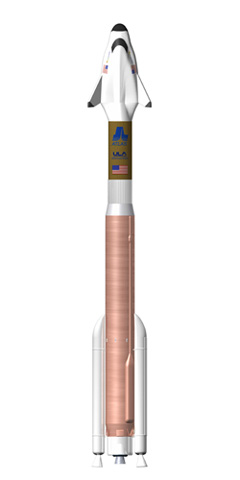
On the other hand though they are going to be totally dependant on Russia to send astronauts to the ISS, and as things stand only Russia and ESA will be able to send supplies to it ( unless one of the NASA sponsored privateers actually gets something to work ). Maybe ESA should be looking into man-rating the Ariane V and developing a manned version of the ATV - they'd make a fair bit of the cost back by charging NASA for rides to the ISS.
Or maybe they'll go back to the idea of putting a CEV on top of a man-rated Delta IV instead
On the other hand though they are going to be totally dependant on Russia to send astronauts to the ISS, and as things stand only Russia and ESA will be able to send supplies to it ( unless one of the NASA sponsored privateers actually gets something to work ). Maybe ESA should be looking into man-rating the Ariane V and developing a manned version of the ATV - they'd make a fair bit of the cost back by charging NASA for rides to the ISS.
Or maybe they'll go back to the idea of putting a CEV on top of a man-rated Delta IV instead
 .
.Gassing Station | Boats, Planes & Trains | Top of Page | What's New | My Stuff