
Strange exhaust contrails from a jet engine
Discussion


Not sure how to describe it really.
Sitting in the garden on this lovely hot summers afternoon and I watched a three engined aircraft at height travel across the sky. Now I'm sure it was a MD11 (or DC10) rather than a Tristar due to the longer fuselage profile. the strange sight was the left engine (if you look from behind) was emitting a larger 'puff' of a white contrail ball every second or so. If you look at a normal aircraft at height and the contrails are constant and even. This was definitely having a hiccough every second or so and from first sighting through to gone in the distance.
Was the engine simply running a bit rough, I've never seen this before and was it/is it common place?
Sitting in the garden on this lovely hot summers afternoon and I watched a three engined aircraft at height travel across the sky. Now I'm sure it was a MD11 (or DC10) rather than a Tristar due to the longer fuselage profile. the strange sight was the left engine (if you look from behind) was emitting a larger 'puff' of a white contrail ball every second or so. If you look at a normal aircraft at height and the contrails are constant and even. This was definitely having a hiccough every second or so and from first sighting through to gone in the distance.
Was the engine simply running a bit rough, I've never seen this before and was it/is it common place?
I might have seen that too. I think it was an MD11 (the DC-10 and Tristar were very similar in length - apart from the short fuselage Tristar 500).
Yiu can get intermittent contrails from engines. The other day I was watching a 747 pass over and there was an intermittent trail coming from the APU.
Yiu can get intermittent contrails from engines. The other day I was watching a 747 pass over and there was an intermittent trail coming from the APU.
Or it was one of those government aircraft, showering us with aluminium dust...
http://en.wikipedia.org/wiki/Chemtrail_conspiracy_...
Wooooo....be afraid. Maybe, even, run away
http://en.wikipedia.org/wiki/Chemtrail_conspiracy_...
Wooooo....be afraid. Maybe, even, run away
dougc said:
Google 'Donuts on a rope'. There's loads of stuff about it around. Some of it quite tinfoil hat...
I aware of the hype surrounding these and it was different - the contrails merged leaving a normal style rather than the doughnut on a rope style. Seemed to me that one engine was definitely not running as sweetly as it should.Eric Mc said:
I might have seen that too. I think it was an MD11 (the DC-10 and Tristar were very similar in length - apart from the short fuselage Tristar 500).
Yiu can get intermittent contrails from engines. The other day I was watching a 747 pass over and there was an intermittent trail coming from the APU.
wonder why he was running the APU in flight. Yiu can get intermittent contrails from engines. The other day I was watching a 747 pass over and there was an intermittent trail coming from the APU.
eccles said:
Eric Mc said:
I might have seen that too. I think it was an MD11 (the DC-10 and Tristar were very similar in length - apart from the short fuselage Tristar 500).
Yiu can get intermittent contrails from engines. The other day I was watching a 747 pass over and there was an intermittent trail coming from the APU.
wonder why he was running the APU in flight. Yiu can get intermittent contrails from engines. The other day I was watching a 747 pass over and there was an intermittent trail coming from the APU.
Eric Mc said:
Do they not keep the APU running as a matter of course?
No virtually never. Especially on a four engined aircraft. You might start it on a twin in an emergency as a back up source of AC power, they don't really work as an air source much above 20,000 feet.They burn too much fuel to have sitting running all day.
Most operators turn the APU on after landing and off after engine start.
Edited by el stovey on Sunday 23 May 22:59
Correct - The Auxiliary Power Unit to give it its full name is a small gas turbine engine that sits in the rear of the a/c. It is most often used on the ground to provide air to start the main engines & electrical power. Some aircraft can also use them in the air to provide additional power in the event of a generator failure or main engine failure but some types do not allow use in the air or cannot be paralleled up with the main electrical system.
el stovey said:
Eric Mc said:
Do they not keep the APU running as a matter of course?
No virtually never. Especially on a four engined aircraft. You might start it on a twin in an emergency as a back up source of AC power, they don't really work as an air source much above 20,000 feet.They burn too much fuel to have sitting running all day.
Most operators turn the APU on after landing and off after engine start.
Edited by el stovey on Sunday 23 May 22:59
Merritt said:
Correct - The Auxiliary Power Unit to give it its full name is a small gas turbine engine that sits in the rear of the a/c. It is most often used on the ground to provide air to start the main engines & electrical power. Some aircraft can also use them in the air to provide additional power in the event of a generator failure or main engine failure but some types do not allow use in the air or cannot be paralleled up with the main electrical system.
Excellent, many thanks.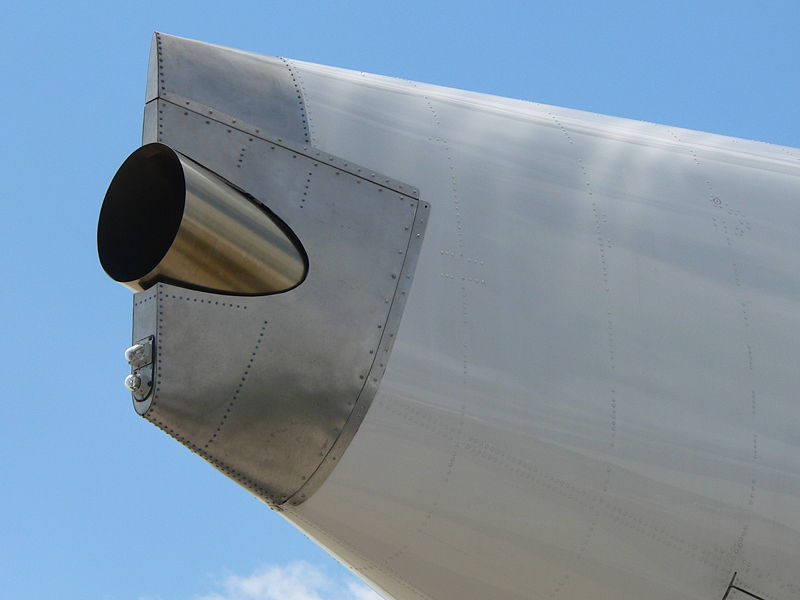
M-J-B said:
Not sure how to describe it really.
Sitting in the garden on this lovely hot summers afternoon and I watched a three engined aircraft at height travel across the sky. Now I'm sure it was a MD11 (or DC10) rather than a Tristar due to the longer fuselage profile. the strange sight was the left engine (if you look from behind) was emitting a larger 'puff' of a white contrail ball every second or so. If you look at a normal aircraft at height and the contrails are constant and even. This was definitely having a hiccough every second or so and from first sighting through to gone in the distance.
Was the engine simply running a bit rough, I've never seen this before and was it/is it common place?
Definitiely Chemtrails, not contrails. I hope you were wearing your respirator!Sitting in the garden on this lovely hot summers afternoon and I watched a three engined aircraft at height travel across the sky. Now I'm sure it was a MD11 (or DC10) rather than a Tristar due to the longer fuselage profile. the strange sight was the left engine (if you look from behind) was emitting a larger 'puff' of a white contrail ball every second or so. If you look at a normal aircraft at height and the contrails are constant and even. This was definitely having a hiccough every second or so and from first sighting through to gone in the distance.
Was the engine simply running a bit rough, I've never seen this before and was it/is it common place?
Gassing Station | Boats, Planes & Trains | Top of Page | What's New | My Stuff