
Do planes have brakes on the wheels?
Discussion


Possibly a silly question, but do planes have brakes on the wheels? I know they use ‘reverse thrust’ and air brakes on the wings to slow down after landing, but do they rely on mechanical braking too? The reason I ask is because I hear of aircraft skidding off the end of the runway in icy conditions, but surely if the braking was 100% aerodynamic then the grip level on the runway would be irrelevant and the plane would stop just as quickly regardless of the condition of the surface.
MitchT said:
Possibly a silly question, but do planes have brakes on the wheels? I know they use ‘reverse thrust’ and air brakes on the wings to slow down after landing, but do they rely on mechanical braking too? The reason I ask is because I hear of aircraft skidding off the end of the runway in icy conditions, but surely if the braking was 100% aerodynamic then the grip level on the runway would be irrelevant and the plane would stop just as quickly regardless of the condition of the surface.
Yes they do.No need to...that's what the conveyor belt is for!
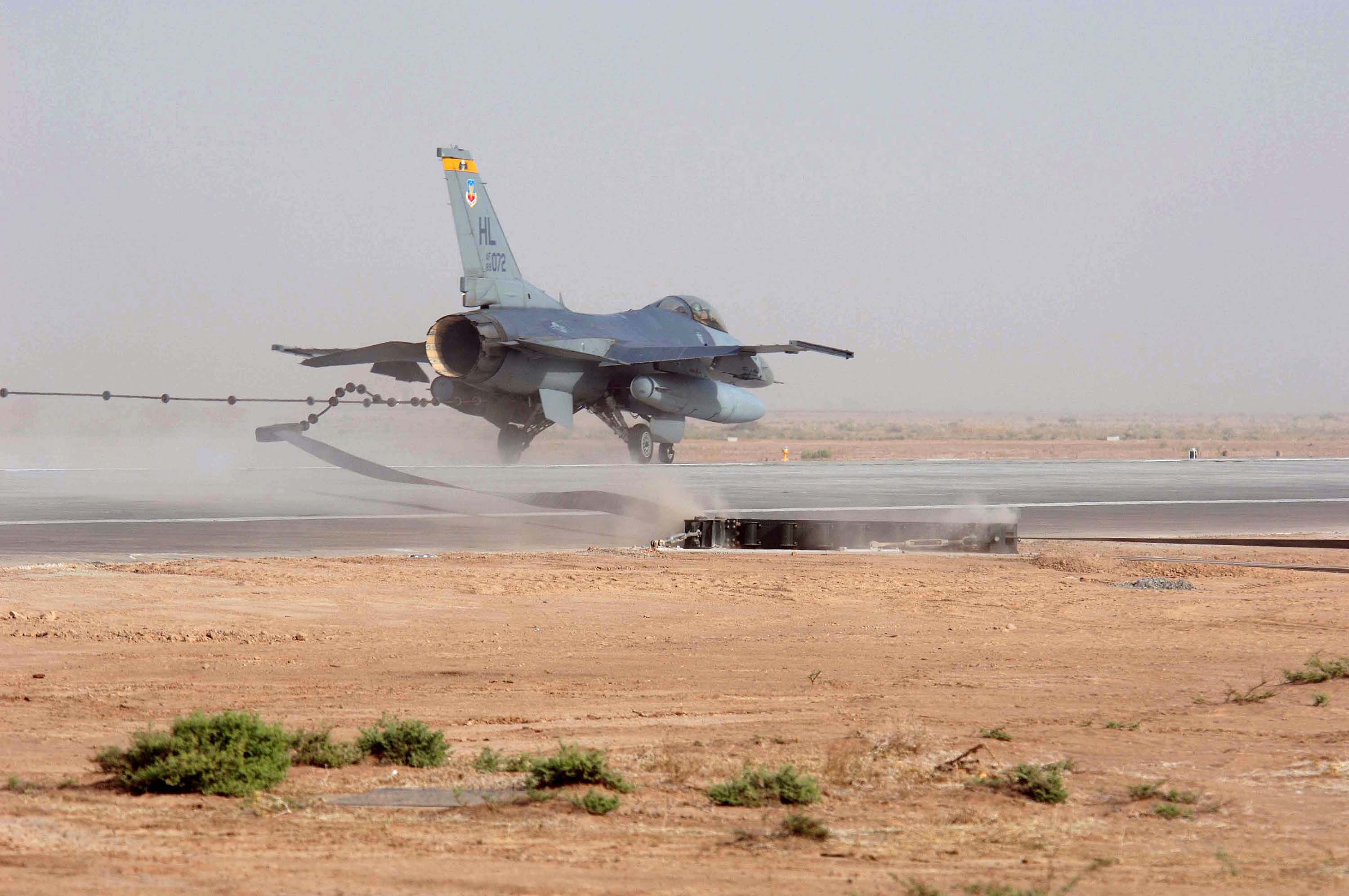
Seriously, yes they do, usually operated by the toes, at the top of your rudder pedals. ABS technology was around in planes long before vehicles. Modern airliners stop via a combination of speedbrakes on the wings, reverse thrust from the engines, and wheel brakes.
Seriously, yes they do, usually operated by the toes, at the top of your rudder pedals. ABS technology was around in planes long before vehicles. Modern airliners stop via a combination of speedbrakes on the wings, reverse thrust from the engines, and wheel brakes.
Of course. In fact, disc brakes were first used on aircraft as were ABS systems.
However, before WW2, most smaller aircraft did not have proper brakes. Aircraft like the Sopwith Camel and SE5A relied on a wooden tail skid dragging in the grass to slow them down. Even into the 1930s this crude method of slowing an aircraft down was common. For instance, the DH82 Tiger Moth doesn't have brakes.
However, before WW2, most smaller aircraft did not have proper brakes. Aircraft like the Sopwith Camel and SE5A relied on a wooden tail skid dragging in the grass to slow them down. Even into the 1930s this crude method of slowing an aircraft down was common. For instance, the DH82 Tiger Moth doesn't have brakes.
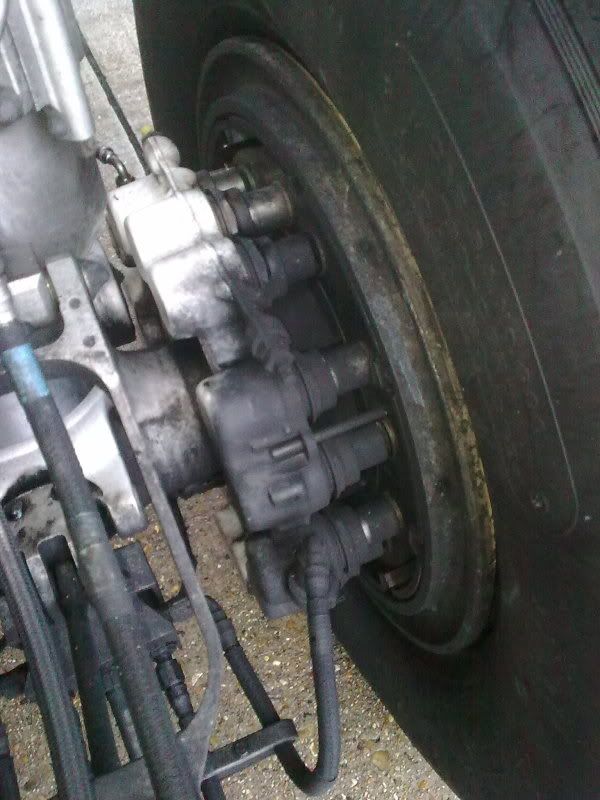
If I remember I'll take a pic of an aircraft brake and post it up in a day or two. Or you could have a quick look at google images to see what a brake unit looks like. And before you ask if you could fit one to your car  , then I have to say that the weight of a single unit that is fitted to our fleet of A319/A320s is 90kg! And those on an A330 are 158kg!
, then I have to say that the weight of a single unit that is fitted to our fleet of A319/A320s is 90kg! And those on an A330 are 158kg! http://www.youtube.com/watch?v=hRzWp67PIMw
This vid is from a "rejected takeoff test" when the Airbus A340 was being certified .. one test for all aircraft is to replicate the maximum load on the brakes (occurs following a rejected takeoff at max weight) and check that the aircraft can safely sit and wait for a period of time before the firefighters can get there. The brakes get so hot that the tyres burst, but this should normally be a controlled event (due to fusible plugs in the tyres).
As you can see, the results of this test were not entirely successful

Following modifications it was fine, of course.
xr287 said:
Yes I thought ABS was first developed for planes. Which would be a bit silly if they didn't have brakes to apply it on.
Probably a PH related urban myth, but didn't the Jensen Interceptor have modified aircraft ABS when it was one of the first production cars to have it installed as standard?prand said:
xr287 said:
Yes I thought ABS was first developed for planes. Which would be a bit silly if they didn't have brakes to apply it on.
Probably a PH related urban myth, but didn't the Jensen Interceptor have modified aircraft ABS when it was one of the first production cars to have it installed as standard?xr287 said:
Yertis said:
knight said:
I have to say that the weight of a single unit that is fitted to our fleet of A319/A320s is 90kg! And those on an A330 are 158kg!
Which is about a tenth of the weight of a London bus. 
Hang on.
An unladen Dennis Trident weighs 14560kg, apparently.


Gassing Station | Boats, Planes & Trains | Top of Page | What's New | My Stuff