
The PH Butchery Masterclass
Discussion


Many of us enjoy a bit of butchery on PH FD&R and lots ask about different methods and techniques used to make the most out of our meat and fish.
Okay so most of us aren't professionally trained butchers but still we have some skills and knowledge worth sharing.
As someone asked over on the BBQ thread about beef short ribs I thought I'd oblige and start this thread with a step-by-step approach to breaking them down in to manageable portions.
Feel free to add your own tips and images for any cut of meat, poultry or fish to pass on your skills.
Here's a 5-rib piece bought today from the butcher's. I bought this, a pound of home cured bacon, 10 of their sauasages in multiple flavours and a pig's head for £22.

This is the top. As you can see there are multiple muscle groups held in place by connective tissue which need separating so that they can be cooked in the most suitable way based on their structure, fat content and size.

So I began to seam out the different muscles which is very easy on hung beef. A little encouragement from a sharp knife and this pulls apart in seconds.

Here it is in two parts. The boneless piece is very much like brisket and I will either brine it, then smoke it and slow cook it, or sous vide, then glaze it.
The rib piece requires further work.

Look in the bottom right corner where I've started to peel back the membrane.

This is removed from both bones and meat as otherwise it contracts during cooking and end up like elastic. It effectively ruins the look and enjoyment of a good beef rib if left intact.
I removed it in one piece with brute-force but wished I'd have cut it out with the knife as you don't end up with the fibrous effect as shown here.


Turn the ribs over and there's more silverskin. Again, get rid.

I removed the fibrous residue left from the membrane. They are now ready for portioning. Don't underestimate their size and richness.


Vac packed for sous vide or freezing

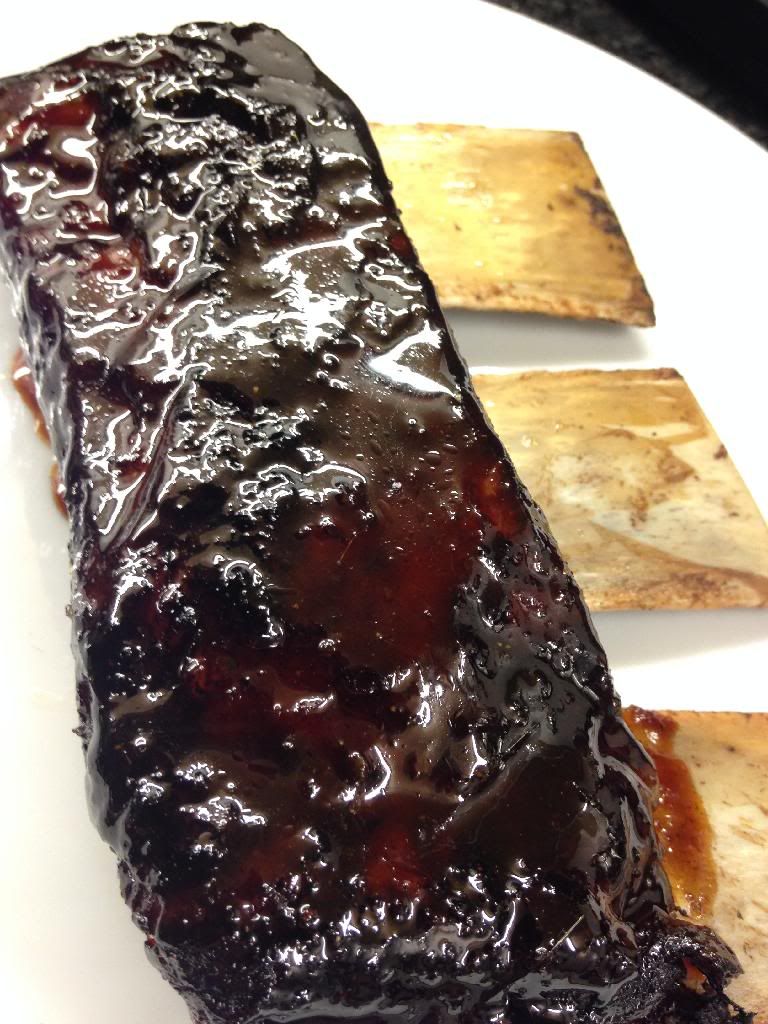
Disclaimer: Image of different ribs left intact but cut halfway down rib bone.
Okay so most of us aren't professionally trained butchers but still we have some skills and knowledge worth sharing.
As someone asked over on the BBQ thread about beef short ribs I thought I'd oblige and start this thread with a step-by-step approach to breaking them down in to manageable portions.
Feel free to add your own tips and images for any cut of meat, poultry or fish to pass on your skills.
Here's a 5-rib piece bought today from the butcher's. I bought this, a pound of home cured bacon, 10 of their sauasages in multiple flavours and a pig's head for £22.

This is the top. As you can see there are multiple muscle groups held in place by connective tissue which need separating so that they can be cooked in the most suitable way based on their structure, fat content and size.

So I began to seam out the different muscles which is very easy on hung beef. A little encouragement from a sharp knife and this pulls apart in seconds.

Here it is in two parts. The boneless piece is very much like brisket and I will either brine it, then smoke it and slow cook it, or sous vide, then glaze it.
The rib piece requires further work.

Look in the bottom right corner where I've started to peel back the membrane.

This is removed from both bones and meat as otherwise it contracts during cooking and end up like elastic. It effectively ruins the look and enjoyment of a good beef rib if left intact.
I removed it in one piece with brute-force but wished I'd have cut it out with the knife as you don't end up with the fibrous effect as shown here.


Turn the ribs over and there's more silverskin. Again, get rid.

I removed the fibrous residue left from the membrane. They are now ready for portioning. Don't underestimate their size and richness.


Vac packed for sous vide or freezing


Disclaimer: Image of different ribs left intact but cut halfway down rib bone.
Edited by Pferdestarke on Thursday 26th June 13:31
 Great walk-through, thanks for taking the time to make and post it up
Arpa said:
I've cooked beef short ribs a couple of times now for 72hours at 52 degrees and absolutely loved the results. Amazing texture and flavour for pennies! (well, maybe not the electricity bill).
Usually buy already broken down short ribs so much appreciate the guide.
I thouht 52 degrees is below pasteurisation temp. Isnt cooking at that temp for that long is a bit risky? i thought it should be 55+Usually buy already broken down short ribs so much appreciate the guide.
Arpa said:
I've cooked beef short ribs a couple of times now for 72hours at 52 degrees and absolutely loved the results. Amazing texture and flavour for pennies! (well, maybe not the electricity bill).
Usually buy already broken down short ribs so much appreciate the guide.
You're lucky your electric oven can do that. Mine won't go that low. Usually buy already broken down short ribs so much appreciate the guide.

Pete Franklin said:
I thouht 52 degrees is below pasteurisation temp. Isnt cooking at that temp for that long is a bit risky? i thought it should be 55+
I followed the guide found on this website:http://www.chefsteps.com/activities/short-ribs-tim...
Temperature is actually 54 degrees not 52, I made a mistake in my previous post.
I'm also extremely fastidious with hygiene when preparing the meat. Once cooked, the outside is seared which should render any bacteria dead in similar fashion to cooking a steak blue/rare.
I would probably avoid cooking like for those pregnant or frail, but then I think that's pretty standard practice.
Most the time, I prefer my steak even rarer, Yook Hwe being a particular favorite!

I have tried this a couple of times, only once stuffed it but it is good skewered and BBQed,
It is surprisingly easy.
http://m.youtube.com/watch?v=kAekQ5fzfGM
It is surprisingly easy.
http://m.youtube.com/watch?v=kAekQ5fzfGM


Chicken...
If theres one thing that really winds me up its if I come home and find a pack of chicken breasts in the fridge. £7-8 a kilo vs. <£3 a kilo for a whole bird, sometimes a whole bird is cheaper than two butchered breasts!
One of the most important things I learned was how to joint a chicken and this is my slight variation on the traditional jointing. Hopefully this explains:
This is a long-legged chicken, so called because the legs are cut between the knee and ankle joints which is useful for me but does mean you are paying for a few grammes of "waste".

First pull the legs out from the body and slice through the skin between the leg and the body.
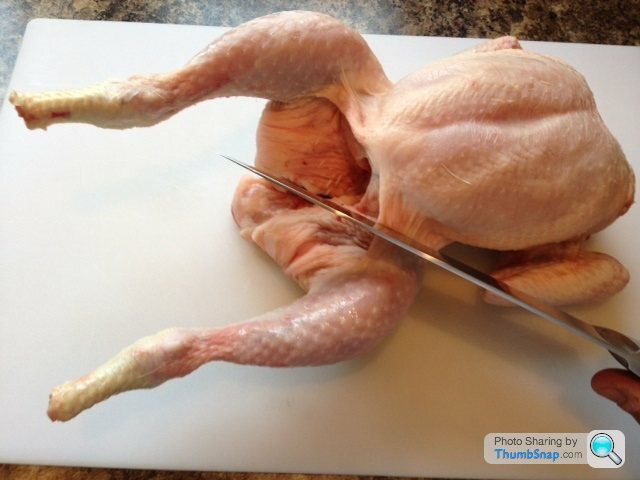
Turn the bird over and spot where the "Oyster" is on the underside on the hip joint.

Work the knife around the oyster and pull the leg downwards to break the joint open. Then run your knife through the joint and down the side of the carcass.

Now remove the "waste" for the stockpot. Run the knife about the leg down to the bone, just above the knee joint. Grip above and below the cut and bend the lower part backwards until the joint pops and you should be left with a clean end to the leg. Doing this means the meat will shrink back on the bone when cooks and remain moist, not stringy and dried out.

Do the same on the other side and you should end up with this...

Use the same principal of cutting round the joint to remove the wings...

Then trim of the wing tip for stock. Repeat the other side.

Now you need to remove the breasts, smooth the skin evenly over the crown and made a single cut down the centre to split the skin.

The import bit now is to juggle the bird around so you are working comfortably and using a knife you are used to. Be confident and follow the cartlidge and bones of the carcass. Dont try to scrape or pick at it, use confident long knife strokes to remove the breast, letting it fall away from the carcass as you work.

Look at the joint and cut cleanly through to remove the breast. On the underside is the fillet which you can normally remove with your fingers and maybe a quick cut.

Repeat on the other side and you should end up with a selection of cuts.

Finally if you want to joint the legs flip over and you will se a fat line that runs over the joint, just down following this to separate the thigh and drumstick.
Now you never need by anything other than a whole chicken!

If theres one thing that really winds me up its if I come home and find a pack of chicken breasts in the fridge. £7-8 a kilo vs. <£3 a kilo for a whole bird, sometimes a whole bird is cheaper than two butchered breasts!
One of the most important things I learned was how to joint a chicken and this is my slight variation on the traditional jointing. Hopefully this explains:
This is a long-legged chicken, so called because the legs are cut between the knee and ankle joints which is useful for me but does mean you are paying for a few grammes of "waste".
First pull the legs out from the body and slice through the skin between the leg and the body.
Turn the bird over and spot where the "Oyster" is on the underside on the hip joint.
Work the knife around the oyster and pull the leg downwards to break the joint open. Then run your knife through the joint and down the side of the carcass.
Now remove the "waste" for the stockpot. Run the knife about the leg down to the bone, just above the knee joint. Grip above and below the cut and bend the lower part backwards until the joint pops and you should be left with a clean end to the leg. Doing this means the meat will shrink back on the bone when cooks and remain moist, not stringy and dried out.
Do the same on the other side and you should end up with this...
Use the same principal of cutting round the joint to remove the wings...
Then trim of the wing tip for stock. Repeat the other side.
Now you need to remove the breasts, smooth the skin evenly over the crown and made a single cut down the centre to split the skin.
The import bit now is to juggle the bird around so you are working comfortably and using a knife you are used to. Be confident and follow the cartlidge and bones of the carcass. Dont try to scrape or pick at it, use confident long knife strokes to remove the breast, letting it fall away from the carcass as you work.
Look at the joint and cut cleanly through to remove the breast. On the underside is the fillet which you can normally remove with your fingers and maybe a quick cut.
Repeat on the other side and you should end up with a selection of cuts.
Finally if you want to joint the legs flip over and you will se a fat line that runs over the joint, just down following this to separate the thigh and drumstick.
Now you never need by anything other than a whole chicken!
Gassing Station | Food, Drink & Restaurants | Top of Page | What's New | My Stuff