
Discussion


Would appreciate some views from the more learned minds on aero effects as I'm struggling to comprehend this one.
I've been rubbing down and prepping for a new coat of paint and the shape of the rear "pods" suddenly struck me. Looking at the rear, I imagine them to act like a huge parachute creating drag, and the thought crossed my mind about cutting out some slats or similar for air to flow out of the back of the car (following the regs regarding mudflaps of course!).
Then with my thinking head on the thought crossed my mind that surely it was designed this way for a reason, and that as I knew relatively nothing about aero other than what Mr Brundle used to tell me of a Sunday afternoon, I thought this idea was better consigned to the bin.
I'd be interested for your views on this as to my mind, with them being hollow they are surely creating drag? Or is it all to do with pressures and so on, meaning that the void is filled and air is displaced by the rotation of the wheel and I'd be wise to leave well alone?!
A few pics below to give you an idea..........
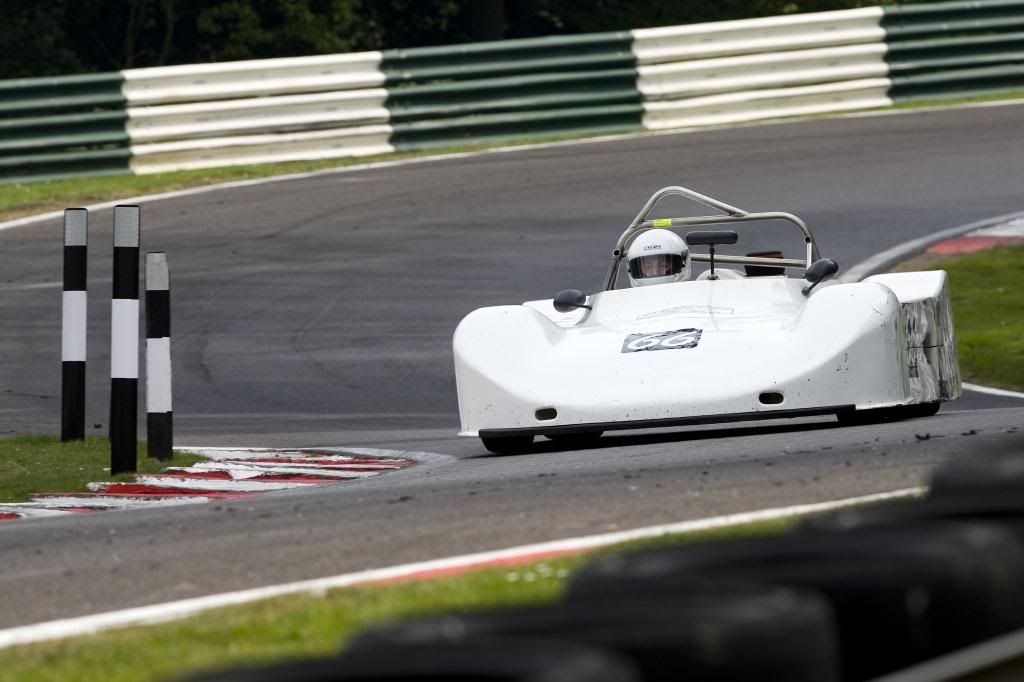
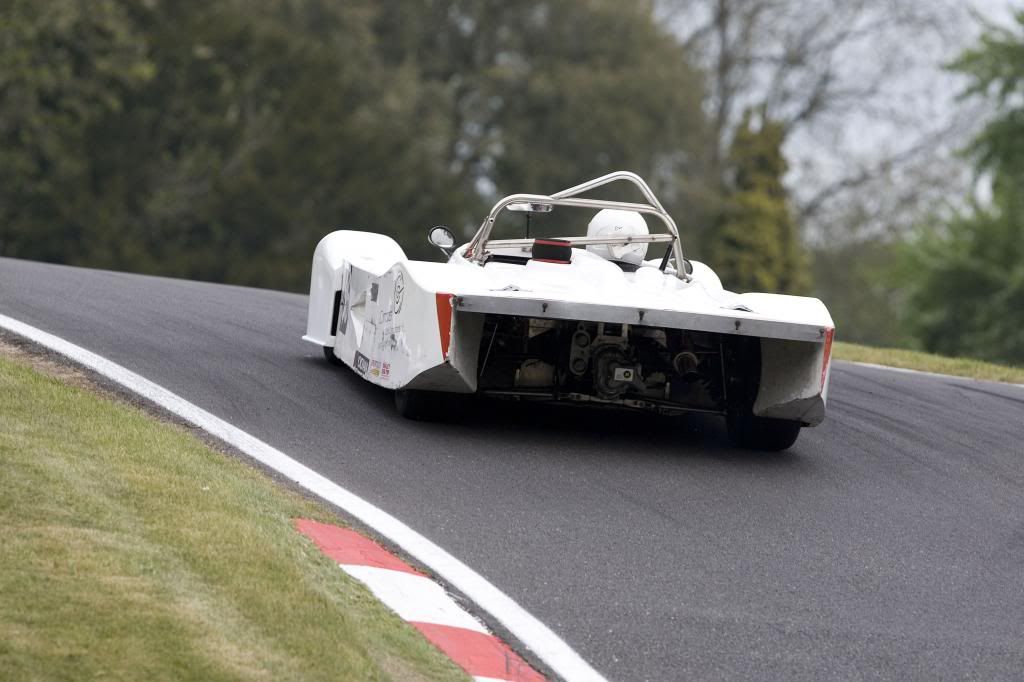
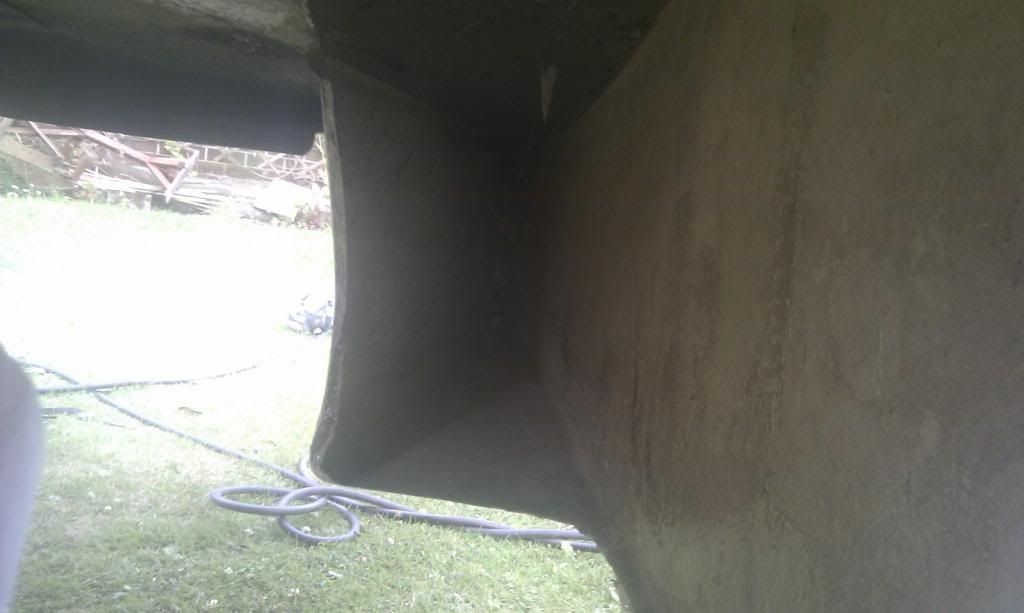
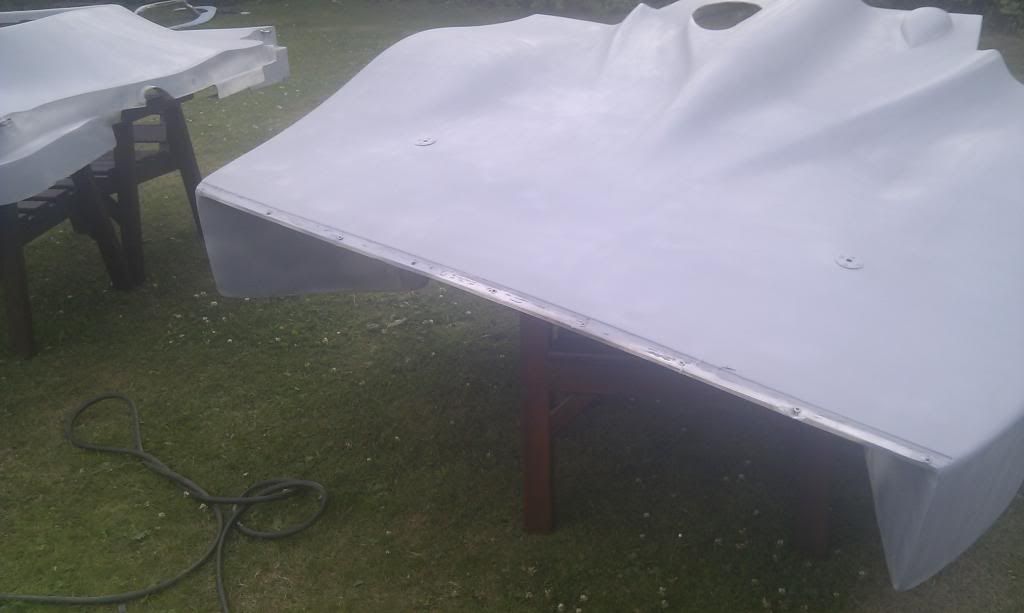
I've been rubbing down and prepping for a new coat of paint and the shape of the rear "pods" suddenly struck me. Looking at the rear, I imagine them to act like a huge parachute creating drag, and the thought crossed my mind about cutting out some slats or similar for air to flow out of the back of the car (following the regs regarding mudflaps of course!).
Then with my thinking head on the thought crossed my mind that surely it was designed this way for a reason, and that as I knew relatively nothing about aero other than what Mr Brundle used to tell me of a Sunday afternoon, I thought this idea was better consigned to the bin.
I'd be interested for your views on this as to my mind, with them being hollow they are surely creating drag? Or is it all to do with pressures and so on, meaning that the void is filled and air is displaced by the rotation of the wheel and I'd be wise to leave well alone?!
A few pics below to give you an idea..........
nsnt,
That is your car?
The aero treatment of the rear of a car has two aspects.
First, as any fule no, the ideal for low drag is a teardrop shape, with a long tail. But Herr.Dr.Wunibald Kamm of Stuttgart, whom God preserve, discovered that cutting off about 45% of that tail made little or no differece to the drag ratio. But it should be a closed end, not open like yours, to ensure the correct vortex production.
Second, a rear diffuser will act to accelerate air leaving the underside of the car, preventing the air beneath it slowing down, increasing its pressure and causing lift. The diffuser itself can obtain some down force. But I fear that the amount of engine in that space in your car will not allow an effective diffuser, so the first, Kamm-tail approach is most worthwhile.
John
That is your car?
The aero treatment of the rear of a car has two aspects.
First, as any fule no, the ideal for low drag is a teardrop shape, with a long tail. But Herr.Dr.Wunibald Kamm of Stuttgart, whom God preserve, discovered that cutting off about 45% of that tail made little or no differece to the drag ratio. But it should be a closed end, not open like yours, to ensure the correct vortex production.
Second, a rear diffuser will act to accelerate air leaving the underside of the car, preventing the air beneath it slowing down, increasing its pressure and causing lift. The diffuser itself can obtain some down force. But I fear that the amount of engine in that space in your car will not allow an effective diffuser, so the first, Kamm-tail approach is most worthwhile.
John
It's difficult to exactly how your aero is working without understanding your rear floor detail. But, from what I can see I would be looking to do the following.
1. Increase rear underfloor up to behind the g/box and run it into the bottom surface of the parachutes - effective making a simple diffuser and using this to ensure the underbody air can never get near the parachuates. I reckon it will be upsetting the flow somewhat.
2. It looks as though you have some NACA ducts on the side of the body work which I assume are for cooling(?). Even if you close off the bottom of the parachutes by extending the floor, the air flow through the engine bay can still fill the parachutes. Now, in reality, any air flow into the engine bay will be getting very disturbed and so I would doubt you will see much negative affect from these parachutes with this flow. However, to clean up the exit of the airflow I would be looking to box the parachutes in. Rather than just putting a flat surface on it though I would be looking to sculp it slightly to just give a smother path out the rear of the car.
Would be interesting to run some simple paint tests on it - if you end up with a big collection in the parachute then you know it's a problem!!
I've worked on many race cars for aero development and to be honest, as much as we can sit around looking at designs the best developments always come from some real life tests - it's the only way to know exactly whats happening!
1. Increase rear underfloor up to behind the g/box and run it into the bottom surface of the parachutes - effective making a simple diffuser and using this to ensure the underbody air can never get near the parachuates. I reckon it will be upsetting the flow somewhat.
2. It looks as though you have some NACA ducts on the side of the body work which I assume are for cooling(?). Even if you close off the bottom of the parachutes by extending the floor, the air flow through the engine bay can still fill the parachutes. Now, in reality, any air flow into the engine bay will be getting very disturbed and so I would doubt you will see much negative affect from these parachutes with this flow. However, to clean up the exit of the airflow I would be looking to box the parachutes in. Rather than just putting a flat surface on it though I would be looking to sculp it slightly to just give a smother path out the rear of the car.
Would be interesting to run some simple paint tests on it - if you end up with a big collection in the parachute then you know it's a problem!!
I've worked on many race cars for aero development and to be honest, as much as we can sit around looking at designs the best developments always come from some real life tests - it's the only way to know exactly whats happening!
Notshortnottall said:
...the thought crossed my mind about cutting out some slats or similar for air to flow out of the back of the car (following the regs regarding mudflaps of course!)...
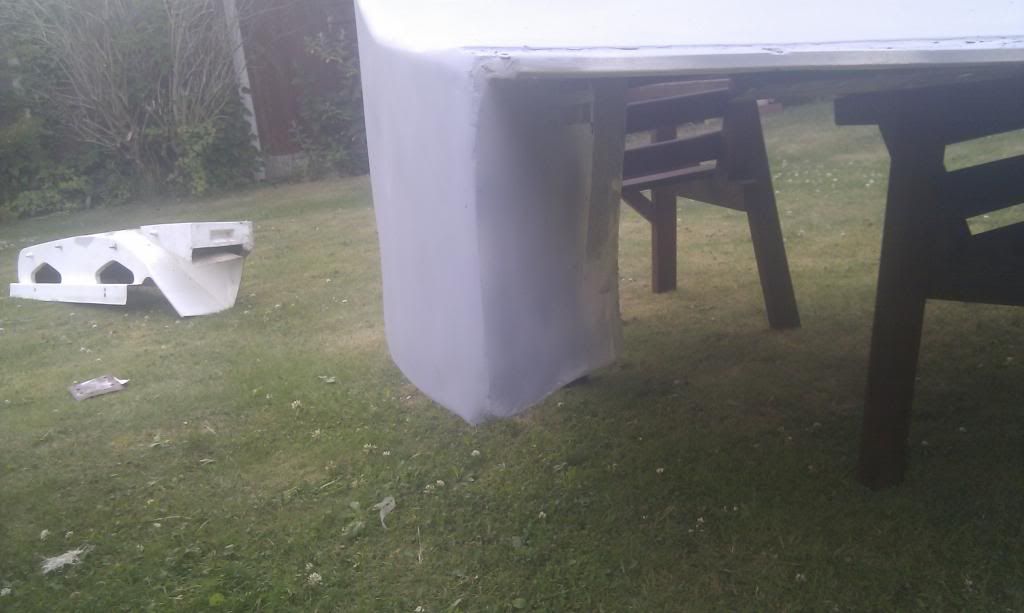
By the '...regs regarding mudflaps...' I guess you're referring to 5.2.6(a) which states that '...the tyre must not be visible above any point 50mm or more above the axle centre line.'.If so, could I highlight that this reg states 'With the exception of racing cars...' which, if you turn to section B, means 'Racing Car. See Single-Seater Racing Car and Sports Racing Car'.
So, if I were you, I'd do what we've done with our mudguards, annd disappear them. It weighs less, for a start:

Edited by Count Johnny on Friday 1st March 04:45
 You appear to be experiencing lift:
tapkaJohnD said:
nsnt,
That is your car?
Yup, tis my car.That is your car?
NightDriver said:
It's difficult to exactly how your aero is working without understanding your rear floor detail. But, from what I can see I would be looking to do the following.
1. Increase rear underfloor up to behind the g/box and run it into the bottom surface of the parachutes - effective making a simple diffuser and using this to ensure the underbody air can never get near the parachuates. I reckon it will be upsetting the flow somewhat.
2. It looks as though you have some NACA ducts on the side of the body work which I assume are for cooling(?). Even if you close off the bottom of the parachutes by extending the floor, the air flow through the engine bay can still fill the parachutes. Now, in reality, any air flow into the engine bay will be getting very disturbed and so I would doubt you will see much negative affect from these parachutes with this flow. However, to clean up the exit of the airflow I would be looking to box the parachutes in. Rather than just putting a flat surface on it though I would be looking to sculp it slightly to just give a smother path out the rear of the car.
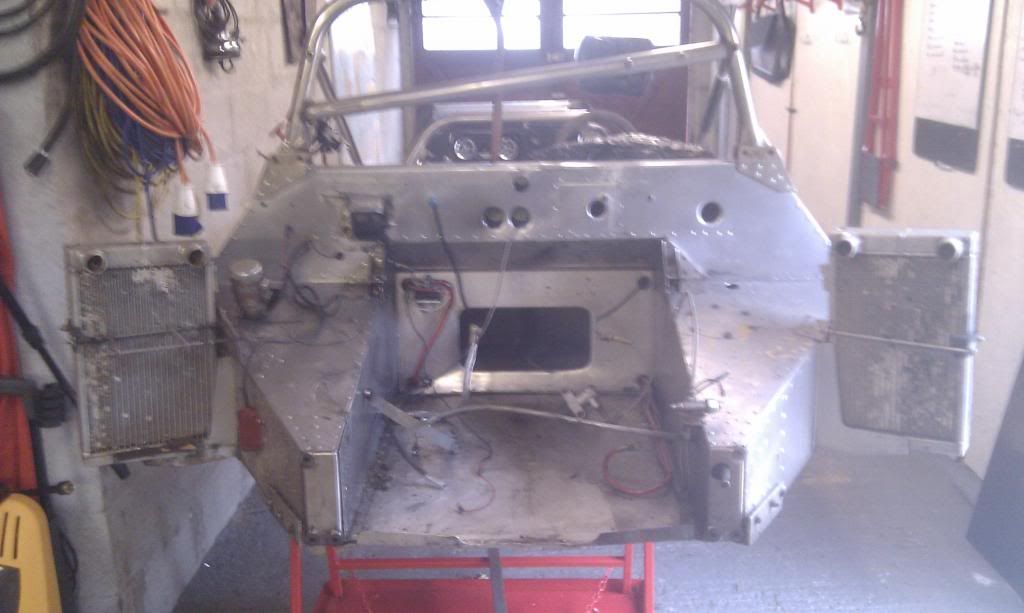
It's flat-floored completely underneath, right up to the gearbox/drivetrain. The NACA ducts are indeed for cooling the rads (see below) but your input is useful. Never really considered paint tests but that's a handy (and easy) way to check.1. Increase rear underfloor up to behind the g/box and run it into the bottom surface of the parachutes - effective making a simple diffuser and using this to ensure the underbody air can never get near the parachuates. I reckon it will be upsetting the flow somewhat.
2. It looks as though you have some NACA ducts on the side of the body work which I assume are for cooling(?). Even if you close off the bottom of the parachutes by extending the floor, the air flow through the engine bay can still fill the parachutes. Now, in reality, any air flow into the engine bay will be getting very disturbed and so I would doubt you will see much negative affect from these parachutes with this flow. However, to clean up the exit of the airflow I would be looking to box the parachutes in. Rather than just putting a flat surface on it though I would be looking to sculp it slightly to just give a smother path out the rear of the car.
Here's a pic of the empty tub:
and of the car 'sans' bodywork:
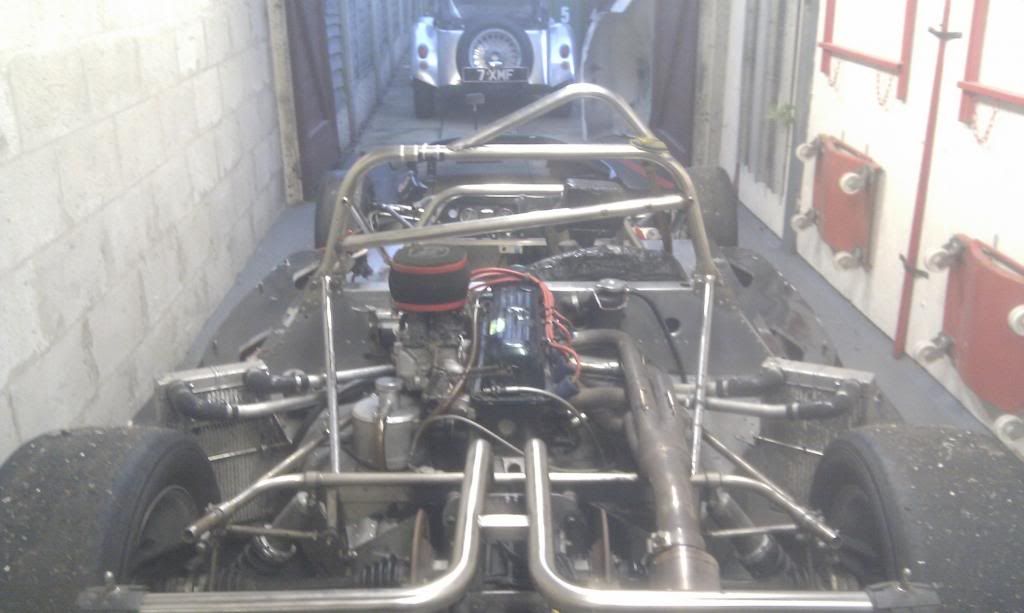
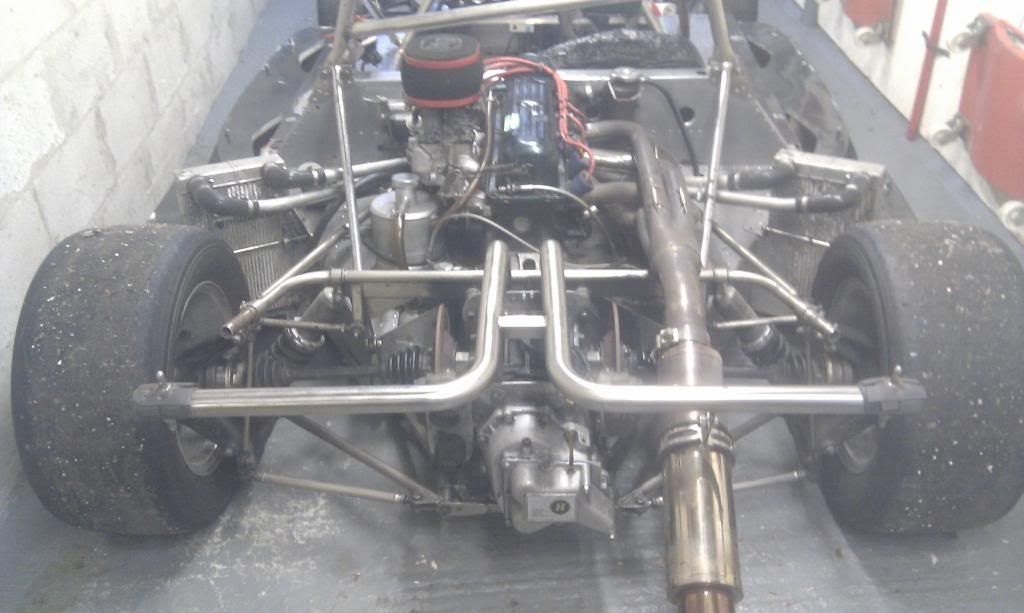
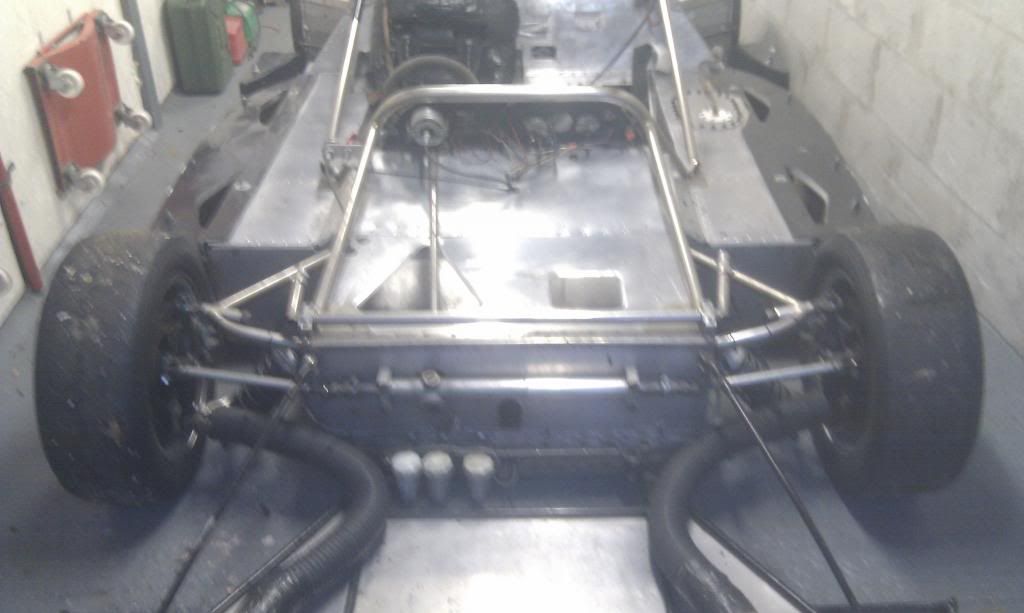
Apologies for the poor photos - I left my photography skills in my other jeans!
So the 'pontoons' are trying to manage the air that's passing through the heat exchangers, and probably not doing a terribly good job of it.
Personally - given that a rotating wheel is a pump that increases the pressure within a wheel well - I'd be chopping away at the pontoons and liberating my rear wheels (as we have done (above)).
This said, to do that to what is effectively an historic car might be considered vandalism.
Personally - given that a rotating wheel is a pump that increases the pressure within a wheel well - I'd be chopping away at the pontoons and liberating my rear wheels (as we have done (above)).
This said, to do that to what is effectively an historic car might be considered vandalism.
Edited by Count Johnny on Saturday 2nd March 07:44
NightDriver said:
1. Increase rear underfloor up to behind the g/box and run it into the bottom surface of the parachutes - effective making a simple diffuser...
From the 2013 regs for Pinto S2000:5.6.2
Modifications Prohibited:
...No bodywork/diffuser extension of the underside panel, or support structure for the floor that may be considered to aid down force, is allowed between the inside faces of the rear wheels, from a vertical plane connecting the rear wheel centre points, to the rear extremity of the car...
Count Johnny said:
5.6.2
Modifications Prohibited:
...No bodywork/diffuser extension of the underside panel, or support structure for the floor that may be considered to aid down force, is allowed between the inside faces of the rear wheels, from a vertical plane connecting the rear wheel centre points, to the rear extremity of the car...
Just run a load of rake!Modifications Prohibited:
...No bodywork/diffuser extension of the underside panel, or support structure for the floor that may be considered to aid down force, is allowed between the inside faces of the rear wheels, from a vertical plane connecting the rear wheel centre points, to the rear extremity of the car...


Gassing Station | UK Club Motorsport | Top of Page | What's New | My Stuff