
Great Britain past and present
Discussion


Feeling nostalgic about Britain’s past and the decisions that shaped it — for better or worse.
Beeching’s railway cuts spring to mind. Would public transport look fundamentally different today had those lines been preserved? Hard not to wonder what a more intact network might have meant, particularly for rural communities that were effectively cut off overnight.
Then there’s the British motorcycle industry. While iconic names have since been resurrected — Triumph being the standout success story — would meaningful R&D investment in the 1970s have kept the industry on a more stable footing, rather than letting it collapse in the face of Japanese competition?
Any other examples or opinions people would like to share, either for better or worse
Beeching’s railway cuts spring to mind. Would public transport look fundamentally different today had those lines been preserved? Hard not to wonder what a more intact network might have meant, particularly for rural communities that were effectively cut off overnight.
Then there’s the British motorcycle industry. While iconic names have since been resurrected — Triumph being the standout success story — would meaningful R&D investment in the 1970s have kept the industry on a more stable footing, rather than letting it collapse in the face of Japanese competition?
Any other examples or opinions people would like to share, either for better or worse
Thatcher selling off the family silver in the 80's, British Telecom, BP to name two privatised companies that come to mind easily. But there are plenty more if I was to check.
Although I'm not affected by the water situation in England, where you pay a lot for the companies to pump s t into the sea and rivers while still getting allowed to increase prices, this has to be a massive mistake in lowering the quality of living in the UK as well.
The UK is still great but what was done 30-40 years ago has had a massive effect on us now and I doubt enough people realise this.
Although I'm not affected by the water situation in England, where you pay a lot for the companies to pump s
t into the sea and rivers while still getting allowed to increase prices, this has to be a massive mistake in lowering the quality of living in the UK as well. The UK is still great but what was done 30-40 years ago has had a massive effect on us now and I doubt enough people realise this.
I think Beeching cuts are hindsight on steroids.
At the time car ownership was only just taking off and mobility as a result was on the up. The trains were seen as an outdated relic of the past. Employment was still local in most part, commuting was yet to establish.
in addition the way that the railways were structured it was massively quicker to drive somewhere than take multiple trains from many different companies.
At the time car ownership was only just taking off and mobility as a result was on the up. The trains were seen as an outdated relic of the past. Employment was still local in most part, commuting was yet to establish.
in addition the way that the railways were structured it was massively quicker to drive somewhere than take multiple trains from many different companies.
worsy said:
I think Beeching cuts are hindsight on steroids.
At the time car ownership was only just taking off and mobility as a result was on the up. The trains were seen as an outdated relic of the past. Employment was still local in most part, commuting was yet to establish.
in addition the way that the railways were structured it was massively quicker to drive somewhere than take multiple trains from many different companies.
Indeed, but:At the time car ownership was only just taking off and mobility as a result was on the up. The trains were seen as an outdated relic of the past. Employment was still local in most part, commuting was yet to establish.
in addition the way that the railways were structured it was massively quicker to drive somewhere than take multiple trains from many different companies.
https://bettertransport.org.uk/blog/the-beeching-l...
The biggest decision making failures in my lifetime seems to be the squandering of the North Sea Oil windfall. It should have been used to establish a sovreign wealth fund (like the Norwegians) or, more modestly, to hypothecate some of the proceeds to researching and developing alternative energy sources. At the same time, the 'dash for gas' was a foolish, ideologically driven, short term policy to kill off our dependence on coal.
We could have been a world leader in using and selling green tech and made the investments required to a belt and braces nuclear programme which the Blair Govt. chickened out of. Our failure to compete is, in part, due to our dependence on gas and the high energy prices we pay as a result of those decision making failures.
We could have been a world leader in using and selling green tech and made the investments required to a belt and braces nuclear programme which the Blair Govt. chickened out of. Our failure to compete is, in part, due to our dependence on gas and the high energy prices we pay as a result of those decision making failures.
oddman said:
The biggest decision making failures in my lifetime seems to be the squandering of the North Sea Oil windfall. It should have been used to establish a sovreign wealth fund (like the Norwegians) or, more modestly, to hypothecate some of the proceeds to researching and developing alternative energy sources. At the same time, the 'dash for gas' was a foolish, ideologically driven, short term policy to kill off our dependence on coal.
We could have been a world leader in using and selling green tech and made the investments required to a belt and braces nuclear programme which the Blair Govt. chickened out of. Our failure to compete is, in part, due to our dependence on gas and the high energy prices we pay as a result of those decision making failures.
As above plus the post higher up about selling off public infrastructure. But also I have an issue about living in the past and feeling entitled about how great the UK used to be. I think the US is worse for that though. Global competition is tougher and the world doesnt owe us a living.We could have been a world leader in using and selling green tech and made the investments required to a belt and braces nuclear programme which the Blair Govt. chickened out of. Our failure to compete is, in part, due to our dependence on gas and the high energy prices we pay as a result of those decision making failures.
oddman said:
The biggest decision making failures in my lifetime seems to be the squandering of the North Sea Oil windfall. It should have been used to establish a sovreign wealth fund (like the Norwegians) or, more modestly, to hypothecate some of the proceeds to researching and developing alternative energy sources. At the same time, the 'dash for gas' was a foolish, ideologically driven, short term policy to kill off our dependence on coal.
We could have been a world leader in using and selling green tech and made the investments required to a belt and braces nuclear programme which the Blair Govt. chickened out of. Our failure to compete is, in part, due to our dependence on gas and the high energy prices we pay as a result of those decision making failures.
The first sentence or two I agree with 100% (as with the above poster's comments about Thatcher's privatisation of much of UK infrastructure - the idea that a profit-driven industry would be better at looking after ultra-long-term assets was always a bad joke, and only enabled by the equally nonsensical attitudes of the unions in the 1970s which created an utter mess of an economy and a dysfunctional public sector).We could have been a world leader in using and selling green tech and made the investments required to a belt and braces nuclear programme which the Blair Govt. chickened out of. Our failure to compete is, in part, due to our dependence on gas and the high energy prices we pay as a result of those decision making failures.
...and IMHO those two items alone are responsible for a large chunk of the problems we face today in society.
The second paragraph is written with a huge dose of hindsight, albeit I do agree with Blair's chickening-out of nuclear being another part of the energy problems we find ourselves in.
Beyond that (and in balance having laid a ton of blame on Thatcher's legacy) I think Brown's legacy is equally damaging:-
- excessive pandering to the public sector
- deregulation of financial services
- fundamental mis-understanding / mis-management of a booming economy
...the last two of which led directly to both the financial crash of 2007/08 and to the subsequent political landscape which enabled Osborne's "austerity", AKA 95% of people suffer all the consequences while the top few % rake up the consequent gains...a cynical and horrific act of self-interest and pandering to donors.
...and IMHO it's that consequence of Brown's incompetence and Osborne's ideology that robbed us of all the optimism of the 1990s and early 2000's, that left most people struggling and wondering who to blame for it, and these led directly to the rise of the far right through the Farage-led narrative that it's all the fault of immigrants. Cue Brexit, cue current politics.
(Yep - nothing to do with Browns or Osborne's economic policies - it has to be migrants
 )
)saknog said:
Beeching s railway cuts spring to mind. Would public transport look fundamentally different today had those lines been preserved? Hard not to wonder what a more intact network might have meant, particularly for rural communities that were effectively cut off overnight.
They were not the Beeching cuts. He was just the fall guy.The then Transport Minister Ernest Marples, commissioned Beeching (an academic) to carry out a railway usage survey.
Beeching performed exactly as instructed and produced a very accurate set of results.
They showed that 50% of the network was used by about 98% of passengers and the remaining 50% by about 2% of passengers.
Rail usage was declining rapidly as more and more people started to get cars.
Running 50% of a rail network for 2% was clearly vasty inefficient so Marples took the decision to close it down.
Would that be Ernest Marples, of construction and civil engineering company Marples Ridgeway that had nothing at all to do with having any interests in major infrastructure and roads building at the time..?
But I'd agree that not putting any of the oil wealth into some form of wealth fund for the long term and instead giving the country a 40 year sugar rush of perceived abundance and wealth that today we all expect but can no longer afford as a country was a touch shortsighted.
But I'd agree that not putting any of the oil wealth into some form of wealth fund for the long term and instead giving the country a 40 year sugar rush of perceived abundance and wealth that today we all expect but can no longer afford as a country was a touch shortsighted.
Edited by bigglesA110 on Thursday 23 April 11:26
saknog said:
Beeching s railway cuts spring to mind. Would public transport look fundamentally different today had those lines been preserved? Hard not to wonder what a more intact network might have meant, particularly for rural communities that were effectively cut off overnight.
The Beeching Cuts (that Beeching rather unfairly had his name attached to for ever more) were going to happen. Every other developed nation had an equivalent in the same time period as transport and travel shifted from rail to road with the growth of personal car ownership and the construction of car- and lorry-dedicated infrastructure.The number of genuinely 'wrong' Beeching closures, that don't benefit from 20/20 hindsight, is actually very small.
These weren't (Titfield Thunderbolt style...) beloved, well used transport links that were taken away by hard-nosed London bureaucrats just because they weren't covering their costs. The majority were barely used by passengers, with their clientel deserting to the roads in droves and their freight customers rapidly following behind.
In many, many cases the BR staff (driver, guard, fireman, station masters, porters, freight clerks, shunters, signalman, crossing keepers, track gangers) outnumbered the paying customers several times over. Any economies such as automated ticket machines, driver only operation, radio signalling, automatic level crossings and so on required upfront capital that BR (losing £millions per day in 1950s value) didn't have and would only reduce the deficit.
Contrary to the folk memory, most of these lines and stations closed without protest. People didn't use them. They'd switched to the car, the bus, the van and the truck and didn't care about the railways, which were seen at every level, from the voter's breakfast table to the Cabinet table, as outdated Victorian relics unsuitable for the sleek, modern age of personal motorised transport.
Where campaigns against closure were mounted, it was widely noted that if everyone who wrote letters of objection or turned out to wave banners at visiting BR officials actually used their local train, then not only would it not be at risk of closure but they'd have to add extra carriages!
Remember that there was no thought or mechanism for subsidising the railways at the time. For over 100 years they had been built and run as profit-making enterprises, and they had been nationalised on the basis that the government would be the investor needed to make good years of neglect after WW2 and the Depression, and in return the profits would go to the Treasury. Until the mid-1950s that plan worked - BR returned an operating profit to the Treasury.
No one in the industry or in Whitehall really had an idea what to do when, for the first time in British history, railways became unprofitable as a whole.
I'm actually typing all this as I wait in the car park of a station on the East Coast Main Line to pick someone up. I'm benefiting perfectly from Beeching's overall vision for the railways. He and his staff knew that the branch lines and rural stations criss-crossing the country couldn't compete in speed, convenience or per-trip cost with the car. So they wouldn't.
Railways are good at three things - 1) long-distance high-speed intercity routes 2) high-density intra-urban mass transit 3) heavy long distance bulk freight. Beeching aimed to turn BR into a network that did those things and slouched off everything else that it could. He successfully arranged for BR to lose its common carrier obligations which had hobbled the railways' ability to act in their own commercial interests and self-preservation for 40 years.
60 years ago, my family member could have arrived at the Cambridgeshire market town where I live at one of two stations (population in 1960 c. 5000 for the entire parish, and it had two stations - the sort of Victorian lassez-faire madness that Beeching was finally getting to grips with). One of those stations required changing onto a branch from a station on the ECML. The other would, I think, need two changes going from London via Cambridge. Both those stations, as well as the junction stations and one of the branch lines, were shut by the Beeching Axe.
It's actually much quicker and more convenient for both the traveller and me, the host, for them to get off at Huntingdon and me to meet them in the car. They get to Huntingdon on a 125mph train that arrives from Kings Cross in less than an hour. Because thanks to Beeching all the intermediate stations serving no one in particular and all the barely-used goods yards have been shut. There aren't any two-carriage local trains stopping every few miles or crawling freight trains. Those things were barely used and getting rid of them means that the fast trains can run faster and more frequently.
And once they get to Huntingdon, it's far quicker for me to collect them to take them home than to wait for the branch train (which only ran three times a day) and then they'd still need to be met at the local station (or get a taxi or a bus) for the tricky 'last mile'.
The funny thing is that we think about the crimes of the Beeching Cuts being the axeing of the picture-postcard rural villages. In fact the real loss has proven to be the hundreds of urban and suburban stations and link-lines that were closed in the 1960s, especially in the industrial North, the Scottish belt and South Wales.
Even by 1965 it was becoming clear that the dream of a car-based society would never come true and that Britain's urban and suburban spaces just could not be acceptably modernised to handle the number of cars. We baulked at American-style urban freeways, resisted bypasses and motorways and shunned car parks and low-density car-based suburbs. But without the new roads promised by the White Heat of Technology, and with the loss of the old railway network, many urban areas became isolated and car-dependent in ways that are still affecting them today.
Take the trans-Pennine area - centres of population and economic activity, only a few miles apart but with appalling public transport links and absolutely choked by too much traffic, lifestyles that rely on the car, thoroughly inadequate road infrastructure and no alternatives.
Personally I think the real failure of the era from a social point of view wasn't so much the closure of the railways but the complete failure to preserve an alternative. Beeching's report is actually predicated on the fact that buses can provide public transport to the places named in his report more cost-effectively than rail. The bus services could - and should - have been regulated, mandated and subsidised.
The big-picture failure, imo (and with admitted hindsight) was that the British Transport Commission was still siloed into different modes - within the BTC you had British Railways, British Waterways, British Road Services etc. What they should have done is instead have a 'Passenger Executive' and a 'Freight Executive', each dedicated to planning and managing the best way to move its particular traffic, rather than managing its particular mode of transport. So the BTC-PE decides what level of service a particular place requires and then decides whether that is best (for a combination of service and cost indexes) whether that's best done by rail, by bus or whatever.
I could write similar reams about the motor industry, but I've subjected everyone to more than enough and the train is due...
E:
bigglesA110 said:
Would that be Ernest Marples, of construction and civil engineering company Marples Ridgeway that had nothing at all to do with having any interests in major infrastructure and roads building at the time..?
Marbles was definitely dodgy in his affairs...but what evidence is there that he or his business benefited from the Beeching closures or the concurrent roadbuilding programme?The only Beeching era road project that Marples Ridgeway undertook were the Hammersmith and Chiswick Flyovers. It was hardly a major player in later years compared to some of the other big civil contractors of the motorway era - Marples Ridgeway did the M56, parts of the M27 and the southern extension of the M1. All undertaken post-Beeching and all, in fact, paralleling still-open railway lines.
Did Marples make other countries cull their railway networks (often much more savagely than we did)?
Let's not discount how Harold Wilson was elected on a promise to halt and review all the closures, and then not only carried them out but closed some that Beeching hadn't listed. It was a combination of seeing the BR books and realising what a financial death spiral the organisation was in and being greatly influenced by the AEU and the EETPU, which represented workers in the motor industry and held a lot of sway in the Labour Party, while ASLEF and the NUR were never that influential post-1945. Plus Wilson shared the general view of the political class, the managerial class and the population as a whole that the future was in cars and the railways were only suitable for managed decline.
Edited by 2xChevrons on Thursday 23 April 11:36
I would dearly love to be able to go everywhere via train, but many of the dead lines were burning money at a time when car ownership was piddly compared to today.
They would've been absolutely ruinous to maintain going forward.
Buses were supposed to be the cheap and seamless cure.
Perhaps we'd have a more diverse and buoyant economy if those replacement routes had been legislated into stone as there are some major gaps and you can never tell when they'll vapourise.
Elsewhere, Britain seems to have had a unique ability to invent things and then throw them away, give them away or strangle them. Then someone else comes along and reaps the benefits.
If that attitude had been different then it would be a rather different place today.
They would've been absolutely ruinous to maintain going forward.
Buses were supposed to be the cheap and seamless cure.
Perhaps we'd have a more diverse and buoyant economy if those replacement routes had been legislated into stone as there are some major gaps and you can never tell when they'll vapourise.
Elsewhere, Britain seems to have had a unique ability to invent things and then throw them away, give them away or strangle them. Then someone else comes along and reaps the benefits.
If that attitude had been different then it would be a rather different place today.
Edited by bloomen on Thursday 23 April 11:38
oddman said:
The biggest decision making failures in my lifetime seems to be the squandering of the North Sea Oil windfall. It should have been used to establish a sovreign wealth fund (like the Norwegians) or, more modestly, to hypothecate some of the proceeds to researching and developing alternative energy sources. At the same time, the 'dash for gas' was a foolish, ideologically driven, short term policy to kill off our dependence on coal.
We could have been a world leader in using and selling green tech and made the investments required to a belt and braces nuclear programme which the Blair Govt. chickened out of. Our failure to compete is, in part, due to our dependence on gas and the high energy prices we pay as a result of those decision making failures.
'Squandering' probably is correct but perhaps not in the way you suggest per above I think wrt to north sea oil. While it's definitely true that the UK failed (badly) to take a longer term view wrt to utilising north sea oil revenues, imo the comparison to the Norway sov wealth fund isn't necessarily relevant or a good one, or at least not without a lot of hindsight/back-trading. We could have been a world leader in using and selling green tech and made the investments required to a belt and braces nuclear programme which the Blair Govt. chickened out of. Our failure to compete is, in part, due to our dependence on gas and the high energy prices we pay as a result of those decision making failures.
Norway's oil revenues as a % of economy was and is a heck of a lot more than the UK (especially per capita) and are a much smaller country so the sovereign wealth fund idea was a much more plausible idea for them. Any such fund as setup by a UK equivalent (not knowing how oil/gas prices may or may not move in future) would never be able to provide anything like a norway-esque contribution given the relative sizes of revenues/population involved. It's more that the UK dismally failed to structure that in a way to ensure oil revenues would continue to feed into public services etc in a durable form outside of the immediate windfall/boom such that it would able to provide a long term benefit that is the much greater failure. The form of that doesn't necessarily require said sov wealth fund by merely a mechanism to link long term revenues into government coffers....
2xChevrons said:
saknog said:
Beeching s railway cuts spring to mind. Would public transport look fundamentally different today had those lines been preserved? Hard not to wonder what a more intact network might have meant, particularly for rural communities that were effectively cut off overnight.
The Beeching Cuts (that Beeching rather unfairly had his name attached to for ever more) were going to happen. Every other developed nation had an equivalent in the same time period as transport and travel shifted from rail to road with the growth of personal car ownership and the construction of car- and lorry-dedicated infrastructure.The number of genuinely 'wrong' Beeching closures, that don't benefit from 20/20 hindsight, is actually very small.
These weren't (Titfield Thunderbolt style...) beloved, well used transport links that were taken away by hard-nosed London bureaucrats just because they weren't covering their costs. The majority were barely used by passengers, with their clientel deserting to the roads in droves and their freight customers rapidly following behind.
In many, many cases the BR staff (driver, guard, fireman, station masters, porters, freight clerks, shunters, signalman, crossing keepers, track gangers) outnumbered the paying customers several times over. Any economies such as automated ticket machines, driver only operation, radio signalling, automatic level crossings and so on required upfront capital that BR (losing £millions per day in 1950s value) didn't have and would only reduce the deficit.
Contrary to the folk memory, most of these lines and stations closed without protest. People didn't use them. They'd switched to the car, the bus, the van and the truck and didn't care about the railways, which were seen at every level, from the voter's breakfast table to the Cabinet table, as outdated Victorian relics unsuitable for the sleek, modern age of personal motorised transport.
Where campaigns against closure were mounted, it was widely noted that if everyone who wrote letters of objection or turned out to wave banners at visiting BR officials actually used their local train, then not only would it not be at risk of closure but they'd have to add extra carriages!
Remember that there was no thought or mechanism for subsidising the railways at the time. For over 100 years they had been built and run as profit-making enterprises, and they had been nationalised on the basis that the government would be the investor needed to make good years of neglect after WW2 and the Depression, and in return the profits would go to the Treasury. Until the mid-1950s that plan worked - BR returned an operating profit to the Treasury.
No one in the industry or in Whitehall really had an idea what to do when, for the first time in British history, railways became unprofitable as a whole.
I'm actually typing all this as I wait in the car park of a station on the East Coast Main Line to pick someone up. I'm benefiting perfectly from Beeching's overall vision for the railways. He and his staff knew that the branch lines and rural stations criss-crossing the country couldn't compete in speed, convenience or per-trip cost with the car. So they wouldn't.
Railways are good at three things - 1) long-distance high-speed intercity routes 2) high-density intra-urban mass transit 3) heavy long distance bulk freight. Beeching aimed to turn BR into a network that did those things and slouched off everything else that it could. He successfully arranged for BR to lose its common carrier obligations which had hobbled the railways' ability to act in their own commercial interests and self-preservation for 40 years.
60 years ago, my family member could have arrived at the Cambridgeshire market town where I live at one of two stations (population in 1960 c. 5000 for the entire parish, and it had two stations - the sort of Victorian lassez-faire madness that Beeching was finally getting to grips with). One of those stations required changing onto a branch from a station on the ECML. The other would, I think, need two changes going from London via Cambridge. Both those stations, as well as the junction stations and one of the branch lines, were shut by the Beeching Axe.
It's actually much quicker and more convenient for both the traveller and me, the host, for them to get off at Huntingdon and me to meet them in the car. They get to Huntingdon on a 125mph train that arrives from Kings Cross in less than an hour. Because thanks to Beeching all the intermediate stations serving no one in particular and all the barely-used goods yards have been shut. There aren't any two-carriage local trains stopping every few miles or crawling freight trains. Those things were barely used and getting rid of them means that the fast trains can run faster and more frequently.
And once they get to Huntingdon, it's far quicker for me to collect them to take them home than to wait for the branch train (which only ran three times a day) and then they'd still need to be met at the local station (or get a taxi or a bus) for the tricky 'last mile'.
The funny thing is that we think about the crimes of the Beeching Cuts being the axeing of the picture-postcard rural villages. In fact the real loss has proven to be the hundreds of urban and suburban stations and link-lines that were closed in the 1960s, especially in the industrial North, the Scottish belt and South Wales.
Even by 1965 it was becoming clear that the dream of a car-based society would never come true and that Britain's urban and suburban spaces just could not be acceptably modernised to handle the number of cars. We baulked at American-style urban freeways, resisted bypasses and motorways and shunned car parks and low-density car-based suburbs. But without the new roads promised by the White Heat of Technology, and with the loss of the old railway network, many urban areas became isolated and car-dependent in ways that are still affecting them today.
Take the trans-Pennine area - centres of population and economic activity, only a few miles apart but with appalling public transport links and absolutely choked by too much traffic, lifestyles that rely on the car, thoroughly inadequate road infrastructure and no alternatives.
Personally I think the real failure of the era from a social point of view wasn't so much the closure of the railways but the complete failure to preserve an alternative. Beeching's report is actually predicated on the fact that buses can provide public transport to the places named in his report more cost-effectively than rail. The bus services could - and should - have been regulated, mandated and subsidised.
The big-picture failure, imo (and with admitted hindsight) was that the British Transport Commission was still siloed into different modes - within the BTC you had British Railways, British Waterways, British Road Services etc. What they should have done is instead have a 'Passenger Executive' and a 'Freight Executive', each dedicated to planning and managing the best way to move its particular traffic, rather than managing its particular mode of transport. So the BTC-PE decides what level of service a particular place requires and then decides whether that is best (for a combination of service and cost indexes) whether that's best done by rail, by bus or whatever.
I could write similar reams about the motor industry, but I've subjected everyone to more than enough and the train is due...
E:
bigglesA110 said:
Would that be Ernest Marples, of construction and civil engineering company Marples Ridgeway that had nothing at all to do with having any interests in major infrastructure and roads building at the time..?
Marbles was definitely dodgy in his affairs...but what evidence is there that he or his business benefited from the Beeching closures or the concurrent roadbuilding programme?The only Beeching era road project that Marples Ridgeway undertook were the Hammersmith and Chiswick Flyovers. It was hardly a major player in later years compared to some of the other big civil contractors of the motorway era - Marples Ridgeway did the M56, parts of the M27 and the southern extension of the M1. All undertaken post-Beeching and all, in fact, paralleling still-open railway lines.
Did Marples make other countries cull their railway networks (often much more savagely than we did)?
Let's not discount how Harold Wilson was elected on a promise to halt and review all the closures, and then not only carried them out but closed some that Beeching hadn't listed. It was a combination of seeing the BR books and realising what a financial death spiral the organisation was in and being greatly influenced by the AEU and the EETPU, which represented workers in the motor industry and held a lot of sway in the Labour Party, while ASLEF and the NUR were never that influential post-1945. Plus Wilson shared the general view of the political class, the managerial class and the population as a whole that the future was in cars and the railways were only suitable for managed decline.
Edited by 2xChevrons on Thursday 23 April 11:36
A documentary about the cuts from the time.
https://youtu.be/uke3Y43F-BQ?si=wIs0I2retsdIm8az
beaching railway cuts eventually led to Swanage railway being closed in 1972
A success story Wareham - Swanage railway and last steam train 1967 .
As a kid growing up In Wareham Dorset I remember as a family going to Wareham railway station in the summer and going by train to Swanage for lazy summer days spent on Swanage beach.
Then in 1972 . Swanage railway service was closed , that had a big impact as mum never drove so we lost our favourite train service to Swanage via Corfe Castle.
Fortunately the railway line wasn't completely removed . Trains still travelled to Furze brook & Wytch farm ( Corfe ) commercially . However . The track was removed from Harmons cross to Swanage . Swanage Railway station was about to be sold to a developer .
As luck would have it after a huge campaign it was bought by Swanage Council , and the railway society gradually re-laid the track . First to Corfe Castle . Then finally 30 years to the day it was closed in 2002 Steam engines once again Travelled from Swanage to Wareham .
A bit of nostalgia
[url]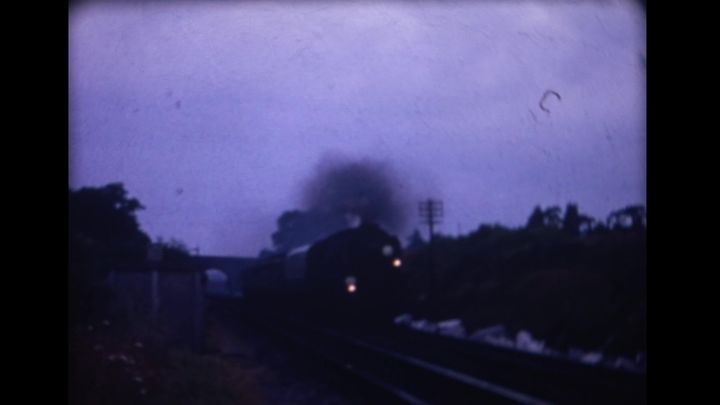 |https://forums-
images.pistonheads.com/662880/202604274716521[/url]
A still from my fathers Cine of the last Steam train returning from Swanage across Wareham Common in 1967 . prior to being replaced with Diesel locomotives
steam train filling with water at Wareham Station 1967
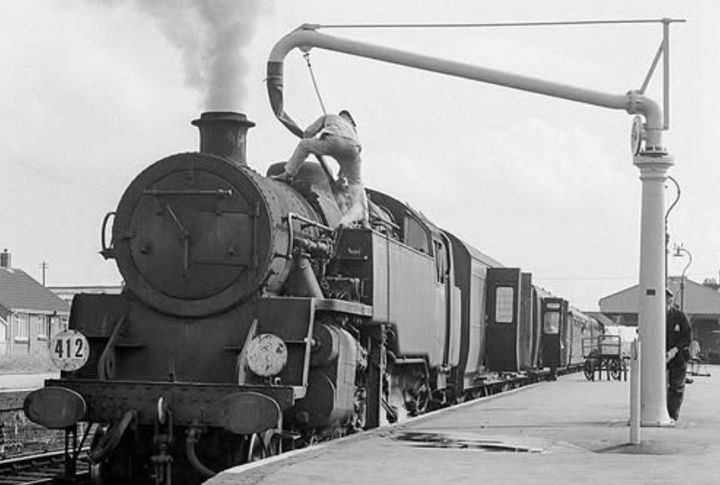
Found an old cine of the last steam train to roll out towards Swanage it was highly publicised at the time it was dated 1967 on Dads Cine reel , I would have been around 1 years old in the cine with the family .
nice to have a happy ending taking my own kids on the steam engine from Wareham to Corfe Castle then on to Swanage to the beach al be it 50 years later .
A success story Wareham - Swanage railway and last steam train 1967 .
As a kid growing up In Wareham Dorset I remember as a family going to Wareham railway station in the summer and going by train to Swanage for lazy summer days spent on Swanage beach.
Then in 1972 . Swanage railway service was closed , that had a big impact as mum never drove so we lost our favourite train service to Swanage via Corfe Castle.
Fortunately the railway line wasn't completely removed . Trains still travelled to Furze brook & Wytch farm ( Corfe ) commercially . However . The track was removed from Harmons cross to Swanage . Swanage Railway station was about to be sold to a developer .
As luck would have it after a huge campaign it was bought by Swanage Council , and the railway society gradually re-laid the track . First to Corfe Castle . Then finally 30 years to the day it was closed in 2002 Steam engines once again Travelled from Swanage to Wareham .
A bit of nostalgia
[url]
images.pistonheads.com/662880/202604274716521[/url]
A still from my fathers Cine of the last Steam train returning from Swanage across Wareham Common in 1967 . prior to being replaced with Diesel locomotives
steam train filling with water at Wareham Station 1967
Found an old cine of the last steam train to roll out towards Swanage it was highly publicised at the time it was dated 1967 on Dads Cine reel , I would have been around 1 years old in the cine with the family .
nice to have a happy ending taking my own kids on the steam engine from Wareham to Corfe Castle then on to Swanage to the beach al be it 50 years later .
Edited by Purosangue on Monday 27th April 13:26
Randy Winkman said:
As above plus the post higher up about selling off public infrastructure. But also I have an issue about living in the past and feeling entitled about how great the UK used to be. I think the US is worse for that though. Global competition is tougher and the world doesnt owe us a living.
Yes, we know you're left-wing.A far greater loss than the myriad branchlines that carried one man and a dog were all the urban tramlines ripped up and 'replaced' with buses, except the buses did not replace them at all, lacking the carrying capacity to do so. This was justified because buses were cheaper than trams and the magnitude of the folly partially concealed by the combined attacks of the Luftwaffe and town planners. Even quite modestly-sized european towns have trams. The UK has Edinburgh, Manchester, Sheffield, Brum, Notty and Croydon, about 10% of what there should be pro-rata. For some reason we don't understand urban transport, or at least the funding paths every other country in western europe have the UK does not.
J6542 said:
2xChevrons said:
saknog said:
Beeching s railway cuts spring to mind. Would public transport look fundamentally different today had those lines been preserved? Hard not to wonder what a more intact network might have meant, particularly for rural communities that were effectively cut off overnight.
The Beeching Cuts (that Beeching rather unfairly had his name attached to for ever more) were going to happen. Every other developed nation had an equivalent in the same time period as transport and travel shifted from rail to road with the growth of personal car ownership and the construction of car- and lorry-dedicated infrastructure.The number of genuinely 'wrong' Beeching closures, that don't benefit from 20/20 hindsight, is actually very small.
These weren't (Titfield Thunderbolt style...) beloved, well used transport links that were taken away by hard-nosed London bureaucrats just because they weren't covering their costs. The majority were barely used by passengers, with their clientel deserting to the roads in droves and their freight customers rapidly following behind.
In many, many cases the BR staff (driver, guard, fireman, station masters, porters, freight clerks, shunters, signalman, crossing keepers, track gangers) outnumbered the paying customers several times over. Any economies such as automated ticket machines, driver only operation, radio signalling, automatic level crossings and so on required upfront capital that BR (losing £millions per day in 1950s value) didn't have and would only reduce the deficit.
Contrary to the folk memory, most of these lines and stations closed without protest. People didn't use them. They'd switched to the car, the bus, the van and the truck and didn't care about the railways, which were seen at every level, from the voter's breakfast table to the Cabinet table, as outdated Victorian relics unsuitable for the sleek, modern age of personal motorised transport.
Where campaigns against closure were mounted, it was widely noted that if everyone who wrote letters of objection or turned out to wave banners at visiting BR officials actually used their local train, then not only would it not be at risk of closure but they'd have to add extra carriages!
Remember that there was no thought or mechanism for subsidising the railways at the time. For over 100 years they had been built and run as profit-making enterprises, and they had been nationalised on the basis that the government would be the investor needed to make good years of neglect after WW2 and the Depression, and in return the profits would go to the Treasury. Until the mid-1950s that plan worked - BR returned an operating profit to the Treasury.
No one in the industry or in Whitehall really had an idea what to do when, for the first time in British history, railways became unprofitable as a whole.
I'm actually typing all this as I wait in the car park of a station on the East Coast Main Line to pick someone up. I'm benefiting perfectly from Beeching's overall vision for the railways. He and his staff knew that the branch lines and rural stations criss-crossing the country couldn't compete in speed, convenience or per-trip cost with the car. So they wouldn't.
Railways are good at three things - 1) long-distance high-speed intercity routes 2) high-density intra-urban mass transit 3) heavy long distance bulk freight. Beeching aimed to turn BR into a network that did those things and slouched off everything else that it could. He successfully arranged for BR to lose its common carrier obligations which had hobbled the railways' ability to act in their own commercial interests and self-preservation for 40 years.
60 years ago, my family member could have arrived at the Cambridgeshire market town where I live at one of two stations (population in 1960 c. 5000 for the entire parish, and it had two stations - the sort of Victorian lassez-faire madness that Beeching was finally getting to grips with). One of those stations required changing onto a branch from a station on the ECML. The other would, I think, need two changes going from London via Cambridge. Both those stations, as well as the junction stations and one of the branch lines, were shut by the Beeching Axe.
It's actually much quicker and more convenient for both the traveller and me, the host, for them to get off at Huntingdon and me to meet them in the car. They get to Huntingdon on a 125mph train that arrives from Kings Cross in less than an hour. Because thanks to Beeching all the intermediate stations serving no one in particular and all the barely-used goods yards have been shut. There aren't any two-carriage local trains stopping every few miles or crawling freight trains. Those things were barely used and getting rid of them means that the fast trains can run faster and more frequently.
And once they get to Huntingdon, it's far quicker for me to collect them to take them home than to wait for the branch train (which only ran three times a day) and then they'd still need to be met at the local station (or get a taxi or a bus) for the tricky 'last mile'.
The funny thing is that we think about the crimes of the Beeching Cuts being the axeing of the picture-postcard rural villages. In fact the real loss has proven to be the hundreds of urban and suburban stations and link-lines that were closed in the 1960s, especially in the industrial North, the Scottish belt and South Wales.
Even by 1965 it was becoming clear that the dream of a car-based society would never come true and that Britain's urban and suburban spaces just could not be acceptably modernised to handle the number of cars. We baulked at American-style urban freeways, resisted bypasses and motorways and shunned car parks and low-density car-based suburbs. But without the new roads promised by the White Heat of Technology, and with the loss of the old railway network, many urban areas became isolated and car-dependent in ways that are still affecting them today.
Take the trans-Pennine area - centres of population and economic activity, only a few miles apart but with appalling public transport links and absolutely choked by too much traffic, lifestyles that rely on the car, thoroughly inadequate road infrastructure and no alternatives.
Personally I think the real failure of the era from a social point of view wasn't so much the closure of the railways but the complete failure to preserve an alternative. Beeching's report is actually predicated on the fact that buses can provide public transport to the places named in his report more cost-effectively than rail. The bus services could - and should - have been regulated, mandated and subsidised.
The big-picture failure, imo (and with admitted hindsight) was that the British Transport Commission was still siloed into different modes - within the BTC you had British Railways, British Waterways, British Road Services etc. What they should have done is instead have a 'Passenger Executive' and a 'Freight Executive', each dedicated to planning and managing the best way to move its particular traffic, rather than managing its particular mode of transport. So the BTC-PE decides what level of service a particular place requires and then decides whether that is best (for a combination of service and cost indexes) whether that's best done by rail, by bus or whatever.
I could write similar reams about the motor industry, but I've subjected everyone to more than enough and the train is due...
E:
bigglesA110 said:
Would that be Ernest Marples, of construction and civil engineering company Marples Ridgeway that had nothing at all to do with having any interests in major infrastructure and roads building at the time..?
Marbles was definitely dodgy in his affairs...but what evidence is there that he or his business benefited from the Beeching closures or the concurrent roadbuilding programme?The only Beeching era road project that Marples Ridgeway undertook were the Hammersmith and Chiswick Flyovers. It was hardly a major player in later years compared to some of the other big civil contractors of the motorway era - Marples Ridgeway did the M56, parts of the M27 and the southern extension of the M1. All undertaken post-Beeching and all, in fact, paralleling still-open railway lines.
Did Marples make other countries cull their railway networks (often much more savagely than we did)?
Let's not discount how Harold Wilson was elected on a promise to halt and review all the closures, and then not only carried them out but closed some that Beeching hadn't listed. It was a combination of seeing the BR books and realising what a financial death spiral the organisation was in and being greatly influenced by the AEU and the EETPU, which represented workers in the motor industry and held a lot of sway in the Labour Party, while ASLEF and the NUR were never that influential post-1945. Plus Wilson shared the general view of the political class, the managerial class and the population as a whole that the future was in cars and the railways were only suitable for managed decline.
Edited by 2xChevrons on Thursday 23 April 11:36
A documentary about the cuts from the time.
https://youtu.be/uke3Y43F-BQ?si=wIs0I2retsdIm8az
Gassing Station | News, Politics & Economics | Top of Page | What's New | My Stuff