
Floods in Cockermouth
Discussion


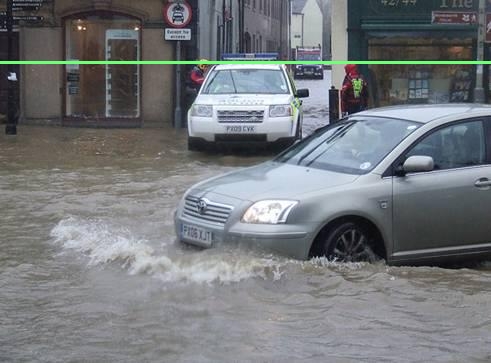
It's not looking good at all. :-(
I'm in Millom in South Cumbria, and at present we are completely cut off from the south. The only way we could get to Barrow in Furness or beyond now is if we go to Carlisle and back down the M6.
That pales into insignificance though when you look at the pictures on the news.
I'm in Millom in South Cumbria, and at present we are completely cut off from the south. The only way we could get to Barrow in Furness or beyond now is if we go to Carlisle and back down the M6.
That pales into insignificance though when you look at the pictures on the news.
Mrs and I went up to Edinburgh by west coast train on 4th Nov and even then, just about every field north of Warrington seemed saturated, and every river full to bursting. That was before the deluge of the last fortnight.
Sympathies to those caught up in this.
Perhaps the Environment Agency might start spending some money on dredging and flood relief, if their budgets weren't about to be axed to pay for more ill-conceived spending.
Sympathies to those caught up in this.
Perhaps the Environment Agency might start spending some money on dredging and flood relief, if their budgets weren't about to be axed to pay for more ill-conceived spending.
I live about 45 minutes east of Cockermouth in Appleby. Town was flooded by the Eden on Wednesday, though fortunately we missed out on the scale of rain on the Pennines that hit The Lakes yesterday.
I work in Penrith and the rain yesterday just didn't stop for a minute. The river Eamont that flows from Ullswater is this morning the highest I have ever seen it in 20 years.
Bear in mind, when you hear of bridge collapses and serious flooding, that places like Cockermouth have been built over thousands of years around the wettest climate in the country. Large ups and downs in the water level are normal, so for something to affect the area in the way it has means a biblical weather event has taken place.
Unfortunately for the residents of Cockermouth it looks like the beginning of probably more than 12 months of rebuilding homes and businesses.
I work in Penrith and the rain yesterday just didn't stop for a minute. The river Eamont that flows from Ullswater is this morning the highest I have ever seen it in 20 years.
Bear in mind, when you hear of bridge collapses and serious flooding, that places like Cockermouth have been built over thousands of years around the wettest climate in the country. Large ups and downs in the water level are normal, so for something to affect the area in the way it has means a biblical weather event has taken place.
Unfortunately for the residents of Cockermouth it looks like the beginning of probably more than 12 months of rebuilding homes and businesses.
Digga said:
Perhaps the Environment Agency might start spending some money on dredging and flood relief, if their budgets weren't about to be axed to pay for more ill-conceived spending.
Dredging is not going to make any difference to the very small, fast flowing rivers around the Lakes. The Environment Agency have spent millions in Cumbria (the new Carlisle flood defences bults after the 2005 floods, for example) but for all that, there is no wisdom in spending millions to counter events that occur once every 100 or 200 years.
The circumstances around Cockermouth just have to be dealt with rather than large compromises made for very rare events.
10 Pence Short said:
The Environment Agency have spent millions in Cumbria (the new Carlisle flood defences bults after the 2005 floods, for example) but for all that, there is no wisdom in spending millions to counter events that occur once every 100 or 200 years.
The circumstances around Cockermouth just have to be dealt with rather than large compromises made for very rare events.
If there is flooding in 2005 and then again in 2009 it doesn't look once every 100 years to me?.The circumstances around Cockermouth just have to be dealt with rather than large compromises made for very rare events.
Don't get me wrong, there needs to be balance, and I would be happy if they abandoned some new housing built on flood plains as too costly to defend. But these are ancient towns.
10 Pence Short said:
Digga said:
Perhaps the Environment Agency might start spending some money on dredging and flood relief, if their budgets weren't about to be axed to pay for more ill-conceived spending.
Dredging is not going to make any difference to the very small, fast flowing rivers around the Lakes. The Environment Agency have spent millions in Cumbria (the new Carlisle flood defences bults after the 2005 floods, for example) but for all that, there is no wisdom in spending millions to counter events that occur once every 100 or 200 years.
The circumstances around Cockermouth just have to be dealt with rather than large compromises made for very rare events.
However, I dare say there will be a number of places flooded this winter, as last, which could have been avoided through EA works.
FWIW, I was surprised after the rains of 2007 that few of our customers seemed to be engaged in digging any sort of drainage works. Only this year have we seen what we think is a rise in activity, judging by sales of these things:

JagLover said:
10 Pence Short said:
The Environment Agency have spent millions in Cumbria (the new Carlisle flood defences bults after the 2005 floods, for example) but for all that, there is no wisdom in spending millions to counter events that occur once every 100 or 200 years.
The circumstances around Cockermouth just have to be dealt with rather than large compromises made for very rare events.
If there is flooding in 2005 and then again in 2009 it doesn't look once every 100 years to me?.The circumstances around Cockermouth just have to be dealt with rather than large compromises made for very rare events.
Don't get me wrong, there needs to be balance, and I would be happy if they abandoned some new housing built on flood plains as too costly to defend. But these are ancient towns.
Cockermouth is affected when the Lakeland fells around Keswick are saturated, Carlisle is affected when the northern Pennines around Kirkby Stephen and Appleby are saturated.
Edited by 10 Pence Short on Friday 20th November 09:24
10 Pence Short said:
JagLover said:
10 Pence Short said:
The Environment Agency have spent millions in Cumbria (the new Carlisle flood defences bults after the 2005 floods, for example) but for all that, there is no wisdom in spending millions to counter events that occur once every 100 or 200 years.
The circumstances around Cockermouth just have to be dealt with rather than large compromises made for very rare events.
If there is flooding in 2005 and then again in 2009 it doesn't look once every 100 years to me?.The circumstances around Cockermouth just have to be dealt with rather than large compromises made for very rare events.
Don't get me wrong, there needs to be balance, and I would be happy if they abandoned some new housing built on flood plains as too costly to defend. But these are ancient towns.
Cockermouth is affected when the Lakeland fells around Keswick are saturated, Carlisle is affected when the northern Pennines around Kirkby Stephen and Appleby are saturated.
The planned but not yet started defences for Keswick would have been topped.
To be honest, the Eden is high but not that bad this time around. Nothing at all like 2005.
Even without the new defences, Carlisle would not have been flooded anything like it was 4 years ago.
As for The Lakes, the relief is such that once saturated, the run off from the fells feeds into the (short) rivers extremely quickly and at high speed. You're talking the kind of power that pushes 200kg boulders along valley floors. There's little you can do because the water courses are steep, can't handle volume (they 'V' shaped rather than 'U'), turn sharp angles and soon get blocked by debris.
Carlise is easier to plan for, because it is 6-8 hours from the source of the flood, can handle larger volume, is on flat relief and controlled to an extent by the tides.
Even without the new defences, Carlisle would not have been flooded anything like it was 4 years ago.
As for The Lakes, the relief is such that once saturated, the run off from the fells feeds into the (short) rivers extremely quickly and at high speed. You're talking the kind of power that pushes 200kg boulders along valley floors. There's little you can do because the water courses are steep, can't handle volume (they 'V' shaped rather than 'U'), turn sharp angles and soon get blocked by debris.
Carlise is easier to plan for, because it is 6-8 hours from the source of the flood, can handle larger volume, is on flat relief and controlled to an extent by the tides.

F i F said:
one bridge is down in Workington, Police officer missing,
levels dropped 4-5 ft in Cockermouth but evacuation still under way.
levels dropped 4-5 ft in Cockermouth but evacuation still under way.
 It's not looking good. http://news.bbc.co.uk/1/hi/uk/8369934.stm
10 Pence Short said:
Digga said:
Perhaps the Environment Agency might start spending some money on dredging and flood relief, if their budgets weren't about to be axed to pay for more ill-conceived spending.
Dredging is not going to make any difference to the very small, fast flowing rivers around the Lakes. The Environment Agency have spent millions in Cumbria (the new Carlisle flood defences bults after the 2005 floods, for example) but for all that, there is no wisdom in spending millions to counter events that occur once every 100 or 200 years.
The circumstances around Cockermouth just have to be dealt with rather than large compromises made for very rare events.
Cockermouth is no stranger to floods, but there were at least 5 feet higher than 'normal'.
Gassing Station | News, Politics & Economics | Top of Page | What's New | My Stuff