
Where to begin with Stocks
Discussion


Hello, I have never bought shares before. I am not even financially minded. I am however a big fan of learning new things.
Could you please recommend a starting point from which I can research and build confidence when it comes to learning about the market.
I want my first investment to be very low and then I’ll build it up. Just so I can say I only started with a tenner, or twenty or fifty. That would be cool.
Any general advice is also greatly appreciated.
MargoSilch
Could you please recommend a starting point from which I can research and build confidence when it comes to learning about the market.
I want my first investment to be very low and then I’ll build it up. Just so I can say I only started with a tenner, or twenty or fifty. That would be cool.
Any general advice is also greatly appreciated.
MargoSilch
I was in a similar position to you at the start of last year, read the IM threads to get a gist of things.
I didn't realise the difference between investing and trading, the first thing you have to do as a complete novice I would say is to learn the difference and then decide what you're after. If it's investing then the chaps at IM couldn't be more helpful even to a low level 'investor' like myself.
I didn't realise the difference between investing and trading, the first thing you have to do as a complete novice I would say is to learn the difference and then decide what you're after. If it's investing then the chaps at IM couldn't be more helpful even to a low level 'investor' like myself.
Buying and selling stocks is very simple. Set up an account with any of the platforms, add some money, buy, then sell at some point in the future.
If you mean how do you learn what to buy and sell, I wouldn't bother.There are professionals and very experienced amateurs who will outperform you so your gains (if any) will likely be small, and anything that affects share prices will be acted on before you know about it.
If you are investing small amounts then gains will be eaten up by the spread (buy vs sell price) and dealing fees. If you want to try without risking money then there are dummy accounts you can use.
What I would do is buy funds. They are traded the same way as stocks (other than they are executed once day rather then instantly). The difference is they are a collection of shares managed by a fund manager.
Invest through an ISA and just keep dripping cash in when you can. It's the same experience as buying stocks, but the risk is spread.
I've been investing in funds like Lindsel Train Global Equity and Fundsmith, and I've seen 100% gains in 5 years.
Edited to add...
I've been investing for about 30 years and have traded individual stocks for decades. Funds are what made me decent returns.
Edited a second time to add...
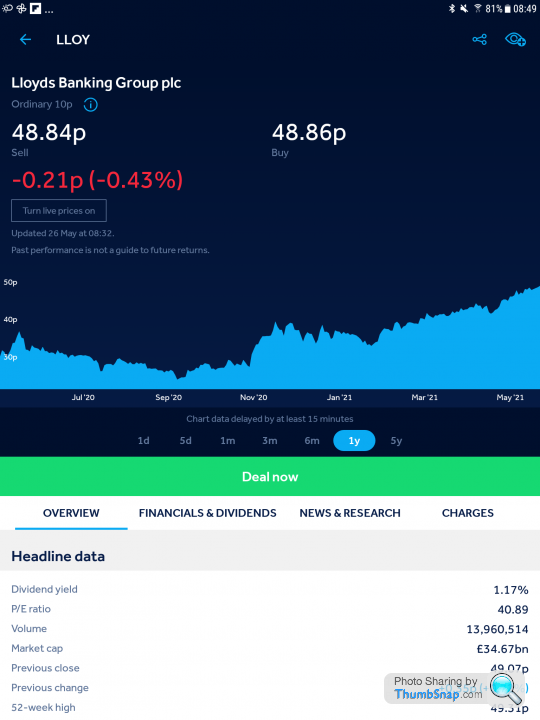
This is a typical stock (Lloyds Bank) viewed through the Hargreaves and Lansdown platform. You can see there is a small difference between the buy and sell price, and you're only buying Lloyds.
This is a Fund (Lindsel Train Global Equity) through the same platform. As you can see there is no difference between the buy and sell, and on the tabs I've shown what stocks the fund owns, hence you're spreading the risk.

If you mean how do you learn what to buy and sell, I wouldn't bother.There are professionals and very experienced amateurs who will outperform you so your gains (if any) will likely be small, and anything that affects share prices will be acted on before you know about it.
If you are investing small amounts then gains will be eaten up by the spread (buy vs sell price) and dealing fees. If you want to try without risking money then there are dummy accounts you can use.
What I would do is buy funds. They are traded the same way as stocks (other than they are executed once day rather then instantly). The difference is they are a collection of shares managed by a fund manager.
Invest through an ISA and just keep dripping cash in when you can. It's the same experience as buying stocks, but the risk is spread.
I've been investing in funds like Lindsel Train Global Equity and Fundsmith, and I've seen 100% gains in 5 years.
Edited to add...
I've been investing for about 30 years and have traded individual stocks for decades. Funds are what made me decent returns.
Edited by 98elise on Wednesday 26th May 08:47
Edited a second time to add...
This is a typical stock (Lloyds Bank) viewed through the Hargreaves and Lansdown platform. You can see there is a small difference between the buy and sell price, and you're only buying Lloyds.
This is a Fund (Lindsel Train Global Equity) through the same platform. As you can see there is no difference between the buy and sell, and on the tabs I've shown what stocks the fund owns, hence you're spreading the risk.
Edited by 98elise on Wednesday 26th May 10:05
If your just learning with very small amounts sign up for T212. Free to trade so if you get it wrong sell them with no fee and buy something else very simple to use and if you know someone with a code (PM me if you don’t) you get a free share normally a tenner to get you started.
Tips for trading read everything you can. Forums on here , free reports a plenty on the likes of HL, finance forums, the internet is awash.
Tips for trading read everything you can. Forums on here , free reports a plenty on the likes of HL, finance forums, the internet is awash.
BoRED S2upid said:
If your just learning with very small amounts sign up for T212. Free to trade so if you get it wrong sell them with no fee and buy something else very simple to use and if you know someone with a code (PM me if you don’t) you get a free share normally a tenner to get you started.
Tips for trading read everything you can. Forums on here , free reports a plenty on the likes of HL, finance forums, the internet is awash.
T212 weren't taking new clients this morning.Tips for trading read everything you can. Forums on here , free reports a plenty on the likes of HL, finance forums, the internet is awash.
Open a Vanguard ISA, set up a direct debit of £100 a month and buy the LS100% equity fund with it. About 30minutes of your time.
Get on with your life. Check account every 1/4and revel in your financial skills.
Trading shares or investing in them with no capital is not viable unless you use one of the new apps like Robin Hood or T212 and they are designed to make you gamble not invest and they make money on the spread which is far less transparent and predictable than a simple fee structure (although the fee structure on some isas and funds is admittedly also not that obvious)
Get on with your life. Check account every 1/4and revel in your financial skills.
Trading shares or investing in them with no capital is not viable unless you use one of the new apps like Robin Hood or T212 and they are designed to make you gamble not invest and they make money on the spread which is far less transparent and predictable than a simple fee structure (although the fee structure on some isas and funds is admittedly also not that obvious)
The UKPersonalFinance subreddit wiki has a lot of good introductory information eg.
https://ukpersonal.finance/index-funds/
That subreddit is very heavy on promoting globally diversified index funds (I happen to agree). Though that’s only one approach.
General advice:
1. Have a good idea of your risk appetite and time horizon. If you don’t need the money for a long time, this suggests you can take more risk. Risk in this case means equities (shares, funds etc) rather than bonds
2. Costs matter. Try to keep these low. Vanguard you’ll likely be paying less than 0.5% all in.
3. Trading is not investing. Investing should be boring.
4. Understand what you’re investing in. Eg. If you buy into an index, you should be able to explain to an educated layperson why you’ve picked that fund. Don’t just FOMO.
https://ukpersonal.finance/index-funds/
That subreddit is very heavy on promoting globally diversified index funds (I happen to agree). Though that’s only one approach.
General advice:
1. Have a good idea of your risk appetite and time horizon. If you don’t need the money for a long time, this suggests you can take more risk. Risk in this case means equities (shares, funds etc) rather than bonds
2. Costs matter. Try to keep these low. Vanguard you’ll likely be paying less than 0.5% all in.
3. Trading is not investing. Investing should be boring.
4. Understand what you’re investing in. Eg. If you buy into an index, you should be able to explain to an educated layperson why you’ve picked that fund. Don’t just FOMO.
Edited by Jawls on Wednesday 26th May 11:02
Start with a index tracker - at the beginning I invested only in FTSE 100 tracker, that was a mistake - the FTSE 100 pretty much hasn't done much for at least 5 years if not longer (I have only been investing 5 years).
If I was to do my time again - I would of started with a world tracker, you will have a yearly fee (some world trackers are around 0.17% - some lower some higher). A world tracker is invested in global stocks.
Then start maybe looking at regions if you wish (asia pacific fund for example, emerging markets etc, or you could go and invest in specialist funds such as Lindsell train global equity / Fundsmith equity etc (this would have typically only 25 stocks its invested in).
Depending on the amounts, theres no point in buying £100 worth of legal and general for example as it will take years to make any return (due to trading fees, stamp duty etc).
I would say the minimum to invest in any shares is £1k. Wouldn't bother below that, with £1k of shares on Hargreaves lansdown for example your costs to buy are £11.95, sell £11.95 plus stamp duty - so call it £30 profit needs to be made just to break even.
If I was to do my time again - I would of started with a world tracker, you will have a yearly fee (some world trackers are around 0.17% - some lower some higher). A world tracker is invested in global stocks.
Then start maybe looking at regions if you wish (asia pacific fund for example, emerging markets etc, or you could go and invest in specialist funds such as Lindsell train global equity / Fundsmith equity etc (this would have typically only 25 stocks its invested in).
Depending on the amounts, theres no point in buying £100 worth of legal and general for example as it will take years to make any return (due to trading fees, stamp duty etc).
I would say the minimum to invest in any shares is £1k. Wouldn't bother below that, with £1k of shares on Hargreaves lansdown for example your costs to buy are £11.95, sell £11.95 plus stamp duty - so call it £30 profit needs to be made just to break even.
BobsPigeon said:
Open a Vanguard ISA, set up a direct debit of £100 a month and buy the LS100% equity fund with it. About 30minutes of your time.
Get on with your life. Check account every 1/4and revel in your financial skills.
Trading shares or investing in them with no capital is not viable unless you use one of the new apps like Robin Hood or T212 and they are designed to make you gamble not invest and they make money on the spread which is far less transparent and predictable than a simple fee structure (although the fee structure on some isas and funds is admittedly also not that obvious)
^^^^^ This is good advice. I tried my hand with S&S and managed to turn £2k into £48. Get on with your life. Check account every 1/4and revel in your financial skills.
Trading shares or investing in them with no capital is not viable unless you use one of the new apps like Robin Hood or T212 and they are designed to make you gamble not invest and they make money on the spread which is far less transparent and predictable than a simple fee structure (although the fee structure on some isas and funds is admittedly also not that obvious)

BobsPigeon said:
Open a Vanguard ISA, set up a direct debit of £100 a month and buy the LS100% equity fund with it. About 30minutes of your time.
Get on with your life. Check account every 1/4and revel in your financial skills.
Trading shares or investing in them with no capital is not viable unless you use one of the new apps like Robin Hood or T212 and they are designed to make you gamble not invest and they make money on the spread which is far less transparent and predictable than a simple fee structure (although the fee structure on some isas and funds is admittedly also not that obvious)
^^^^^^^^Yep, I'd also agree with the above.Get on with your life. Check account every 1/4and revel in your financial skills.
Trading shares or investing in them with no capital is not viable unless you use one of the new apps like Robin Hood or T212 and they are designed to make you gamble not invest and they make money on the spread which is far less transparent and predictable than a simple fee structure (although the fee structure on some isas and funds is admittedly also not that obvious)
If you just want to have a little bit of fun trading (gambling) a few individual stocks with money you don't mind losing, I'd use the Trading 212 app or something similar.
If on the other hand you want to INVEST long term, and build wealth for some point in the future, then you could do a lot worse than opening an ISA with Vanguard and every month just trickle whatever you can afford into something like a Life Strategy 100 (or similar Low Cost Index Fund)
Use YouTube to see tutorials and reviews regarding the S&S platforms.
Remember that buying from Fidelity, Legal & General, Vanguard platform/website would mean you will only be able to buy their brand of funds i.e. like buying from the Ralph Lauren, Nike, Rolex store only their brand of products.
Whereas if you buy from AJ Bell, Hargreaves Lansdown, Investor Interactive, etc. platform would mean you can buy 100's of different funds, stocks & shares i.e. like buying from John Lewis, JD Sports, Watches of Switzerland, a wide brand/range of products.
If you wanted to buy various funds by Lindsell Train, Fundsmith, Baillie Gifford, etc. it would have to be from the latter name platforms.
Also some funds are fairly similar i.e. a tech fund from Fidelity, Legal & General, Vanguard would have the likes of Amazon, Apple, Google, Intel, Microsoft, Netflix, Nvidia, etc... but the percentage size of those stock in the fund would be different just like the fund price, annual Ongoing Charge Fee and platform fee.
I personally use Hargreaves Lansdown, very easy to use/navigate and does show you an example of cost, charges and assumption return over 5 years to give you an illustrative breakdown.
Remember that buying from Fidelity, Legal & General, Vanguard platform/website would mean you will only be able to buy their brand of funds i.e. like buying from the Ralph Lauren, Nike, Rolex store only their brand of products.
Whereas if you buy from AJ Bell, Hargreaves Lansdown, Investor Interactive, etc. platform would mean you can buy 100's of different funds, stocks & shares i.e. like buying from John Lewis, JD Sports, Watches of Switzerland, a wide brand/range of products.
If you wanted to buy various funds by Lindsell Train, Fundsmith, Baillie Gifford, etc. it would have to be from the latter name platforms.
Also some funds are fairly similar i.e. a tech fund from Fidelity, Legal & General, Vanguard would have the likes of Amazon, Apple, Google, Intel, Microsoft, Netflix, Nvidia, etc... but the percentage size of those stock in the fund would be different just like the fund price, annual Ongoing Charge Fee and platform fee.
I personally use Hargreaves Lansdown, very easy to use/navigate and does show you an example of cost, charges and assumption return over 5 years to give you an illustrative breakdown.
So I invest - I traded crypto and my experience was I lost more than made (tho investing and mining paid off a bit).
I have vanguard funds and they are performing really well. I add some money and forget about it. I can play with the funds I pop the money into and try and balance their lower risk funds, but they are all doing much better than I could.
I tried the freetrade app thinking I could be a bit of hero. Its not quite trading and more investing, but picking the right things that consistently rise isn't as easy as it looks so far.
Personally I am going to stick beer money in freetrade and savings in vanguard.
I have vanguard funds and they are performing really well. I add some money and forget about it. I can play with the funds I pop the money into and try and balance their lower risk funds, but they are all doing much better than I could.
I tried the freetrade app thinking I could be a bit of hero. Its not quite trading and more investing, but picking the right things that consistently rise isn't as easy as it looks so far.
Personally I am going to stick beer money in freetrade and savings in vanguard.
Who knows the future, but I don’t think it’ll be plain sailing. You are buying into a lot of crap companies if you buy the whole market. Go for a focused but all weather strategy. On balance, if I had to put everything into one pot it would probably be Fundsmith. Do some reading, watch their recent AGM. Makes a lot of sense to me.
halo34 said:
Personally I am going to stick beer money in freetrade and savings in vanguard.
I do the same, only with T212 instead of freetrade (I found freetrade didn't have quite a few stocks I wanted unless you subscribed to the pro version). My savings are in a managed fund, whereas my new car fund is down to my own luck within T212. That way whatever I buy is as a result of my own doing  I should probably set a date on it, at which point I crystalise the fund and buy whatever I can afford at that price point.
Shnozz said:
whereas my new car fund is down to my own luck within T212. That way whatever I buy is as a result of my own doing I should probably set a date on it, at which point I crystalise the fund and buy whatever I can afford at that price point.
Funny you should look at it like that, as I realised recently that I'd got enough in my T212 account to cover the 3 year lease on my Golf R, so was feeling pretty pleased with myself, then a couple of my stocks took a big dive, and now I could probably buy a secondhand Ford Fiesta with it :-( I should probably set a date on it, at which point I crystalise the fund and buy whatever I can afford at that price point.troika said:
You are buying into a lot of crap companies if you buy the whole market.
This is a common cognitive bias. The logical extension of "only buy good companies that will go up" is "don't buy bad companies that will go down". Of course, if you know ex ante which companies are "crap", why not short sell those ones and make far more money?NickCQ said:
This is a common cognitive bias. The logical extension of "only buy good companies that will go up" is "don't buy bad companies that will go down". Of course, if you know ex ante which companies are "crap", why not short sell those ones and make far more money?
My impression is that the vast majority of mediocre companies tends to go sideways rather than necessarily down?Finding the next Patisserie Valerie or Wirecard (when they're trying to hide how crap they are) is possibly more work than looking for good ones?
xeny said:
My impression is that the vast majority of mediocre companies tends to go sideways rather than necessarily down?
Finding the next Patisserie Valerie or Wirecard (when they're trying to hide how crap they are) is possibly more work than looking for good ones?
This is maybe the third extension - only buy the stuff that goes up rather than the stuff that stays still?Finding the next Patisserie Valerie or Wirecard (when they're trying to hide how crap they are) is possibly more work than looking for good ones?
Seriously, if it were that easy you could set up an algorithmic trading bot to do that and make billions while you slept.
NickCQ said:
This is maybe the third extension - only buy the stuff that goes up rather than the stuff that stays still?
Seriously, if it were that easy you could set up an algorithmic trading bot to do that and make billions while you slept.
I'm not saying it's easy. I wonder though if it is easier than finding the stuff that will go down.Seriously, if it were that easy you could set up an algorithmic trading bot to do that and make billions while you slept.
xeny said:
I'm not saying it's easy. I wonder though if it is easier than finding the stuff that will go down.
Possibly - but you are looking for the second-order effect, i.e. which company is worse / better than the market thinks it is. You are estimating two things - firstly how good the company is (which is not impossible), but secondly how good the market thinks the company is. The opportunity is created by having a differentiated view from the market and being right. If everyone thinks Kodak is worthless, it's unlikely to be possible to make money by betting on that view.Gassing Station | Finance | Top of Page | What's New | My Stuff