
Does anyone here sell covered calls on a regular basis?
Discussion


I am wondering if anyone here sells covered calls on a regular basis?
I am not thinking about this as a proper investment, or as a business, but I like learning new things and I think it might be fun.
The concern I had is, as I would hold the shares, I am taking all the downside risk if they drop in price, but only getting the limited upside (plus the call premium) if they increase. So I am wondering, if I looked on an historical basis across a selection of companies, whether this normally worked as a strategy or not, or if because the upside is always capped, you end up being worse off.
Just interested if anyone has any experience at making it work on a small scale.
I am not thinking about this as a proper investment, or as a business, but I like learning new things and I think it might be fun.
The concern I had is, as I would hold the shares, I am taking all the downside risk if they drop in price, but only getting the limited upside (plus the call premium) if they increase. So I am wondering, if I looked on an historical basis across a selection of companies, whether this normally worked as a strategy or not, or if because the upside is always capped, you end up being worse off.
Just interested if anyone has any experience at making it work on a small scale.
EddieSteadyGo said:
I am wondering if anyone here sells covered calls on a regular basis?
I am not thinking about this as a proper investment, or as a business, but I like learning new things and I think it might be fun.
The concern I had is, as I would hold the shares, I am taking all the downside risk if they drop in price, but only getting the limited upside (plus the call premium) if they increase. So I am wondering, if I looked on an historical basis across a selection of companies, whether this normally worked as a strategy or not, or if because the upside is always capped, you end up being worse off.
Just interested if anyone has any experience at making it work on a small scale.
You would only write a covered call to increase your price (total return). Stock X at $10 cost, you want to achieve $11 and it happens, due to the volatility, duration, you can charge a $1 premium for writing the contract. I wouldn't entertain it as a strategy but if you held a stock for the longer term it could make sense. Of course if the stock went to $20 before expiry, you have lost $9/share. It's a complex business (derivatives) and not for the faint hearted. The biggest issue is with stocks which have a very large options book in play-it follows that professional traders working with deep pocket institutions will have much better tools that you. They can see the flows (they buy it from Robin Hood etc)and having deep pockets they can and will manipulate the underlying stock to best fit their positions. You end up being a mere participant.I am not thinking about this as a proper investment, or as a business, but I like learning new things and I think it might be fun.
The concern I had is, as I would hold the shares, I am taking all the downside risk if they drop in price, but only getting the limited upside (plus the call premium) if they increase. So I am wondering, if I looked on an historical basis across a selection of companies, whether this normally worked as a strategy or not, or if because the upside is always capped, you end up being worse off.
Just interested if anyone has any experience at making it work on a small scale.
I do it on a portfolio of mainly US stocks (dividend aristocrats) in my pension.
It tends to be worthwhile as the stocks are generally relatively low beta and low volatility so even if one or two rise beyond the strike (25 delta - OtM) gains on the remainder usually exceed any unrealised 'loss', which I then roll out until strike catches up with price of the underlying. It takes a couple of minutes to complete each trade and makes an extra 1-2% most months.
Obviously whilst you can miss out - or defer - unexpected swings to the upside, it cushions small downward moves nicely.
It tends to be worthwhile as the stocks are generally relatively low beta and low volatility so even if one or two rise beyond the strike (25 delta - OtM) gains on the remainder usually exceed any unrealised 'loss', which I then roll out until strike catches up with price of the underlying. It takes a couple of minutes to complete each trade and makes an extra 1-2% most months.
Obviously whilst you can miss out - or defer - unexpected swings to the upside, it cushions small downward moves nicely.
I personally don't sell covered calls automatically, which is what this study involves, but this might be of interest to the OP and others.
https://blog.orats.com/covered-call-backtest-findi...
https://blog.orats.com/covered-call-backtest-findi...
Edited by sideways sid on Wednesday 22 December 12:27
Burwood said:
They can see the flows (they buy it from Robin Hood etc)and having deep pockets they can and will manipulate the underlying stock to best fit their positions.
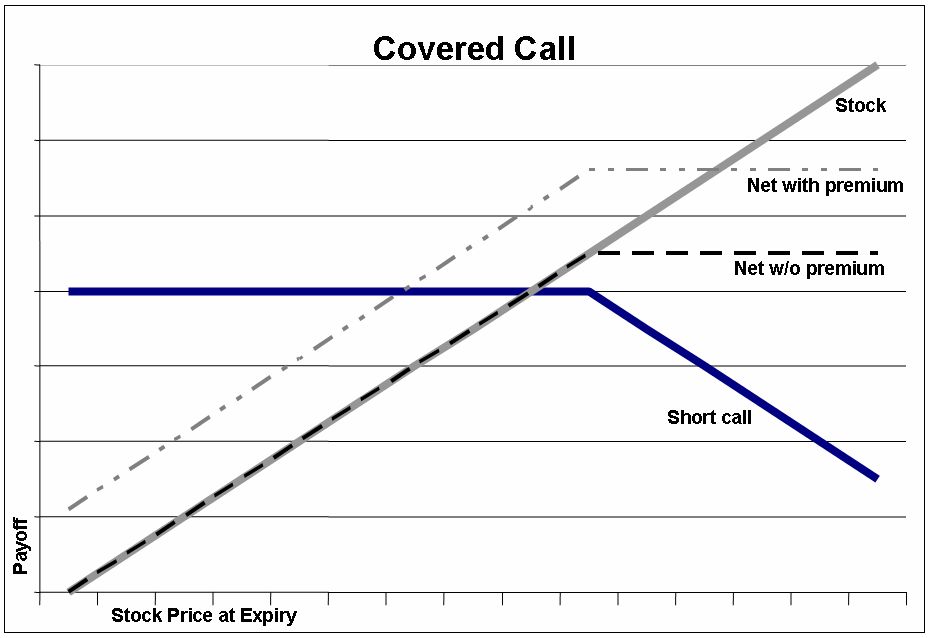
This is a baseless conspiracy theory that I am disappointed to see propagated outside r/WallStreetBets. PFOF is a way to capture a market-making spread inside the NBBO - Citadel et al. really aren't front-running retail trades.Re the OP's question on covered calls, if you want capped upside and full downside you should just buy bonds, unless you have a compelling reason to think that the market is overvaluing the likelihood of equities appreciating:
Burwood said:
The OP asked for comments from people with experience. Have any?
Early in my career I worked on a derivatives structuring desk so I have some familiarity with these products. For what most retail investors are trying to achieve with their portfolios the strategy doesn’t seem particularly suitable. The reason I bring up Citadel is that they are usually identified as the shadowy manipulative hedge fund in the conspiracy theory you cited. They are also Robinhood’s main PFOF counterparty.
NickCQ said:
Burwood said:
The OP asked for comments from people with experience. Have any?
Early in my career I worked on a derivatives structuring desk so I have some familiarity with these products. For what most retail investors are trying to achieve with their portfolios the strategy doesn’t seem particularly suitable. The reason I bring up Citadel is that they are usually identified as the shadowy manipulative hedge fund in the conspiracy theory you cited. They are also Robinhood’s main PFOF counterparty.
 . Someone pays Robin hood $1B per year for this data. Don't you think the buyers perceive great value in it and there are a myriad of uses, some we haven't even thought of.
Burwood said:
If you don't think derivative writers and market makers try and manipulate prices then you're incorrect. Someone pays Robin hood $1B per year for this data. Don't you think the buyers perceive great value in it and there are a myriad of uses, some we haven't even thought of.
There is sufficient value in the market making profits to be made off non-adversely selected retail order data to support $1 bn of value without assuming anything more nefarious is going on. The various US regulatory agencies have been all over this for the last year and have not found anything - of course if they come out and say the opposite I'll eat my words.On the broader question of whether derivatives players try and play shenanigans with market prices, for sure some of that goes on, but I think it is incorrect to suggest that retail traders are particularly on the receiving end of that (versus real money / corporates making large single FX / commodity trades).

Burwood said:
NickCQ said:
Burwood said:
The OP asked for comments from people with experience. Have any?
Early in my career I worked on a derivatives structuring desk so I have some familiarity with these products. For what most retail investors are trying to achieve with their portfolios the strategy doesn’t seem particularly suitable. The reason I bring up Citadel is that they are usually identified as the shadowy manipulative hedge fund in the conspiracy theory you cited. They are also Robinhood’s main PFOF counterparty.
. Someone pays Robin hood $1B per year for this data. Don't you think the buyers perceive great value in it and there are a myriad of uses, some we haven't even thought of.It's more simple than that. Robinhood and the other retail hubs are not in the investment game but the gambling game. 'Investment' is just a marketing masquerade to draw in the punters and get them gambling. Every single aspect of the business is about generating excessive flow, excessive size and excessive risk.
What this means is that the bulk of the flow onto their desk is loss making for the originator. However, in the US they can't run a book as we can here so they developed a system using PFOF whereby the flow passes to another license which runs the book. The undesirable flow, the stuff that looks like it could be profitable for the originator is laid off, if it can't be laid off then you turn the tap off and stop accepting the flow meanwhile the junk is run for large gains.
There will be smarter stuff going on with PFOF elsewhere but generally with retail gambler flow like RH there's no need to take any great risks or try to be particularly clever, you just dump it all in a bucket, hedge out where it's overflowing and run that bucket of swill while the end punters haemorrhage losses.
What this means is that the bulk of the flow onto their desk is loss making for the originator. However, in the US they can't run a book as we can here so they developed a system using PFOF whereby the flow passes to another license which runs the book. The undesirable flow, the stuff that looks like it could be profitable for the originator is laid off, if it can't be laid off then you turn the tap off and stop accepting the flow meanwhile the junk is run for large gains.
There will be smarter stuff going on with PFOF elsewhere but generally with retail gambler flow like RH there's no need to take any great risks or try to be particularly clever, you just dump it all in a bucket, hedge out where it's overflowing and run that bucket of swill while the end punters haemorrhage losses.
sideways sid said:
I do it on a portfolio of mainly US stocks (dividend aristocrats) in my pension.
It tends to be worthwhile as the stocks are generally relatively low beta and low volatility so even if one or two rise beyond the strike (25 delta - OtM) gains on the remainder usually exceed any unrealised 'loss', which I then roll out until strike catches up with price of the underlying. It takes a couple of minutes to complete each trade and makes an extra 1-2% most months.
Obviously whilst you can miss out - or defer - unexpected swings to the upside, it cushions small downward moves nicely.
Which trading platform do you use/recommend , for US stocks and also UK ?It tends to be worthwhile as the stocks are generally relatively low beta and low volatility so even if one or two rise beyond the strike (25 delta - OtM) gains on the remainder usually exceed any unrealised 'loss', which I then roll out until strike catches up with price of the underlying. It takes a couple of minutes to complete each trade and makes an extra 1-2% most months.
Obviously whilst you can miss out - or defer - unexpected swings to the upside, it cushions small downward moves nicely.
DonkeyApple said:
It's more simple than that. Robinhood and the other retail hubs are not in the investment game but the gambling game. 'Investment' is just a marketing masquerade to draw in the punters and get them gambling. Every single aspect of the business is about generating excessive flow, excessive size and excessive risk.
What this means is that the bulk of the flow onto their desk is loss making for the originator. However, in the US they can't run a book as we can here so they developed a system using PFOF whereby the flow passes to another license which runs the book. The undesirable flow, the stuff that looks like it could be profitable for the originator is laid off, if it can't be laid off then you turn the tap off and stop accepting the flow meanwhile the junk is run for large gains.
There will be smarter stuff going on with PFOF elsewhere but generally with retail gambler flow like RH there's no need to take any great risks or try to be particularly clever, you just dump it all in a bucket, hedge out where it's overflowing and run that bucket of swill while the end punters haemorrhage losses.
Yep, generally retail flow is so uncorrelated and low impact that it ends up risk managing itself on a timeline of hours or a few days max. Empirically there's so little alpha, either positive or negative, in most of it that it's pointless for a MM to tie up scarce balance sheet by doing anything clever around it when they can just capture the spread and keep churning.What this means is that the bulk of the flow onto their desk is loss making for the originator. However, in the US they can't run a book as we can here so they developed a system using PFOF whereby the flow passes to another license which runs the book. The undesirable flow, the stuff that looks like it could be profitable for the originator is laid off, if it can't be laid off then you turn the tap off and stop accepting the flow meanwhile the junk is run for large gains.
There will be smarter stuff going on with PFOF elsewhere but generally with retail gambler flow like RH there's no need to take any great risks or try to be particularly clever, you just dump it all in a bucket, hedge out where it's overflowing and run that bucket of swill while the end punters haemorrhage losses.
Langleyuser said:
Which trading platform do you use/recommend , for US stocks and also UK ?
IBKR and Saxo are the most common (maybe only? not sure) if you're UK-based. Just don't expect much juice from UK single stock options where usually the spreads are wide enough to drive a truck through. There's a few names that exhibit silly enough IV spikes around earnings to occasionally be worth a look, but on the whole it's a backwater compared to the US.NowWatchThisDrive said:
Yep, generally retail flow is so uncorrelated and low impact that it ends up risk managing itself on a timeline of hours or a few days max. Empirically there's so little alpha, either positive or negative, in most of it that it's pointless for a MM to tie up scarce balance sheet by doing anything clever around it when they can just capture the spread and keep churning.
You get the spread on the stuff you hedge but the real bucks and why you pay a lot for retail gambling flow is that it's near guaranteed to be loss making almost all the time. They will all be selling when you're happy to buy and buying when your selling. It breaks occasionally but the luxury of PFOF is that you can close off the flow and leave all the fallout with the entity that collects that flow directly from the market. Plus, retail always does the exact same as each other so it's easy to isolate the particular stocks that they will be simply sitting on forever and just hedge it out for spread as it comes in like clockwork. In really simple terms, hedge the FAANG stock flows that hit your book, keep an eye on social media for the next stock that's going to get blasted and switch off the book element so it just hedges into the market and then just stick everything else onto your book and take the client losses while hedging any excess flow above your book tolerances.
If you then want to be clever you can have a trading team monitoring specific markets and potentially taking a house view on exposure or you could even set up a fund backed by more savvy retail money to run extra exposure for a share of gains but in its simplest form you just tip all that retail gambling flow into your big bucket, sit on it and wait for them to ask for it back at a higher price or for you to take it off their hands at a lower price than they paid for it.
Most of the time you aren't even clearing flow into the market but back to the clients of the retail broker that sent it to you just a few moments ago. As they bank their losses they are banking your gains.
I make reasonable returns doing this but it’s clear from some posts that supposed experts perhaps don’t know as much as they claim
It is not easy nor is it exiting and the returns are capped but the notion that Citadel will stuff you only applies if you play that game. It’s all about liquidity and this limits the number of markets but that applies if you go short small cap stocks, I spent an awful lot of time investigating it and once the methodology is learned, it’s about the psychological notion of capped upside, it requires very real risk control and an ability to be able to not trade for the sake of it.
With regards to the capped upside, it is possible to reduce costs on stock you’d like to own
I found it extremely tedious to learn something new at my age but it has proved worthwhile, do not attempt it until you have thoroughly, thoroughly researched all. It took me a year before I even thought of trading
It’s very hard here to adequately convey the myriad of potential issues but as a basis, liquidity or lack of it will be must likely the one that gets you
It is not easy nor is it exiting and the returns are capped but the notion that Citadel will stuff you only applies if you play that game. It’s all about liquidity and this limits the number of markets but that applies if you go short small cap stocks, I spent an awful lot of time investigating it and once the methodology is learned, it’s about the psychological notion of capped upside, it requires very real risk control and an ability to be able to not trade for the sake of it.
With regards to the capped upside, it is possible to reduce costs on stock you’d like to own
I found it extremely tedious to learn something new at my age but it has proved worthwhile, do not attempt it until you have thoroughly, thoroughly researched all. It took me a year before I even thought of trading
It’s very hard here to adequately convey the myriad of potential issues but as a basis, liquidity or lack of it will be must likely the one that gets you
DonkeyApple said:
It's more simple than that. Robinhood and the other retail hubs are not in the investment game but the gambling game. 'Investment' is just a marketing masquerade to draw in the punters and get them gambling. Every single aspect of the business is about generating excessive flow, excessive size and excessive risk.
I appreciate this isn't the main thrust of the thread but the above is one of my hobby horses. The way eToro and like like are marketed is identical to online gambling. The ultimate destination for these punters is the crypto market where the 24/7 market and volatility means that they are a couple of clicks away from laying a 'bet' - but without the oversight that the traditional gambling markets come under (however ineffective they may be).
The TV advertising that these companies churn out is quite galling. At least the betting firms pretend that they will try not to let you spunk your last penny!
Andy 308GTB said:
I appreciate this isn't the main thrust of the thread but the above is one of my hobby horses. The way eToro and like like are marketed is identical to online gambling.
The ultimate destination for these punters is the crypto market where the 24/7 market and volatility means that they are a couple of clicks away from laying a 'bet' - but without the oversight that the traditional gambling markets come under (however ineffective they may be).
The TV advertising that these companies churn out is quite galling. At least the betting firms pretend that they will try not to let you spunk your last penny!
Yup. It's ultra gambling and far more dangerous because it is pretending to be something else. It's using investment products so as to bypass the client protections and gamifying them, then drawing in the most base and easily manipulated customer base as that is the group that will lose money quickest and pretty much believe anything they are told. And not just believe it but become unpaid promoters sourcing more and more punters. The ultimate destination for these punters is the crypto market where the 24/7 market and volatility means that they are a couple of clicks away from laying a 'bet' - but without the oversight that the traditional gambling markets come under (however ineffective they may be).
The TV advertising that these companies churn out is quite galling. At least the betting firms pretend that they will try not to let you spunk your last penny!
What's truly impressive is how these firms have understood an entire generation so perfectly and have created systems to manipulate and profit so vastly.
I've worked in the middle of all of this for 25 years now and I see nothing wrong with punting, it's fun but these mechanisms are insidious as the punters don't even realise they're gambling but genuinely think it's investment. I don't have an issue with leverage, leverage is a superb tool, crypto is genuinely interesting, a bit of punting is fun but to take things like this and promote them as something else to groups of people who have little chance of really wanting to understand or desperate to believe something else isn't my bag.
Gassing Station | Finance | Top of Page | What's New | My Stuff