
Help with xero please
Discussion


Hi I am a sole trader non vat
I have xero
I dont understand all the accounting terms and words .
If I receive money that is not work related sell some bike part or what ever , do I then log that in to an Equity box ( say 966 )
When say a direct debt from one bank account goes in to another bank account , again not work related , does that again go in to an Equity box for filing
Thank you for any help I hope question is clear
I have xero
I dont understand all the accounting terms and words .
If I receive money that is not work related sell some bike part or what ever , do I then log that in to an Equity box ( say 966 )
When say a direct debt from one bank account goes in to another bank account , again not work related , does that again go in to an Equity box for filing
Thank you for any help I hope question is clear
I may be misunderstanding what you are asking but from what you have said you don't need to account for that as its just your personal day to day spending
If you are just trying to balance your account maybe put all personal expenditure down as "miscellaneous personal"
You will find it easy easier to have a separate account for business expenditure.
If you are just trying to balance your account maybe put all personal expenditure down as "miscellaneous personal"
You will find it easy easier to have a separate account for business expenditure.
Thanks for trying to keep me out nicetobenice
I know I don’t explain myself very well .
Let me try a different approach
Can you tell me in real simple terms ( like talking to a child ) the difference between
Revenue
Direct costs
Overheads
Depreciation
Current asset
Inventory
Fixed asset
Non current asset
Current Liability
Non current liability
And finally
Equity
These are all the different places I can place all the relevant info from my accounts ,
I need to put these in the correct places so then my
Net profit and loss can be worked out for sending to tax man .
I know this may seem a big ask ?
I don’t believe I need half of these “ boxes “
Once again I am a sole trader no vat , I buy stuff that I need to claim for , I work for other traders that pay me or other traders work for me and then I pay them
. The main account and credit card I use is also the credit card and account that I then pay bills mortgage etc on ( I don’t want to change that .
And I have now set up a Monzo account that I am transferring lump sums in to when I can and using that for personal stuff.
Thank you again for any help
Basically I need to know what the different words mean above so I can put appropriate things In The right place .
I know I don’t explain myself very well .
Let me try a different approach
Can you tell me in real simple terms ( like talking to a child ) the difference between
Revenue
Direct costs
Overheads
Depreciation
Current asset
Inventory
Fixed asset
Non current asset
Current Liability
Non current liability
And finally
Equity
These are all the different places I can place all the relevant info from my accounts ,
I need to put these in the correct places so then my
Net profit and loss can be worked out for sending to tax man .
I know this may seem a big ask ?
I don’t believe I need half of these “ boxes “
Once again I am a sole trader no vat , I buy stuff that I need to claim for , I work for other traders that pay me or other traders work for me and then I pay them
. The main account and credit card I use is also the credit card and account that I then pay bills mortgage etc on ( I don’t want to change that .
And I have now set up a Monzo account that I am transferring lump sums in to when I can and using that for personal stuff.
Thank you again for any help
Basically I need to know what the different words mean above so I can put appropriate things In The right place .
The monies received for the sale of the personal bike parts will need to be credited to Capital Introduced, so part of the Equity.
With regard to the transfers assuming these are from or to a personal account these will need to be treated again as Capital Introduced or Drawings respectivily, both as part of the Equity.
You are probably best to setup two new equity accounts, if you do not already have one for drawings.
With regard to the transfers assuming these are from or to a personal account these will need to be treated again as Capital Introduced or Drawings respectivily, both as part of the Equity.
You are probably best to setup two new equity accounts, if you do not already have one for drawings.
Petrolhead67 said:
My main credit card and bank account
Are also the same bank accounts that people have paid me for say selling bits or booking holidays or even this bank account is where I then transfer money from to another account to pay for mortgage etc
Get a separate bank account & credit card & use only these for the business - it makes everything much simpler as you don't need to deal with personal expenditure.Are also the same bank accounts that people have paid me for say selling bits or booking holidays or even this bank account is where I then transfer money from to another account to pay for mortgage etc
You really need Xero if you are under the VAT limit? How many transactions per month do you have?
If your turnover is over £50k you need to be aware of MTD from April.
Petrolhead67 said:
Revenue
Direct costs
Overheads
Depreciation
Current asset
Inventory
Fixed asset
Non current asset
Current Liability
Non current liability
And finally
Equity
.
2. Costs directly attributable to providing goods/services (eg purchase of stock, raw materials, labour
3. Costs which can't be directly applied to each specific unit of goods/services provided (eg rent, rates, heating, back office costs, admin costs)
4. The fall in value of any fixed assets due to wear and tear.
5. Stock, cash, short term debtors. WIP
6. Stock (inventory is a current asset)
7. Building, Fixtures and fittings, plant and machinery, cap ex, assets that are used by the business over multiple years
9. Goodwill, IP
10. bills that need to be paid in the short term 9within 12 months)
11 Long term money owed (eg loans)
12 The value of the business if all assets were sold at book value and all debts were paid off.
Petrolhead67 said:
Thanks for trying to keep me out nicetobenice
I know I don t explain myself very well .
Let me try a different approach
Can you tell me in real simple terms ( like talking to a child ) the difference between
Revenue
Direct costs
Overheads
Depreciation
Current asset
Inventory
Fixed asset
Non current asset
Current Liability
Non current liability
And finally
Equity
These are all the different places I can place all the relevant info from my accounts ,
I need to put these in the correct places so then my
Net profit and loss can be worked out for sending to tax man .
I know this may seem a big ask ?
I don t believe I need half of these boxes
Once again I am a sole trader no vat , I buy stuff that I need to claim for , I work for other traders that pay me or other traders work for me and then I pay them
. The main account and credit card I use is also the credit card and account that I then pay bills mortgage etc on ( I don t want to change that .
And I have now set up a Monzo account that I am transferring lump sums in to when I can and using that for personal stuff.
Thank you again for any help
Basically I need to know what the different words mean above so I can put appropriate things In The right place .
Unfortunately, the mythology perpetrated by the accounting and book-keeping software industry is that the "system" can do ALL the work for you. All you have to do is allow the bank feed to "populate" the correct account headings and you don't have to do, or know, anything. I know I don t explain myself very well .
Let me try a different approach
Can you tell me in real simple terms ( like talking to a child ) the difference between
Revenue
Direct costs
Overheads
Depreciation
Current asset
Inventory
Fixed asset
Non current asset
Current Liability
Non current liability
And finally
Equity
These are all the different places I can place all the relevant info from my accounts ,
I need to put these in the correct places so then my
Net profit and loss can be worked out for sending to tax man .
I know this may seem a big ask ?
I don t believe I need half of these boxes
Once again I am a sole trader no vat , I buy stuff that I need to claim for , I work for other traders that pay me or other traders work for me and then I pay them
. The main account and credit card I use is also the credit card and account that I then pay bills mortgage etc on ( I don t want to change that .
And I have now set up a Monzo account that I am transferring lump sums in to when I can and using that for personal stuff.
Thank you again for any help
Basically I need to know what the different words mean above so I can put appropriate things In The right place .
Sadly, you might as well be advising passengers to step into the cockpit of an Airbus and fly the aeroplane with no knowledge of what they are doing.
Accountants take over four years (often a lot longer) to be able to get enough knowledge into their heads to know and understand what "accounting" is actually about. Even basic book-keeping takes a couple of years of proper learning to understand suffiiently
Have a read of this -
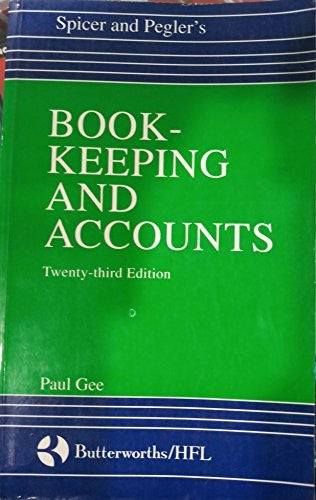
All your questions are answered.
I will also add that we now have a problem with terminology. Many of the expressions used in book-keeping and accounting do not mean what a "layperson" might think they do i.e -
- debtors = monies owed to the business.
- creditors = monies owed by the business to third parties ( suppliers, banks, HP companies etc)
What makes it even harder is that sometimes American versions of these terms are used, especially if the software was originated in the US (such as Intuit's products like Quickbooks e.g -
- debtors (UK) v' accounts receivable (US)
- creditors (UK) v' accounts payable (US)
- stock (UK) v' inventory (US)
- debtors = monies owed to the business.
- creditors = monies owed by the business to third parties ( suppliers, banks, HP companies etc)
What makes it even harder is that sometimes American versions of these terms are used, especially if the software was originated in the US (such as Intuit's products like Quickbooks e.g -
- debtors (UK) v' accounts receivable (US)
- creditors (UK) v' accounts payable (US)
- stock (UK) v' inventory (US)
As others have said, get yourself a dedicated bank account and credit card for your business, it doesn't have to be a 'business account' any account will do. It will really help keep it simple.
Also Xero is overly complicated for a simple sole trader, look at alternatives.
If you do want to go for a new account then look at a business Mettel from Nat west. This includes 'Freeagent' accounting software which is pretty straight forward to use. https://www.mettle.co.uk
Also a Buisness Barclaycard gives you Freshbooks for free. I've been using it for a few years and it does everything I need. Card app is pants though.
Also Xero is overly complicated for a simple sole trader, look at alternatives.
If you do want to go for a new account then look at a business Mettel from Nat west. This includes 'Freeagent' accounting software which is pretty straight forward to use. https://www.mettle.co.uk
Also a Buisness Barclaycard gives you Freshbooks for free. I've been using it for a few years and it does everything I need. Card app is pants though.
Any book-keeping system that is based on true "double entry" principles is going to be very confusing to somebody who has no formal training or experience of the principles of how double entry systems work.
I have been in this game 50 years (I started as a trainee accountant in that blazing summer of 1976).
Over the decades I can honestly say I have NEVER, not once, seen a book-keeping system kept correctly with all balances checked, verified, reconciled etc by a client ESPECIALLY if the system they were using was a full double entry system.
In the old days, nobody who was running a business on their own with no book-keeping assistance would normally attempt to run a double entry system. It was only with the advent of personal comoputers and (relatively) cheap off the shelf software packages that we started to see people like this attempting to run their records through such systems. Invariably, unless they obtained the assistance of a god book-keeper, the figures they ended up with were only ever marginally useful when it came to completing annual accounts. In many cases, the data provided was hopelessly wrong and misleading.
This is only going to get worse now that using computerised systems is becoming obligatory.
I have been in this game 50 years (I started as a trainee accountant in that blazing summer of 1976).
Over the decades I can honestly say I have NEVER, not once, seen a book-keeping system kept correctly with all balances checked, verified, reconciled etc by a client ESPECIALLY if the system they were using was a full double entry system.
In the old days, nobody who was running a business on their own with no book-keeping assistance would normally attempt to run a double entry system. It was only with the advent of personal comoputers and (relatively) cheap off the shelf software packages that we started to see people like this attempting to run their records through such systems. Invariably, unless they obtained the assistance of a god book-keeper, the figures they ended up with were only ever marginally useful when it came to completing annual accounts. In many cases, the data provided was hopelessly wrong and misleading.
This is only going to get worse now that using computerised systems is becoming obligatory.

Eric Mc said:
Have a read of this -
Suddenly this sprang into my mind: https://www.youtube.com/watch?v=JrsB1RfksEA'And now, back to the thread'.
Gassing Station | Finance | Top of Page | What's New | My Stuff