
Neigbour's connected wall letting water into our house?
Discussion


My house connects to the one next door (I know, I need to work harder) but sits lower than theirs - we both have 3 floors but theirs is a more conventional town house whereas ours has a garage to the side and uses more of the roof space for the to floor:

(their wall is highlighted in the image above)
When the weather is really bad and there's high winds and lots of rain (like in the recent storm) we get water coming in to the bedroom at the top and the one below it on the side where my neighbour's house joins.
We had a roofing contractor out this week after a particularly bad instance of this and he can't find any issues with our roof but did see hairline cracks in the mortar on the wall above it that forms part of my neighbours house.
I need to speak to next door (a bit of an awkward fella but a decent chap) but am I right in thinking this is their problem to sort and not mine? I don't want to be a knob about it but at the same time it seems wrong that I'd have the patch his house up to stop it damaging mine
When it's happened in the past (3 years ago was the last time) I asked him if he had any damp / leaks on his side and he didn't, I don't know how houses are built but would I be right in presuming it could be hitting a brick tie as it runs down the cavity and coming our way instead of his so he's oblivious?
I presume that if he does decide just to ignore this (I don't think he will) I can just get it sorted myself to protect my own place? I'm hoping it can just be patched up where there's issues rather than needing a full repoint.
(their wall is highlighted in the image above)
When the weather is really bad and there's high winds and lots of rain (like in the recent storm) we get water coming in to the bedroom at the top and the one below it on the side where my neighbour's house joins.
We had a roofing contractor out this week after a particularly bad instance of this and he can't find any issues with our roof but did see hairline cracks in the mortar on the wall above it that forms part of my neighbours house.
I need to speak to next door (a bit of an awkward fella but a decent chap) but am I right in thinking this is their problem to sort and not mine? I don't want to be a knob about it but at the same time it seems wrong that I'd have the patch his house up to stop it damaging mine
When it's happened in the past (3 years ago was the last time) I asked him if he had any damp / leaks on his side and he didn't, I don't know how houses are built but would I be right in presuming it could be hitting a brick tie as it runs down the cavity and coming our way instead of his so he's oblivious?
I presume that if he does decide just to ignore this (I don't think he will) I can just get it sorted myself to protect my own place? I'm hoping it can just be patched up where there's issues rather than needing a full repoint.
a defective or, possibly, missing cavity tray is the most likely issue.
Typically the wall will be party below your roof line and then usually it will be the other sides wall above but you'd need to check this legally and where the separation of responsibilty is drawn.
Your neighbour is unlikely to have any damp ingress as he has the benefit of a cavity in the wall construction.
Typically the wall will be party below your roof line and then usually it will be the other sides wall above but you'd need to check this legally and where the separation of responsibilty is drawn.
Your neighbour is unlikely to have any damp ingress as he has the benefit of a cavity in the wall construction.
Are you happy with the roofers comment.
Given it's the detail of your roof that's doing the work, I'm struggling to understand how their way, buggered or not, is letting water into your house.
I would have thought that the flashing against their wall is to blame, however I'm not a roofer!
Get another roof around and see if they agree, before you do anything else, would be my next step.
Given it's the detail of your roof that's doing the work, I'm struggling to understand how their way, buggered or not, is letting water into your house.
I would have thought that the flashing against their wall is to blame, however I'm not a roofer!
Get another roof around and see if they agree, before you do anything else, would be my next step.
thetapeworm said:
I need to speak to next door (a bit of an awkward fella but a decent chap) but am I right in thinking this is their problem to sort and not mine? I don't want to be a knob about it but at the same time it seems wrong that I'd have the patch his house up to stop it damaging mine
It's a party wall, so shared responsibility... and if the problem is mainly impacting your property, it's going to be pretty much up to you to sort it, I'd suggest (and you will need to serve a PWA notice on your neighbour).thetapeworm said:
We had a roofing contractor out this week after a particularly bad instance of this and he can't find any issues with our roof but did see hairline cracks in the mortar on the wall above it that forms part of my neighbours house.
...When it's happened in the past (3 years ago was the last time) I asked him if he had any damp / leaks on his side and he didn't, I don't know how houses are built but would I be right in presuming it could be hitting a brick tie as it runs down the cavity and coming our way instead of his so he's oblivious?
Water will penetrate the outer leaf of the wall above the roof abutment and run down the inside face (this will be worse if the pointing is not in good order, but will happen to some extent even if it is)....When it's happened in the past (3 years ago was the last time) I asked him if he had any damp / leaks on his side and he didn't, I don't know how houses are built but would I be right in presuming it could be hitting a brick tie as it runs down the cavity and coming our way instead of his so he's oblivious?
There should be a stepped cavity tray, linked to the flashing of the roof abutment, that 'catches' such water and directs it back out, before that outer leaf becomes internal to your property, like this:
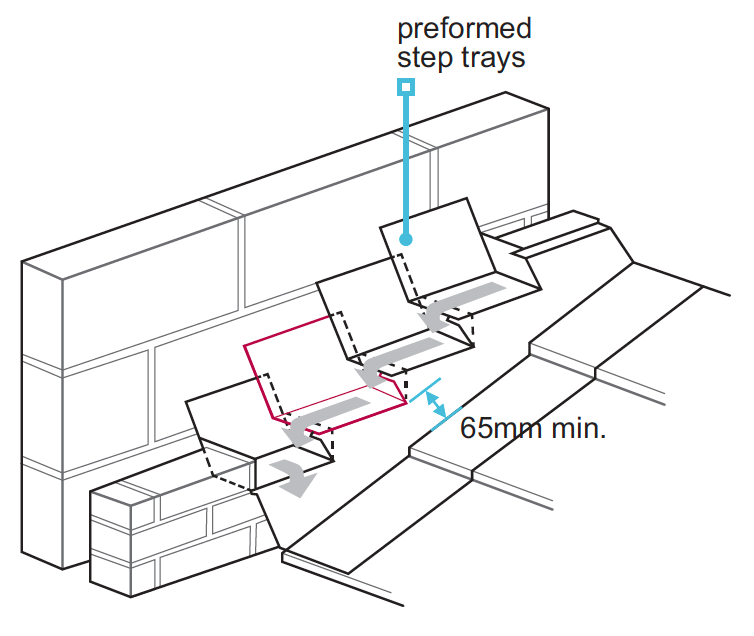
The strong likelihood is that this stepped cavity tray is not doing its job (it's even conceivable that the builder omitted to use one). Inserting or fixing such a cavity tray after the property has been completed involves chopping out the brickwork in sections to gain access, so is not trivial.
ETA: crossed post: Lotobear beat me to it, above.
I stand to be corrected by our resident Party Wall experts, but my interpretation has always been that it would definitely be PWA work: the legislation defines such a party wall as '...so much of a wall ...as separates buildings belonging to different owners', and the cavity tray itself functionally forms part of the separation.
Edited by Equus on Thursday 26th October 13:29
dundarach said:
Are you happy with the roofers comment.
Given it's the detail of your roof that's doing the work, I'm struggling to understand how their way, buggered or not, is letting water into your house.
I would have thought that the flashing against their wall is to blame, however I'm not a roofer!
Get another roof around and see if they agree, before you do anything else, would be my next step.
A flashing in a cavity wall under driving rain conditions is not sufficient to prevent water ingress, via the outer leaf of the cavity wall especially through un rendered elevations, from bypassing the flashing line if there is no cavity tray or if the cavity tray is defective and/or not correctly installed.Given it's the detail of your roof that's doing the work, I'm struggling to understand how their way, buggered or not, is letting water into your house.
I would have thought that the flashing against their wall is to blame, however I'm not a roofer!
Get another roof around and see if they agree, before you do anything else, would be my next step.
dundarach said:
Are you happy with the roofers comment.
Given it's the detail of your roof that's doing the work, I'm struggling to understand how their way, buggered or not, is letting water into your house.
I would have thought that the flashing against their wall is to blame, however I'm not a roofer!
Get another roof around and see if they agree, before you do anything else, would be my next step.
I'm no expert here (as I'm clearly demonstrating by not understanding how any of this works) but the roofer is a decent bloke with a great reputation and was pretty much "the roof looks great, no issues I can find so there's nothing I can really do to help here" - he then showed me a series of photos he'd taken that showed horizontal cracks along the mortar by the bricks and suggested that in extreme weather the water is probably getting in through these. Given it's the detail of your roof that's doing the work, I'm struggling to understand how their way, buggered or not, is letting water into your house.
I would have thought that the flashing against their wall is to blame, however I'm not a roofer!
Get another roof around and see if they agree, before you do anything else, would be my next step.
As it only happens once every few years when the weather is mental and the flashing, roof etc on my side all looks to be in order I had no reason to doubt him. I thought the flashing would be a likely point of failure but he couldn't see any issues, he could easily have said it needed doing and charged me for the work and I'd have been none the wiser so I have faith in his honesty.
Thanks for the other replies that have given me some insight into what's supposed to be in the wall and how all of this stuff is supposed to work, I had no idea about cavity trays.
We have something similar OP. It only seems to happen when we have torrential rain. See my post from a couple of months ago.
https://www.pistonheads.com/gassing/topic.asp?h=0&...
I sprayed most of the wall above with waterproofer but it started again during the last few weeks of stormy weather so will try and spray the remaining wall when I get the opportunity.
We have the lead flashing but no idea about the stepped cavity trays? We’re having a roofer come round to take a look so will update then.
https://www.pistonheads.com/gassing/topic.asp?h=0&...
I sprayed most of the wall above with waterproofer but it started again during the last few weeks of stormy weather so will try and spray the remaining wall when I get the opportunity.
We have the lead flashing but no idea about the stepped cavity trays? We’re having a roofer come round to take a look so will update then.
Mandat said:
Can you post the photos of the cracking mortar, so that we can better understand what the roofer is describing.
I'll need to get them from him to share but but it was just a hairline crack along the length of some of the brickwork where the mortar would normally be in contact. The issue only happens during extreme weather which is thankfully rare but it does mean I have to redecorate the affected rooms so I'd like to get to the bottom of it.
Not a roofer ,cracks in mortar may be allowing ingress into wall cavity however if I understand Equess explanation ite the cavity trays are responsible for taking this water back to the outside edge of the bricks. Would the roofer be able to tell if there was a cavity tray without removing flashing/bricks?
Presume house is more than 10years old and outside builders guarantee period
Presume house is more than 10years old and outside builders guarantee period
Edited by twokcc on Thursday 26th October 14:38
This is a very interesting (and alarming) thread.
I had always thought that bricks were waterproof.
I'm sure the cavity walls on my house don't have trays in them so would water be running down the back of the outer skin of bricks when it rains?
I haven't noticed any damp inside at the bottom of the walls.
I had always thought that bricks were waterproof.
I'm sure the cavity walls on my house don't have trays in them so would water be running down the back of the outer skin of bricks when it rains?
I haven't noticed any damp inside at the bottom of the walls.
twokcc said:
Would the roofer be able to tell if there was a cavity tray without removing flashing/bricks?
....in a correctly fitted installation you would be able to see weepholes in the brickwork and the 'toe' or downturn of the cavity tray where it laps over the soaker/abutment flashing.GasEngineer said:
This is a very interesting (and alarming) thread.
I had always thought that bricks were waterproof.
I'm sure the cavity walls on my house don't have trays in them so would water be running down the back of the outer skin of bricks when it rains?
I haven't noticed any damp inside at the bottom of the walls.
..the design intent of a cavity wall accepts that the external brick leaf will admit water in certain conditions which then safely runs down the inside face of the outer leaf to exit safely at the bottom of the wall or else via trays with weepholes above windows, roof abutmentts and similar. The cavity is there to prevent that water tracking across to the inside 'dry' leaf and the wall ties have 'drips' on them to prevent it tracking across them.I had always thought that bricks were waterproof.
I'm sure the cavity walls on my house don't have trays in them so would water be running down the back of the outer skin of bricks when it rains?
I haven't noticed any damp inside at the bottom of the walls.
Had same thing but more often, although my / neighbours wall is rendered, but rendering isn't "waterproof".
Had Kingfisher Extreme liberally sprayed on wall, stopped the issue. Sure it will come back in years to come but think it's the best solution.
The rendering has lots of hairline cracks and still has sealed it.
Had Kingfisher Extreme liberally sprayed on wall, stopped the issue. Sure it will come back in years to come but think it's the best solution.
The rendering has lots of hairline cracks and still has sealed it.
Thanks again for those adding information to this, I'm learning a lot, not things I'd like to be hearing about but learning all the same

In my loft there's no sign of any damp patches further up the wall but I haven't been brave enough to climb up there and wander over to immediately above where the damp patches are. It does feel like it's coming from within the walls and that's certainly the case on the floor below where this time around it was much worse than it's ever been.
snobetter said:
Had same thing but more often, although my / neighbours wall is rendered, but rendering isn't "waterproof".
Had Kingfisher Extreme liberally sprayed on wall, stopped the issue. Sure it will come back in years to come but think it's the best solution.
The rendering has lots of hairline cracks and still has sealed it.
I just had a look at that, I like the sound of it as a potential way of not having to take any walls apart, I'd want the hairline cracks sorting out first I suppose but it seems like a good way to reduce the problem even if it doesn't completely solve it. Had Kingfisher Extreme liberally sprayed on wall, stopped the issue. Sure it will come back in years to come but think it's the best solution.
The rendering has lots of hairline cracks and still has sealed it.
Thanks again.
I'd not thought before of the consequences of having an external leaf of a cavity wall becoming internal lower down a building. I assume this means that lean-two structures are at risk of having a damp internal wall in spite of their rooves having flashing chased into the external leaf? Is this a common problem in practice?
ATG said:
I'd not thought before of the consequences of having an external leaf of a cavity wall becoming internal lower down a building. I assume this means that lean-two structures are at risk of having a damp internal wall in spite of their rooves having flashing chased into the external leaf? Is this a common problem in practice?
The British Standard recommends the installation of cavity tray as do various robust details and bodies such as the NHBC.Whether the absence of a cavity tray causes an issue in practice is significantly influenced by the porosity of the external leaf and in particular the exposure of the elevation to driving rain. The BRE publishes an index of driving rain in the UK which zones various locations according to the severity of exposure to driving rain but there are often specific site factors which also need to be considered such as local topographical conditions, sheltering by other buildings etc.
In essence though they should be provided regardless as a matter of good practice.
Issues of the sort discussed in this thread are presumably what led to the following:

In case the contrast makes it hard to see, the whole wall above the lower neighbour's roofline has been flashed in lead (or something that looks like lead).
Is this something that might've been done at build time, or is it more likely to have been a retrofit?
In case the contrast makes it hard to see, the whole wall above the lower neighbour's roofline has been flashed in lead (or something that looks like lead).
Is this something that might've been done at build time, or is it more likely to have been a retrofit?
tux850 said:
Issues of the sort discussed in this thread are presumably what led to the following:
In case the contrast makes it hard to see, the whole wall above the lower neighbour's roofline has been flashed in lead (or something that looks like lead).
Is this something that might've been done at build time, or is it more likely to have been a retrofit?
I'm guessing, here, but my expectation would be that it was done as part of the build, for the entirely unrelated reason that the houses are timber frame and they wanted to use a timber frame spandrel panel behind the lead bit, instead of using a steel to carry brickwork.In case the contrast makes it hard to see, the whole wall above the lower neighbour's roofline has been flashed in lead (or something that looks like lead).
Is this something that might've been done at build time, or is it more likely to have been a retrofit?
Gassing Station | Homes, Gardens and DIY | Top of Page | What's New | My Stuff