
Smooth finish with water based eggshell on wood
Discussion


Finding that it’s really gloopy and you can see every strand of the brush as it goes on, it obviously dries a bit flatter but you can still see and feel lines in it.
I can sand between coats but it would take the finish off the top coat so I really want a smooth(er) top coat with no fannying around afterwards.
This pic is just after the paint went on, am I using too much, should each coat just be super thin? Would a roller or sponge be an option?
Mainly skirting and uprights but a few larger panels too.
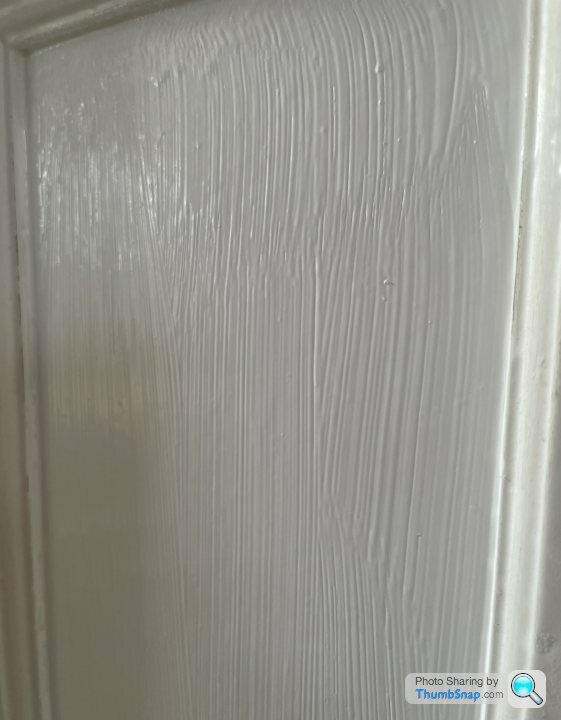
I can sand between coats but it would take the finish off the top coat so I really want a smooth(er) top coat with no fannying around afterwards.
This pic is just after the paint went on, am I using too much, should each coat just be super thin? Would a roller or sponge be an option?
Mainly skirting and uprights but a few larger panels too.
 t brush strokes. The conditioner slows down the drying of the paint allowing it to smooth a little better.
 ScotHill said:
Finding that it’s really gloopy and you can see every strand of the brush as it goes on, it obviously dries a bit flatter but you can still see and feel lines in it.
I can sand between coats but it would take the finish off the top coat so I really want a smooth(er) top coat with no fannying around afterwards.
This pic is just after the paint went on, am I using too much, should each coat just be super thin? Would a roller or sponge be an option?
Mainly skirting and uprights but a few larger panels too.
Not just me then! I can sand between coats but it would take the finish off the top coat so I really want a smooth(er) top coat with no fannying around afterwards.
This pic is just after the paint went on, am I using too much, should each coat just be super thin? Would a roller or sponge be an option?
Mainly skirting and uprights but a few larger panels too.
I found using a mini roller for the bigger panels, e.g doors gave a much, much better finish.
Much faster too.
Thanks, will try a roller, the second coat was much better but still wavy lines when the sunlight catches it. Will try a damp roller or diluting the paint a little too, I could probably throw the pot of it up at the ceiling and none of it would drip down! Makes a change from retail pisswater paint though. 
ScotHill said:
Finding that it’s really gloopy and you can see every strand of the brush as it goes on, it obviously dries a bit flatter but you can still see and feel lines in it.
I can sand between coats but it would take the finish off the top coat so I really want a smooth(er) top coat with no fannying around afterwards.
This pic is just after the paint went on, am I using too much, should each coat just be super thin? Would a roller or sponge be an option?
Mainly skirting and uprights but a few larger panels too.
At first glance that looks like too much is being applied and possibly with an inexpensive brush? I can sand between coats but it would take the finish off the top coat so I really want a smooth(er) top coat with no fannying around afterwards.
This pic is just after the paint went on, am I using too much, should each coat just be super thin? Would a roller or sponge be an option?
Mainly skirting and uprights but a few larger panels too.
I prefer to thin the paint down and apply in very thin coats using a high quality brush. I also favour satin as I've found this gives the best finish for the least effort and I massively favour least effort.

You have to get it on quick as others have mentioned.
I've found that you need the lightest of touches when laying off and really take care to align the remaining brush marks to ensure you don't get the effect you have.
I've only used oil based paint once but my initial reaction to your photo was when are going to lay it off?!
I've found that you need the lightest of touches when laying off and really take care to align the remaining brush marks to ensure you don't get the effect you have.
I've only used oil based paint once but my initial reaction to your photo was when are going to lay it off?!
Is a foam brush just a sponge, or am I being thick? A sponge was one of my first thoughts, as it could spread out the excess without wiping away everything, which kind of seems to be what you need.
Last time I used a foam roller it skidded a lot, just acting like a block of foam, is there a technique to avoid that, or could that just have been overloading it with paint? Foam texture would be preferable to brush strand texture.
Last time I used a foam roller it skidded a lot, just acting like a block of foam, is there a technique to avoid that, or could that just have been overloading it with paint? Foam texture would be preferable to brush strand texture.
Mr_J said:
Stupid question.
You say it's gloopy. Are you stirring it before using it?
My thoughts - you're perhaps not stirring it enough hence the gloopy texture, are applying too much paint and are therefore struggling to lay it off properly. Perhaps coupled with a cheap, dry, brush.
Possibly not stirring enough, will do that next time, almost definitely putting too much paint on based on how the two coats have dried.You say it's gloopy. Are you stirring it before using it?
My thoughts - you're perhaps not stirring it enough hence the gloopy texture, are applying too much paint and are therefore struggling to lay it off properly. Perhaps coupled with a cheap, dry, brush.
It's an Axus Decor S-Finish, so not premium level but no slouch, plenty of pros seem to use them based on reviews.
I’d echo some of the above posters and definitely use floetrol paint conditioner. I’m a bit of a perfectionist and the conditioner really does help get rid of brush marks. Even if you used a roller, you’d still see some stipple, so without exception now, I add a conditioner to any wood work I do.
Don’t paint it too thick either. Be patient, if you can, and use thinner layers, with a light sand in between (with a block if sand flat surfaces). With good brush control, thinner paint and conditioner you can get a good smooth finish.
Don’t paint it too thick either. Be patient, if you can, and use thinner layers, with a light sand in between (with a block if sand flat surfaces). With good brush control, thinner paint and conditioner you can get a good smooth finish.
thepritch said:
I’d echo some of the above posters and definitely use floetrol paint conditioner. I’m a bit of a perfectionist and the conditioner really does help get rid of brush marks. Even if you used a roller, you’d still see some stipple, so without exception now, I add a conditioner to any wood work I do.
Don’t paint it too thick either. Be patient, if you can, and use thinner layers, with a light sand in between (with a block if sand flat surfaces). With good brush control, thinner paint and conditioner you can get a good smooth finish.
Can I add floetrol to the whole tin and then it will still be good long-term, or would I need to measure what I need and add floetrol to that for each session?Don’t paint it too thick either. Be patient, if you can, and use thinner layers, with a light sand in between (with a block if sand flat surfaces). With good brush control, thinner paint and conditioner you can get a good smooth finish.
Kind of want to get it right first time as there are a few jobs where I've aced it 95% of the way, and then spent the subsequent years noticing the remaining 5% each time I walk past it!
ScotHill said:
Is a foam brush just a sponge, or am I being thick? A sponge was one of my first thoughts, as it could spread out the excess without wiping away everything, which kind of seems to be what you need.
First hit for 'foam brush': https://www.amazon.co.uk/Sponge-Wooden-Handle-Glit...It's just a wedge of foam on a stick, but they work well. Get several as they take a while to clean after use, but they're cheap.
ScotHill said:
Can I add floetrol to the whole tin and then it will still be good long-term, or would I need to measure what I need and add floetrol to that for each session?
Kind of want to get it right first time as there are a few jobs where I've aced it 95% of the way, and then spent the subsequent years noticing the remaining 5% each time I walk past it!
I’ve never tried it with a whole tin, so I’m sorry, I don’t know! I measured per session (I used scales as it made calculating amounts incredibly easy) and if any was left over I kept airtight till the next day and it was fine. My painting style is definitely not pro in terms of progress, but I did get a good finish. My wife, poor thing, was on the receiving end of me being very particular, quite how she puts up with me I don’t know. Kind of want to get it right first time as there are a few jobs where I've aced it 95% of the way, and then spent the subsequent years noticing the remaining 5% each time I walk past it!
I will add, like others have said, I always use a satin finish as I found it also helps hide marks. And I just don’t like gloss!
You may already be doing this but keep a wet front/edge and even with conditioner work at a good pace, and never go back over an area you did a minute prior. You’ll be asking for trouble. Keep the lines you paint parallel too and use the brush back and forth smoothly.
Finally I’d say if you use a roller and it’s slipping then you’re using too much paint - make sure you roll it on the tray so it’s not slipping. Foam rollers will tend to slip, and if it does do it on your woodwork, then I found lifting pressure for a few rolls will get adhesion back and you can easily roll the paint out evenly. If you push harder it’ll slip more.
Have fun and good luck !
Gassing Station | Homes, Gardens and DIY | Top of Page | What's New | My Stuff