
Sockets not working downstairs. Learn from my mistake
Discussion


Had an interesting lesson today,
The hinges on the door from my entrance hall to my lounge had been loose for a few weeks, so the door would not close as it should, it was a very tight fit.
I decided to replace the three screws going into the top and bottom hinges with slightly longer ones, figuring thet would grip into the door casing better.
So, six longer screws later, I re hung the door, it fit a treat, so I patted myself on the back and thought, that was a nice simple job
Then, five minutes later I noticed all the electric sockets in the lounge and hall were dead, went to the consumer unit in the garage, the relevant switch had tripped and would not reset.
I had no option but to call out my usual electrician, who fortunately had a couple of hours free.
I told him what I had done, and he immediately unscrewed the six screws I put in and removed the door....Bingo! the switch would reset and the sockets worked.
What had happened was a never realised the wiring was set INSIDE the architrave, going down to another double socket to the left of the door.
He carefully removed the left hand and top architrave and found the wiring was pierced in four places, I was lucky I wasn't electrocuted
To rectify, he chased a new channel into the wall, slightly over to the left, removed the old length of damaged wiring and fit a new section.
Replaced the architrave, (Luckily hardly any damage was done), refit the door with screws of the original shorter length but twin screw and wider.
The door fitted perfectly and all was good, overall the job took around two hours, because he had to plaster up in a couple of places.
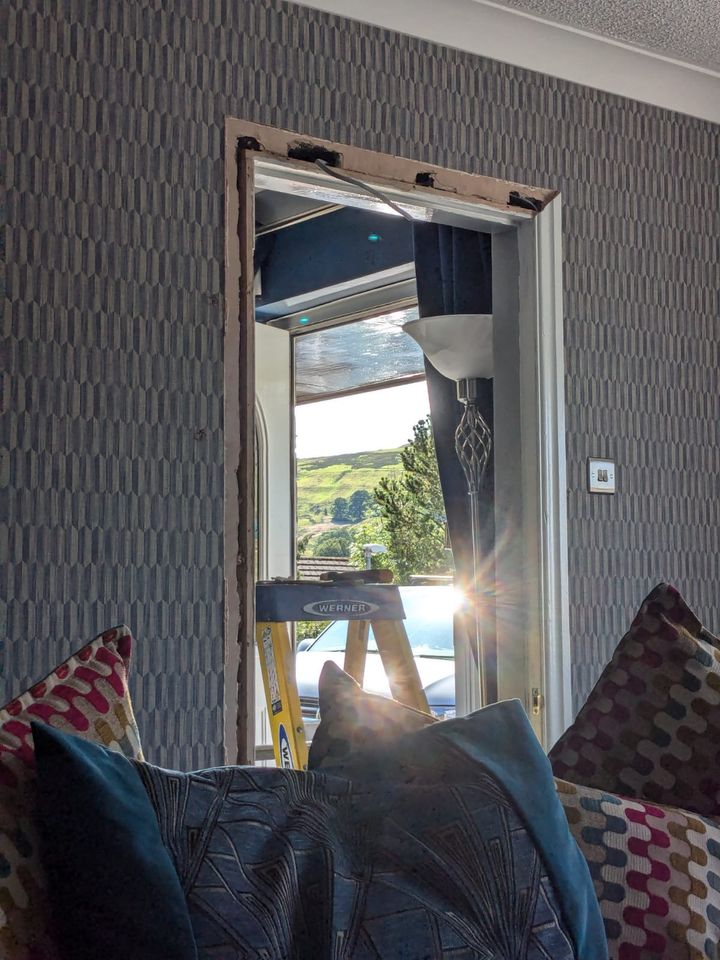
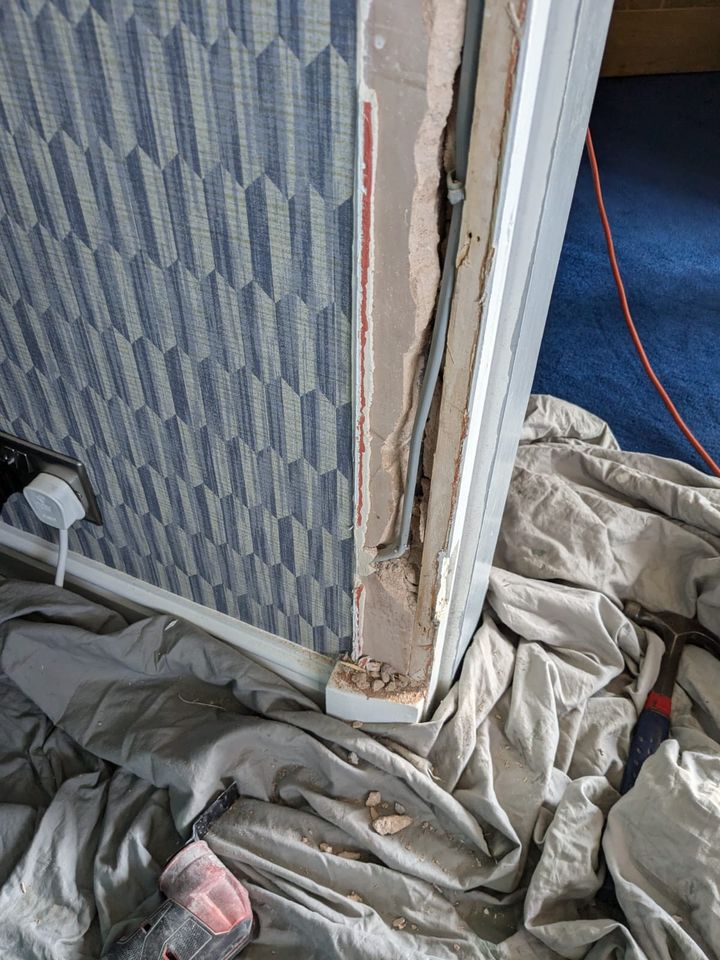
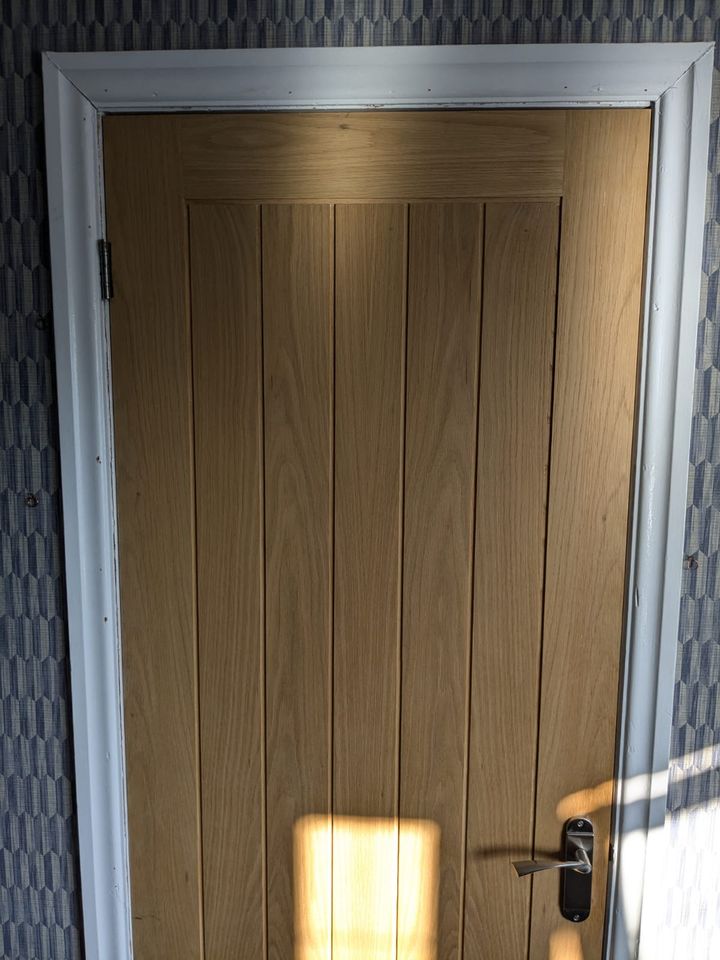
The hinges on the door from my entrance hall to my lounge had been loose for a few weeks, so the door would not close as it should, it was a very tight fit.
I decided to replace the three screws going into the top and bottom hinges with slightly longer ones, figuring thet would grip into the door casing better.
So, six longer screws later, I re hung the door, it fit a treat, so I patted myself on the back and thought, that was a nice simple job
Then, five minutes later I noticed all the electric sockets in the lounge and hall were dead, went to the consumer unit in the garage, the relevant switch had tripped and would not reset.
I had no option but to call out my usual electrician, who fortunately had a couple of hours free.
I told him what I had done, and he immediately unscrewed the six screws I put in and removed the door....Bingo! the switch would reset and the sockets worked.
What had happened was a never realised the wiring was set INSIDE the architrave, going down to another double socket to the left of the door.
He carefully removed the left hand and top architrave and found the wiring was pierced in four places, I was lucky I wasn't electrocuted
To rectify, he chased a new channel into the wall, slightly over to the left, removed the old length of damaged wiring and fit a new section.
Replaced the architrave, (Luckily hardly any damage was done), refit the door with screws of the original shorter length but twin screw and wider.
The door fitted perfectly and all was good, overall the job took around two hours, because he had to plaster up in a couple of places.

Sporky said:
That can't be normal?
Guess someone took an easy route to adding something later?Even fairly vintage stuff wouldn't tend to be like that (my 60's vintage stuff seems to be sensibly run, inside metal conduit where buried) and under any vaguely recent regs that doesn't count as a safe route either.
That said I've seen 'proper' NICEIC certified people do some very very silly stuff, all while apparently obvious to both the regulations and even the simple pictures in the onsite guides.
Guess the lesson there is don't trust anything to not be hiding something.
PS. You might have noticed the wood isn't that thick so longer screws don't add much benefit.
eliot said:
Sporky said:
That can't be normal?
diy dave here - as despised by the “pro’s” - but yeh, it doesn’t follow the regs for “safe zones”.Hopefully it was done by an amateur not a pro.
 But there is no door and no hinges.
wolfracesonic said:
Question for the pro sparkies, if you didn’t know about the work to the door, how would you go about tracing the fault? And would you have left all your crap on site to prove, indeed you were a pro?;)
The clue would be when the customer says 'It stopped working after I screwed this screw in here...'Simpo Two said:
wolfracesonic said:
Question for the pro sparkies, if you didn’t know about the work to the door, how would you go about tracing the fault? And would you have left all your crap on site to prove, indeed you were a pro?;)
The clue would be when the customer says 'It stopped working after I screwed this screw in here...'Or test it for a short that's causing to to trip, then either inspect it/split it to isolate, or plug in a cable tracer to find where the wires actually go and where the interruption might be.
JoshSm said:
Simpo Two said:
wolfracesonic said:
Question for the pro sparkies, if you didn’t know about the work to the door, how would you go about tracing the fault? And would you have left all your crap on site to prove, indeed you were a pro?;)
The clue would be when the customer says 'It stopped working after I screwed this screw in here...'Or test it for a short that's causing to to trip, then either inspect it/split it to isolate, or plug in a cable tracer to find where the wires actually go and where the interruption might be.
Eg: "I hung a mirror, the sockets are now tripping, but I didn't put a screw through a cable and I don't think the two are related." (one of my favourites). Yep, screwed straight through a cable...
Does help when there's a direct A->B link of someone doing something, then a problem happening.
Of course you can be unlucky and it takes a year or two to actually be a problem. Especially if it's transient like a nail causing a short after a few years, only when someone treads on that bit of floor.
Of course you can be unlucky and it takes a year or two to actually be a problem. Especially if it's transient like a nail causing a short after a few years, only when someone treads on that bit of floor.
Gassing Station | Homes, Gardens and DIY | Top of Page | What's New | My Stuff