
Mounting blinds
Discussion


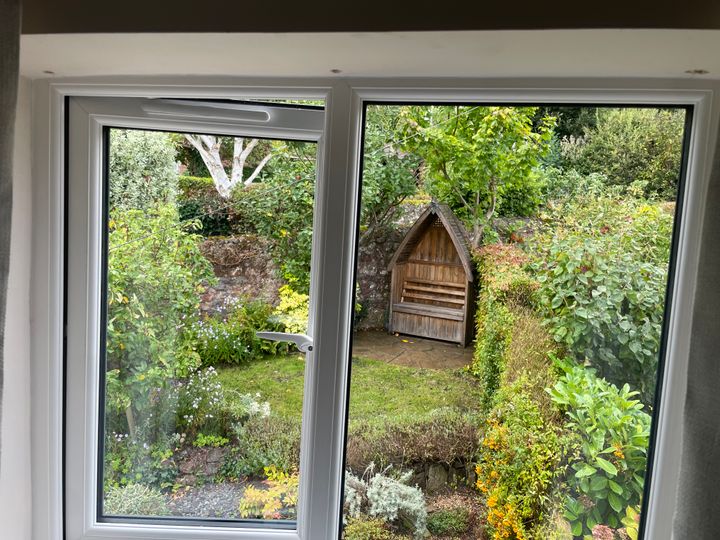
I’ve had some new windows fitted, which is marvellous.
However, I now have the conundrum of how to fit my roman blinds, these were previously screwed into the window frames but I don’t want to do this with the new ones.
I’ve tried using plasterboard anchors above the window, with predictable results. Holes now filled! There don’t seem to be any battens there either.
Any ideas? Glue up a batten maybe across top of window?
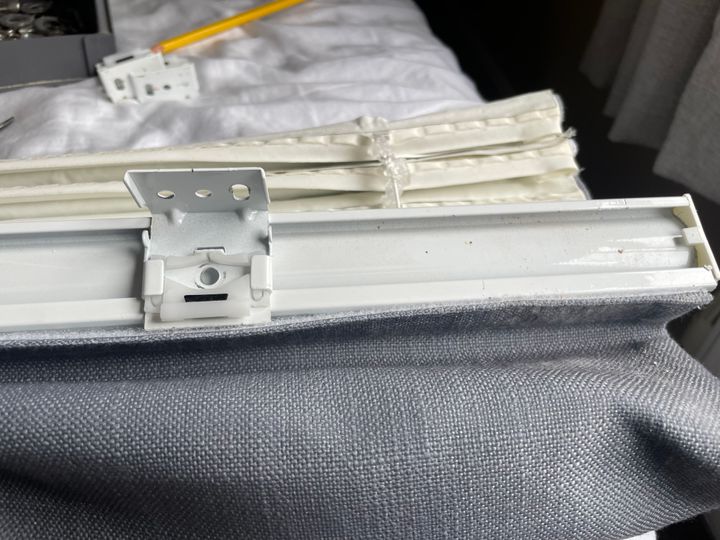
However, I now have the conundrum of how to fit my roman blinds, these were previously screwed into the window frames but I don’t want to do this with the new ones.
I’ve tried using plasterboard anchors above the window, with predictable results. Holes now filled! There don’t seem to be any battens there either.
Any ideas? Glue up a batten maybe across top of window?
carreauchompeur said:
I ve tried using plasterboard anchors above the window, with predictable results. Holes now filled!
Would that be because it's not plasterboard with a void above, but a thin layer of plaster on top of a steel lintel as tough as the Bismarck?Looks like your brackets don't have an end-fixing option, unfortunately.
I once fitted a blind by screwing it onto the uPVC window frame behind. Worked fine.
Securing curtain poles or blinds to the plasterboard above windows can be difficult because there is usually a lintel behind the plasterboard which prevents getting a good fixing.
My solution is to use a a 80mm hole saw to 1. Cut out a disc of plasterboard. 2. Cut a disc of plywood. 3. Glue the plywood disc in the hole. 4. Screw the blind to the plywood disc using short screws. 5. Decorate.
I did used this method for motorised cassette roller blinds.
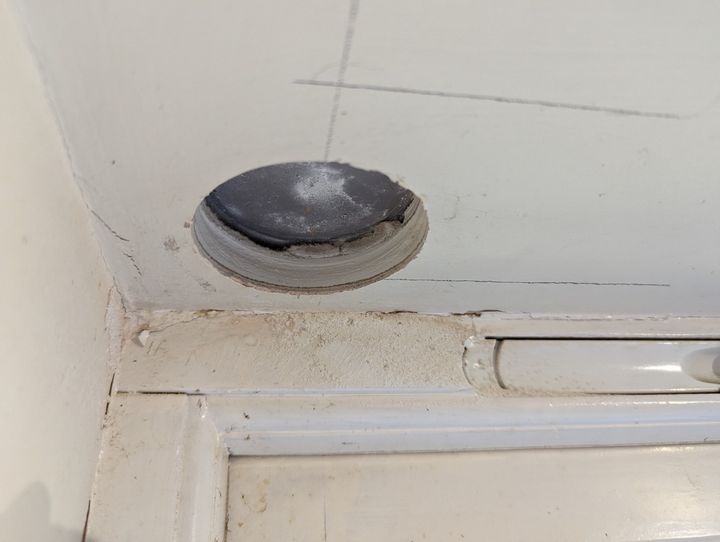
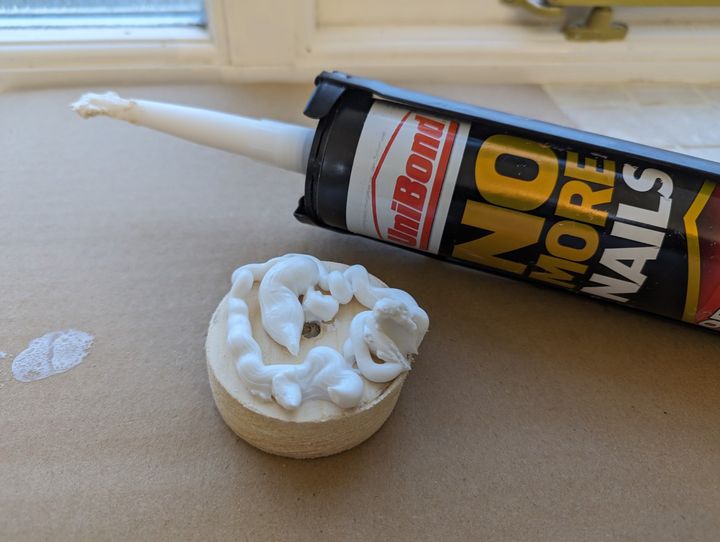
My solution is to use a a 80mm hole saw to 1. Cut out a disc of plasterboard. 2. Cut a disc of plywood. 3. Glue the plywood disc in the hole. 4. Screw the blind to the plywood disc using short screws. 5. Decorate.
I did used this method for motorised cassette roller blinds.
Nope, sadly this house is built of Swiss cheese so it is just plasterboard…I don’t really think the fixings are designed for vertical loads and they just popped out.
Don’t really want to splash out on new blinds, therefore would a good dollop of no more nails and a batten down the length probably be strong enough?
Don’t really want to splash out on new blinds, therefore would a good dollop of no more nails and a batten down the length probably be strong enough?
I had an issue getting a duo blind screwed to a too-tough lintel. Even our builder didn't really have an idea (tried cobalt drill bits to no avail).
In the end I fashioned wedges of wood and using Sticks Like Sh*t. Then I could screw the blind fixings into those.
9 years later - still up.
I find Sticks Like Sh*t a superb adhesive!
In the end I fashioned wedges of wood and using Sticks Like Sh*t. Then I could screw the blind fixings into those.
9 years later - still up.
I find Sticks Like Sh*t a superb adhesive!

If there is a void above the plasterboard, you can use a butterfly or toggle fixing which should have adequate strength for a blind.
Often the problem is there is no space, just a hard lintel you can't drill.
Trouble is, once someone has tried and failed, the plasterboard can be broken up inside and weak.
In this house, I ended up chopping out a few sections and putting in some wood to screw blinds to.
This is why I try to insist that all fittings like blinds and so on are bought before the decorating starts.
Often the problem is there is no space, just a hard lintel you can't drill.
Trouble is, once someone has tried and failed, the plasterboard can be broken up inside and weak.
In this house, I ended up chopping out a few sections and putting in some wood to screw blinds to.
This is why I try to insist that all fittings like blinds and so on are bought before the decorating starts.
Actual said:
Securing curtain poles or blinds to the plasterboard above windows can be difficult because there is usually a lintel behind the plasterboard which prevents getting a good fixing.
My solution is to use a a 80mm hole saw to 1. Cut out a disc of plasterboard. 2. Cut a disc of plywood. 3. Glue the plywood disc in the hole. 4. Screw the blind to the plywood disc using short screws. 5. Decorate.
I did used this method for motorised cassette roller blinds.
Clever solution that - thanks for posting.My solution is to use a a 80mm hole saw to 1. Cut out a disc of plasterboard. 2. Cut a disc of plywood. 3. Glue the plywood disc in the hole. 4. Screw the blind to the plywood disc using short screws. 5. Decorate.
I did used this method for motorised cassette roller blinds.

I've mounted blinds to plasterboard walls before when there wasn't a better alternative - it's pretty strong stuff, and worked fine. How big a blind are you trying to mount, and how did it fail? I generally use Fischer duo plugs, but most plugs are probably good enough - it's a downwards force so the plasterboard should be able to handle many tens of kgs.
(Edited to say "walls" in case it wasn't clear. I wouldn't mount a blind or curtain to a plasterboard ceiling).
(Edited to say "walls" in case it wasn't clear. I wouldn't mount a blind or curtain to a plasterboard ceiling).
Edited by biggiles on Monday 22 September 14:09
There’s nothing above…I used Fischer plugs but a toggle fixing might work better. Blinds aren’t terribly heavy, only about a metre wide.
Will probably go with the batten since, amongst other issues, the top of the window is not remotely plumb therefore hard to get them at the same level!
Will probably go with the batten since, amongst other issues, the top of the window is not remotely plumb therefore hard to get them at the same level!
How about a Fischer expanding fixing? You could likely have two of the 4mm type per bracket. You will need the tool to install them correctly - Fischer version is great. Also, metal washers are helpful to get them broadly along the same level
https://www.toolstation.com/fischer-hm-s-metal-cav...
https://www.toolstation.com/fischer-hm-s-metal-cav...
You’ve really got to work out what is above the plasterboard. I’m very skeptical about it being just plasterboard - what’s holding the roof up or the brickwork above?
If it’s been dot and dabb’ed then you’ll need something like corefix, but you might need a long metal bit if there is a steel lintel. If it’s pre stressed concrete probably a SDS and suitable masonary bit.
That being said a decent rawl plug into the plasterboard may also work if it’s not stuffed up now
If it’s been dot and dabb’ed then you’ll need something like corefix, but you might need a long metal bit if there is a steel lintel. If it’s pre stressed concrete probably a SDS and suitable masonary bit.
That being said a decent rawl plug into the plasterboard may also work if it’s not stuffed up now
Your answer is to... screw them into the window frames. I mean, why not? Nice and easy, plastic. Only makes small holes with self tappers. So long as you plan to leave them up then just do it. Even if you removed them a quick sanding down to flatten the screw oles and a dab of white silicone and one one would be any the wiser.
I've just bought a house and the previous owners did just that with the ones in the kitchen, and we will copy that in the rest of the house (all UPVC).
I've just bought a house and the previous owners did just that with the ones in the kitchen, and we will copy that in the rest of the house (all UPVC).
+1 on just use the window frame to screw onto.
Or, borrow an SDS drill and the thinnest frame fixers you can and drill into the lintel that's likely hidden from view. I've once done this and fixed a thin wooden batten to the head of the window opening - a bit like a traditional curtain mounting batten above a window - so that you can screw into it. Filler and paint and you would never know it's there.
Or, borrow an SDS drill and the thinnest frame fixers you can and drill into the lintel that's likely hidden from view. I've once done this and fixed a thin wooden batten to the head of the window opening - a bit like a traditional curtain mounting batten above a window - so that you can screw into it. Filler and paint and you would never know it's there.
Gassing Station | Homes, Gardens and DIY | Top of Page | What's New | My Stuff