
Old boiler flue - likelihood of asbestos?
Discussion


Chaps and chapessess, I'm kindly looking for some advice.
In our late 70s house we have an old, redundant boiler flue in the loft. I'm looking for advice from anyone who recognises the materials to understand if it's likely to contain asbestos insulation or lagging.
Apparently the house used to have a floor to ceiling boiler when new, in the kitchen. When we bought the house this had been long since replaced with a combi boiler relocated to an upstairs airing cupboard.
The old flue however is still present in the loft, and runs into a void on the first floor. I'm looking to remove it for 2 reasons 1) to reuse the ridge vent for a bathroom extractor (possibly a bad idea...) and 2) to remove the pipe from and repurpose the void, opening it up to our sons room and turn it into a bookcase.
Hopefully someone recognises the flue type?!
Many thanks!
P.
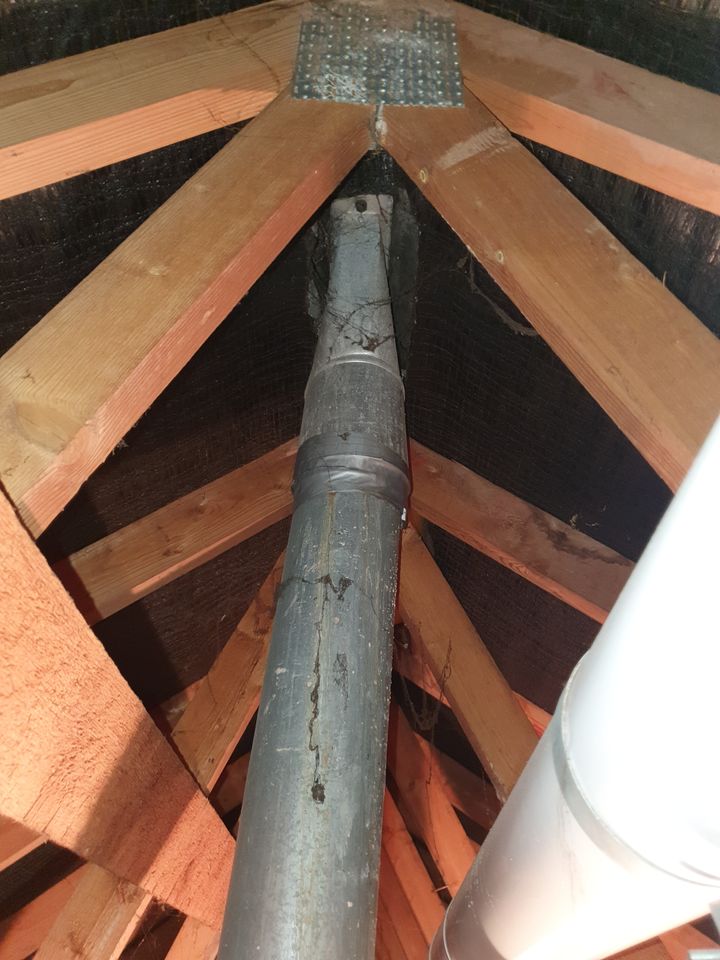
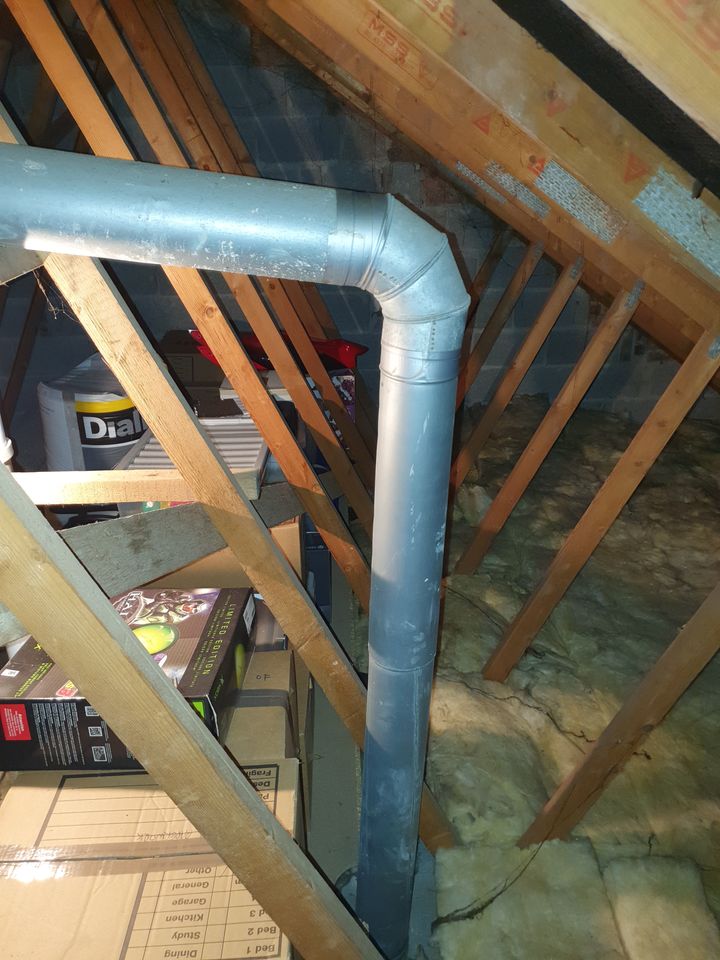
In our late 70s house we have an old, redundant boiler flue in the loft. I'm looking for advice from anyone who recognises the materials to understand if it's likely to contain asbestos insulation or lagging.
Apparently the house used to have a floor to ceiling boiler when new, in the kitchen. When we bought the house this had been long since replaced with a combi boiler relocated to an upstairs airing cupboard.
The old flue however is still present in the loft, and runs into a void on the first floor. I'm looking to remove it for 2 reasons 1) to reuse the ridge vent for a bathroom extractor (possibly a bad idea...) and 2) to remove the pipe from and repurpose the void, opening it up to our sons room and turn it into a bookcase.
Hopefully someone recognises the flue type?!
Many thanks!
P.
Edited by Previous on Sunday 19th October 14:20
I would guess that is double wall internally with insulation between the tubes, definitely need to suit up to remove or get a pro in. Doesn't seem to easy to get a sample for testing.
I would also either clear out the loft or put up sheeting to contain any insulation material or the internal rubbish in the flue, removing that lot will make a right old mess.
I would also either clear out the loft or put up sheeting to contain any insulation material or the internal rubbish in the flue, removing that lot will make a right old mess.
Inbox said:
I would guess that is double wall internally with insulation between the tubes, definitely need to suit up to remove or get a pro in. Doesn't seem to easy to get a sample for testing.
I was wondering about that and a mask is in order however either the first floor end or undoing the tape and gently separating the joint should allow you to do an investigation.How difficult would it be to separate the other joints? Once you've undone the gaffer tape and sealed the ends, could you take the whole lot outside in one piece?
Thanks!
Yes, it's metallic - I'm guessing twin wall. It's the first one I've seen (but assume they were pretty common) hence being ultra cautious!
The void isn't currently accessible in the house, at least not without making a mess and putting big holes in walls!
So, suit up... gently prise apart and go from there...
Having been up there messing around with insulation today I'm tempted to leave the whole thing until the spring!
Yes, it's metallic - I'm guessing twin wall. It's the first one I've seen (but assume they were pretty common) hence being ultra cautious!
The void isn't currently accessible in the house, at least not without making a mess and putting big holes in walls!
So, suit up... gently prise apart and go from there...
Having been up there messing around with insulation today I'm tempted to leave the whole thing until the spring!
Gassing Station | Homes, Gardens and DIY | Top of Page | What's New | My Stuff