
Insulation/ membrane conundrum
Discussion


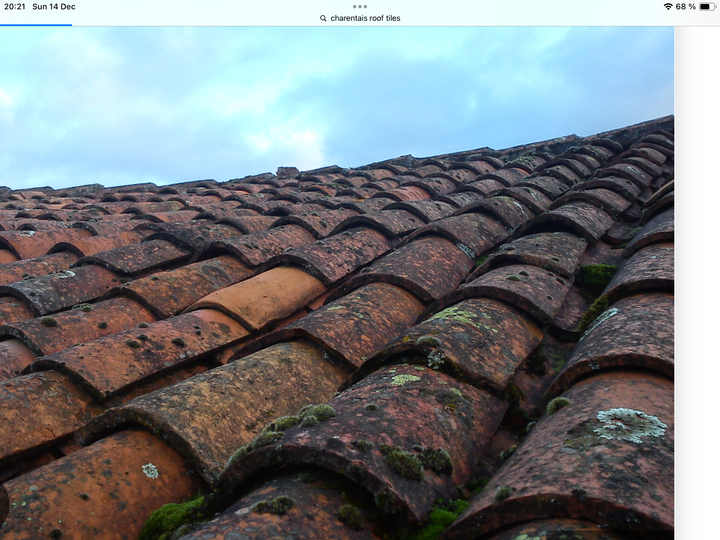
Next spring I’m going to change the roof tiles on my French home. At the moment the roof has a two tile over and under system, very typical to this region. They are great when flexibility is needed with wonky roofs etc but tend to slip in the wind as they are only laid not fixed etc. Mine are over 25 years old on the extended part of the house and probably over 40 years old on the original. Here’s a photo of what they look like. (Not my roof but similar)
They let plenty of air into the carpentry etc.
The roof construction is rafters on load bearing purlins.
Plasterboard underside of rafters. Infilled with fibreglass insulation with a foil type bubble insulation between rafters to the underside of 15 mm close boarding which the tiles sit on.
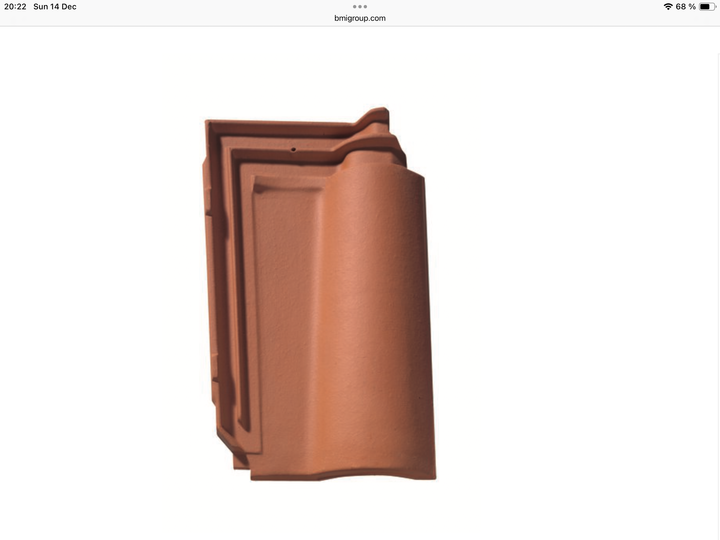
These are the replacement mechanical tiles I’m going to use.
I’m considering putting insulation onto the close boarding. Something like rigid roofing insulation. Then breather membrane, cross batons then the new tiles. The new tiles will incorporate some vent tiles.
The insulation almost doubles the material cost and I’m not sure I will bother but if I do what’s the opinion about the positioning of membranes in my described sandwich of materials please.
They let plenty of air into the carpentry etc.
The roof construction is rafters on load bearing purlins.
Plasterboard underside of rafters. Infilled with fibreglass insulation with a foil type bubble insulation between rafters to the underside of 15 mm close boarding which the tiles sit on.
These are the replacement mechanical tiles I’m going to use.
I’m considering putting insulation onto the close boarding. Something like rigid roofing insulation. Then breather membrane, cross batons then the new tiles. The new tiles will incorporate some vent tiles.
The insulation almost doubles the material cost and I’m not sure I will bother but if I do what’s the opinion about the positioning of membranes in my described sandwich of materials please.
That’s kind of cold Scottish roof with warm roof on top?
The kingspan would stop the boards and rafters from breathing if I’ve understood it correctly.
Adding an air gap above the boards would make the new insulation pointless.. apart from sun protection I suppose.
Unless there’s a breathable insulation (wool?) you could bung on the top of the boards with more rafters for support, vented ridge and soffit, plus a membrane above it with battens above all that. And if condensation did happen, it’d turn the wool to mouldy mush.
I think it’d have to be plasterboard off and kingspan and membrane under/between it with an air gap (uk = 50mm) left at the top of the rafters for breathability but it’d obviously lose room height and be messy.
Interesting question. I am not a roofer
The kingspan would stop the boards and rafters from breathing if I’ve understood it correctly.
Adding an air gap above the boards would make the new insulation pointless.. apart from sun protection I suppose.
Unless there’s a breathable insulation (wool?) you could bung on the top of the boards with more rafters for support, vented ridge and soffit, plus a membrane above it with battens above all that. And if condensation did happen, it’d turn the wool to mouldy mush.
I think it’d have to be plasterboard off and kingspan and membrane under/between it with an air gap (uk = 50mm) left at the top of the rafters for breathability but it’d obviously lose room height and be messy.
Interesting question. I am not a roofer
andy43 said:
That s kind of cold Scottish roof with warm roof on top?
The kingspan would stop the boards and rafters from breathing if I ve understood it correctly.
Adding an air gap above the boards would make the new insulation pointless.. apart from sun protection I suppose.
Unless there s a breathable insulation (wool?) you could bung on the top of the boards with more rafters for support, vented ridge and soffit, plus a membrane above it with battens above all that. And if condensation did happen, it d turn the wool to mouldy mush.
I think it d have to be plasterboard off and kingspan and membrane under/between it with an air gap (uk = 50mm) left at the top of the rafters for breathability but it d obviously lose room height and be messy.
Interesting question. I am not a roofer
Yes, what you say is what I m thinking.The kingspan would stop the boards and rafters from breathing if I ve understood it correctly.
Adding an air gap above the boards would make the new insulation pointless.. apart from sun protection I suppose.
Unless there s a breathable insulation (wool?) you could bung on the top of the boards with more rafters for support, vented ridge and soffit, plus a membrane above it with battens above all that. And if condensation did happen, it d turn the wool to mouldy mush.
I think it d have to be plasterboard off and kingspan and membrane under/between it with an air gap (uk = 50mm) left at the top of the rafters for breathability but it d obviously lose room height and be messy.
Interesting question. I am not a roofer
When I ve removed the tiles I may take up a close board or two to see how much the fibreglass insulation has settled this past 25 years. It may be I can retro fit some air vents at the top of the external wall roof junction.Also lifting a few close boards gives me a chance to see how the rafters are after 25 years.
Putting the kingsman on top of the close boarding would certainly help with the heat here as often now it s over forty degrees.
It may be just a balance of finances against how long I ve got left on this planet to be honest. I m 68 soon and want to get this done before I m unable to dance about up on a roof.
I ve just had the merchants quote in this morning.
1800 tiles along with associated verge tiles and ridges. Also R3 membrane and 750 metres of treated baton.
5630 delivered. So about £5,000.
One issue see in your proposed method of boarding-rigid insulation-membrane-tile batten-tiles is that any water vapour that passes through the permeable membrane and condenses on the cold battens/underside of tiles is going to be trapped as the battens are nailed down tight to the said membrane. Membrane(or roofing felt for old farts) is usually laid with a drape so any moisture is can escape away from the battens, this is where counter battens come in. An email to the technical department may pay off to avoid tears in the long term, or maybe Aluminati may be along to advise
wolfracesonic said:
One issue see in your proposed method of boarding-rigid insulation-membrane-tile batten-tiles is that any water vapour that passes through the permeable membrane and condenses on the cold battens/underside of tiles is going to be trapped as the battens are nailed down tight to the said membrane. Membrane(or roofing felt for old farts) is usually laid with a drape so any moisture is can escape away from the battens, this is where counter battens come in. An email to the technical department may pay off to avoid tears in the long term, or maybe Aluminati may be along to advise
Yes I’ve no void that I can drape the membrane but on the positive side the underside of the tiles will be well ventilated from the gutter line and the use of vent tiles. I will be using the counter baton method on top of the membrane so any drips off the tile underside should run down and bearing in mind it’s ventilated.I’ve just had an insulation estimate which is another 50% on top of the materials so there’s a good chance I won’t be bothering with it!
Aluminati said:
If it s close boarded, it will need a counterbatten.
Yes I ve mentioned that, it s just the actual sandwich of materials I was questioning if I were to instal a kingspan like insulation material onto the close boarding. The type of insulation most available to me is TMS. https://www.soprema-international.com/en/product/i...It s tounge and grooved with a what seems waterproof coating on each side.
Would it need a breather/vapour membrane under? As well as over.
Edit to add. Does the existing sandwich of materials on the underside that I described in the op have any bearing on the materials being added?
When we did our French house our roofers used Roman Canale mechanical tiles (similar to yours but a uniform shape top to bottom), we had all new roof timbers topped with chestnut vallige (boards over the timbers on which the tiles are laid) and that was covered on the underside by a vapour barrier. The insulation was Kingspan boards between the loft floor joists and then all covered with thick Rockwool. So the underside of the roof did not have insulation only a vapour barrier, the loft was huge by the way, roughly 100ft x 30ft by 12ft high at the ridge and was partially floor boarded with OSB.
WyrleyD said:
When we did our French house our roofers used Roman Canale mechanical tiles (similar to yours but a uniform shape top to bottom), we had all new roof timbers topped with chestnut vallige (boards over the timbers on which the tiles are laid) and that was covered on the underside by a vapour barrier. The insulation was Kingspan boards between the loft floor joists and then all covered with thick Rockwool. So the underside of the roof did not have insulation only a vapour barrier, the loft was huge by the way, roughly 100ft x 30ft by 12ft high at the ridge and was partially floor boarded with OSB.
Thanks for that.We have loft bedrooms so the underside is already insulated and plaster boarded. Hence my conundrum on the sandwich of materials going on top.
It’s now unlikely I will add more insulation on top of the close boards. So it will be membrane the cross batons and tiles. The void in the cross batons will be ventilated to deal with condensation to the tile underside.
Magooagain said:
Aluminati said:
If it s close boarded, it will need a counterbatten.
Yes I ve mentioned that, it s just the actual sandwich of materials I was questioning if I were to instal a kingspan like insulation material onto the close boarding. The type of insulation most available to me is TMS. https://www.soprema-international.com/en/product/i...It s tounge and grooved with a what seems waterproof coating on each side.
Would it need a breather/vapour membrane under? As well as over.
Edit to add. Does the existing sandwich of materials on the underside that I described in the op have any bearing on the materials being added?
Close boarding not required, but rafter centres are 400mm.
Gassing Station | Homes, Gardens and DIY | Top of Page | What's New | My Stuff