
Discussion


I'm building a shed. Nothing special, its to house mower/paint/deckchairs. It's roughly 7ft x 7ft.
It's frame will be 100x100mm pillars in each corner, with 100x50mm timbers running between them, and 50x50mm timbers doing the uprights. It will then all be clad in 19mm thick Shiplap
What's the best way of joining the timbers together? I've seen some people say use nails, some to use screws.
As I will have to put nails/screws in at an angle to be able to link the 4x2 and 4x4 timbers, I'm favouring using screws, as I think i will have more control over getting them in properly, but some sites say that screws will snap and don't allow for expansion/contraction of the wood.
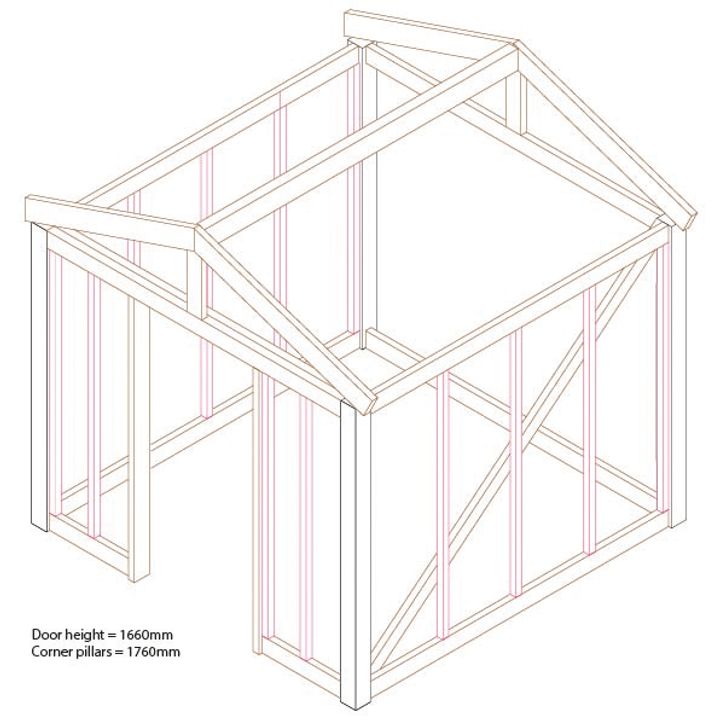
It's frame will be 100x100mm pillars in each corner, with 100x50mm timbers running between them, and 50x50mm timbers doing the uprights. It will then all be clad in 19mm thick Shiplap
What's the best way of joining the timbers together? I've seen some people say use nails, some to use screws.
As I will have to put nails/screws in at an angle to be able to link the 4x2 and 4x4 timbers, I'm favouring using screws, as I think i will have more control over getting them in properly, but some sites say that screws will snap and don't allow for expansion/contraction of the wood.
I would use screws just because I prefer to use them. I would pilot drill the holes, especially the ones going across the grain.
As for the wood I think you could get away with much smaller sizes. In my shed the main frame is 75x30 and the wall battens are 30x30, the shed is 16x10 foot, and been standing without issue for 13 years. Its solid with no movement.
As for the wood I think you could get away with much smaller sizes. In my shed the main frame is 75x30 and the wall battens are 30x30, the shed is 16x10 foot, and been standing without issue for 13 years. Its solid with no movement.
Guffy said:
I use screws and pilot holes too.
Those 100mm posts are a bit OTT IMO, assume the roof will have more joists?
The 100x100 post are really being used because I already have them knocking around for a few years, and I've been looking for a job to use them on!Those 100mm posts are a bit OTT IMO, assume the roof will have more joists?
Saves me buying another load of 2x4s

I might put another joist halfway between eaves and ridge, but I'm not sure it will need it.
boyse7en said:
I'm building a shed. Nothing special, its to house mower/paint/deckchairs. It's roughly 7ft x 7ft.
It's frame will be 100x100mm pillars in each corner, with 100x50mm timbers running between them, and 50x50mm timbers doing the uprights. It will then all be clad in 19mm thick Shiplap
Use 75x50 for the uprights and don't forget to put some noggins between them.It's frame will be 100x100mm pillars in each corner, with 100x50mm timbers running between them, and 50x50mm timbers doing the uprights. It will then all be clad in 19mm thick Shiplap
Use pressure treated timber and you'll have a shed that will last decades.
Contrary to the advice above I'd say go chunky with the timber sizes if you're going DIY - the small extra cost of timber is worth it in the longer run to get a rock solid shed that's much less shonky than most of the flimsy stuff on the market.
Worth phoning round fencing supply/agricultural type stores for timber if you've got anywhere like that nearby. I managed to get pressure treated c16 for significantly less than the stuff in DIY sheds/builders merchant.
Edit - ah, you've already got the timber, you can ignore most of that!
Worth phoning round fencing supply/agricultural type stores for timber if you've got anywhere like that nearby. I managed to get pressure treated c16 for significantly less than the stuff in DIY sheds/builders merchant.
Edit - ah, you've already got the timber, you can ignore most of that!
Edited by Snow and Rocks on Wednesday 29th April 12:57
Gassing Station | Homes, Gardens and DIY | Top of Page | What's New | My Stuff