
Is this Acer really sick?
Discussion


We ve had this acer in our garden since we moved in, it s always been in rude health. We don t really do anything to it at all, just let it be.
We ve had a few trees / shrubs die over the last few years, including a cherry, a rowan and a hebe. Next door have had the eucalyptus go as well.
Now the acer is stating to looking like this. It s been very dry here, but this has been after a weekend of rain.
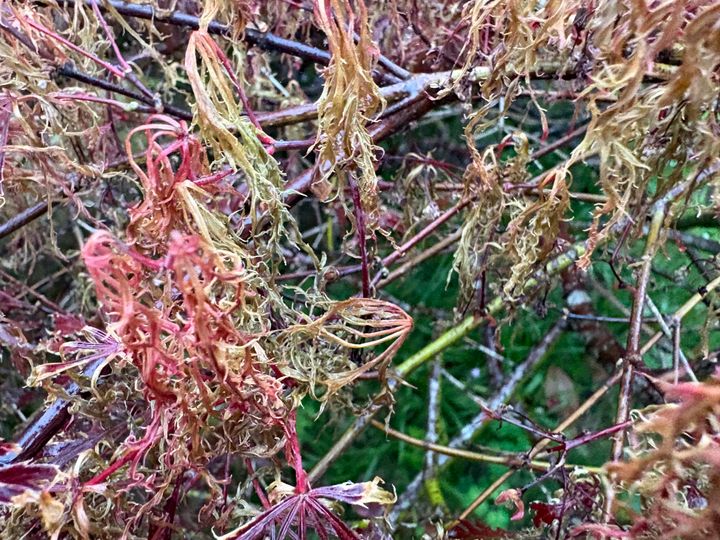
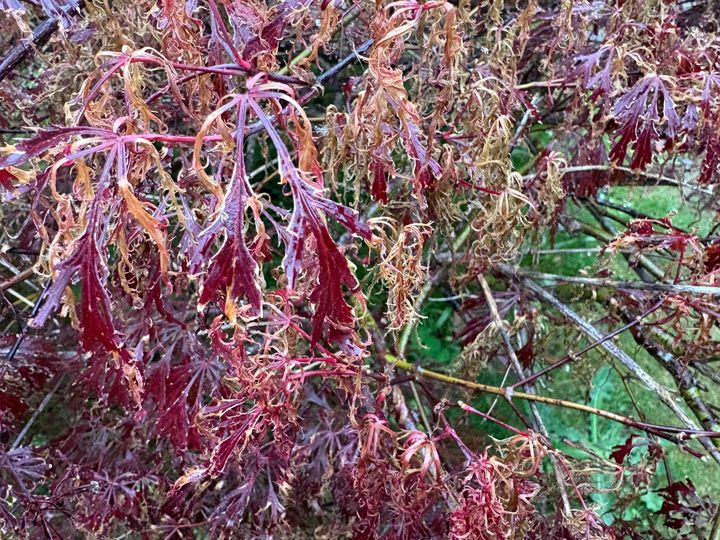
We ve had a few trees / shrubs die over the last few years, including a cherry, a rowan and a hebe. Next door have had the eucalyptus go as well.
Now the acer is stating to looking like this. It s been very dry here, but this has been after a weekend of rain.
If you’ve had a history of sudden unexplained and somewhat isolated plant deaths, my immediate concern would be the possibility of honey fungus.
Have a look at the trunk near the base, for the first six inches or so from the soil line upwards. Is the bark cracked or splitting? If so, can you peel it back, and is there a white skin-like layer underneath, a bit like the skin on custard? If there are roots near the surface, try scraping the soil back and look for similar signs. Sometimes you might find black bootlace-like strands in the soil and attached to the roots - this is how it spreads - although I’ve never actually seen those myself. These are the classic signs of honey fungus. (Note: powdery white under the bark is not honey fungus).
If you have these signs, particularly the peeling bark and the white skin underneath, it’s quite likely to be honey fungus. There’s no cure or treatment. The tree is a gonner, and you need to dig it out with as much of its roots as possible (because they will be infected).
If you think it might be honey fungus, I would also dig out any dead stumps and roots anywhere else in the garden (especially from other trees and shrubs that have died mysteriously), because rotting wood can harbour honey fungus for some time and it can spread to healthy plants via those bootlaces.
Even if you don’t have those signs it still could be the culprit, but I think I’d wait and see.
Have a look at the trunk near the base, for the first six inches or so from the soil line upwards. Is the bark cracked or splitting? If so, can you peel it back, and is there a white skin-like layer underneath, a bit like the skin on custard? If there are roots near the surface, try scraping the soil back and look for similar signs. Sometimes you might find black bootlace-like strands in the soil and attached to the roots - this is how it spreads - although I’ve never actually seen those myself. These are the classic signs of honey fungus. (Note: powdery white under the bark is not honey fungus).
If you have these signs, particularly the peeling bark and the white skin underneath, it’s quite likely to be honey fungus. There’s no cure or treatment. The tree is a gonner, and you need to dig it out with as much of its roots as possible (because they will be infected).
If you think it might be honey fungus, I would also dig out any dead stumps and roots anywhere else in the garden (especially from other trees and shrubs that have died mysteriously), because rotting wood can harbour honey fungus for some time and it can spread to healthy plants via those bootlaces.
Even if you don’t have those signs it still could be the culprit, but I think I’d wait and see.
Further comment:
A well-established Acer should not be showing any signs of stress from the recent dry spell. It hasn’t been all that hot, and the dry spell hasn’t been long enough.
Also, I have two Acers in the garden, both of which get quite a lot of sun without problems. The worst you’d get is some mild scorching (and I don’t think the sun has been strong enough for that yet), not the widespread death that we’re seeing in the pictures.
I’m afraid something is systemically wrong with that tree.
A well-established Acer should not be showing any signs of stress from the recent dry spell. It hasn’t been all that hot, and the dry spell hasn’t been long enough.
Also, I have two Acers in the garden, both of which get quite a lot of sun without problems. The worst you’d get is some mild scorching (and I don’t think the sun has been strong enough for that yet), not the widespread death that we’re seeing in the pictures.
I’m afraid something is systemically wrong with that tree.
Dr Mike Oxgreen said:
Further comment:
A well-established Acer should not be showing any signs of stress from the recent dry spell. It hasn t been all that hot, and the dry spell hasn t been long enough.
Also, I have two Acers in the garden, both of which get quite a lot of sun without problems. The worst you d get is some mild scorching (and I don t think the sun has been strong enough for that yet), not the widespread death that we re seeing in the pictures.
I m afraid something is systemically wrong with that tree.
Have to agree, my acers are stunning at the moment but the only reason I mentioned it is that my olive tree dropped it leaves last weekend after the very windy, dry weather of the week before (North Hampshire/Berkshire borders). 25/26 degrees for a few days. A well-established Acer should not be showing any signs of stress from the recent dry spell. It hasn t been all that hot, and the dry spell hasn t been long enough.
Also, I have two Acers in the garden, both of which get quite a lot of sun without problems. The worst you d get is some mild scorching (and I don t think the sun has been strong enough for that yet), not the widespread death that we re seeing in the pictures.
I m afraid something is systemically wrong with that tree.
RichB said:
ave to agree, my acers are stunning at the moment but the only reason I mentioned it is that my olive tree dropped it leaves last weekend after the very windy, dry weather of the week before (North Hampshire/Berkshire borders). 25/26 degrees for a few days.
Yes, I have that problem with a large potted olive tree in a half barrel. It drops its leaves pretty badly over winter, but it’s now beginning to refoliate fairly well.Someone from the olive tree nursery I bought it from told me it’s likely due to drying out. He said even during winter it’s important to water them well in anticipation of a cold spell, which seems counterintuitive. The wind is either increasing the drying effect of the heat, or simply blowing off the leaves that the tree has already begun to shed.
Sounds like one for Gardeners' Question Time, but whether you can get an answer in time is another matter.
https://www.bbc.co.uk/programmes/b006qp2f
https://www.bbc.co.uk/programmes/b006qp2f
Unlikely to be windburn or any issue from sun. Are garden is quite shady and sheltered really.
The acer is quite well established. It s been here at least the 9 years we ve lived it and it must have been a fair few before that!
We did suspect honey fungus for the others, but without any proof. The acer is 15ft from the closest casualty with other shrubs / trees in between.
No peeling bark and no obvious fungus. You can see what appears to be peeling/splitting here, but I think it s historic damage. The bark doesn t peel when you try but little thick bits break off

A couple of pictures of the whole shrub. Excuse the mess! It s taking over a bit, but I am reticent to prune it much
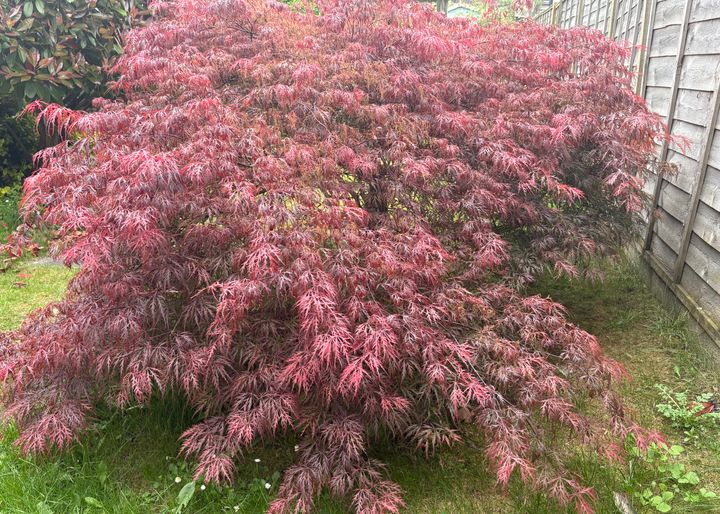
The acer is quite well established. It s been here at least the 9 years we ve lived it and it must have been a fair few before that!
We did suspect honey fungus for the others, but without any proof. The acer is 15ft from the closest casualty with other shrubs / trees in between.
No peeling bark and no obvious fungus. You can see what appears to be peeling/splitting here, but I think it s historic damage. The bark doesn t peel when you try but little thick bits break off
A couple of pictures of the whole shrub. Excuse the mess! It s taking over a bit, but I am reticent to prune it much
Edited by jimmy156 on Tuesday 5th May 18:58
Gassing Station | Homes, Gardens and DIY | Top of Page | What's New | My Stuff