
Patch repairing track potholes
Discussion


I have 4 builders bags of recycled road planings and my research/chat GPT says I should layer these approx 50-75mm, compact with a wacker plate and repeat etc.
In examples such as the below (excuse the photos, the depth is never shown accurately) where there are lots of loose stones, should I remove all these first or would they help make a decent base layer?
The track is 400m and of course the holes are spread across most of its length- should a wacker plate be able to move back up this easily enough? I've never use done.
I'm not expecting perfection and before anyone says, we're looking at getting drainage channels installed across the track in places.
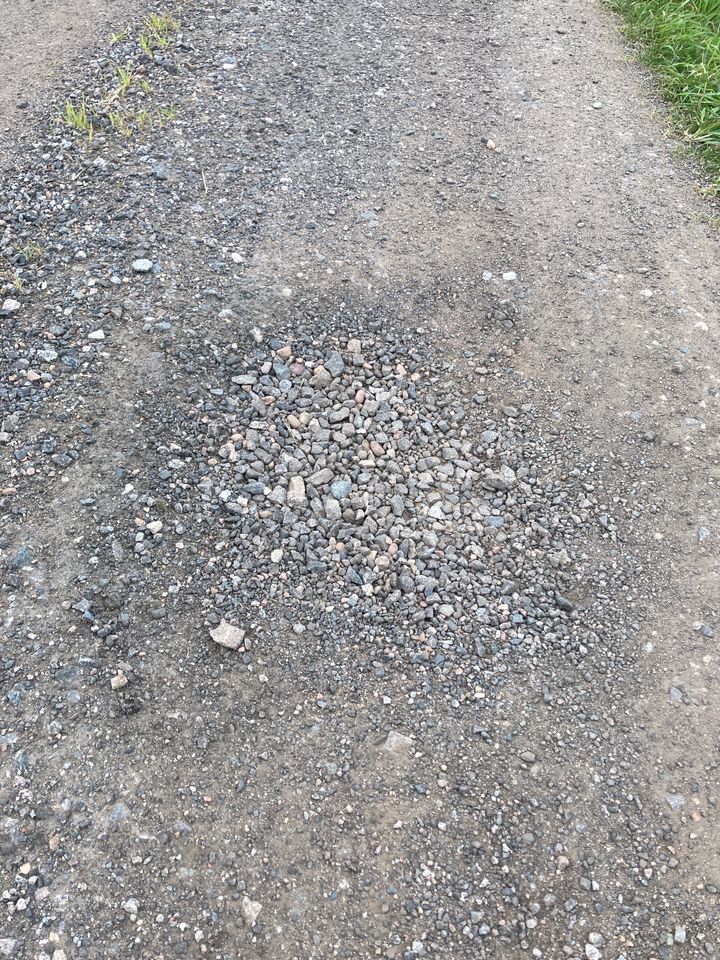
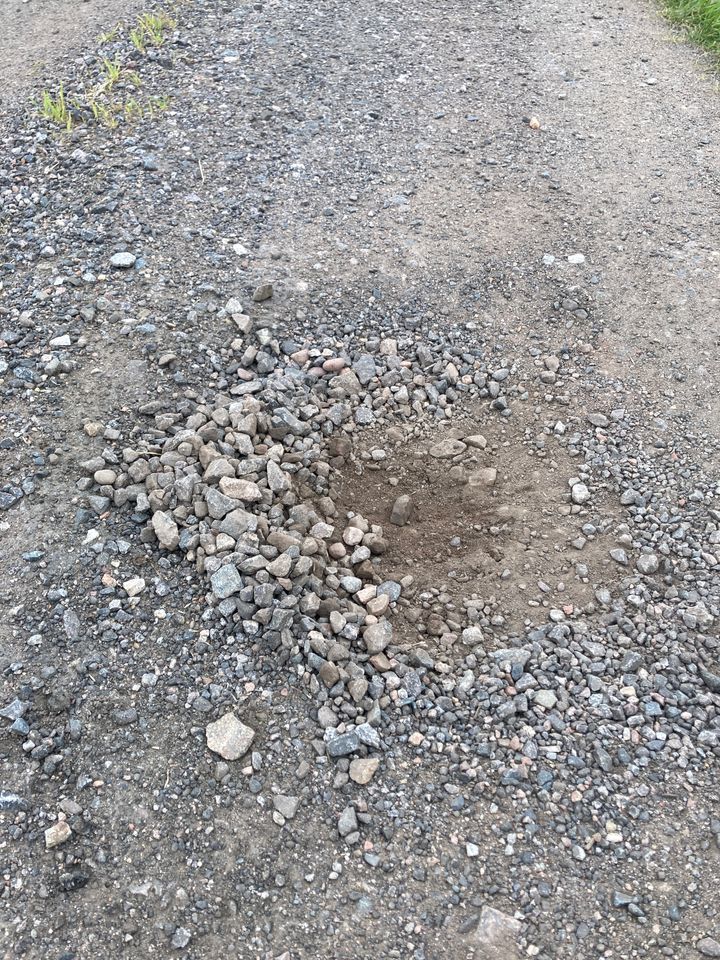
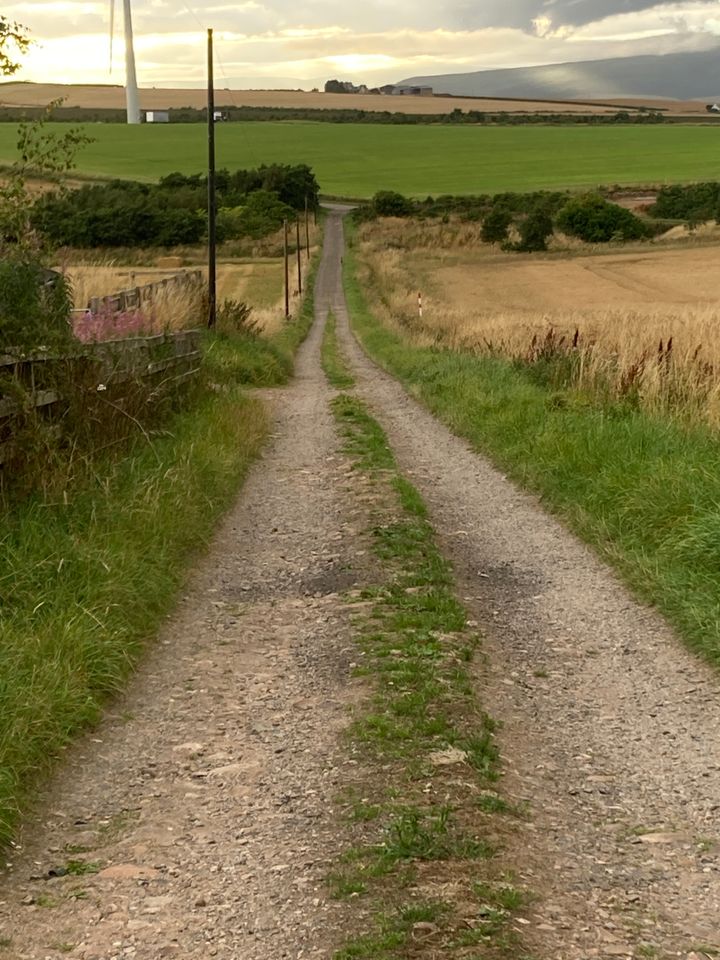
In examples such as the below (excuse the photos, the depth is never shown accurately) where there are lots of loose stones, should I remove all these first or would they help make a decent base layer?
The track is 400m and of course the holes are spread across most of its length- should a wacker plate be able to move back up this easily enough? I've never use done.
I'm not expecting perfection and before anyone says, we're looking at getting drainage channels installed across the track in places.
My thinking would be to excavate it out deeper with a proper edge then backfill and pack?
Otherwise you have two issues - you're trying to fill a shallow edge which never works, and you're filling onto a solid packed surface so it just won't bind to it?
It's just extra effort not material you'll be using but I suspect if you just try to fill the hole as-is it'll soon return exactly as it was
Otherwise you have two issues - you're trying to fill a shallow edge which never works, and you're filling onto a solid packed surface so it just won't bind to it?
It's just extra effort not material you'll be using but I suspect if you just try to fill the hole as-is it'll soon return exactly as it was
I have similar! I bought 60 tonnes of road planings to fix mine. Problem is pot holes are all about different hardnesses between materials so whacker plating things down will create a different hardness.
Have you got much kit for work? For my 60 tonnes I used my JCB to drag the track spreading loose and creating a bit of rough surface for bonding. Then filled pot holes with planings, light compacting by just driving over them. The spread rest of plannings evenly and used JCB bucket as a roller by dragging it backwards to smooth and light compact. Cars then drove over and created a pretty good finish. Summer heat has helped too.
I do need to go and scrape up loose stuff and refill little spots to smooth the surface a bit more.
Have you got much kit for work? For my 60 tonnes I used my JCB to drag the track spreading loose and creating a bit of rough surface for bonding. Then filled pot holes with planings, light compacting by just driving over them. The spread rest of plannings evenly and used JCB bucket as a roller by dragging it backwards to smooth and light compact. Cars then drove over and created a pretty good finish. Summer heat has helped too.
I do need to go and scrape up loose stuff and refill little spots to smooth the surface a bit more.
JoshSm said:
My thinking would be to excavate it out deeper with a proper edge then backfill and pack?
Otherwise you have two issues - you're trying to fill a shallow edge which never works, and you're filling onto a solid packed surface so it just won't bind to it?
It's just extra effort not material you'll be using but I suspect if you just try to fill the hole as-is it'll soon return exactly as it was
In NZ I saw them levelling a track by dragging a huge steel frame along it. It just scrapes the high bit down into the low bits (and presumably you compact it afterwards).Otherwise you have two issues - you're trying to fill a shallow edge which never works, and you're filling onto a solid packed surface so it just won't bind to it?
It's just extra effort not material you'll be using but I suspect if you just try to fill the hole as-is it'll soon return exactly as it was
as they say a picture is worth a 1000 words.
so I hope this vid is also worth a 1000 words
https://youtu.be/T3hPECCqg60?si=yzoOpNX0UX5ybjbI
pretty much the same situation you are looking to deal with.
so I hope this vid is also worth a 1000 words
https://youtu.be/T3hPECCqg60?si=yzoOpNX0UX5ybjbI
pretty much the same situation you are looking to deal with.
Well I'm told this is what the previous owner of the house did and the track was ok until last winter being really bad.
My one neighbour is in Dubai for most of the year so it's just me and the other half most of the time with f k all equipment over the basics of a wheelbarrow etc.
Bottom line...for now, I'm not going any more expansive so a wacker plate and the road planings is what it's getting.
My one neighbour is in Dubai for most of the year so it's just me and the other half most of the time with f
k all equipment over the basics of a wheelbarrow etc.Bottom line...for now, I'm not going any more expansive so a wacker plate and the road planings is what it's getting.
Patrick Bateman said:
Well I'm told this is what the previous owner of the house did and the track was ok until last winter being really bad.
My one neighbour is in Dubai for most of the year so it's just me and the other half most of the time with fk all equipment over the basics of a wheelbarrow etc.
Bottom line...for now, I'm not going any more expansive so a wacker plate and the road planings is what it's getting.
Forget the wackier plate if all you are doing is patching it. Clean each hole out best you can, wet it well, put in the scalpings damp and stamp it in. Quick and cheap.My one neighbour is in Dubai for most of the year so it's just me and the other half most of the time with f
k all equipment over the basics of a wheelbarrow etc.Bottom line...for now, I'm not going any more expansive so a wacker plate and the road planings is what it's getting.
Magooagain said:
Forget the wackier plate if all you are doing is patching it. Clean each hole out best you can, wet it well, put in the scalpings damp and stamp it in. Quick and cheap.
Yep this, if anything you can gently drive back and fore over it with a car or whatever to pack in - little whacker plate won't achieve very much. But be prepared to be back there pretty soon - filling in potholes is never a long term fix. As an aside, interesting it potholes with that gradient, the only bits of our track that form potholes are where water sits
astroarcadia said:
Box grader.
Astroarcadia is right. This is a great chance to acquire a little Kubota tractor :-)A wacker plate won't do very much for this. If you really need to do a little repair without big kit, just drive your heaviest car with skinniest wheels back and forth over the repair pothole a few times.
Next time it rains heavily, watch carefully how the water runs down that track. Can you find a way to get it off?
Kyboshed the wacker plate, Jag has been a road roller the past 2 nights.
What a mission walking 400m down there with a full wheelbarrow though, Christ.
Have had a couple of contractors round to look at permanent options for drains/channels but fk knows how pricey that might be.
Forgot to mention, the previous owners installed 4 or 5 wooden channels that fed into the ditch but didn’t look after them very well, they’re almost completely buried but an interim option could be to give them a full clear out so there’s at least something to help in the interim.
What a mission walking 400m down there with a full wheelbarrow though, Christ.
Have had a couple of contractors round to look at permanent options for drains/channels but f
k knows how pricey that might be. Forgot to mention, the previous owners installed 4 or 5 wooden channels that fed into the ditch but didn’t look after them very well, they’re almost completely buried but an interim option could be to give them a full clear out so there’s at least something to help in the interim.
Patrick Bateman said:
Kyboshed the wacker plate, Jag has been a road roller the past 2 nights.
What a mission walking 400m down there with a full wheelbarrow though, Christ.
Have had a couple of contractors round to look at permanent options for drains/channels but fk knows how pricey that might be.
Forgot to mention, the previous owners installed 4 or 5 wooden channels that fed into the ditch but didn t look after them very well, they re almost completely buried but an interim option could be to give them a full clear out so there s at least something to help in the interim.
You definitely need to invest in some big boys toys. You will always be on it!What a mission walking 400m down there with a full wheelbarrow though, Christ.
Have had a couple of contractors round to look at permanent options for drains/channels but f
k knows how pricey that might be. Forgot to mention, the previous owners installed 4 or 5 wooden channels that fed into the ditch but didn t look after them very well, they re almost completely buried but an interim option could be to give them a full clear out so there s at least something to help in the interim.
Your track looks like ours. Ours is a few hundred meters long with another few hundred meters we share with neighbours. We have been here over 20 years and have occasionally had it regraded - mainly to remove high spots after a few years. Generally all we ever do is group together and get 20/30tons of road planings to fill in the holes. Costs about £100 each every couple of years.
It isn't a permanent solution but it is a good workout, though a bit knackering with a wheelbarrow. If you have a towbar a small trailer is very handy - or one on a quad if you have one. Never bothered tamping down, just overfill slightly and drive over it a few times before the delivery drivers turn up. Only ever do it in dry weather when there is no standing water.
If possible (helps if you own the land) place piles of the planings periodically along the track to minimise how far you have to walk.
As has been said above it is the pooling water that is the enemy. Concentrate on the places where water pools and see if you can get some way of draining off. Ours is on a slope too so we have added some cross channels/hollows diagonally across that channel any flowing water to the sides/ditches (also slows down the delivery drivers). In places that are prone to heavy pooling/potholes make sure there is a channel for water to run away to the sides from the pothole/puddles.
Every now and again a new neighbour will insist that we should pay to have the shared track concreted/tarmaced to save the effort. They usually quieten upon seeing the quote.
Finally - it is an ongoing job. Whenever a hole appears fill it sooner rather than later. It is much easier that way.
It isn't a permanent solution but it is a good workout, though a bit knackering with a wheelbarrow. If you have a towbar a small trailer is very handy - or one on a quad if you have one. Never bothered tamping down, just overfill slightly and drive over it a few times before the delivery drivers turn up. Only ever do it in dry weather when there is no standing water.
If possible (helps if you own the land) place piles of the planings periodically along the track to minimise how far you have to walk.
As has been said above it is the pooling water that is the enemy. Concentrate on the places where water pools and see if you can get some way of draining off. Ours is on a slope too so we have added some cross channels/hollows diagonally across that channel any flowing water to the sides/ditches (also slows down the delivery drivers). In places that are prone to heavy pooling/potholes make sure there is a channel for water to run away to the sides from the pothole/puddles.
Every now and again a new neighbour will insist that we should pay to have the shared track concreted/tarmaced to save the effort. They usually quieten upon seeing the quote.
Finally - it is an ongoing job. Whenever a hole appears fill it sooner rather than later. It is much easier that way.
Gassing Station | Homes, Gardens and DIY | Top of Page | What's New | My Stuff