
Tiling advice please - new plaster and plasterboard?
Discussion


Hi,
We're quite new to DIY but we're getting stuck in. We've done our lounge and we're currently tackling the bathroom as the shower has been leaking into the spare room and hallway and the bath is now leaking a bit too!
So we've ordered new tiles and started pulling the tiles off the wall and scraping off all the loose paint. The idea is to tile the whole room - I've had enough of paint flaking off the walls! The room was two rooms originally but was converted years ago by the previous owner into one big room with a shower cubicle where the door used to be.
Photo:
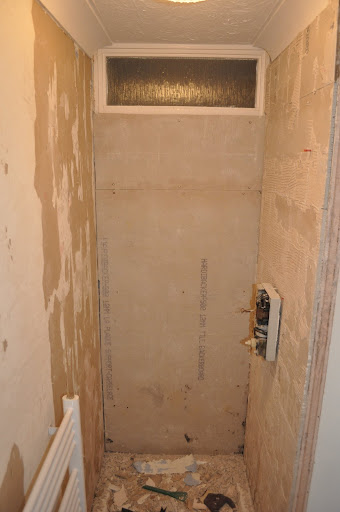
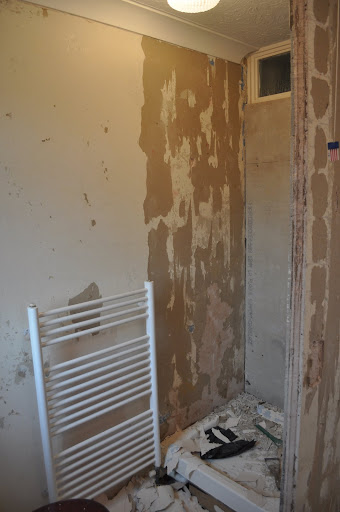
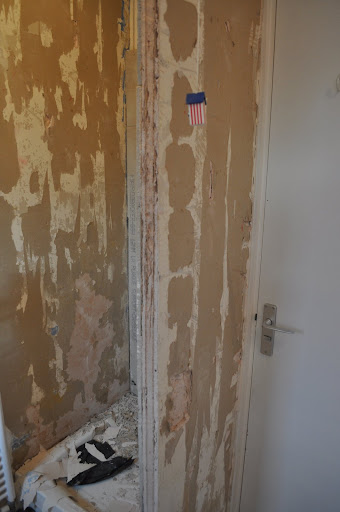
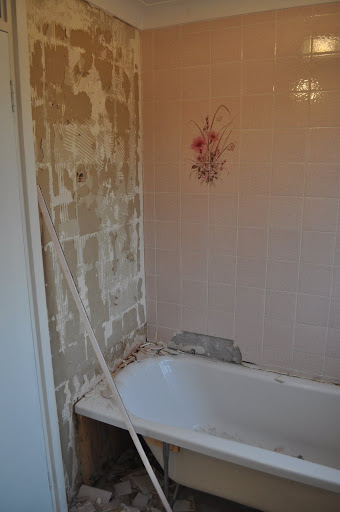
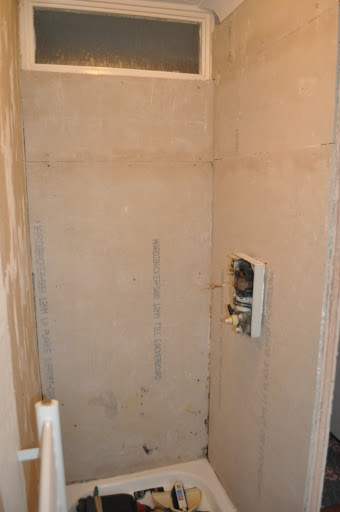
In the shower cubicle you can see two walls (the back wall and the small wall to the right with the shower unit on) are "tile backboards" and seem to be in ok condition, although one of them has been damp at the bottom. The tile adhesive has chipped off these ok and I'm assuming that once primed these will be fine for tiling onto. However, the longer wall to the left (opposite the wall with the shower unit on) seems to be cheap plasterboard and the paper lining has just come off with the tiles and left a brown rough papery texture behind and at the bottom where it's been leaking, just the internal bare plaster. What should we do about this? Once primed (we're planning on getting a tanking kit) will this be ok to tile on once again or should it be replaced with tile backboard too? Same question goes for the wall at the back of the bath, next to the door. This seems to be cheap plasterboard too.
Photo:
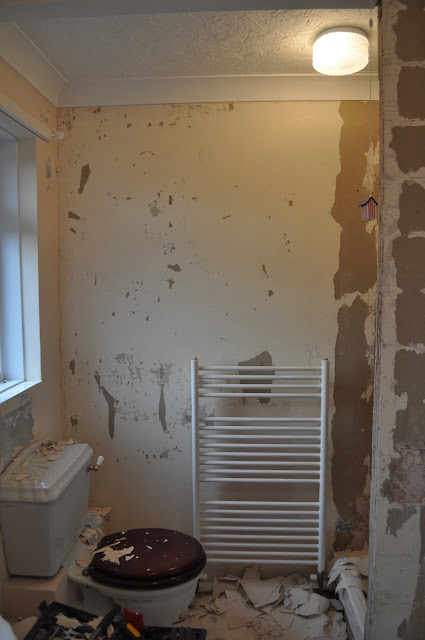
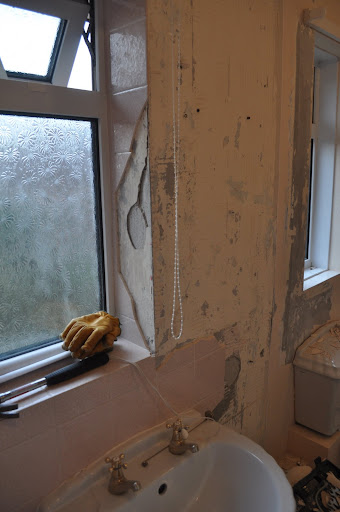
The other problem we have is the different levels on the wall face, where the two rooms have been divided. The room where the toilet is seems to protrude out further than the room with the basin in. The plaster also seems to the coming off in lumps when removing tiles on the outside wall so I think these might need re-skimming - would you agree? How much would it cost to have the wall with the windows in and the wall alongside the bath re-skimmed would you think?
I have a bathroom fitter coming in to fit the tiles, anything else I should know or be aware of to make sure he's doing it properly?
Thanks,
Dan
We're quite new to DIY but we're getting stuck in. We've done our lounge and we're currently tackling the bathroom as the shower has been leaking into the spare room and hallway and the bath is now leaking a bit too!
So we've ordered new tiles and started pulling the tiles off the wall and scraping off all the loose paint. The idea is to tile the whole room - I've had enough of paint flaking off the walls! The room was two rooms originally but was converted years ago by the previous owner into one big room with a shower cubicle where the door used to be.
Photo:
In the shower cubicle you can see two walls (the back wall and the small wall to the right with the shower unit on) are "tile backboards" and seem to be in ok condition, although one of them has been damp at the bottom. The tile adhesive has chipped off these ok and I'm assuming that once primed these will be fine for tiling onto. However, the longer wall to the left (opposite the wall with the shower unit on) seems to be cheap plasterboard and the paper lining has just come off with the tiles and left a brown rough papery texture behind and at the bottom where it's been leaking, just the internal bare plaster. What should we do about this? Once primed (we're planning on getting a tanking kit) will this be ok to tile on once again or should it be replaced with tile backboard too? Same question goes for the wall at the back of the bath, next to the door. This seems to be cheap plasterboard too.
Photo:
The other problem we have is the different levels on the wall face, where the two rooms have been divided. The room where the toilet is seems to protrude out further than the room with the basin in. The plaster also seems to the coming off in lumps when removing tiles on the outside wall so I think these might need re-skimming - would you agree? How much would it cost to have the wall with the windows in and the wall alongside the bath re-skimmed would you think?
I have a bathroom fitter coming in to fit the tiles, anything else I should know or be aware of to make sure he's doing it properly?
Thanks,
Dan
Why don't you remove the temporary wall between the shower cubicle (as you face it) and the door? Then you can install a good quality glass shower cubilcle (glass on 2 sides, one to replace the temporary wall and obviously a glass door). That way you'll make the room look alot bigger and get more light into the shower. You'll also have less tiling etc to do then.
skeeterm5 said:
In the shower area I would use aqua board rather than normal plasterboard as it waterproof. A bit more expensive (and heavy as hell!) but well worth it.
S
OP follow the above poster's advice, for 10 years or more ago I used the above, Aquapanel boards in a basement shower/wet room, and to this day the shower room looks perfect. S
One of the biggest problems with using tilers, is that they take the cheapest and quickest options, they get paid, go away and 18 months down the road, the grout starts cracking, water penetrates through to the primer, the primer activates, and the plasterboard blows, with the end result that the tiles starts falling off the walls.
So use Aquapanel boards, a proprietary shower room tile adhesive and grout, and follow the instructions of the manufacturer and not of the tiler. If they recommend a primer, use the one recommended by the manuafacturer of the tile adhesive.
http://reviews.wickes.co.uk/9987-en_gb/220561/revi...
Silver993tt said:
Why don't you remove the temporary wall between the shower cubicle (as you face it) and the door? Then you can install a good quality glass shower cubilcle (glass on 2 sides, one to replace the temporary wall and obviously a glass door). That way you'll make the room look alot bigger and get more light into the shower. You'll also have less tiling etc to do then.
Have considered this but discounted it because we thought it would be too expensive. We rent the house from my girlfriends parents so between all of us we don't want to spend a fortune on it. Although having said that, it would mean we wouldn't have to repair the flaky plasterboard on that wall and as you say, less tiles (although they're ordered now) and less work. Could I reuse my shower tray. It's a good quality stone tray. Wings said:
skeeterm5 said:
In the shower area I would use aqua board rather than normal plasterboard as it waterproof. A bit more expensive (and heavy as hell!) but well worth it.
S
OP follow the above poster's advice, for 10 years or more ago I used the above, Aquapanel boards in a basement shower/wet room, and to this day the shower room looks perfect. S
One of the biggest problems with using tilers, is that they take the cheapest and quickest options, they get paid, go away and 18 months down the road, the grout starts cracking, water penetrates through to the primer, the primer activates, and the plasterboard blows, with the end result that the tiles starts falling off the walls.
So use Aquapanel boards, a proprietary shower room tile adhesive and grout, and follow the instructions of the manufacturer and not of the tiler. If they recommend a primer, use the one recommended by the manuafacturer of the tile adhesive.
http://reviews.wickes.co.uk/9987-en_gb/220561/revi...
Wings said:
skeeterm5 said:
In the shower area I would use aqua board rather than normal plasterboard as it waterproof. A bit more expensive (and heavy as hell!) but well worth it.
S
OP follow the above poster's advice, for 10 years or more ago I used the above, Aquapanel boards in a basement shower/wet room, and to this day the shower room looks perfect. S
One of the biggest problems with using tilers, is that they take the cheapest and quickest options, they get paid, go away and 18 months down the road, the grout starts cracking, water penetrates through to the primer, the primer activates, and the plasterboard blows, with the end result that the tiles starts falling off the walls.
So use Aquapanel boards, a proprietary shower room tile adhesive and grout, and follow the instructions of the manufacturer and not of the tiler. If they recommend a primer, use the one recommended by the manuafacturer of the tile adhesive.
http://reviews.wickes.co.uk/9987-en_gb/220561/revi...
You can also use a tanking kit to water proof normal plasterboard, often come in a bucket containing all the kit. http://www.ultratileadhesives.co.uk/product.jsp?pr...
Also A GOOD tiler will care about the job they do, and will have a good knowladge of the produts available. If grout is craking 18 months after the job they are not proper tilers!!!
Plus why would you go to wickes for tiling advice, they are a jack of all trades type of place, chances are the person you deal with has no tiling experiance or knowlage. go to a tile shop or bathroom shop and get some proper advice
Edited by Chris77 on Sunday 22 November 17:28
danyeates said:
Silver993tt said:
Why don't you remove the temporary wall between the shower cubicle (as you face it) and the door? Then you can install a good quality glass shower cubilcle (glass on 2 sides, one to replace the temporary wall and obviously a glass door). That way you'll make the room look alot bigger and get more light into the shower. You'll also have less tiling etc to do then.
Have considered this but discounted it because we thought it would be too expensive. We rent the house from my girlfriends parents so between all of us we don't want to spend a fortune on it. Although having said that, it would mean we wouldn't have to repair the flaky plasterboard on that wall and as you say, less tiles (although they're ordered now) and less work. Could I reuse my shower tray. It's a good quality stone tray. Hi,
Ok, thanks for all the really informative replies. Shower cubicle isn't my main concern anymore, the horribly crumbly plaster around the window is!!! I have no idea what to do about it and I don't think tile adhesive and filler will suffice anymore.
The wall lining is literally just falling off the wall. I've bought a long but thin impact screw driver to gently chip the tiles off, leaving the adhesive ont eh plaster to make sure I don't pull the plaster off but it's no use. As soon as a tile slightly pulls on it, it just pulls a huge area of the plaster (or wall lining of whatever cr@p it is) off, pulling off several other tiles and the area I've just worked on too.
I'll post some photos in 5 mins, I'm just charging the battery on my camera.
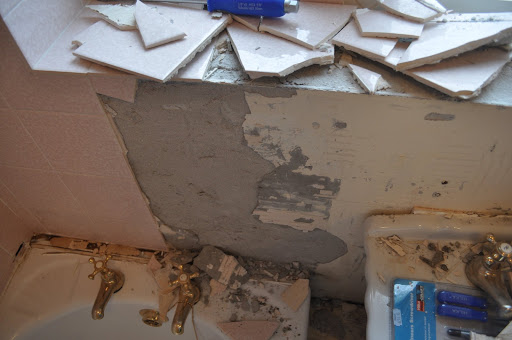
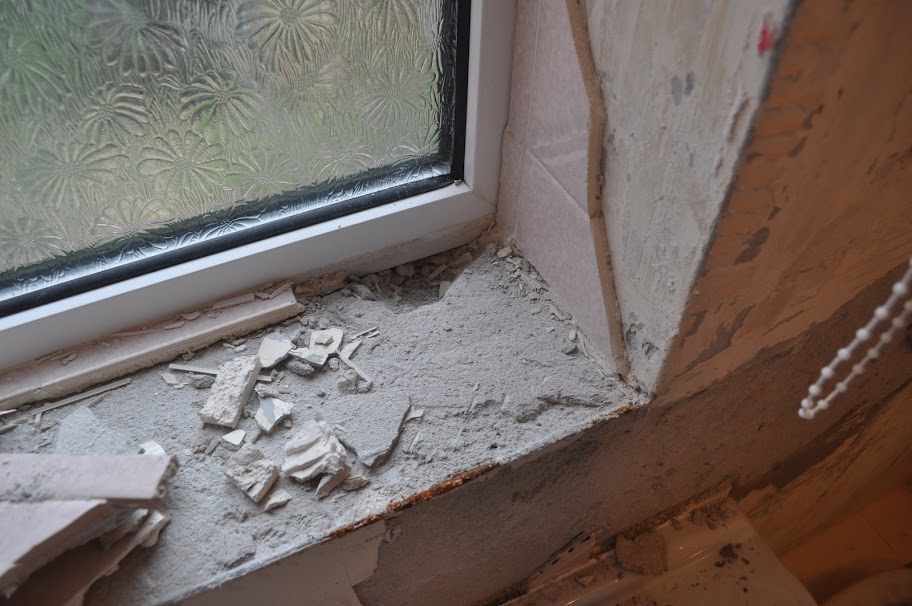
What should I do with this wall? It's really bad around the window, lumps of it have come off and the grey stuff that's left sounds hollow when knocked (implying it's a very large loose section) and moves when you press it. I've had enough now!! I have a feeling it's going to be the same on the long wall alongside the bath too.
Please help!!
Ok, thanks for all the really informative replies. Shower cubicle isn't my main concern anymore, the horribly crumbly plaster around the window is!!! I have no idea what to do about it and I don't think tile adhesive and filler will suffice anymore.
The wall lining is literally just falling off the wall. I've bought a long but thin impact screw driver to gently chip the tiles off, leaving the adhesive ont eh plaster to make sure I don't pull the plaster off but it's no use. As soon as a tile slightly pulls on it, it just pulls a huge area of the plaster (or wall lining of whatever cr@p it is) off, pulling off several other tiles and the area I've just worked on too.
I'll post some photos in 5 mins, I'm just charging the battery on my camera.
What should I do with this wall? It's really bad around the window, lumps of it have come off and the grey stuff that's left sounds hollow when knocked (implying it's a very large loose section) and moves when you press it. I've had enough now!! I have a feeling it's going to be the same on the long wall alongside the bath too.
Please help!!
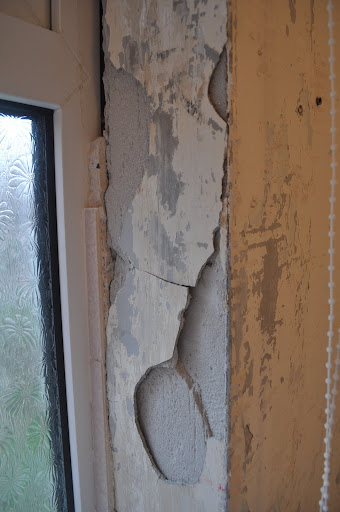
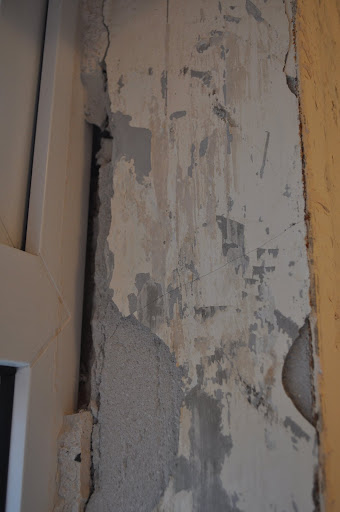
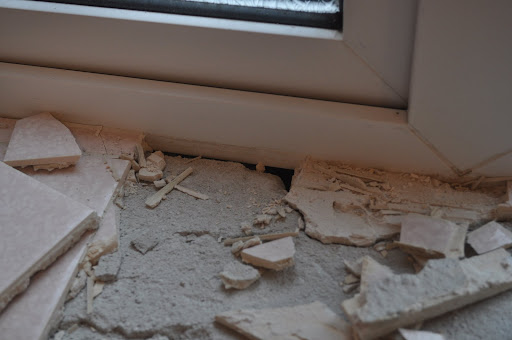
personally Id say get a plasterer to fill in and level it off (or do it yourself if you are able) you probably could tile over that but it will be hard to get a good finish.
If the plaster is loose then it needs to come off, Just think of the weight that it has to hold(Tiles Adhesive grout)
If the plaster is loose then it needs to come off, Just think of the weight that it has to hold(Tiles Adhesive grout)
Chris77 said:
personally Id say get a plasterer to fill in and level it off (or do it yourself if you are able) you probably could tile over that but it will be hard to get a good finish.
If the plaster is loose then it needs to come off, Just think of the weight that it has to hold(Tiles Adhesive grout)
+1 Agree, although on the plasterboard and possibly inside the window sill I would use aquapanel board, the OP would never have to touch the shower room again.If the plaster is loose then it needs to come off, Just think of the weight that it has to hold(Tiles Adhesive grout)
You definitely need to knock the loose plaster off and re-plaster it.
However, since you're tiling over it then the finish of the plaster isn't of any great consequence (so long as the surface ends up roughly level), so if I were you I'd buy a bag of plaster and do it myself.
I'm currently ripping out my downstairs bathroom and plan to fit a shower cubicle (3 tiled walls and a glass door as it's going in an alcove), spoke to a plasterer mate of mine and he recommends aquaboard for the cubicle; he also says there's no need to skim it if it's going to be tiled.
However, since you're tiling over it then the finish of the plaster isn't of any great consequence (so long as the surface ends up roughly level), so if I were you I'd buy a bag of plaster and do it myself.
I'm currently ripping out my downstairs bathroom and plan to fit a shower cubicle (3 tiled walls and a glass door as it's going in an alcove), spoke to a plasterer mate of mine and he recommends aquaboard for the cubicle; he also says there's no need to skim it if it's going to be tiled.
 for the shower by the way. Plasterboard IS a waste of time.
Chris77 said:
You can also use a tanking kit to water proof normal plasterboard, often come in a bucket containing all the kit. http://www.ultratileadhesives.co.uk/product.jsp?pr...
Is this stuff any good?monthefish said:
Chris77 said:
You can also use a tanking kit to water proof normal plasterboard, often come in a bucket containing all the kit. http://www.ultratileadhesives.co.uk/product.jsp?pr...
Is this stuff any good?Wings said:
One of the biggest problems with using tilers, is that they take the cheapest and quickest options, they get paid, go away and 18 months down the road, the grout starts cracking, water penetrates through to the primer, the primer activates, and the plasterboard blows, with the end result that the tiles starts falling off the walls.
To be fair a good tradesmen would use at least treated ply. Plasterboard usually means a DIY hero or spec developer using cheap labour.My $0.02 .......... as the guys say, hack off all loose plaster.
If you re plaster the walls, please wait at least 2 weeks minimum before you tile (depending on thickness), to allow the plaster to be fully dry or it will affect the curing of the tile adhesive.
If using plasterboard, then use the one designed for bathrooms, indicated by the green paper. It is much more tolerant to a damp environment.
Around the shower enclosure, use Aqua board of Hardy backer as this will ensure a long lasting job, should water vapour get through the grout.
Looks like you are not shy about getting stuck in. The result will give you great satisfaction.
If you re plaster the walls, please wait at least 2 weeks minimum before you tile (depending on thickness), to allow the plaster to be fully dry or it will affect the curing of the tile adhesive.
If using plasterboard, then use the one designed for bathrooms, indicated by the green paper. It is much more tolerant to a damp environment.
Around the shower enclosure, use Aqua board of Hardy backer as this will ensure a long lasting job, should water vapour get through the grout.
Looks like you are not shy about getting stuck in. The result will give you great satisfaction.
Gassing Station | Homes, Gardens and DIY | Top of Page | What's New | My Stuff