
House purchase, potential problems/cracks
Discussion


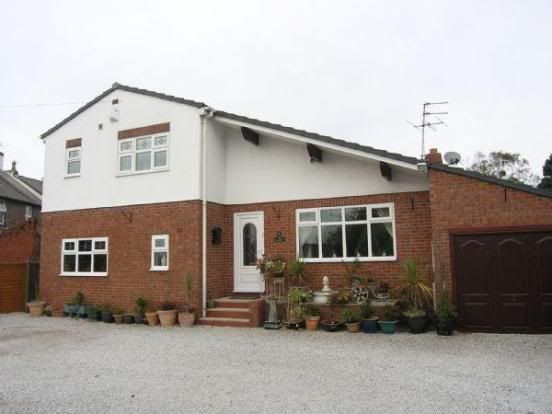
Looking at a little place in Formby
Can anyone tell me what causes these cracks?
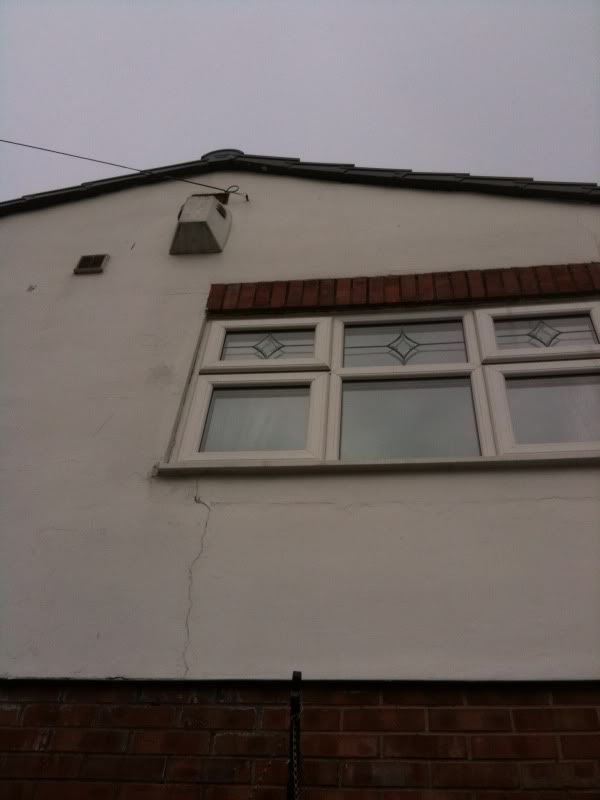
House constructed 1985, windows replaced 1994, do you think the cracks will just be to the render and will have occurred when they were fitted? There are cracks under a few of the windows. Just wanting an opinion on where it could be something more serious?
Any other things to check out or consider would be appreciated, before we progress.
Can anyone tell me what causes these cracks?
House constructed 1985, windows replaced 1994, do you think the cracks will just be to the render and will have occurred when they were fitted? There are cracks under a few of the windows. Just wanting an opinion on where it could be something more serious?
Any other things to check out or consider would be appreciated, before we progress.
I'm far from an expert in this sort of thing but recently walked away from buying a property that was riddled with cracks that turned out to be related to subsidance.
The cracks you've shown don't look that bad to me. Have you been inside yet? Do cracks appear in the same place inside? On the outside do the cracks continue onto the brickwork?
The cracks you've shown don't look that bad to me. Have you been inside yet? Do cracks appear in the same place inside? On the outside do the cracks continue onto the brickwork?
I'd guess it is most likely due to thermal expansion.
Shrinkage (brick/block chemical change/decay), wall tie failure, foundation/ground movement, no/insuffient lintels are all other possibilities (obviously), and although a surveyor can make a best guess on the type and position of the cracks and the construction/age of the house it isn't black and white, it would need proper investigation to be sure.
Of course it could just be a work 'joint' in the render!
Shrinkage (brick/block chemical change/decay), wall tie failure, foundation/ground movement, no/insuffient lintels are all other possibilities (obviously), and although a surveyor can make a best guess on the type and position of the cracks and the construction/age of the house it isn't black and white, it would need proper investigation to be sure.
Of course it could just be a work 'joint' in the render!
I have several rented properties that are all suffering with similar cracks in outside render, the same resulting in the properties suffering with ingress of damp. Over the past three weeks i have been seeking quotations for re-rendering these properties, and even newish rendered properties, there is no guarantee with a sand and cement mortar, that cracks will not appear again. So looking at using alternatives finishes link http://www.avantcoatings.co.uk/rendering-walls.asp...
Mr GrimNasty said:
I'd guess it is most likely due to thermal expansion.
Agreed.Very common. Idealy needs an expansion joint.
Could be patched in with expanding metal underneith but no guarantees it wont surface again. The two courses of brick under the windows also have movement. Not a cheap repair so bear that in mind.
Personally I would say it looks like a crack in the render, and probably not movement related as the crack does not appear to continue down the brickwork. as the above, check to see if there is a similar crack internally, if so, then it could be a sign of a more serious problem.
I would recommend if you go ahead with purchasing this property to get at least a homebuyers survey and flag it to the surveyor.
I would recommend if you go ahead with purchasing this property to get at least a homebuyers survey and flag it to the surveyor.
AB said:
Cheers guys.
Does anyone know what year cavity wall insulation became standard?
Presuming that in 1985, it would have it?
It's just really some primary investigations at this point.
Our house is 84 and has it. We had it checked when we had our loft done (blown stuff about 2cm deep) and the chap said the cavity was from the original build.Does anyone know what year cavity wall insulation became standard?
Presuming that in 1985, it would have it?
It's just really some primary investigations at this point.
As for the cracks they don't look too bad to my untrained eye, just normal expansion/shrinkage.
98elise said:
While its a big house...its very ugly, buy something nicer!
It's not that bad, not everyone can live in chocolate box cottages, sometimes the right house is based upon size and fit rather than external looks. Besides a few climbers up the front walls will soon make it a little prettier.If it is cosmetic and just the render fair enough, that is easily checked by poking about a bit.
But in that position, looking like that, it is probably due to thermal expansion/contraction and it will be full thickness of the outer leaf only.
This means rain water will capillary into the cavity at volumes you cannot even imagine, at the moment probably relatively harmlessly draining down the inside of the outside skin.
New cavity wall insulation will be the last thing you will want if that is the case. Cavity insulation installers are supposed to survey for such faults and decline to install, but most don't, and you will end up with horrendous damp and knackered wall ties.
When insulation is built into the cavity from new, generally a cavity is still left.
If it has already had post-build cavity insulation, I'd be carefully checking the internal walls below the exterior cracks for any sign of damp/mould or fresh decoration, perhaps even drilling a hole to inspect the condition of the insulation.
But in that position, looking like that, it is probably due to thermal expansion/contraction and it will be full thickness of the outer leaf only.
This means rain water will capillary into the cavity at volumes you cannot even imagine, at the moment probably relatively harmlessly draining down the inside of the outside skin.
New cavity wall insulation will be the last thing you will want if that is the case. Cavity insulation installers are supposed to survey for such faults and decline to install, but most don't, and you will end up with horrendous damp and knackered wall ties.
When insulation is built into the cavity from new, generally a cavity is still left.
If it has already had post-build cavity insulation, I'd be carefully checking the internal walls below the exterior cracks for any sign of damp/mould or fresh decoration, perhaps even drilling a hole to inspect the condition of the insulation.
Mr GrimNasty said:
If it is cosmetic and just the render fair enough, that is easily checked by poking about a bit.
But in that position, looking like that, it is probably due to thermal expansion/contraction and it will be full thickness of the outer leaf only.
Going by the photo posted I don't see how you can say it will have fully cracked through the outer leaf, if you look closely at the pic attached you can see that the crack is purely in the render and the brickwork below is absolutely fine and shows no sign of the crack running.But in that position, looking like that, it is probably due to thermal expansion/contraction and it will be full thickness of the outer leaf only.

Gassing Station | Homes, Gardens and DIY | Top of Page | What's New | My Stuff