
Somme/Ypres - 3 days - what to do?
Discussion


There is a lot to see in the area. I recommend Major & Mrs Holt's Battlefield guide. I found the small cemeteries much more moving that the large ones.
If you are going during school term time the large and famous monuments and cemeteries will be busy.
Are you going to visit a grave of a family member? If not I recommend you find a grave and reseach it before you go. It will make your visit much more interesting if you have some background information about an individual and what they did during the Great War.
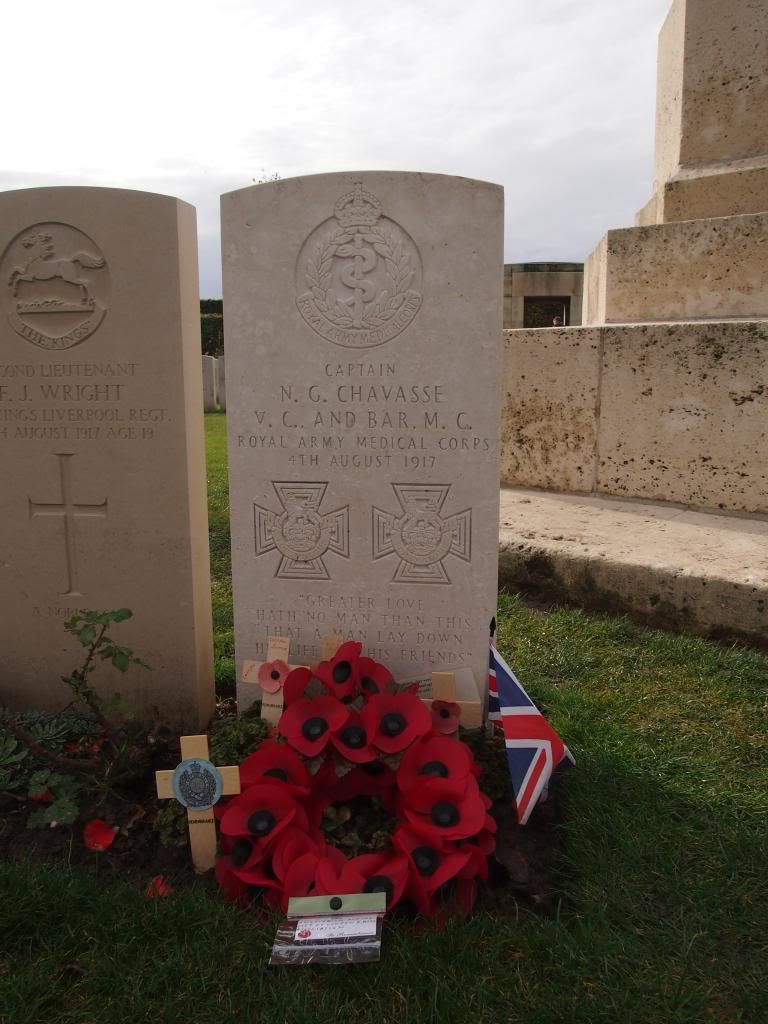
I found out who rescued my wounded Grandfather from no-mans land during the battle of the Somme. My Grandfather recovered from his injuries and lived into his eighties. Noel Chavasse, the man who rescued him gained a VC that day and went on to receive another VC for his bravery whilst saving the lives of other men. Both men were in the Liverpool Scottish.
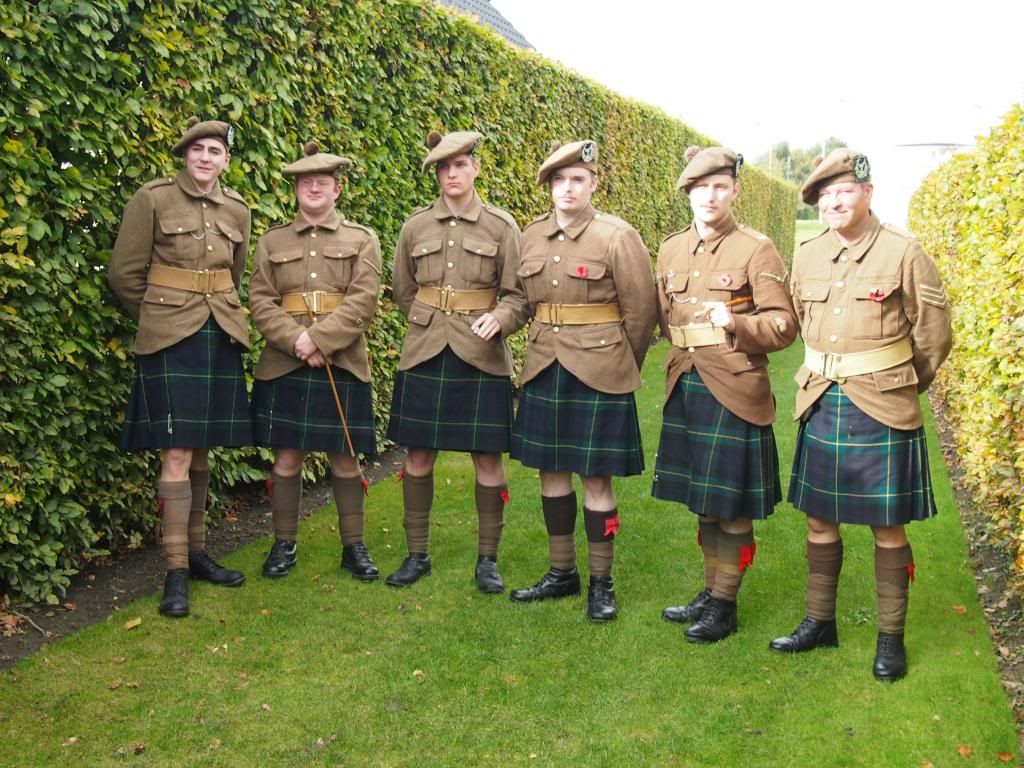
When I last went to the Somme we visited Chavasse's grave to say thank you. When we were there members of the Duke of Lancaster's Regiment which includes the Liverpool Scottish were paying their respects to Chavasse in period uniform.
We also visited Guillemont where my Grandfather was wounded and I put a poppy by a grave of an unknown Liverpool Scottish soldier. I found out that it took 5 weeks to advance less than a mile the cemetery is where the allied dressing station was and you can see how close the village was. It was strange to think that the last member of my family to be at the place I was standing at was fighting for his country in the First World War.
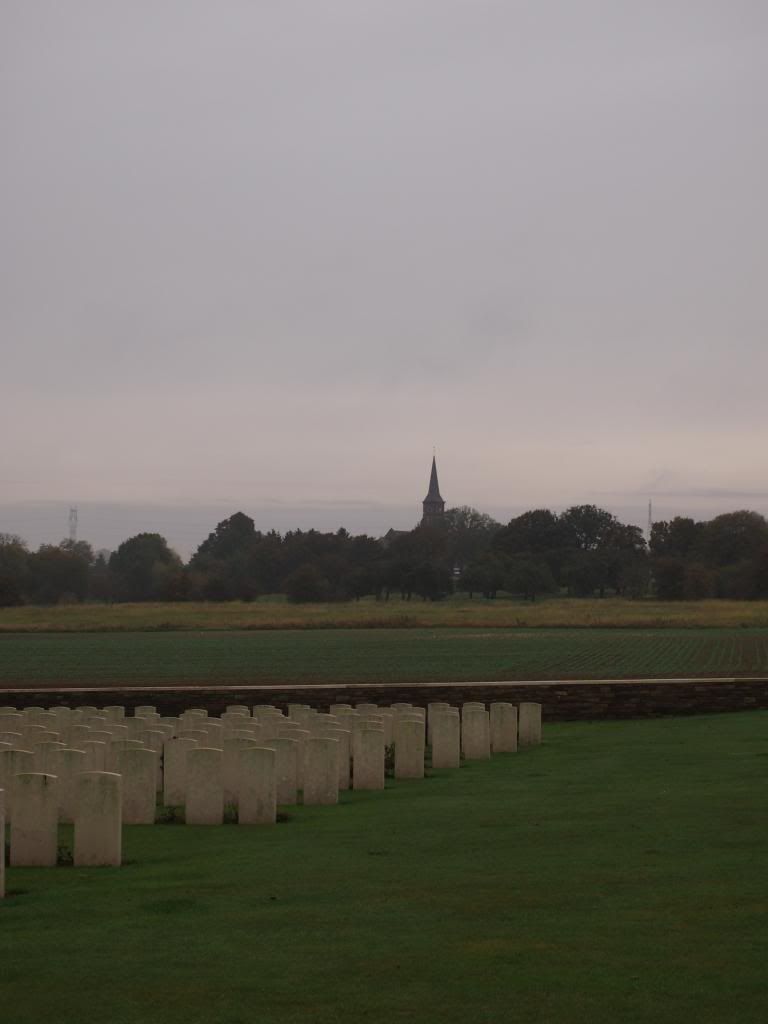
Another place we visited was just as moving even though I had no family connections. It was near Sheffield Park Memorial Park.
There were two small cemeteries near each other. I asked our guide why there were two cemeteries so close to each other. He told us that the closest cemetery was at the range of the German machine guns and the one a couple of hundred yards away was where the barbed wire was. The dead were buried where they fell. Very sobering.

Visit, pay your respects, say thank you and remember how lucky we are.
If you are going during school term time the large and famous monuments and cemeteries will be busy.
Are you going to visit a grave of a family member? If not I recommend you find a grave and reseach it before you go. It will make your visit much more interesting if you have some background information about an individual and what they did during the Great War.
I found out who rescued my wounded Grandfather from no-mans land during the battle of the Somme. My Grandfather recovered from his injuries and lived into his eighties. Noel Chavasse, the man who rescued him gained a VC that day and went on to receive another VC for his bravery whilst saving the lives of other men. Both men were in the Liverpool Scottish.
When I last went to the Somme we visited Chavasse's grave to say thank you. When we were there members of the Duke of Lancaster's Regiment which includes the Liverpool Scottish were paying their respects to Chavasse in period uniform.
We also visited Guillemont where my Grandfather was wounded and I put a poppy by a grave of an unknown Liverpool Scottish soldier. I found out that it took 5 weeks to advance less than a mile the cemetery is where the allied dressing station was and you can see how close the village was. It was strange to think that the last member of my family to be at the place I was standing at was fighting for his country in the First World War.
Another place we visited was just as moving even though I had no family connections. It was near Sheffield Park Memorial Park.
There were two small cemeteries near each other. I asked our guide why there were two cemeteries so close to each other. He told us that the closest cemetery was at the range of the German machine guns and the one a couple of hundred yards away was where the barbed wire was. The dead were buried where they fell. Very sobering.
Visit, pay your respects, say thank you and remember how lucky we are.

A very worthwhile trip imo. 
We visited many of the WW1 sites during our Euro Road Trip.
We used Amiens in France as our base. There is a lot to see, the limiting factor is the weather tbh. We unfortunately got rained off but did get to see a lot of interesting and emotive sights.
IMO - highlights in were Vimy Ridge & and various sights on the Circuit de Souvenir. You can easily spend a whole day on the latter but it allows you to pick and choose the things you are interested in.
Here's a extract from the write up, hope it helps/provides some inspiration:
g3org3y said:
Day 2
Miles on the clock: 162286
Locations: Vimy Ridge, Circuit de Souvenir (Peronne, Albert), Arras.
Miles Covered: 132
Day 2 started early, there was much to see and do. Unfortunately, as the day before the sky remained overcast and grey, the threat of rain ever present. Our plan was to visit as much of the WW1 related sites as possible.
First stop – Vimy Ridge. The scene for some of the worst trench warfare of World War I. The site, given in perpetuity to the Canadian people out of respect for their sacrifices during the conflict is maintained with an interesting and informative visitor centre (run by Canadian students) which backs onto churned land, preserved in part as it was during the battle.


The major ‘draw’ (for want of a better word) is the Canadian memorial monument. Huge, dramatically stretching to the heavens and inscribed with the names of the 11,285 Canadians whose bodies were never found it is a fitting tribute to such an epic sacrifice.


Scattered around the area are cemeteries of various sizes. All exquisitely maintained, grass cut to perfection, fresh flowers at the foot of gravestones and spotlessly clean. Sometimes the significance of numbers can fade over time, however standing in one of the cemeteries with gravestones stretching as far as the eye can see is a poignant reminded of the scale of the conflict and the number of souls who lost their lives.


In the locality, runs the ‘Circuit de Souvenir’, a route marked out between the towns of Albert and Peronne. Each stop-off guides you to a site of interest whether it be a mine crater, trench, memorial, graveyard or museum (Peronne’s being particularly good). A really worthwhile way to spend half the day. Unfortunately for us, the rain had other plans and falling heavily we made the most of our time in the museums rather than outside (though I did spot a field of sheep!).

It should be noted that the opening times stated on the guide are somewhat optimistic. At least 30% of the sites we visited were closed!
Here are a couple of random snaps from the Circuit.


The E30 outside one of the large cemeteries


Despite the rain doing its best to spoil things, a very interesting and worthwhile day. I absolutely recommend to anyone who has even a passing interest in war history to visit the sites. An important and emotive reminder of the past. Given the proximity to Calais and Dunkerque, it’s quite possible to get a morning ferry across, see everything and get a late ferry back. There were quite a lot of UK reg cars in this area, typically families with their children.
Miles on the clock: 162286
Locations: Vimy Ridge, Circuit de Souvenir (Peronne, Albert), Arras.
Miles Covered: 132
Day 2 started early, there was much to see and do. Unfortunately, as the day before the sky remained overcast and grey, the threat of rain ever present. Our plan was to visit as much of the WW1 related sites as possible.
First stop – Vimy Ridge. The scene for some of the worst trench warfare of World War I. The site, given in perpetuity to the Canadian people out of respect for their sacrifices during the conflict is maintained with an interesting and informative visitor centre (run by Canadian students) which backs onto churned land, preserved in part as it was during the battle.
The major ‘draw’ (for want of a better word) is the Canadian memorial monument. Huge, dramatically stretching to the heavens and inscribed with the names of the 11,285 Canadians whose bodies were never found it is a fitting tribute to such an epic sacrifice.
Scattered around the area are cemeteries of various sizes. All exquisitely maintained, grass cut to perfection, fresh flowers at the foot of gravestones and spotlessly clean. Sometimes the significance of numbers can fade over time, however standing in one of the cemeteries with gravestones stretching as far as the eye can see is a poignant reminded of the scale of the conflict and the number of souls who lost their lives.
In the locality, runs the ‘Circuit de Souvenir’, a route marked out between the towns of Albert and Peronne. Each stop-off guides you to a site of interest whether it be a mine crater, trench, memorial, graveyard or museum (Peronne’s being particularly good). A really worthwhile way to spend half the day. Unfortunately for us, the rain had other plans and falling heavily we made the most of our time in the museums rather than outside (though I did spot a field of sheep!).
It should be noted that the opening times stated on the guide are somewhat optimistic. At least 30% of the sites we visited were closed!
Here are a couple of random snaps from the Circuit.
The E30 outside one of the large cemeteries
Despite the rain doing its best to spoil things, a very interesting and worthwhile day. I absolutely recommend to anyone who has even a passing interest in war history to visit the sites. An important and emotive reminder of the past. Given the proximity to Calais and Dunkerque, it’s quite possible to get a morning ferry across, see everything and get a late ferry back. There were quite a lot of UK reg cars in this area, typically families with their children.
Do the 'In Flanders Fields' Museum in Ypres Cloth hall. A fantastic museum in its own right but it really sets the scene of those awful years. Hooge Crater, Tyne Cot, Yorkshire Trench, Menin Gate have to be done. There is a nice short walk from the Menin Gate to Ypres Ramparts Cemetary which follows the town ramparts. The German Cemetary at Langemarck is worth a visit, just to experience the difference between the Commonwealth 'country garden' type of cemetaries compared to the cold, slightly chilling German ones. The Brooding Soldier commemorating the fallen of the first gas attack at St Juliaan is also worthwhile of your time as is St George's memorial church on Elverdingestraat in Ypres.
Ariane is the best hotel in Ypres - they can also organise the battlefield tours for you. I can recommend their restaurant too.
Ariane is the best hotel in Ypres - they can also organise the battlefield tours for you. I can recommend their restaurant too.
Gassing Station | Holidays & Travel | Top of Page | What's New | My Stuff