
All Weather tyres-v-Winter tyres, comments pls.........
Discussion


Guys,
Mrs Mac needs new tyres on her little Mazda and I was considering fitting All Weather tyres rather than Winter tyres, mainly from a pratical point of view and also they're cheaper too.
I've no real experience of either of the above as I've always stuck with a premium brand Summer tyres on all the cars - yes, I've added ballast and lowered the pressures when the roads were covered in the white stuff but that's been about it bar no doubt a bit of luck, but the Mrs has struggled in her light car over the last few winters, so is rather keen on the fitment of Winter tyres.
So, what do you think? AW tyres work to -15 and should be fine on a non performance car all year round, while the Winter tyres work to -30 and have a better thread design for snow.
I know there is another Winter tyre discussion going on at the moment so forgive my post on yet another tyre query but it really doesn't answer my question.
Thanks in advance.
J.
Mrs Mac needs new tyres on her little Mazda and I was considering fitting All Weather tyres rather than Winter tyres, mainly from a pratical point of view and also they're cheaper too.
I've no real experience of either of the above as I've always stuck with a premium brand Summer tyres on all the cars - yes, I've added ballast and lowered the pressures when the roads were covered in the white stuff but that's been about it bar no doubt a bit of luck, but the Mrs has struggled in her light car over the last few winters, so is rather keen on the fitment of Winter tyres.
So, what do you think? AW tyres work to -15 and should be fine on a non performance car all year round, while the Winter tyres work to -30 and have a better thread design for snow.
I know there is another Winter tyre discussion going on at the moment so forgive my post on yet another tyre query but it really doesn't answer my question.
Thanks in advance.
J.
There's a big tyre test in the latest issue of evo magazine comparing summer, winter and all-season tyres in not just snow and ice, but in cold and wet and cold and dry conditions. Winter tyres are massively better in winter conditions than summer rubber, but when the tables are turned, they are nowhere near as poor in summer conditions as summer ones are in winter IYSWIM.
A brief summary I put together for another forum:
 tty parts of the year.
Plus a set of even a set of the dearest ones is cheaper than buying a fked old nail of a 4x4 for winter and running it.
A brief summary I put together for another forum:
article said:
Stopping from 25mph on snow:
Winter & all season tyres from the premium makes stopped in 19.7-22.4m, budget winters from 22.5-27.0m. The Continental summer tyres took 72.7m to stop, it was their own winter tyre that scored the best at 19.7m.
Traction on snow:
With the best perfomance indexed at 100%, the others recorded as a %age of that.
Winter & all season tyres from the premium makes scored 85.9-100%, budget winters from 68.9-82.1%. The Continental summer tyres had 23.7% of the traction of the top scoring winter rubber.
Handling:
Similar results across the board in terms of how they compare on the snow handling circuit (except the summer tyre couldn't post a time as it couldn't ascend the gentle incline to the start of the circuit...) and slalom where the summer tyre had less than 25% of the grip (as measured by lateral G) of the best winter tyre.
Aquaplaning:
The areas where the summer tyre scored top were on the dry circuit, however the worst winter tyre scored at over 96%. In aquaplaning tests (straight, curved and braking), the Conti summer did best in the straight and curved tests, with the rest in the 70 and 80 per cents of that.
It also performed the worst at braking on standing water (emergency stop from 50mph), at 80% of the Conti winter's score, 35.8 and 43.0m respectively. In dry braking the summer tyre scored top, the worst winter tyre at 85% of that (again emergency stop from 50mph) at 37.1-43.6m respectively. Note very similar, but reverse statistics between dry and wet conditions and summer and winter tyres.
Efficiency:
7 of the winter/all-season tyres offered better rolling resistance than the summer tyre too, which means they'll also use a bit less fuel - a 5% increase in rolling resistance making for a 1% increase in fuel consumption, which in this instance amounts to the best returning a 1mpg advantage over the worst on a car with nominal 50mpg consumption. Likewise road noise and refinement, summer tyre scored best with the winter tyres in the 70 and 80 per cents.
The full article is well worth a read for anyone suitably nerdy enough to care. But the upshot is that rather unsurprisingly, winter tyres are much better in all the ways you want them to be during the cold, wet, snowy, slushy and sWinter & all season tyres from the premium makes stopped in 19.7-22.4m, budget winters from 22.5-27.0m. The Continental summer tyres took 72.7m to stop, it was their own winter tyre that scored the best at 19.7m.
Traction on snow:
With the best perfomance indexed at 100%, the others recorded as a %age of that.
Winter & all season tyres from the premium makes scored 85.9-100%, budget winters from 68.9-82.1%. The Continental summer tyres had 23.7% of the traction of the top scoring winter rubber.
Handling:
Similar results across the board in terms of how they compare on the snow handling circuit (except the summer tyre couldn't post a time as it couldn't ascend the gentle incline to the start of the circuit...) and slalom where the summer tyre had less than 25% of the grip (as measured by lateral G) of the best winter tyre.
Aquaplaning:
The areas where the summer tyre scored top were on the dry circuit, however the worst winter tyre scored at over 96%. In aquaplaning tests (straight, curved and braking), the Conti summer did best in the straight and curved tests, with the rest in the 70 and 80 per cents of that.
It also performed the worst at braking on standing water (emergency stop from 50mph), at 80% of the Conti winter's score, 35.8 and 43.0m respectively. In dry braking the summer tyre scored top, the worst winter tyre at 85% of that (again emergency stop from 50mph) at 37.1-43.6m respectively. Note very similar, but reverse statistics between dry and wet conditions and summer and winter tyres.
Efficiency:
7 of the winter/all-season tyres offered better rolling resistance than the summer tyre too, which means they'll also use a bit less fuel - a 5% increase in rolling resistance making for a 1% increase in fuel consumption, which in this instance amounts to the best returning a 1mpg advantage over the worst on a car with nominal 50mpg consumption. Likewise road noise and refinement, summer tyre scored best with the winter tyres in the 70 and 80 per cents.
tty parts of the year. Plus a set of even a set of the dearest ones is cheaper than buying a f
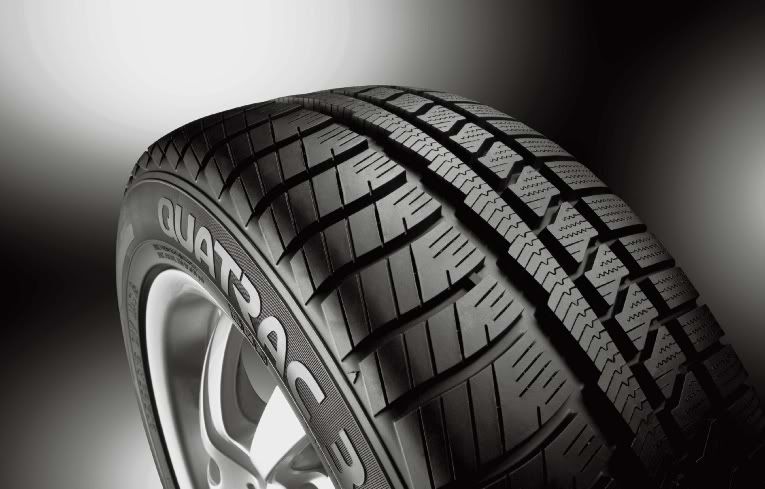
ked old nail of a 4x4 for winter and running it.We run Vredestein Quatrac 3 on our Golf GTI all year round. We live in a hilly area and while it isn't deepest Scotland, we have driven on some very steep hills in all snowy/icey conditions. I find the Quatracs more than adequate. I'm sure full winter tyres are better still, but frankly I don't need them. The same tyres transformed my Brother's E36 318is from something that would not move in snow to a competent almost unstoppable drive.
No problems with economy (rolling resistance), hot weather driving etc. They don't last quite as long as summer tyres, and they're not quite as sharp on a summer's day, but then I have the TVR for 'sharp' type driving
IMO unless you live in very rural area then the right all-season tyre is great for most cars.
No problems with economy (rolling resistance), hot weather driving etc. They don't last quite as long as summer tyres, and they're not quite as sharp on a summer's day, but then I have the TVR for 'sharp' type driving
IMO unless you live in very rural area then the right all-season tyre is great for most cars.
Thank you OP for posting this up!
I too have been wondering the same . The tyres on my Outback are Yokohama Geolanders G035 which are All-Weather tyres . They seem ok , but they're not great in the wet and this'll be my 1st winter with the car.
Curious to hear anyone else's opinion with All-Weathers and even better (but less likely!) if they have a Forester/Legacy/Outback.
I too have been wondering the same . The tyres on my Outback are Yokohama Geolanders G035 which are All-Weather tyres . They seem ok , but they're not great in the wet and this'll be my 1st winter with the car.
Curious to hear anyone else's opinion with All-Weathers and even better (but less likely!) if they have a Forester/Legacy/Outback.
If it's an all round car then go for some all round tyres.
Anything branded M+S should see you right for most winter conditions so long as you use your brain.
Winter tyres (with a snowflake) are better for more serious snow conditions – and will be noticeably better than the M+S in snow, but they aren't all that good in the summer – so I wouldn't recommend using them all year round.
Of course – different brands and different models perform differently.
The main visible difference between all weather and winter tyres is siping – grooves cut into the rubber blocks.
The invisible difference is the rubber compound with M+S tyres having a broader temp range and Snow tyres being better in very cold weather (often advertised as 7c).
In most of Europe where they laws about this sort of thing most places just require M+S branding – I have heard that some area are starting to insist on snowflakes, but I think these tend to be alpine and heavy snow areas.
Anything branded M+S should see you right for most winter conditions so long as you use your brain.
Winter tyres (with a snowflake) are better for more serious snow conditions – and will be noticeably better than the M+S in snow, but they aren't all that good in the summer – so I wouldn't recommend using them all year round.
Of course – different brands and different models perform differently.
The main visible difference between all weather and winter tyres is siping – grooves cut into the rubber blocks.
The invisible difference is the rubber compound with M+S tyres having a broader temp range and Snow tyres being better in very cold weather (often advertised as 7c).
In most of Europe where they laws about this sort of thing most places just require M+S branding – I have heard that some area are starting to insist on snowflakes, but I think these tend to be alpine and heavy snow areas.
Snowboy said:
If it's an all round car then go for some all round tyres.
Anything branded M+S should see you right for most winter conditions so long as you use your brain.
Winter tyres (with a snowflake) are better for more serious snow conditions – and will be noticeably better than the M+S in snow, but they aren't all that good in the summer – so I wouldn't recommend using them all year round.
Of course – different brands and different models perform differently.
The main visible difference between all weather and winter tyres is siping – grooves cut into the rubber blocks.
The invisible difference is the rubber compound with M+S tyres having a broader temp range and Snow tyres being better in very cold weather (often advertised as 7c).
In most of Europe where they laws about this sort of thing most places just require M+S branding – I have heard that some area are starting to insist on snowflakes, but I think these tend to be alpine and heavy snow areas.
Some all-season tyres (Kleber Quadraxer) also carry the snowflake symbol (which is just an indication that the tyre passes the US/Canadian standard for improved grip on snow over a summer tyre) so I don't think this is an indicator that the tyre is no good for all-round use, accepting, of course, that a summer tyre will still perform better in summer than a winter or all-season.Anything branded M+S should see you right for most winter conditions so long as you use your brain.
Winter tyres (with a snowflake) are better for more serious snow conditions – and will be noticeably better than the M+S in snow, but they aren't all that good in the summer – so I wouldn't recommend using them all year round.
Of course – different brands and different models perform differently.
The main visible difference between all weather and winter tyres is siping – grooves cut into the rubber blocks.
The invisible difference is the rubber compound with M+S tyres having a broader temp range and Snow tyres being better in very cold weather (often advertised as 7c).
In most of Europe where they laws about this sort of thing most places just require M+S branding – I have heard that some area are starting to insist on snowflakes, but I think these tend to be alpine and heavy snow areas.
Targarama said:
We run Vredestein Quatrac 3 on our Golf GTI all year round. We live in a hilly area and while it isn't deepest Scotland, we have driven on some very steep hills in all snowy/icey conditions. I find the Quatracs more than adequate. I'm sure full winter tyres are better still, but frankly I don't need them. The same tyres transformed my Brother's E36 318is from something that would not move in snow to a competent almost unstoppable drive.
No problems with economy (rolling resistance), hot weather driving etc. They don't last quite as long as summer tyres, and they're not quite as sharp on a summer's day, but then I have the TVR for 'sharp' type driving
IMO unless you live in very rural area then the right all-season tyre is great for most cars.
I just bought a Chimaera for the winter driving No problems with economy (rolling resistance), hot weather driving etc. They don't last quite as long as summer tyres, and they're not quite as sharp on a summer's day, but then I have the TVR for 'sharp' type driving
IMO unless you live in very rural area then the right all-season tyre is great for most cars.
 and was going to put winter tyres on.
Think I'll go for all season tyres now instead.
Helpful thread, thanks.
HellDiver said:
Consider Bridgestone's WeatherControl A001. It's specifically designed for this part of Europe as an all-season tyre.
Those are the one's my local tyre shop were offering me - the owner had just fitted them to his young lads's car (if that means anything), reasonable price too. Bluebarge said:
Some all-season tyres (Kleber Quadraxer) also carry the snowflake symbol (which is just an indication that the tyre passes the US/Canadian standard for improved grip on snow over a summer tyre) so I don't think this is an indicator that the tyre is no good for all-round use, accepting, of course, that a summer tyre will still perform better in summer than a winter or all-season.
This is true, the North American three peak snowflake marking is becoming more common.If it has that marking it's more than likely a dedicated snow tyre – great for snow – but not so good in summer relatively speaking.
There's also a generic snowflake marking.
I generally use the policy that M+S with siping is snow tyre and M+S without siping is an all season.
Other opinions exists – but that method works for me.
I would be unlikely to choose a tyre with siping for an all year daily drive.
Snowboy said:
This is true, the North American three peak snowflake marking is becoming more common.
If it has that marking it's more than likely a dedicated snow tyre – great for snow – but not so good in summer relatively speaking.
There's also a generic snowflake marking.
I generally use the policy that M+S with siping is snow tyre and M+S without siping is an all season.
Other opinions exists – but that method works for me.
I would be unlikely to choose a tyre with siping for an all year daily drive.
The Vredestein Quatrac 3 has the alpine snowflake and M&S markings. It has sipes in some of the tread.If it has that marking it's more than likely a dedicated snow tyre – great for snow – but not so good in summer relatively speaking.
There's also a generic snowflake marking.
I generally use the policy that M+S with siping is snow tyre and M+S without siping is an all season.
Other opinions exists – but that method works for me.
I would be unlikely to choose a tyre with siping for an all year daily drive.
An update.
I got Bridgestone 'All Weather A001' tyres fitted to Mrs Mac's Mazda and have now driven 300 miles on then, half of that in the pissings of rain and I must say they seem up to the job so far but no snow yet.
Now I know tyres can be rather a subjective subject at the best of times but these AW A001's inspire confidence and seem to perform just as well in the dry as the summer tyres that were removed, bar maybe a very slightly harsher ride.
It's now very possible I'll never bother to fit 'Summer' tyres again, as it seems a little pointless on your average daily driver as I can't see any downsides to the all weather/all season tyres other than inspriring confidence in the wet and hopefully giving better traction in the snow.
I got Bridgestone 'All Weather A001' tyres fitted to Mrs Mac's Mazda and have now driven 300 miles on then, half of that in the pissings of rain and I must say they seem up to the job so far but no snow yet.
Now I know tyres can be rather a subjective subject at the best of times but these AW A001's inspire confidence and seem to perform just as well in the dry as the summer tyres that were removed, bar maybe a very slightly harsher ride.
It's now very possible I'll never bother to fit 'Summer' tyres again, as it seems a little pointless on your average daily driver as I can't see any downsides to the all weather/all season tyres other than inspriring confidence in the wet and hopefully giving better traction in the snow.
Edited by Johnboy Mac on Thursday 17th November 18:20
Goldmember1 said:
Thank you OP for posting this up!
I too have been wondering the same . The tyres on my Outback are Yokohama Geolanders G035 which are All-Weather tyres . They seem ok , but they're not great in the wet and this'll be my 1st winter with the car.
Curious to hear anyone else's opinion with All-Weathers and even better (but less likely!) if they have a Forester/Legacy/Outback.
Only just seen this thread, our Forester has Bridgestone 'Dueller' all weathers, have been really good especially in the snow last December, the only single time I had problems was when I purposely was trying ridiculous bits, in the Welsh hills a forestry track into a hill where some forestry commission vehicles had been in and out a couple of times meaning the snow was deep, but worse, rutted. Think it would have coped with the depth but tram-lining into the ruts which were icy at the bottom was a bit too much, or it could have been the missus deafening me shouting in my ear 'DONT YOU DAAAAARRRREEEE GET US STUCK OUT HERE!'. Hope to have more snow this winter to carry on the fun, doing donuts in the car park for Cadair Idris was also fun (albeit with more shouting I too have been wondering the same . The tyres on my Outback are Yokohama Geolanders G035 which are All-Weather tyres . They seem ok , but they're not great in the wet and this'll be my 1st winter with the car.
Curious to hear anyone else's opinion with All-Weathers and even better (but less likely!) if they have a Forester/Legacy/Outback.
 ).
).The other thing that springs to mind is the tyres were nowhere near new when we got the car 2.5 years ago but the tread depth is still fine, almost like they are barely wearing. When we got a puncture repaired the tyre bloke said it would be the age of the tyres which could prompt their replacement rather than the wear, though I'm sure they'll be fine.
Johnboy Mac said:
An update.
I got Bridgestone 'All Weather A001' tyres fitted to Mrs Mac's Mazda and have now driven 300 miles on then, half of that in the pissings of rain and I must say they seem up to the job so far but no snow yet.
Now I know tyres can be rather a subjective subject at the best of times but these AW A001's inspire confidence and seem to perform just as well in the dry as the summer tyres that were removed, bar maybe a very slightly harsher ride.
It's now very possible I'll never bother to fit 'Summer' tyres again, as it seems a little pointless on your average daily driver as I can't see any downsides to the all weather/all season tyres other than inspriring confidence in the wet and hopefully giving better traction in the snow.
Johnboy, looking to change soon and was thinking of going down the same lines as you by getting an all-weather tyre rather than winter/summer tyres. Having a bit of trouble finding a price for these so do you mind telling me how much?I got Bridgestone 'All Weather A001' tyres fitted to Mrs Mac's Mazda and have now driven 300 miles on then, half of that in the pissings of rain and I must say they seem up to the job so far but no snow yet.
Now I know tyres can be rather a subjective subject at the best of times but these AW A001's inspire confidence and seem to perform just as well in the dry as the summer tyres that were removed, bar maybe a very slightly harsher ride.
It's now very possible I'll never bother to fit 'Summer' tyres again, as it seems a little pointless on your average daily driver as I can't see any downsides to the all weather/all season tyres other than inspriring confidence in the wet and hopefully giving better traction in the snow.
Edited by Johnboy Mac on Thursday 17th November 18:20
Ta!
Gassing Station | General Gassing | Top of Page | What's New | My Stuff