
Big power...it's not always been this way, has it?
Discussion


Just thinking about a time when my Dad had a white Cavalier SRI which I loved. Why? Because it had 130 written down the side, marking it out as the most powerful of the SRI variants. Felt quick too.
Nowadays 130bhp would be laughed at in a family-sized performance car, but I guess that's the extra weight of cars required to carry all the toys and safety kit demanded today. I don't have much more to add really, but it's funny how times change.
Even today I add 'only' before saying 240 when asked what power the TVR has (and yes, it's been on the dyno)
Nowadays 130bhp would be laughed at in a family-sized performance car, but I guess that's the extra weight of cars required to carry all the toys and safety kit demanded today. I don't have much more to add really, but it's funny how times change.
Even today I add 'only' before saying 240 when asked what power the TVR has (and yes, it's been on the dyno)

Good question.
For example, a Jaguar E Type Series 1 with the 3.8 litre engine did 0-60mph in 7.1 seconds (The Motor, 1961).
Rather embarrassingly for the once-fastest-sportscar-in-the-world, a 3.0 diesel Jaguar XF will get from 0-60 quicker in the lowest power output form of that engine (6.7 seconds, 236bhp).
Times move on and cars have got a lot quicker.
For example, a Jaguar E Type Series 1 with the 3.8 litre engine did 0-60mph in 7.1 seconds (The Motor, 1961).
Rather embarrassingly for the once-fastest-sportscar-in-the-world, a 3.0 diesel Jaguar XF will get from 0-60 quicker in the lowest power output form of that engine (6.7 seconds, 236bhp).
Times move on and cars have got a lot quicker.
Don't forget it's all relative. A Cav Sri - if I remember had an 8v 2 litre - was a quantum leap in normal saloon performance. That was more than a 3.0 litre Capri! So the performance cars of the electronic era were massivley advanced compared to their forebears. In the early seventies 40 or 50 Horsepower was common. Easily obtainable credit saw those previously running fifties and sixties bangers in new cars so to them the gains must have been staggering. Imagine going from a wheezing pushrod, single carb, four speed Leyland lump to an OHC, EFi equipped Vauxhall or SAAB.
One simply cannot do that these days. Even the cheapest car is not technologically different to the most expensive. Everything now has injection, electronic ignition, VVT and even forced induction. It's almost like power has plateaued where useful so the premium makers just add more to set their products apart.
If the chassis is right, is it really possible to use much more than 250 or 300 on a normal road? My humble saloon has 150, which is adequate. Most drivers cannot do anything much with it besides tromping the gas at a green light and pounding the brakes a second later when nerves or obstructions prevent further progress.
Bragging aside massively powerful cars are better off on the drag strip - I think the SRi 130 is pretty respectable given the overall good nature of the package.
One simply cannot do that these days. Even the cheapest car is not technologically different to the most expensive. Everything now has injection, electronic ignition, VVT and even forced induction. It's almost like power has plateaued where useful so the premium makers just add more to set their products apart.
If the chassis is right, is it really possible to use much more than 250 or 300 on a normal road? My humble saloon has 150, which is adequate. Most drivers cannot do anything much with it besides tromping the gas at a green light and pounding the brakes a second later when nerves or obstructions prevent further progress.
Bragging aside massively powerful cars are better off on the drag strip - I think the SRi 130 is pretty respectable given the overall good nature of the package.
Futuramic said:
One simply cannot do that these days. Even the cheapest car is not technologically different to the most expensive. Everything now has injection, electronic ignition, VVT and even forced induction. It's almost like power has plateaued where useful so the premium makers just add more to set their products apart.
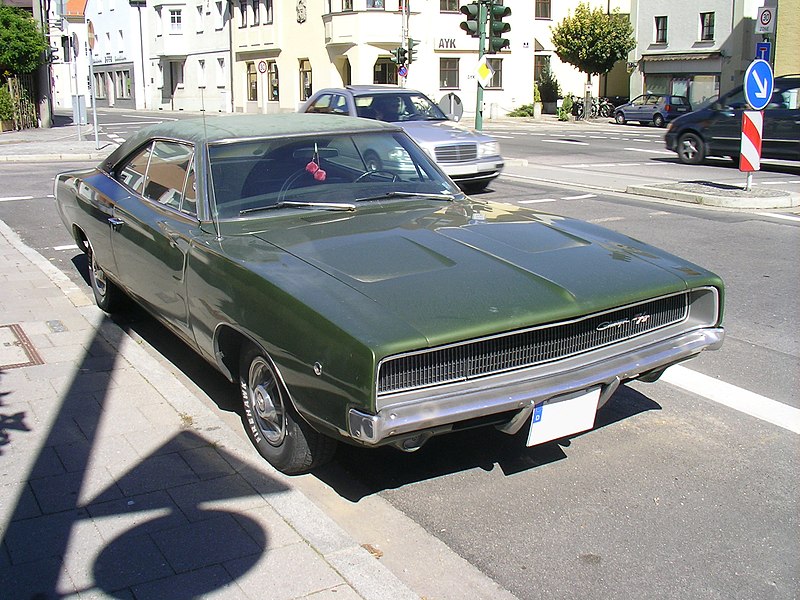
The other advance is traction control and stability control and brake assist, together with more advanced suspension design allowing averagely skilled drivers to use high powered cars more of the time safely. The American Muscle car market from the late 60's was partly killed off by emissions control and partly the high accident rates of those cars leading to higher insurance premiums which dampened the demand.Gassing Station | General Gassing | Top of Page | What's New | My Stuff