
Porsche Cayman (987) | PH Used Buying Guide
The 987 will be considered a classic one day. Today you can buy one for almost nothing. Should you?
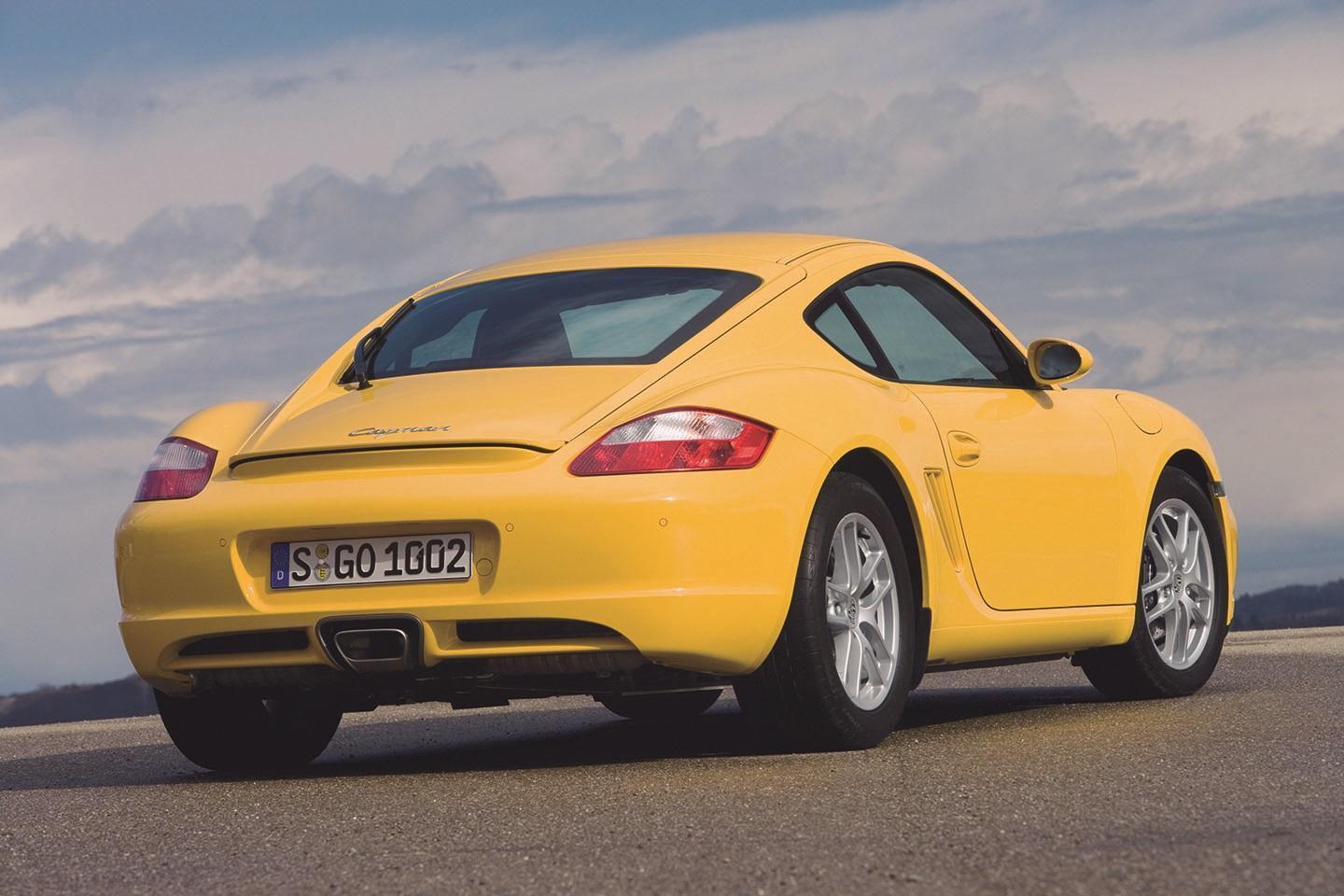
Key considerations
- Available from £10,000
- Superb mid-engine handling
- Generally well put together
- Air conditioning condensers and radiators are prone to damage
- Early engines suffer from reliability issues
- Rear tailgates can rattle, but are easily rectified
Search for a used Porsche Cayman here
OVERVIEW
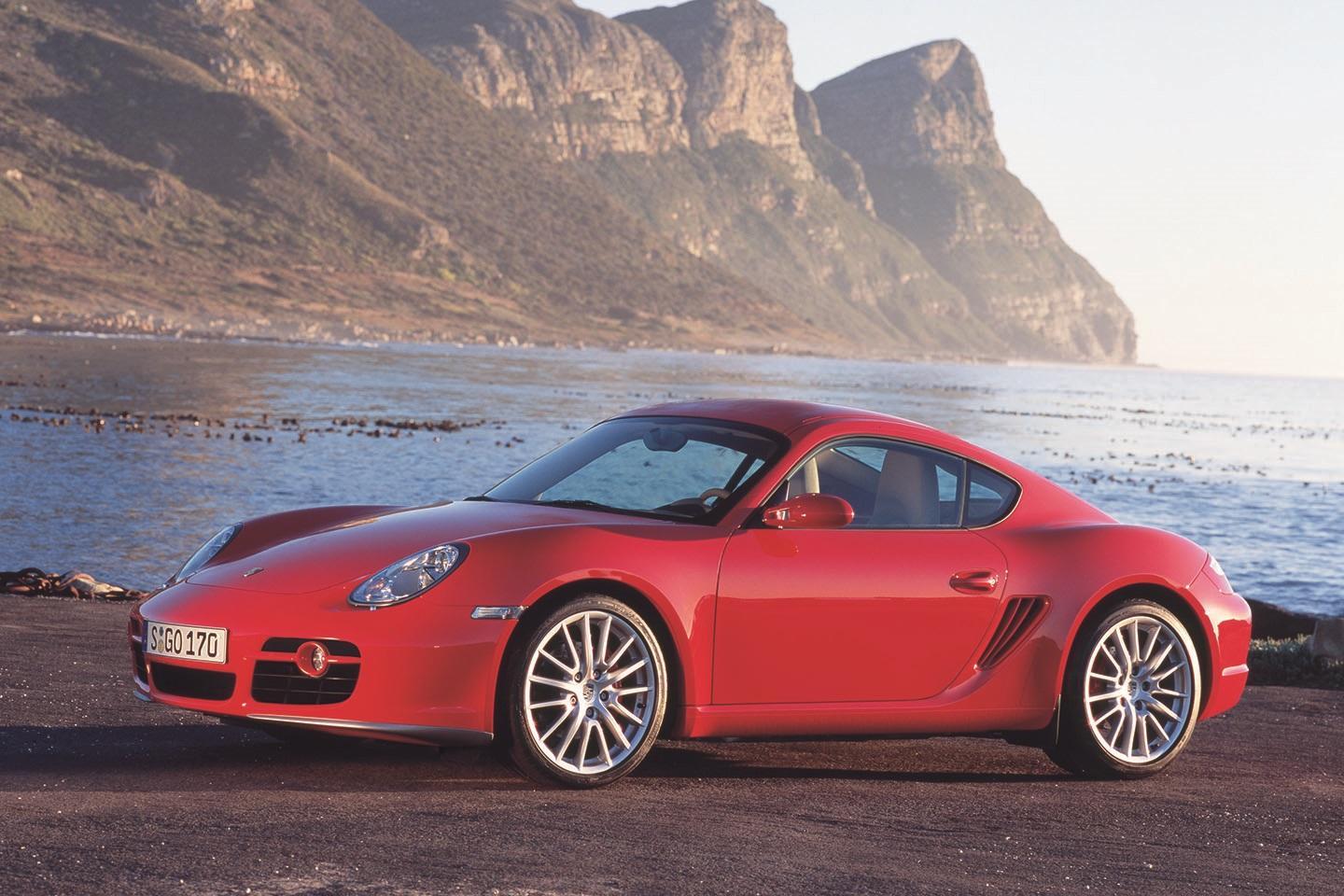
The 987 generation of Porsche Cayman went on sale in 2006 and is generally regarded as one of the best sports cars money can buy. While some originally wondered why Porsche had bothered to put a hard top on a Boxster, it soon became apparent the Cayman was a different car, one that nipped at the heels of the mighty 911.
Porsche didn't quite ever unleash the 987's full potential; regardless of this, the first generation Cayman is now a cracking bargain and can be had for less than £10,000 for an early 2.7 with Tiptronic gearbox if you're feeling brave, all the way up to £40,000 for a mint, late model Cayman R.
Whatever your budget, the Cayman offers one of the most incisive drives of all time. Its mid-engined layout gives it poise, while the engines offer naturally-aspirated punch with decent economy. The Cayman is even decently practical thanks to its large front boot and luggage space under the rear hatch.
Unusually, the car arrived first in its more powerful S guise in 2005 costing £43,930, with the standard 2.7 launching in mid-2006. The S started life with 295hp for 0-62mph in 5.4 seconds and a 166mph top speed. Transmission was a choice between a six-speed manual and five-speed Tiptronic. For the £47,649 second-gen, revised model that arrived in 2009, Porsche gave the S 320hp to see off 0-62mph in 5.2 seconds and head on to 172mph.
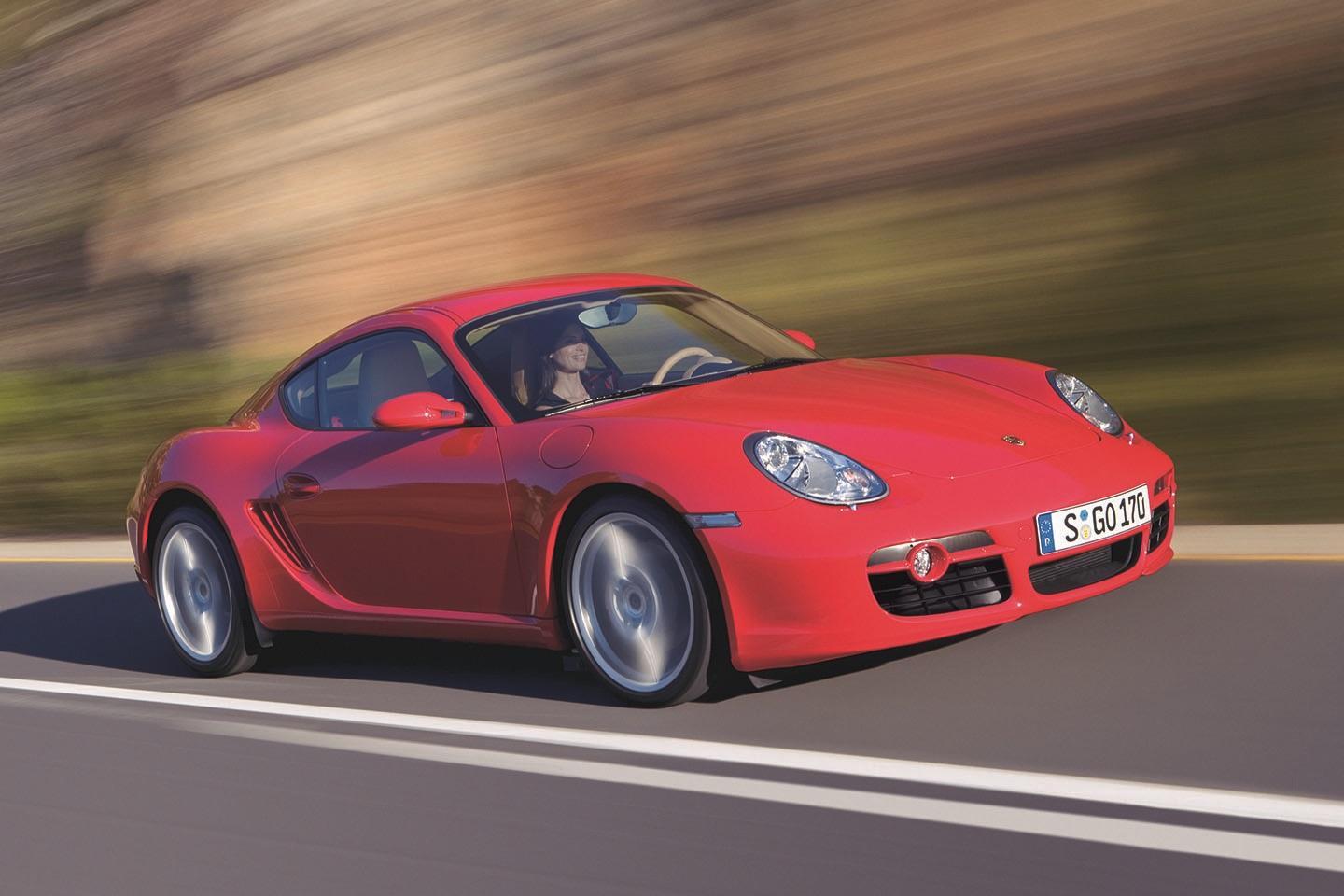
The second-gen S also gained a seven-speed PDK gearbox in place of the Tiptronic auto. With twin-clutches, the PDK 'box offers swift changes, but the steering wheel-mounted push-pull button change was not universally welcomed.
When the standard £36,220 Cayman pitched up, it was fitted with the Boxster's 245hp 2.7-litre flat-six engine and five-speed manual or auto 'boxes. Zero to 62mph took 6.1 seconds for the manual and top end is 161mph. Revised at the same time as the S, the now £39,207 Cayman's engine increased to 2,900cc and 265hp for 165mph and 0-62mph in 5.8 seconds. It was also offered with the seven-speed PDK transmission.
Porsche also offered the Cayman first-gen in S Sport Edition with 303hp and second-gen S Black Edition and R with 330hp, the latter also getting a locking diff and less weight. Any Cayman is a great car to own and they offer reasonable running costs, but there are some pitfalls to be wary of, so read on.
SPECIFICATION - PORSCHE CAYMAN (987)
Engine: 2,687cc, flat-six
Transmission: 5-speed manual, rear-wheel drive
Power (hp): 245@6,500rpm
Torque (lb ft): 201lb ft@4,600-6,000rpm
0-62mph: 6.1 secs
Top speed: 160mph
Weight: 1,300kg (DIN, unladen)
MPG (official combined): N/A
CO2: 222g/km
Wheels: 6.5x17 front, 8x17 rear
Tyres: 205/55 front, 235/50 rear
On sale: 2006
Price new: from £36,220
Price now: from £10,000
Note for reference: car weight and power data is hard to pin down with absolute certainty. For consistency, we use the same source for all our guides. We hope the data we use is right more often than it's wrong. Our advice is to treat it as relative rather than definitive.
ENGINE & GEARBOX
There are three basic engines in the Cayman line-up, comprising M97.21 2.7-litre and 2.9-litre motors for the Cayman and the M97.20 3.4-litre unit for the S in various different power outputs. All have 24 valves and the S motor uses the VarioCam Plus variable valve timing cylinder heads from the 997 S 3.8-litre engine.
The biggest reliability issues with the Cayman centre around the first-gen (987.1) engines built between 2005 and 2008. First problem is the intermediary shaft (IMS) bearing, which begins to fail and can be noticed by a rattle from the engine at idle. If this is left unattended, the bearing will fail and leave the engine a wreck, so check the history for evidence of a new or rebuilt engine or listen for rattles.
Second of the major issues to watch for is bore scoring on pre-2007 engines, though this has afflicted some later engines. Look for excessive smoke when the car is started from cold. Most Caymans emit a small puff of smoke when fired up, but anything more than a slight haze indicates trouble with the cylinder bores. A car that begins to use a lot of oil may also indicate the bores are scored and a Cayman should use only a small amount of oil every 1,000 miles, even with hard use.
A common fault of Porsches of this generation, not just the Cayman, is the rear main seal (RMS) that shows as a small leak under the engine. This isn't quite as worrying as the two problems mentioned above but will need addressing sooner rather than later. The second generation (987.2) of Caymans have engines that don't have an RMS, instantly avoiding this problem.
The only other concerns to have with a Cayman's engines and transmissions are if the car has been used regularly on track. The first-gen cars' engines have only two oil pick-ups and the cylinder head can become starved of oil under during hard cornering. The second-gen cars have four oil pick-ups that resolve this problem.
Otherwise, the Cayman's engines and gearboxes are strong and reliable. The limited edition Cayman S Sport arrived late in first-gen production with 303hp, helped by a standard sports exhaust. For the Cayman R that arrived in 2011, Porsche fitted the Powerkit to raise power to 330hp over the contemporary S model's 320hp. The S Black Edition also sported 330PS. With the PDK transmission and Sport Chrono pack fitted, the 55kg lighter Cayman R was capable of 0-62mph in 4.4 seconds.
For any Cayman owner considering an upgraded exhaust, there are plenty of aftermarket suppliers, but one name that crops up continually as the best bet is Gert Carnewal, who is based in Belgium. The Carnewal GT exhaust uses modified standard back boxes to remove two of the four catalytic convertors, giving a better noise while leaving emissions unaffected.
A major service at an Official Porsche Centre (OPC) will set you back around £900, with a minor service about half that. Independent specialists for Porsche are easy to find and they will cut servicing bills by a considerable margin.
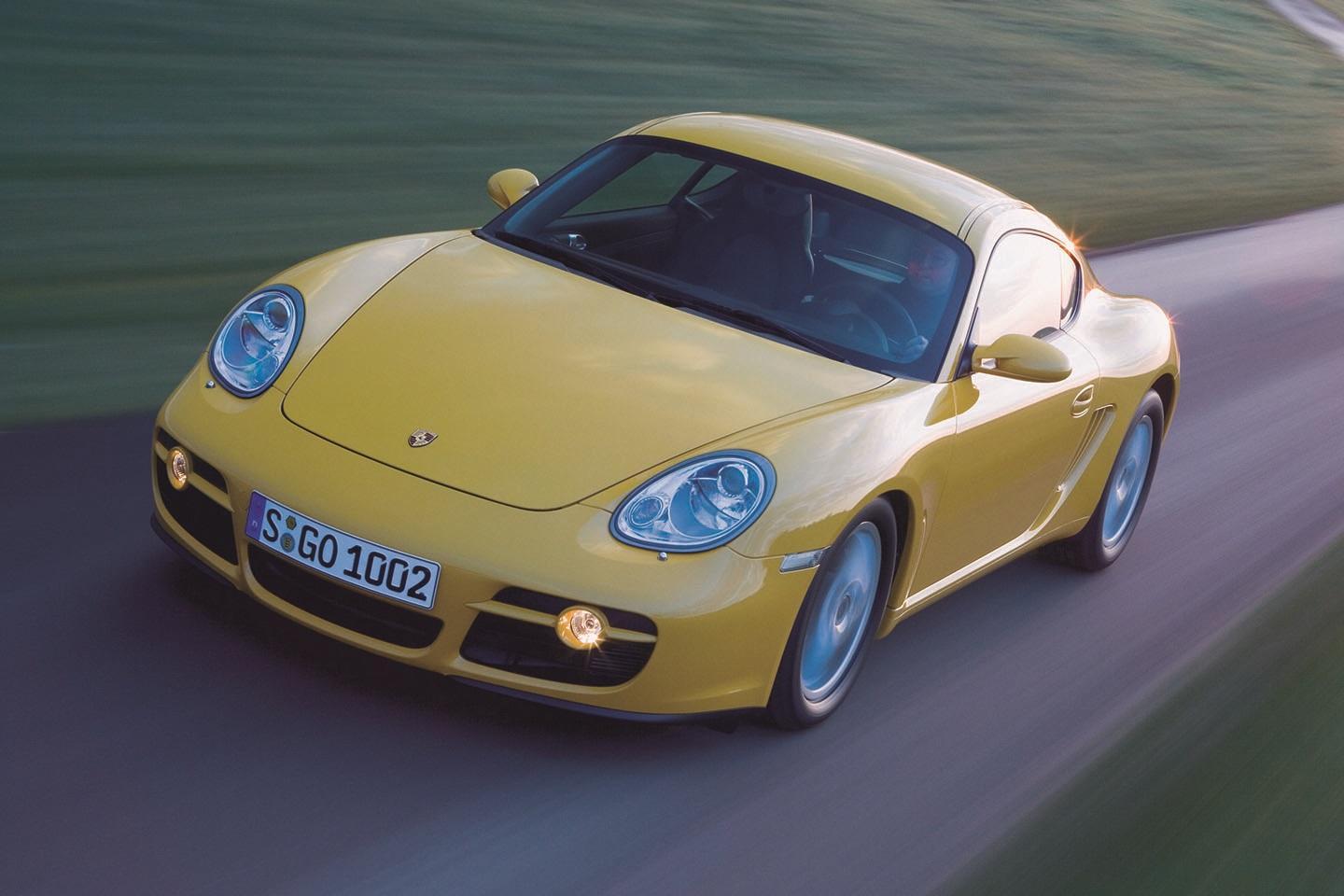
CHASSIS
As the Cayman was developed from the Boxster, its steel monocoque chassis was very rigid and offered a superb base for the all-round MacPherson strut suspension to work from. Lateral control arms further help locate the rear suspension, while Porsche Active Suspension Management (PASM) was also an option, and one which continues to divide opinion to this day.
There's little point in upgrading the standard suspension for road driving as it's already very well balanced. For track use, firmer springs and dampers will make a difference to body lean. The first-gen S Sport Edition, and Porsche Design Edition 1 limited model, sit on 10mm lowered suspension, while the R sits 20mm lower than the S on standard 19-inch alloy wheels.
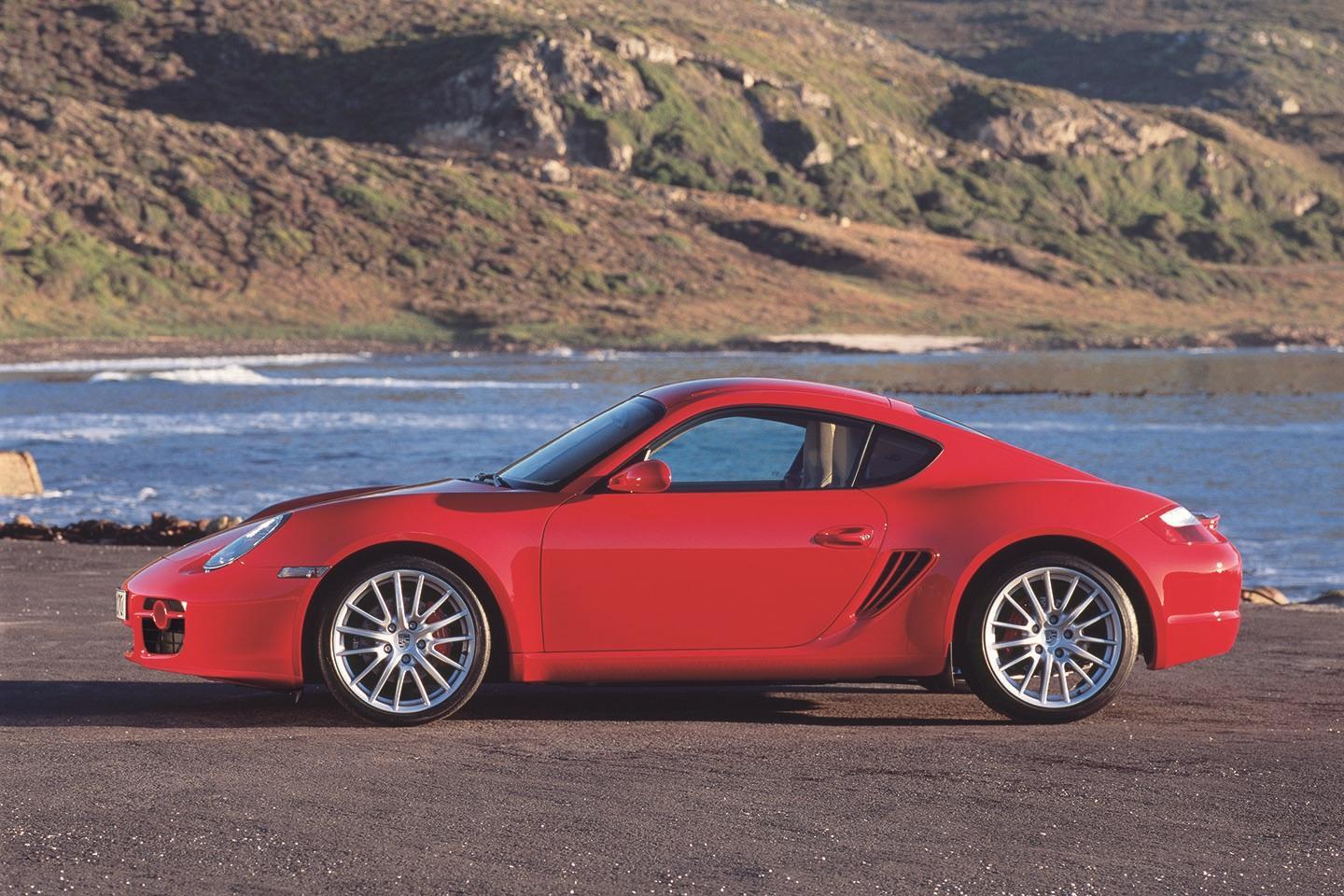
The first-gen and second-gen Caymans have 17-inch alloys as standard, while the S models had 18-inch wheels or 19-inch items as an option. Most Caymans will have 18-inch alloys fitted as options and the S usually has 19-inch optional alloys to improve the looks but not the ride quality.

To counter the ride on 19-inch alloy wheels, the PASM gives a softer ride in Normal mode but is reckoned to be too firm in Sport mode for road use. The PASM system also comes with a stiffer front anti-roll bar to help with turn in to corners, so for track driving a car with PASM fitted is a good bet. However, on earlier generation Caymans, the hydraulic power steering pump can overheat with track driving, though a modified pump is available from specialists to cure this. Track driving also takes its toll on first-gen track rod ends, which were upgraded with larger items for second-gen cars. When replacing a first-gen Cayman's track rod ends, it's worth swapping to the larger second-gen items to avoid this problem in the future.
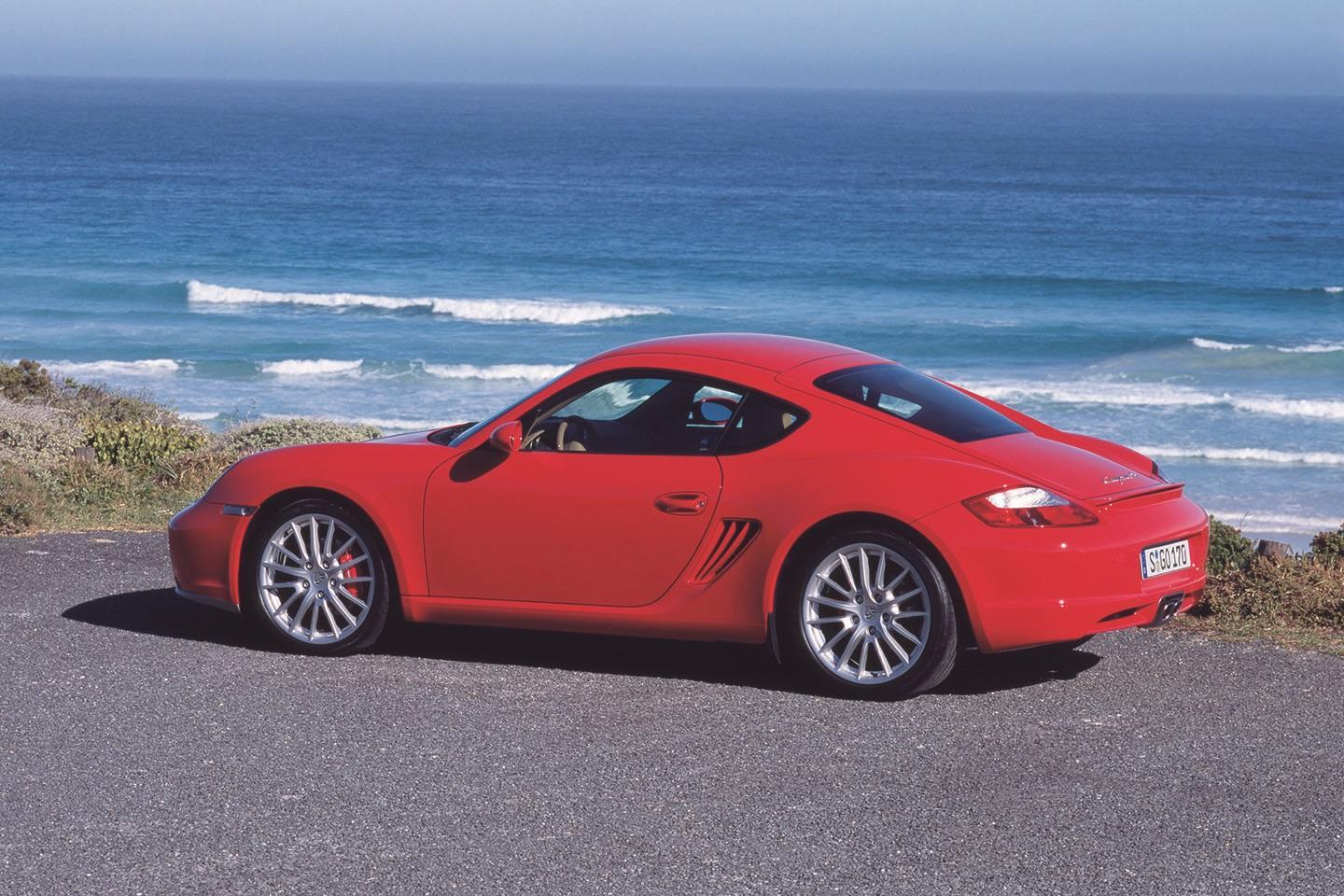
All Porsche Cayman brakes are powerful, with the original 2.7 sporting 298mm front vented discs and 299mm rears with anti-lock for all models. The first-gen S upgrades with 318mm front discs and is identifiable by its red-painted brake calipers. These sizes remained throughout Cayman production, with the only other choice the option of carbon ceramic brake discs, but this is an incredibly rare sight due to the cost of the option when the car was new.
A set of replacement tyres from a premium brand will set you back around £800, but PHers report the Cayman will only need new tyres at around the 18,000-miles mark in normal road driving conditions.
BODYWORK
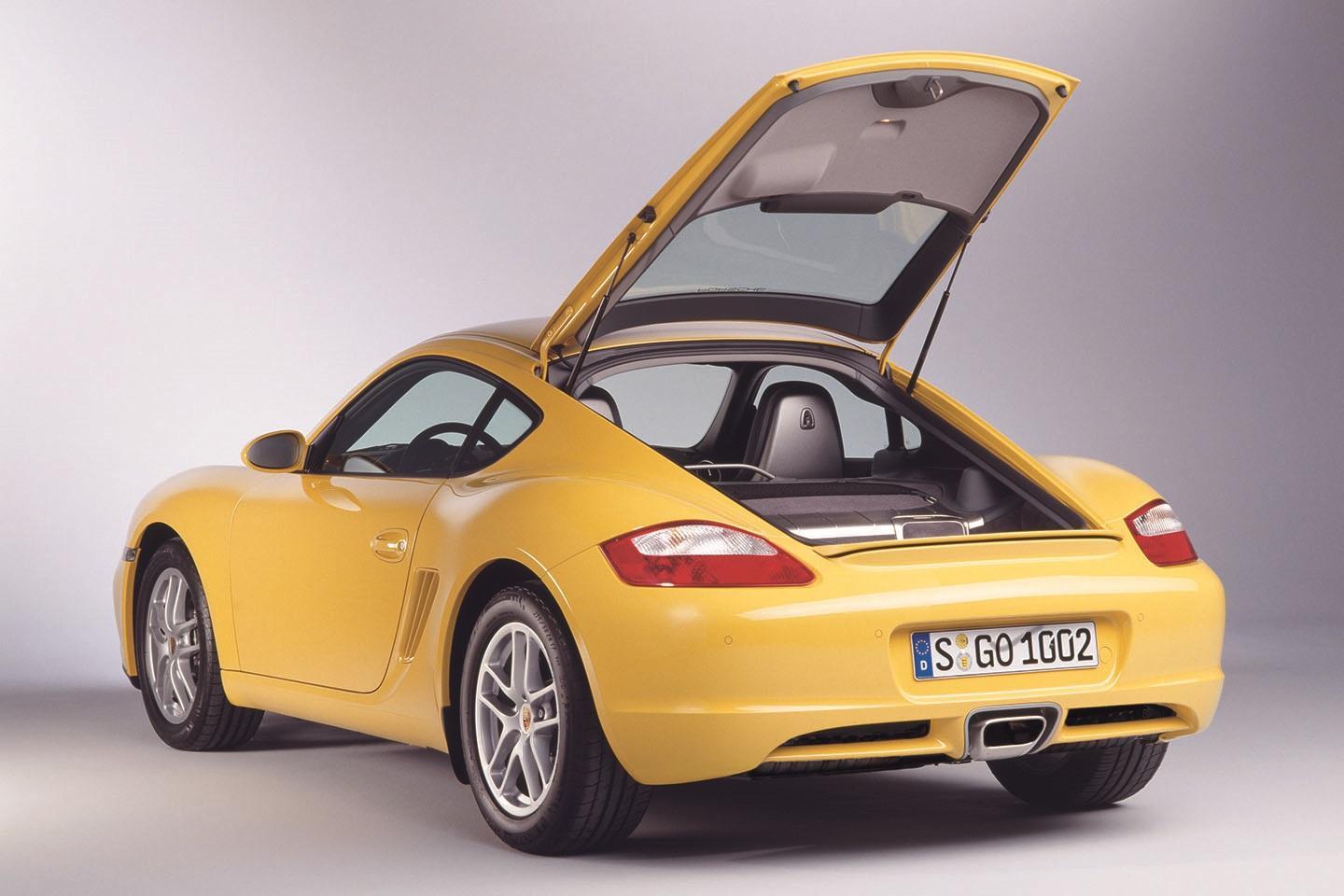
The Cayman shares its steel base structure with the Boxster and, like the open top model, uses aluminium for the bonnet and doors to save weight. Much of the Cayman's bodywork is shared with the Boxster, such as the lights, doors, bonnet and front wings, which helps with the cost of repairs and insurance.
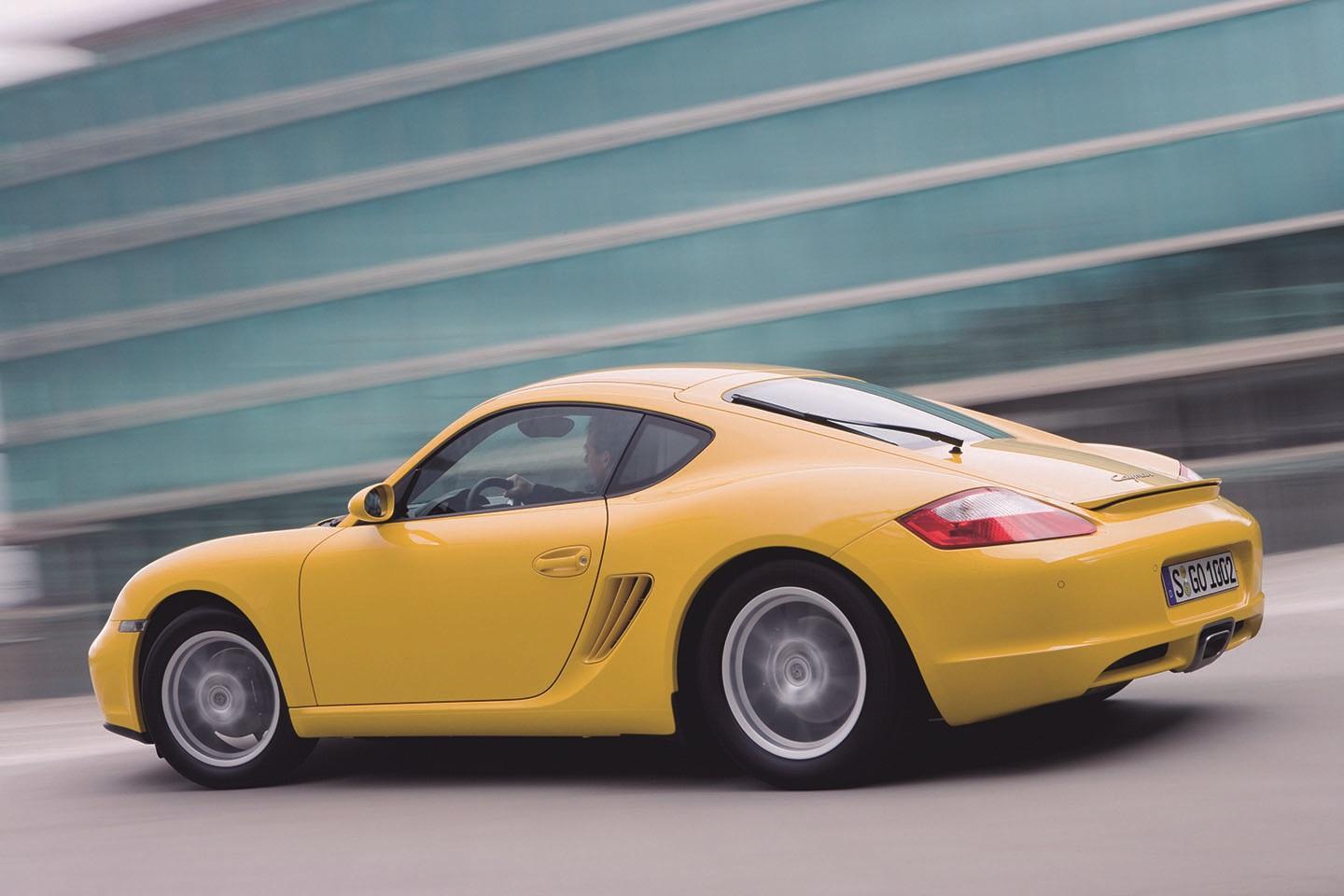
The rear tailgate of some Caymans can rattle, either due to misaligned hinges or worn seals. Neither is a cause for concern, but check the car has not been in an accident and poorly repaired. Any signs of rust of on a Cayman should send alarm bells ringing about crash damage.
Check behind the front air intakes for signs of damage or corrosion to the radiators positioned here. They are susceptible to stone chip damage and becoming clogged with debris and leaves. A common upgrade is for owners to fit grilles to the intakes to prevent muck collecting on the radiators, so look for these as the sign of a careful owner. Porsche charges around £550 for a single radiator unit plus fitting, but specialists can source replacements more cheaply.
Equally air-conditioning condensers in this area are known to fail. Porsche will charge around £600 per condenser to replace, but specialists will likely be much cheaper.
The headlights are also vulnerable to stone chips and cracks. Light scratches can be polished out, but a new light lens will set you back £414 from Porsche. Also on the electrical side, the Cayman is best kept on a trickle charger if being left for more than a few days. Owners don't rate the original Porsche trickle charger, so an aftermarket one is a good investment and saves the £112 for a new battery from a Porsche dealer.
Other than the obvious checks for parking knocks and scratches, the Cayman is a remarkably safe bet in this area, as most owners tend to be fastidious. Some earlier high-mileage cars have fallen into a price bracket where owners may struggle to maintain the correct servicing and repairs on a tight budget, so beware of cars run on a shoestring.
With the second-gen R version of the Cayman, it's easily identified by its fixed rear wing and Porsche decals. However, the R went further and saved 55kg in weight by using lighter aluminium doors and 19-inch alloy wheels, as well as stripping the interior of its air conditioning, door handles, stereo and storage cubbies.
INTERIOR
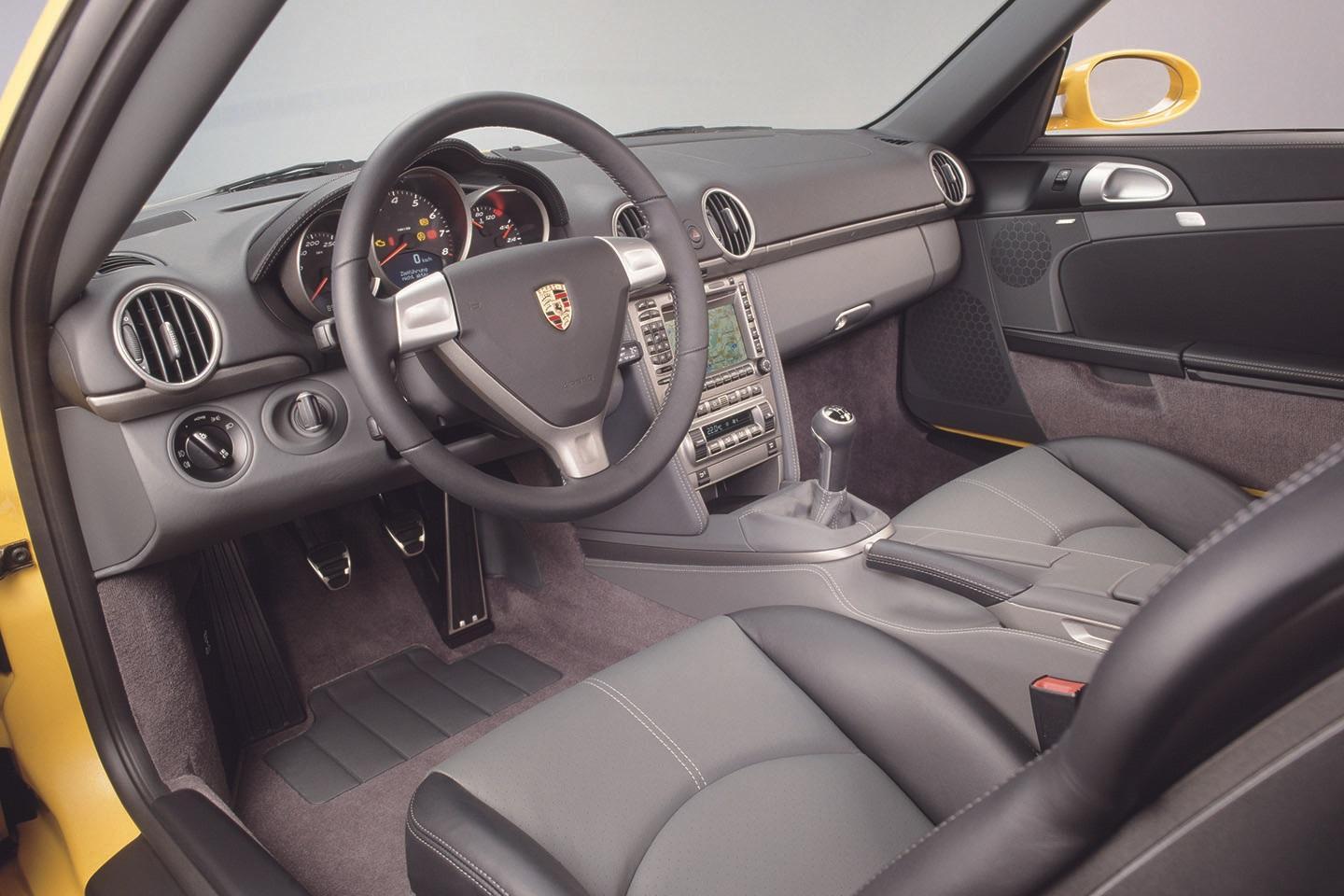
The Cayman's cabin offers good space and comfort for its two occupants, and there's also good luggage space thanks to the front and rear boots. Some owners find the centre console a little fussy but the main dials are typical of Porsche and easy to read.
Early cars with the PDK gearbox have steering wheel buttons where you pull to go down a gear and push to go up through the gears, which feels counter-intuitive. Later PDK-equipped models could be ordered with paddle shifters that solved this annoyance.
The standard seats are comfortable and supportive with manual adjustment, while electric adjustment was an option. Most PH Cayman owners rate the optional sport bucket seats as the best of the bunch for comfort and looks. The R has its own lightweight bucket seats and does away with the radio, air conditioning, door handles in favour of straps, and some storage compartments to help save weight. With its firmer suspension and no air con, be sure the R is right for you if you're after a car for long road trips.
Porsche's build quality means the Cayman shrugs off high miles, but check the driver's seat bolster for signs of wear on higher mileage cars. All of the electrics should work without a problem and don't forget to check the front and rear hatch releases function properly too.
For the first-gen Cayman S Sport, Porsche opted for Alcantara trim for the seats and steering wheel, handbrake and gear lever. It also has gloss black trim inserts, stainless steel sill protectors and Porsche removed the cowl over the main instrument binnacle.
PH VERDICT
Truthfully, there were plenty of jokes that greeted the Cayman at its launch. For some it was merely a Boxster with a roof or else a poor relation of the 911. But the model started winning fans almost immediately for the simple reason that it was just too good not to be appreciated by anyone who'd actually driven it.
Fundamentally, like the Boxster, its engine was in the right place. This distinction was the reasoning behind Porsche's reluctance to deliver it too much performance (privately, it admits to building prototypes with 911-rivalling power almost from the start) lest it trample on the toes of its headline sports car. Since then Porsche has closed the gap, but the original car is very much the blueprint for its current day success.
That does not excuse the notable reliability issues with early cars - these must be purchased with caution - but it does give weight to the idea that you are buying a modern classic, both in terms of driving experience and in Porsche's always-compelling back catalogue. Objectively, the Cayman has become better over time - certainly quicker and better built - although there is much to be said for the mechnical feel of the earlier generation, particularly if you're inclined to favour six cylinders over four turbocharged ones.
Either way, the low mileage examples of the second generation 987 are the ones fit for cherry picking. The R model, a precursor to the now much more famous GT cars, is worthy of the attention originally heaped on it, but it's arguably the 2.9-litre standard Cayman which offers the best mix of performance and value for money. Expect to pay around £20k for a decent one in 2020. Don't expect to ever regret it.


The ride is way too hard for UK roads (not quite as bad on the optional switchable suspension though), the interior of early ones is a button-fest, rear 3/4 visibility is poor and it manages to look both ugly and a bit plain at the same time somehow. I'm not convinced reliability is perfect either. Oh, and PDK ? Nein danke.
I'll take an Evora instead, in BRG, please


Cracking success that one eh!
PDK suits the car as you can concentrate more on the sublime steering,looks are subjective but I loved the shape and the only car I enjoyed cleaning the build quality was way way above a previous M car ! you are right about the harsh ride tho' I had a gen2 with 19" wheels and f
 k me it was hard and tiring after a while,reliability on the gen2's at least seems bulletproof
  all in all a car that I will remember fondly....
The IMS bearing was addressed in 2007 and from 2009 cars don't have one to fail. It's well reported, but it also skews the view of the failures in that the thousands of perfectly fine engines are not reported... It's a very small proportion in reality. It's more rare on certain models also (the 2.7 for example).
RMS isn't as big an issue as is sometimes made out. Keep an eye out for puddles under the car. If there aren't any, just get it checked at service. Mine weeps very slightly but doesn't drip. Essentially whenever the clutch gets done it'll get swapped. Otherwise it's not a problem.
Bore scoring is another issue. This is covered quite a bit in the Porsche section and is to do with the coating they used on the liners. Labouring the engines seems to be the favourite cause behind it. Essentially high torque at low revs. So don't drive them like a diesel.
It's just things to be aware of. All cars have issues. Porsche did let these go for too long before addressing them to be fair as they've been known about forever. They're design faults. But then they seem to make a fortune selling extended warranties to the paranoid masses, so maybe they dragged their heels a bit.
If you went with everything you read on the internet, no one would own a K-Series engined car either (Elises & Caterhams) for fear of the heads going porous and head gasket failures happening every few weeks. The internet tends to exaggerate the bad things. They're worth being aware of, sure. But they're not all time bombs.
Seem to have been a tidy few engine 'issues' for Porsche over the years. That'll be the "build quality" and "thorough engineering" that we've heard so much about, then?

Each to their own and all that.

Caymans have a proper gearbox FWIW, one that's so far beyond the crap they slapped into the Evora it's untrue. That's not saying that it's some sort of uber box like a S2000/MX5, god far from it. But it's a million times better than the Evora box. The Evora is a brilliant car... The gearbox is better glossed over however.


hmmm... first time I've heard someone claim an Evora sounds better than the flat six in Cayman.
Best stop digging now mate.
hmmm... first time I've heard someone claim an Evora sounds better than the flat six in Cayman.
Best stop digging now mate.
hmmm... first time I've heard someone claim an Evora sounds better than the flat six in Cayman.
Best stop digging now mate.
ks. Which it is.Gassing Station | General Gassing | Top of Page | What's New | My Stuff