
Discussion


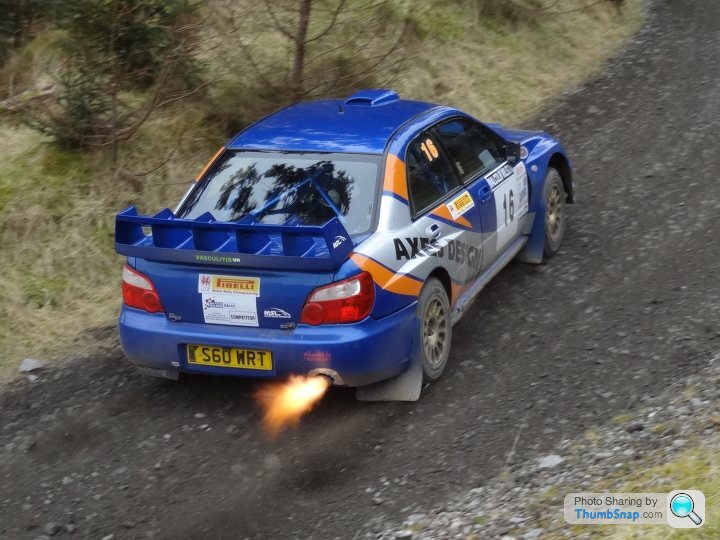
Firstly, let's see your favourite pictures of exhaust flames - but then I have a few questions for you 
I'm talking Aventador style, not Dodgy Damo from the ghetto with a flamer kit on his 1.4 litre Astra.
For example:

What's going on here? People talk about the 'unburnt fuel' thing but is that really true? Surely then the exhaust valve is opening sometime during the ignition cycle, which seems pretty inefficient (though obviously still awesome to see). Is that not just wasted energy?
Perhaps this has to do with the dark art of 'timing' - I don't know, enlighten me please!
Or is it really just the sheer volume of fuel being chucked into the cylinders that not all of it has time to ignite before the exhaust valve opens?
If you do well on this I'm starting a topic about anti-lag
I'm talking Aventador style, not Dodgy Damo from the ghetto with a flamer kit on his 1.4 litre Astra.
For example:
What's going on here? People talk about the 'unburnt fuel' thing but is that really true? Surely then the exhaust valve is opening sometime during the ignition cycle, which seems pretty inefficient (though obviously still awesome to see). Is that not just wasted energy?
Perhaps this has to do with the dark art of 'timing' - I don't know, enlighten me please!
Or is it really just the sheer volume of fuel being chucked into the cylinders that not all of it has time to ignite before the exhaust valve opens?
If you do well on this I'm starting a topic about anti-lag
I think what happens is this:
When you go from wide open throttle to closed throttle, you suddenly shut off air flow into the piston but there is still pressurised fuel in the injectors which is released anyway; this makes the mixture massively over-rich so most of that fuel can't burn. As soon as that (super-heated from what combustion did happen) unburned fuel hits the air behind the exhaust, it ignites.
Not certain though.
kambites said:
I think what happens is this:
When you go from wide open throttle to closed throttle, you suddenly shut off air flow into the piston but there is still pressurised fuel in the injectors which is released anyway; this makes the mixture massively over-rich so most of the fuel can't burn. As soon as that (super-heated from what combustion did happen) unburned fuel hits the air behind the exhaust, it ignites.
I think that's basically true, however I think it's done deliberately. With fly-by-wire throttles and fuel injection there's no way it can't be stopped, I'm pretty sure it's programmed into the ECU. Even with carbs and a cable throttle I've never had it happen on any of my classics and if it did I'd suspect a timing/carb problem. The reason the mixture ignites when it hits the air (and not inside the exhaust) is that there's oxygen in the air but not in the exhaust. I'm surprised this sort of thing doesn't poison the cats and/or make it fail emissions regs.When you go from wide open throttle to closed throttle, you suddenly shut off air flow into the piston but there is still pressurised fuel in the injectors which is released anyway; this makes the mixture massively over-rich so most of the fuel can't burn. As soon as that (super-heated from what combustion did happen) unburned fuel hits the air behind the exhaust, it ignites.
My boosted civic flames often.
When you plant the accelerator at a certain rpm as the turbo is almost fully spooled, the injectors open fully. If you come off the pedal instantly, there is unburnt fuel which is chucked out the exhaust and is ignited by the turbo/hot exhaust.
Also on very rapid gear shift at high rpm. I couldn't tell you why it does it in this case however, but it pops loudly and spits large flames.


varsas said:
I think that's basically true, however I think it's done deliberately. With fly-by-wire throttles and fuel injection there's no way it can't be stopped, I'm pretty sure it's programmed into the ECU. Even with carbs and a cable throttle I've never had it happen on any of my classics and if it did I'd suspect a timing/carb problem. The reason the mixture ignites when it hits the air (and not inside the exhaust) is that there's oxygen in the air but not in the exhaust. I'm surprised this sort of thing doesn't poison the cats and/or make it fail emissions regs.
Yes, I'm sure they could avoid it if they wanted to. Otherwise all cars would do it. I don't have a picture, but I managed to get some pretty decent flames out of the TVR after fitting 'cherry bomb' silencers.
Not sure if the link will work as I'm posting off my phone, but:
https://www.youtube.com/watch?v=oKy629_6My8&fe...
Not sure if the link will work as I'm posting off my phone, but:
https://www.youtube.com/watch?v=oKy629_6My8&fe...

For performance you want to run *some* petrol as if you totally shut off the injectors it takes a (very short) period of time to respond. So you 'waste' some petrol to enable instant response when you open the throttle again. There is no[1] free oxygen in the exhaust pipe so the extra just gets burnt when it gets outside. At low revs there isn't enough petrol to actually burn significantly and its too cold by the time it gets out (or it burns in the exhaust itself) so you don't see it.
Flames on gear-changes or limiters are mostly due to ign cut-outs so you're still flowing fuel but no spark. Again no oxygen in the exhaust but its hot enough to ignite so it burns when it gets out.
Druid
[1] Unless you have a Air Injection System
Flames on gear-changes or limiters are mostly due to ign cut-outs so you're still flowing fuel but no spark. Again no oxygen in the exhaust but its hot enough to ignite so it burns when it gets out.
Druid
[1] Unless you have a Air Injection System
varsas said:
kambites said:
I think what happens is this:
When you go from wide open throttle to closed throttle, you suddenly shut off air flow into the piston but there is still pressurised fuel in the injectors which is released anyway; this makes the mixture massively over-rich so most of the fuel can't burn. As soon as that (super-heated from what combustion did happen) unburned fuel hits the air behind the exhaust, it ignites.
I think that's basically true, however I think it's done deliberately. With fly-by-wire throttles and fuel injection there's no way it can't be stopped, I'm pretty sure it's programmed into the ECU. Even with carbs and a cable throttle I've never had it happen on any of my classics and if it did I'd suspect a timing/carb problem. When you go from wide open throttle to closed throttle, you suddenly shut off air flow into the piston but there is still pressurised fuel in the injectors which is released anyway; this makes the mixture massively over-rich so most of the fuel can't burn. As soon as that (super-heated from what combustion did happen) unburned fuel hits the air behind the exhaust, it ignites.
On modern cars though it is dialled in on purpose. MINI first introduced it on the R53 Cooper S facelift in 2004, and the 'acoustic exhaust noise' carried over onto the R56 S in 2006, but was deleted some time in 2008 as too many people thought their cars were broken! They still do it a little bit, but nowhere near as much as they used to.

Gassing Station | General Gassing | Top of Page | What's New | My Stuff