
Ford Mustang timeline
Need to swot up on your Ford Mustangs to put the new one in context? Read on!
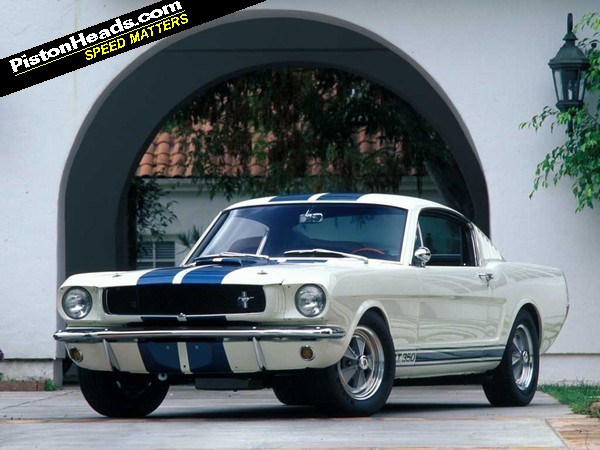
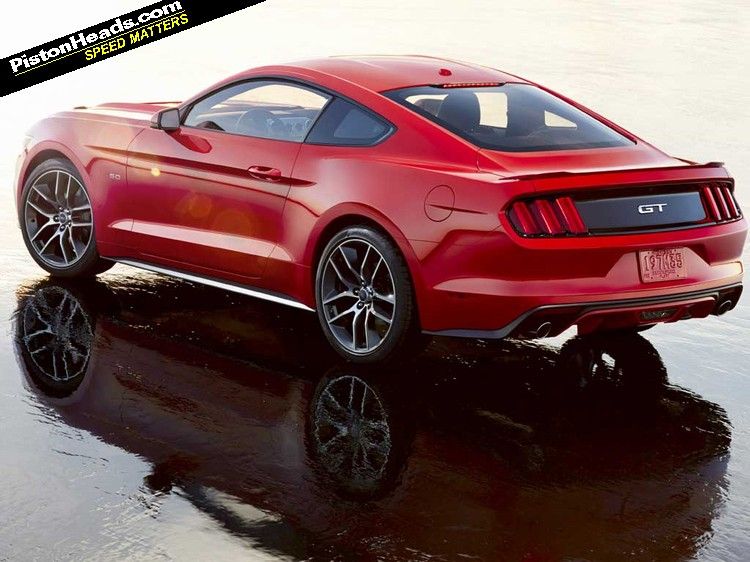
50 years young, now we have a UK Mustang
Not surprisingly for a model that celebrates its 50th birthday next year, the 'stang reflects all the US's automotive fashions and disasters in recent history, from the power race that was the muscle car era to the fuel crisis of the 70s and the retro-boom of the 2000s.
Despite all the different body styles, special editions and engines, there have been only five generations. Some way better than others, but all have stand-out models. This is our guide to those generations.
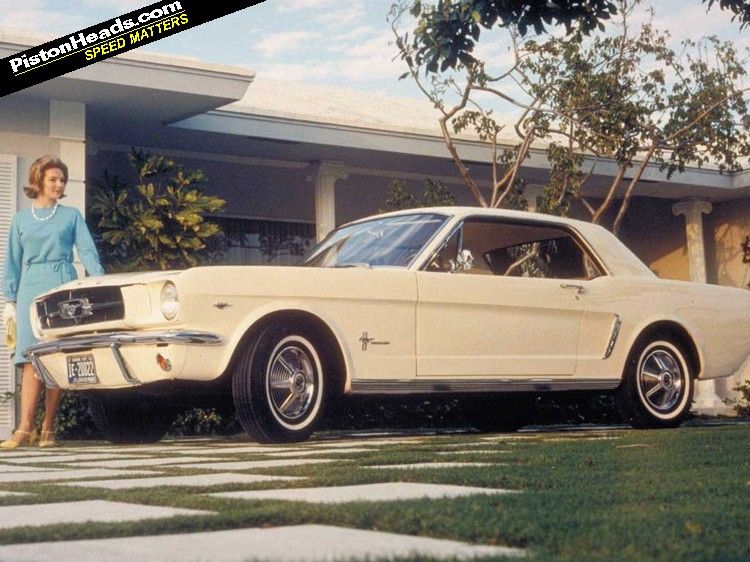
Where it all began...
The Falcon-based Mustang arrived midway through 1964 but these so-called 64 and a half coupes and convertibles with their clean, attractive lines gave little indication of the thunder to follow. The affordable two-door with its twin body styles - coupe and convertible - was an instant hit and after predicting sales of 100K annually, Ford sold a million in just two years.
It launched with a six-cylinder and two 4.7 V8s, the 'Hi-Po' version of which made 271hp through its standard four-speed manual.
The fastback 2+2 landed the following year and was sealed in an ice-block of cool for the rest of eternity when Steve McQueen thrashed a Highland Green 1968 GT390 in Bullitt.
-L.jpg "Click to enlarge")
Delicate early models weren't to last long
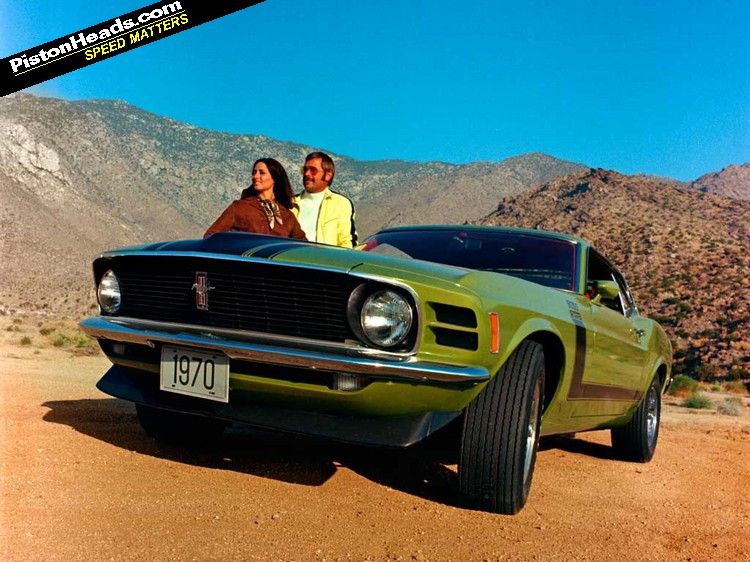
These Cobra Jet engines with their Ram Air 'Shaker' hood scoops heralded an era of pecker flexing when the Mustang got bigger, heavier and more aggressive. The Boss 302, 351 and 429 cars from 1969 (named for their cubic inch capacity) were Ford's factory-built weapons in the muscle car wars and boasted exotic upgrades like aluminium cylinder heads to make upwards of 375hp.
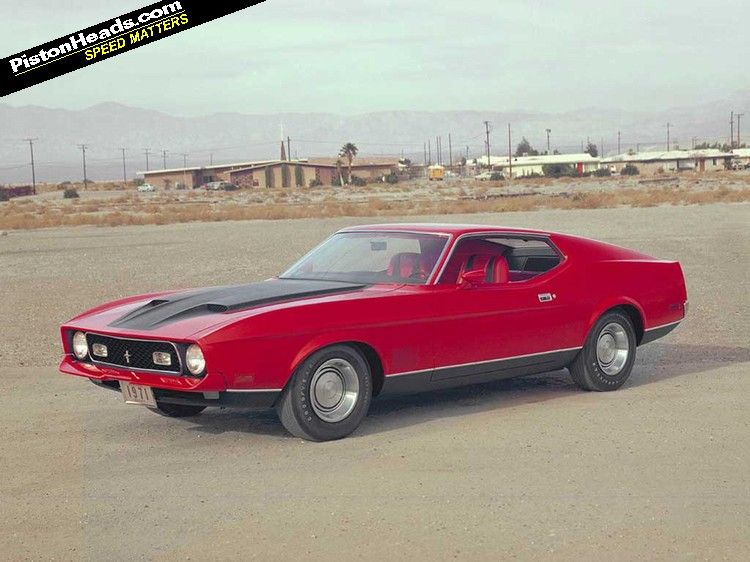
Up there with the Z3 as Bond's worst wheels
But by now emissions regs were destroying that trademark Mustang performance and the increasingly overweight yet undernourished Pony limped into the stable to reappear in the worst incarnation of its 50 years: the Mustang II.
The Daddy: 1965 Mustang Shelby GT350. Legendary tuner Shelby extracted 305hp from the 4.7 V8, stuck it in the fastback now good for 60mph in 5.7sec and created history.
The Dud: 1973 4.1-litre six-cylinder Grande 'luxury' Mustang with 98hp and a three-speed auto. Raft of new government regs in part to blame for the biggest, ugliest, most strangulated 'Stang yet.
-L.jpg "Click to enlarge")
And this was just 10 years after the original
How could the second most-successful Mustang generation also be the worst? On paper the Mustang II from 1974 was a return to the original's purity, shrinking to 4.4m in length from almost 5m and for the first time handing buyers rack and pinion steering and front discs as standard.
But that bloated design with its ponderous overhangs was no-one's idea of pretty and Mustang enthusiasts raised hell when it was launched without a V8. Instead there was a V6 pinched from our Capri and, shock horror, a 2.3-litre four-cylinder that couldn't even scare up 100hp. There was also no convertible.
To be fair on Ford, this was developed slap bang in the middle of the OPEC oil embargo when petrol prices went through the roof. You know things are bad when Ford develops an "MPG Mustang" from the 2.3 with a claimed economy of 34mpg, and it sells...
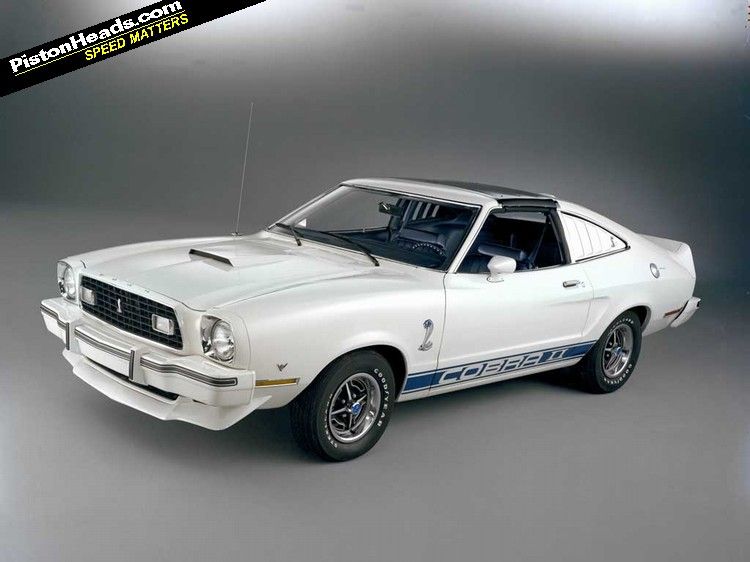
Fancy a Cobra II with a 2.3 4-cyl? Thought not
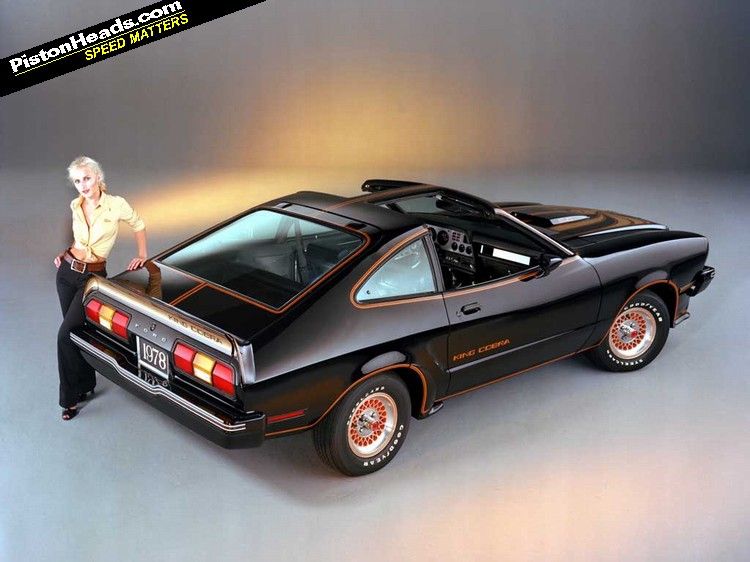
The final strangled whinny from a seriously lame pony was the limited edition King Cobra II with the 139hp 5.0 V8 and a garish paint job featuring lots of snakes, presumably in response to the Pontiac Trans Am's 'Screaming Chicken' bonnet design. That the Mustang II was so successful is yet more evidence of what a terrible decade the 70s actually was.
The best Dud: The 1979 King Cobra V8, but it wasn't much cop at just 139hp thanks to a small two-barrel carb.
The Dud: Most of them, but it's hard to find anything to love about the 2.3 automatic 'MPG' Mustang II.
-L.jpg "Click to enlarge")
Getting back to its best...
This was better. The Fox-body Mustang, named for the platform that underpinned a number of much duller Fords, spanned the entirety of the 80s and brought some cred back to the brand via interesting special editions.
It was a slow start though, and that's meant literally. Another fuel crisis saw the launch V8 emasculated down to 4.2 litres and 120hp and the performance role amazingly handed to a turbo'd version of the old 2.3 four-cylinder making just 132hp.
Poor reliability canned this briefly but the turbo returned in 1984 with the shovel-nosed facelift as a much punchier SVO (Special Vehicle Operations department). This started at 170hp, rising to 200hp by 1986, and had special pedals to aid heel and toeing, as well as a limited-slip diff.
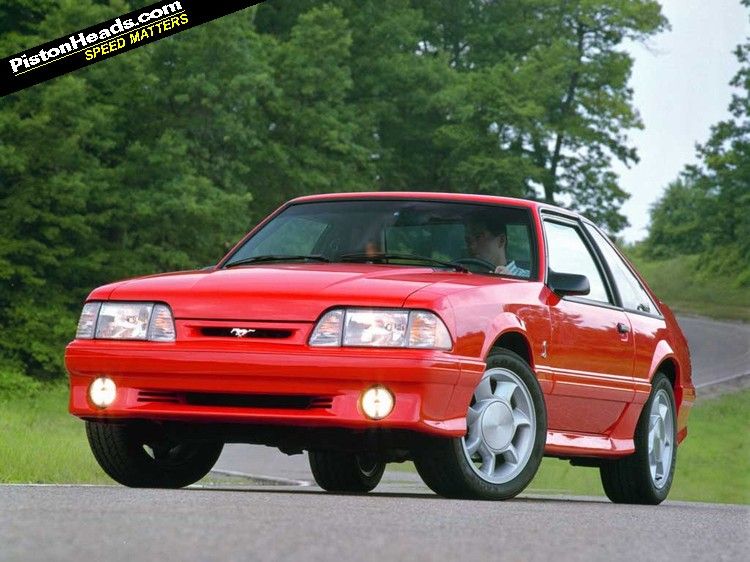
Gen 3 evolved into 235hp Cobra, with an R later
A 2.8 V6 was the same Ford Capri Cologne engine, but once again it was the fall and rise of the V8 that dominated. After the early strangulation, the five-litre returned in 1982 making 157hp. Surviving a debacle in which the Mustang almost became the front-drive Probe, the V8 was handed some cojones and the Cobra struck again in 1993 with a 235hp SVT (Special Vehicle Team) developed car. The track-angled R ditched the rear seats and air-con to create a highly collectable limited edition last hur-R.
The Daddy: We're tempted to say 2.3 SVO turbo, but our heart lies with the stripped-out 235hp 5.0 V8 SVT Cobra R from 1993.
The Dud: Some V8s just aren't worth having. An early 4.2 V8 three-speed automatic tuned for economy is a slug.
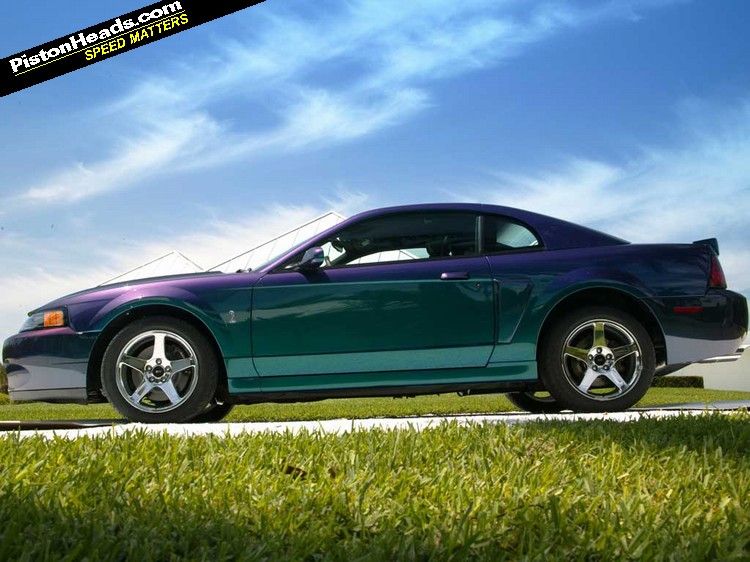
SVT Cobra had 300hp for Gen 4 car
Hard to believe, but the launch V8 in this new car was still nowhere near the official power levels achieved by some of the wilder versions of the first-gen car, and that was first launched 30 years earlier!
The old 5.0 Windsor pushrod V8 soldiered on to here make 215hp in a Mustang that was now much more confident in its heritage. The galloping pony badge was back, the convertible was back, and SVT was immediately handed the car to produce a 5.8-litre 300hp SVT Cobra version with a five-speed manual. No back seats, no air-con and a front strut brace pointed to its track-attack purpose in life.
It was still a Fox platform underneath but heavily reworked and the design, although 90s bland, was evocative enough to get the enthusiasts back on board.
-L.jpg "Click to enlarge")
SVT Cobra R arrived in 2000 with 385hp
The SVT guys weren't so shy however and the SVT Cobra R returned in 2000 with 385hp from a 5.4 version of the engine now mated to the first six-speed manual in a Mustang. The SVT cars also had that new-fangled set-up called an 'independent rear suspension' to replace the standard rear live axle that the current car still has.
There was even the return of the Mach 1 car in 2003 for a more accessible performance hit from a 305hp version of the 4.6, complete with Ram Air 'Shaker' hood scoop. Retro baby, but not as retro as...
The Daddy: Got to be the mighty pared-back SVT Cobra R from 2000 with its 385hp 5.4 and 175mph top speed.
The Dud: No heartbeats will skip in 3.8-litre V6 with 145hp mated to a four-speed auto.
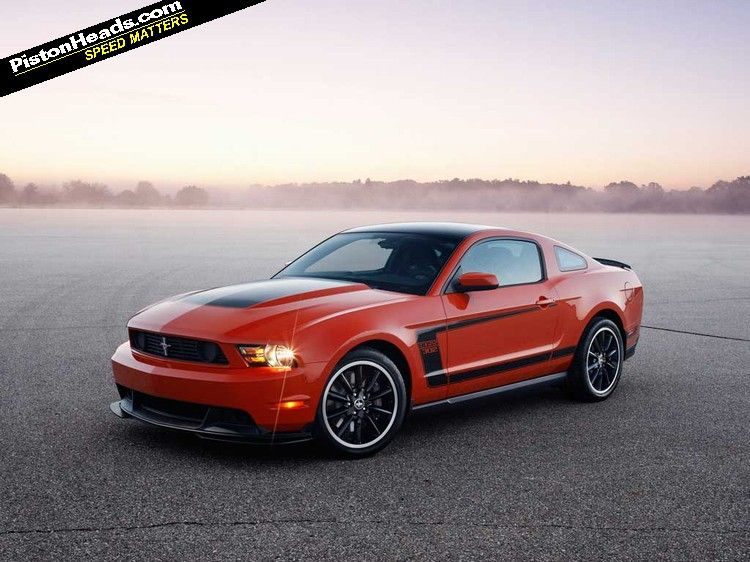
Boss 302 a highlight of the current range
Ford had figured out by this time that only the first generation Mustang held any historical appeal so did the sensible thing with the fifth-gen car from 2005 and went unashamedly retro. The reverse angled sharkbite grille, the blocky body with its low cabin and prominent body-coloured B-pillar all recalled the original and with some style.
Available as a coupe and convertible, it sat on a new platform and the 4.6-litre V8 was massaged to produce 300hp originally to launch the standard car to 60mph in 5.3 seconds. Now even the 3.7 V6 makes over 300hp so there's absolutely no shortage of power any more, even if the automatic continues to frustrate UK drivers when it appears in their rental convertible. And remember, this is car that starts at the equivalent of just over £14,000 for that V6. Yes it's got heavier over the years, with the current V8 GT weighing 1,641kg, but compared to previous-gen cars this was a revelation in the way it handled. We loved it.
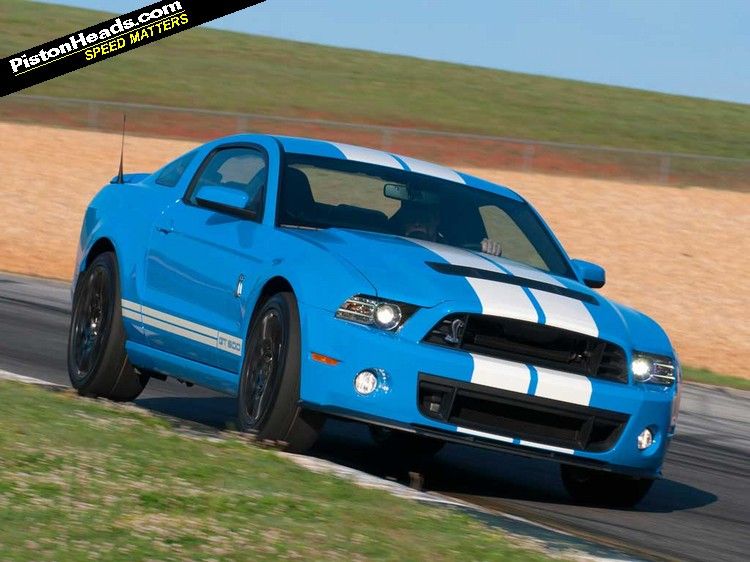
662hp GT500 brought the mad Mustang back
And it has finally produced a model that's even more bat excrement mental than those big-block first-gen cars in 2011's 662hp supercharged 5.8-litre GT500 once again created with the help of Carroll Shelby.
That wasn't all. A brand new V8 finally allowed Ford to put the 5.0 badge on again and the Hi-Po 444hp version created the Boss 302 (5.0-litres is 302 cubic inches), reviving another nameplate from the dim and distant.
Now of course the landscape is changing again. A new generation car is due in 2015 and this time it's coming here. An EcoBoost four-cylinder turbo is confirmed, as is independent rear suspension. Which direction have they gone this time? As long as it isn't a revival of the 1974 Mustang II, we think Mustang lovers will be well served. After 50 years, they've probably got the hang of it.
The Daddy: The GT500 with its V8 making 662hp and top speeds in excess of 200mph. Hell yes, horsey.
The Dud: There wasn't really one, which is impressive in itself. But early 4.0 V6s with autoboxes will probably never trouble the collectors.
 |
 |


Also I'm always amazed by how little horsepower they got from huge engines. Surely it's harder to engineer horsepower out of something that size rather than put it in?
In my eyes only the gen 1 and gen 5 look good, and the gen 6 looks decent. Plenty of years of dross
Also, the first picture of the "4th Generation" Mustang is actually a late model Fox Body (3rd generation).
Flame me all you want to, but I'd thought I'd point these out.
Didn't quite realise how bad the middle generations of the car looked. In my head the Mustang only comes in two forms, Gen 1 and Gen 5.
300bhp/tonne will be along to correct me soon enough though

Also I'm always amazed by how little horsepower they got from huge engines. Surely it's harder to engineer horsepower out of something that size rather than put it in?
In my eyes only the gen 1 and gen 5 look good, and the gen 6 looks decent. Plenty of years of dross
They need the smaller engines to get people into the car, and then the halo products will sell themselves!
Good job, and I bet a greater focus on weight and driving dynamics this time round too. Would be good if the 4 cylinder can produce 300bhp whilst returning a "frugal" 30-40mpg for the greenies. And the top 'base' V8 with more than 450bhp!?
They need the smaller engines to get people into the car, and then the halo products will sell themselves!
Good job, and I bet a greater focus on weight and driving dynamics this time round too. Would be good if the 4 cylinder can produce 300bhp whilst returning a "frugal" 30-40mpg for the greenies. And the top 'base' V8 with more than 450bhp!?
So the I4 will produce over 300bhp, plenty to be interested in then with this range.
Very exciting stuff for muscle car fans!
Also I'm always amazed by how little horsepower they got from huge engines. Surely it's harder to engineer horsepower out of something that size rather than put it in?
In my eyes only the gen 1 and gen 5 look good, and the gen 6 looks decent. Plenty of years of dross
This appeared to be the case with all the main US manufacturers at the time. During my student exchange in the US in the 70s I worked part-time in a service station. If we needed to order parts for a car we had to use a reference book to identify the year of the car. The main identifier was a front end photograph showing lights, grille and bumper as this is what the designers would play around with for the annual facelift. Sometimes the changes were quite subtle, say a different mesh in the grille, so it could be quite hard. I think there were rear end shots as well in the reference book. Seems that no one could be bothered reading off the VIN number.
In my humble opinion a 1971-1973 mach1 351 is a hidden gem in the world of muscle collectibles.
As for low-emission 70s american cars, well they're just embarassing... 100hp from a 5-litre engine: in Europe one has to go back to the 1920s to find this level of specific output. Just try to picture the faces of Toyota engineers studying those engines in order to enter the US market...
I tend to either like a car, or be indifferent to it. Hatred doesn't enter the equation.
If they wanted to make it look good they should have parked it next to a Hippo and then made the Hippo sit on it!
Just noticed it looks like a knock off copy of a Burt Reynolds Trans Am, but copied by someone with tomatoes instead of eyes! Dear lord please destroy any remaining examples! First gen and fifth gen are fantastic.. the rest suck..
The 2003/4 Mustang Cobra, with it's 6 speed T56 manual box, IRS and an ultra strong DOHC 4.6 with an Eaton M112R strapped too it.
Fast by today's standards and massively tunable and capable car. Looked pretty "bas ass!" too.


Also I'm always amazed by how little horsepower they got from huge engines. Surely it's harder to engineer horsepower out of something that size rather than put it in?
Remember anything pre 1973 would be GROSS hp, which is quite unrealistic compared to how HP is derived these days.
Also take a look at most Euro/Brit mass market cars in the mid 70's. This was a time when a 2.0 100hp saloon would have been hot stuff in the UK, let alone a V8 Mustang making 150hp+.
While on this note, remember two other things. Big engines make a lot more torque, so the under the curve power is going to be fairly ok on these large motors, even if the PEAK figures are not so striking. And as has always been the way in the US, after market modifying is big business. Cars were intended to be modified after purchase, so a lowish state of tune meant owners could increase hp by a lot and usually for not a huge sum of cash.
In my humble opinion a 1971-1973 mach1 351 is a hidden gem in the world of muscle collectibles.
As for low-emission 70s american cars, well they're just embarassing... 100hp from a 5-litre engine: in Europe one has to go back to the 1920s to find this level of specific output. Just try to picture the faces of Toyota engineers studying those engines in order to enter the US market...
I also like the Mach 1 Mustang but its enemy was weight compared to output. However, talk about specific output all you like, they still produced bags of torque to spin the tyres.
I had a 1981 3.3 litre straight six Mustang that made 100hp. Power was not the objective - it was very smooth by 1981 standards and was fitted to the Ghia versions. It was no ball of fire but attached to a slushbox it was perfectly good and far more prefereable to your average Astra/Corolla.
Also I'm always amazed by how little horsepower they got from huge engines. Surely it's harder to engineer horsepower out of something that size rather than put it in?
In my eyes only the gen 1 and gen 5 look good, and the gen 6 looks decent. Plenty of years of dross
As to meet similar emissions regs, most smaller engines would also make less power. And a smaller engine won't make the same torque, which is important for cruising, long distances and of course altitude. Driving at 8000' or higher really makes a difference, so having a car with a lot of torque and therefore more low end hp, means it'll work better than you won't have to trash it and over heat it in the mountains.
Then there is just plain old common sense, that says Ford used the V8 in many vehicles, from trucks, to sedans even vans. So using it in the Mustang kept production, r&d and maintenance costs low. Building a completely bespoke engine for the Mustang would have increased it's ticket price.
Gassing Station | General Gassing | Top of Page | What's New | My Stuff