
Walter Rohrl: PH Meets
He'd take a Carrera GT over a 918 Spyder but says 'be happy' about the PDK GT3 - PH meets Walter Rohrl
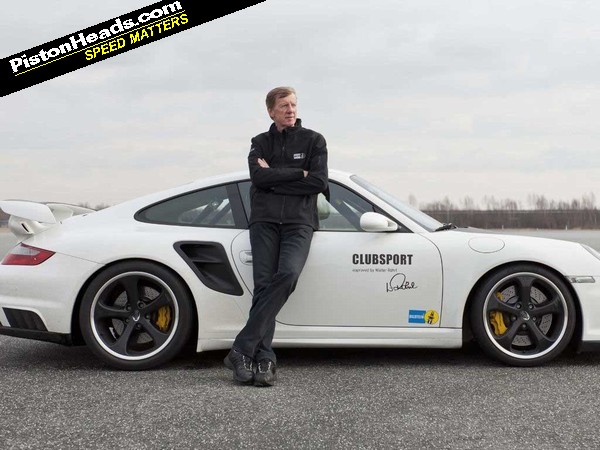
Rohrl was attending Autosport last week with Bilstein and we were lucky enough to grab an exclusive chat with him before he flew home. Here's the chat in full...
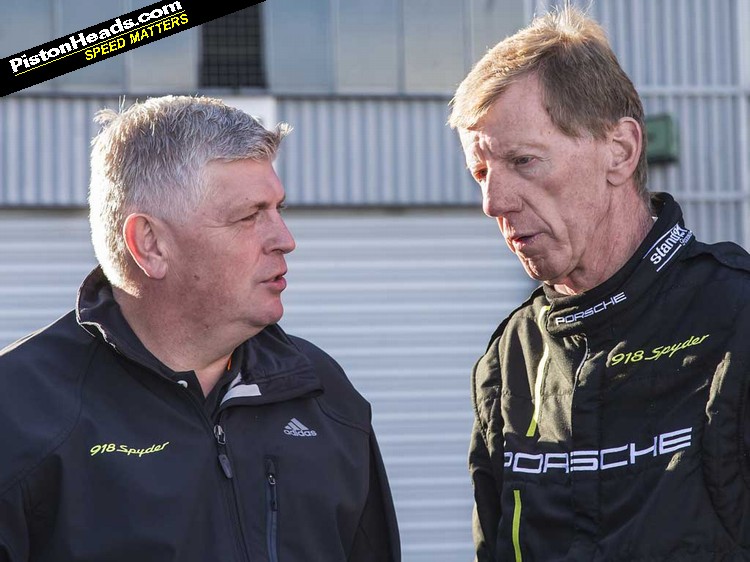
Rohrl and Porsche tech boss Hatz discuss 918
"If I have to choose for a future car, I would take the Carrera GT. The car is slower, and it is much more difficult to drive, but it's more how I expect the car to be.
"The 918 is something highly sophisticated; it's very fast, it's very easy to drive, but it doesn't give you the same feeling as the Carrera GT. Of course if somebody is asking me which to buy, I will always tell them: take the 918. With it, your life is easier, and your life is safer. But the sound of the 10-cylinder; this alone is something which is unique!"
And the next predictable Porsche question; PDK in the GT3 - thoughts?
[With a knowing smile] "Yes, during the press launch everybody was complaining and saying: 'Why?!' But I said, 'Be happy! Drive the car and you will see how much easier it is for you to go fast.' The shifting is something very impressive. I think most engine problems we have created because people were not able to watch the rev counter, watch the speed, and know when to shift. So they would shift back too early and the engine would be over-revving. With PDK, you avoid this. But for myself, if I want to buy a car, and I want to say I keep this car for the next 20 years, I would always take a manual gearbox, because I believe more, I trust more in a manual than in a double clutch. I've just ordered a Boxster Spyder with a manual shift - and I know that it's working, it's perfect, and it's up to me how I handle things. But PDK makes life easier for normal customers."
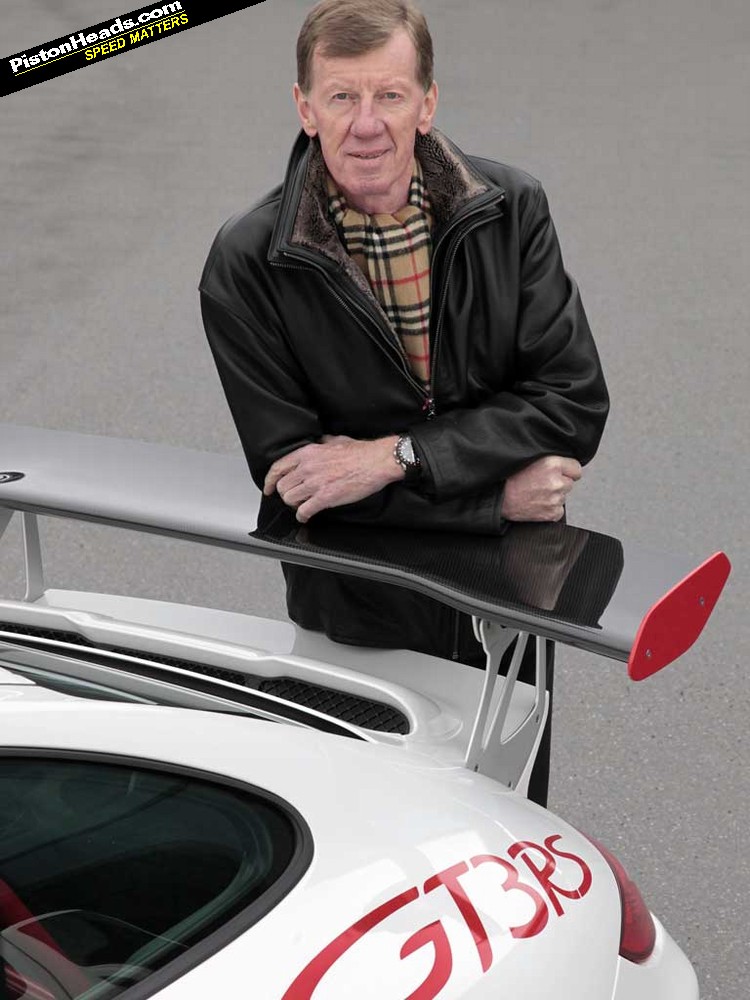
New GT3 ace, 996 favourite, 997 the all-rounder
"It would have to be the first GT3 in 1999, the one in which I set first [Nurburgring] time under eight minutes, a 7:56. I think that car was like a 2.7 RS from 1973; a pure Porsche. Today it's easier to drive the new GT3. On the Nuerburgring, to go 7:35 is nothing any more. It's so easy to drive, it's so perfect; you don't even have to shift any more. You just put down the throttle and brake and everything is going automatically. Really the newest one is always the best one. But for myself, I always want that it is my talent to make the car fast, and in the old one you really need more talent than with the new one. But I still thinkthe 997, with 435hp, it is a fantastic car. In it, everyone can go fast."
What can you tell us about Porsche's future models?
"It is first of all the question of whether with the 911 we are using the hybrid system. I don't know yet. For sure, it will never be an electric car. But you know, with all the emission laws you must do something, otherwise you cannot continue. But also, they have to try to get the car lighter, because it saves so much. It doesn't make sense to make it more powerful. We have 620hp now in the GT2 RS; I think that's enough! But if you save some weight you get a faster car, less consumption, and it's easier to drive. It should be something for the future. And of course, models like Boxster and Cayman they will think about downsizing - maybe using a four-cylinder, double turbos, something like this. It will be a way that you still have power, the same power, but you save petrol."
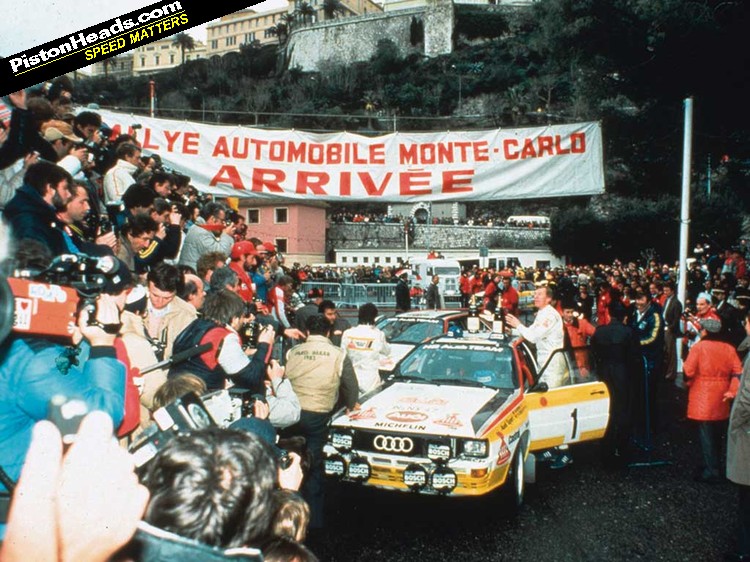
Rohrl after winning the 1984 Monte Carlo
"I think it starts with the skiing. Skiing was something which, when I was young, I was thinking I am the best skier, and I enjoyed it. But eventually, rally driving, that was it for me. If we are talking about car driving, it must be rally driving. It is so much more than race driving. Race driving is something that, if you are thinking automatically, you can learn it quite easily. You have 12 corners, and you just have to concentrate, take the same line, hit same braking point. Rally driving is much more improvisation. It is feeling. You either have it or you don't have it - especially at the top level of the world championship."
Looking at Group B how did you justify to yourself the risks involved?
"Well, nobody had any problems, but there came a time when we did start to think the cars were so fast that even if you had just a puncture out on a forest road, nobody's fault, it could be disaster. When I stood outside the car I would think of all of these dangers. But as soon as I was sitting in the car I forgot it. I was sure I had everything under control. I knew nothing could happen. And I had never an accident with a Group B car where it was a technical fault. But you know, for example, in 1986 at the Monte Carlo Rally - 530hp cars, ice and snow, very narrow road, rocks and ditches - then you have to start thinking, to go from 0-160km/h [0-100mph] in six seconds - in six seconds! - on a gravel road or a snowy road, you start saying 'I think that's dangerous!'
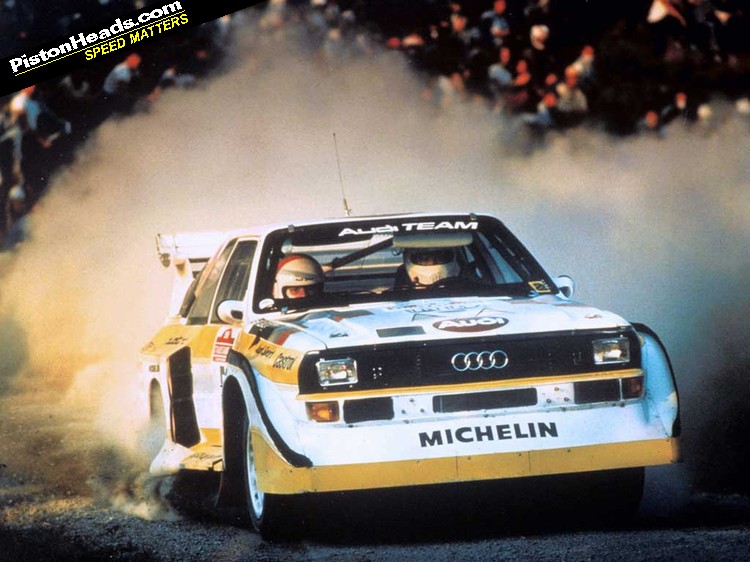
Group B was 'the best time' says Rohrl
Was it the same at Pikes Peak? How did that compare?
"It was nice, of course! When I was coming the first time and I saw the drop of 500 to 1,000 metres, I said 'Ooh, I have to be careful here!' But I did it eight times before, and my wife was with me. She wrote notes on how to get the best time, then I started to learn the notes. Every corner had a name; that was the secret. I was talking to Ari [Vatanen]; four weeks earlier, Peugeot rented the whole mountain, and he said he had done it maybe 40-50 times, but he was still not 100 per cent sure what was coming up next. That was his mistake! I was learning - medium left, plus 200, flat right - I knew it.
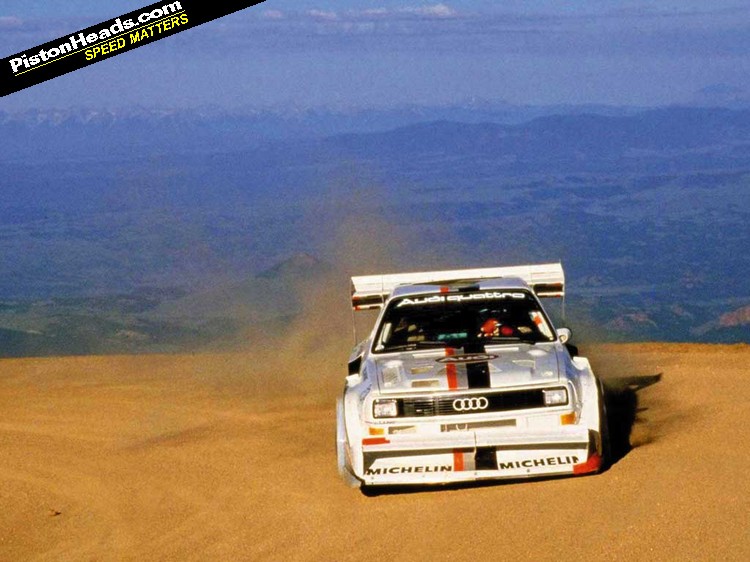
Analytical approach to learning Pikes Peak worked
So it sounds like you don't think rally driving today is quite what it used to be?
"It has changed completely. Both the length of the event, and the number of stages. In Monte Carlo we had 47 stages, and 40 different ones. Today they have six or seven stages, that they do three times. That means today it is a little more like race driving than rally driving. The Monte Carlo is 1,300km [around 800 miles]; in my time it was 5,000 [around 3,100]. The longest time sitting at the steering wheel is 10-11 hours; in my time it was 40 hours. You know I tell you, once you got to the second night it showed the difference between a boy and a man! Shifting manually, night time, fog - it was much easier for the good one to show that he is good. Today, the cars are easy, it's not so long, and when you drive the stage for the third time, you know braking points. You need much more feeling the first time, and when it's feeling, you either have it or you don't have it."
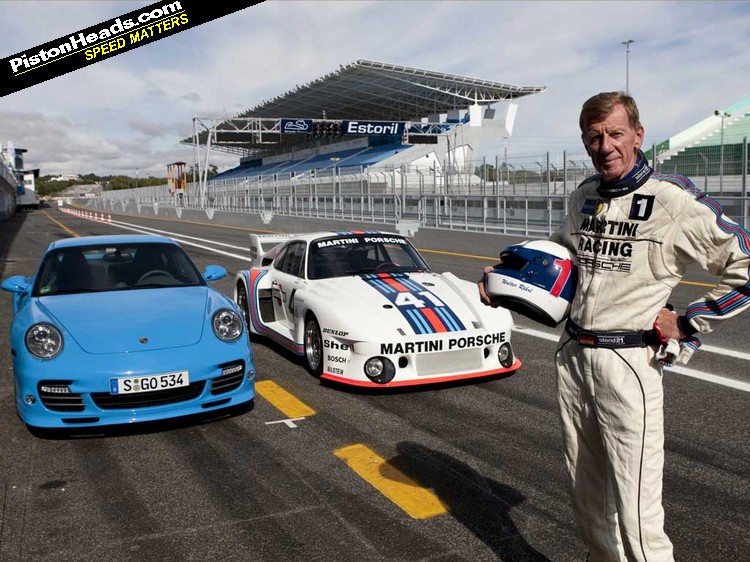
Rohrl shows no signs of slowing down
[Chuckling] "No, not true! I was in the department where all the land owned by the church was orchestrated. My boss was a jurist, and he didn't have a driving licence, and that was the reason I was driving the Mercedes. He was the man who opened the events, but I was doing the paperwork for the driving, writing my name. And so when they found the paperwork, everyone thought I was the driver for the bishop! So sorry - but I never drove him! But it was an important thing because I was 18 years old on March 7, and on March 8 I was jumping in the car and I did 120,000km [around 74,500 miles] in the first year. I had all the practice of driving a car, and it was really helpful. You know, if you look today it's different because teenagers can spend five years driving go karts or something, but in my time it didn't exist, so it means you only got experience when you turned 18. So if you had the chance to do 120,000km a year, you would do it!"
 |
 |
 |
 |


Back pedaling or what? anyway one of the corner stones of racing driver elite and clearly very skilled. Yet considering the irony it appears he's not all bout big BHP and perhaps gets frustrated when a car is Too easy to drive?

There isn't even a rumour or spy shots of a new spyder, so quite why he would order one now? I have a feeling he may be in a position to jump the order queue if he wanted a new model.
 te modern WRC is:
"It has changed completely. Both the length of the event, and the number of stages. In Monte Carlo we had 47 stages, and 40 different ones. Today they have six or seven stages, that they do three times. That means today it is a little more like race driving than rally driving. The Monte Carlo is 1,300km [around 800 miles]; in my time it was 5,000 [around 3,100]. The longest time sitting at the steering wheel is 10-11 hours; in my time it was 40 hours. You know I tell you, once you got to the second night it showed the difference between a boy and a man! Shifting manually, night time, fog - it was much easier for the good one to show that he is good. Today, the cars are easy, it's not so long, and when you drive the stage for the third time, you know braking points. You need much more feeling the first time, and when it's feeling, you either have it or you don't have it."
Basically it is just kids playing at rallying, it isn't real rallying for men
 te modern WRC is:
"It has changed completely. Both the length of the event, and the number of stages. In Monte Carlo we had 47 stages, and 40 different ones. Today they have six or seven stages, that they do three times. That means today it is a little more like race driving than rally driving. The Monte Carlo is 1,300km [around 800 miles]; in my time it was 5,000 [around 3,100]. The longest time sitting at the steering wheel is 10-11 hours; in my time it was 40 hours. You know I tell you, once you got to the second night it showed the difference between a boy and a man! Shifting manually, night time, fog - it was much easier for the good one to show that he is good. Today, the cars are easy, it's not so long, and when you drive the stage for the third time, you know braking points. You need much more feeling the first time, and when it's feeling, you either have it or you don't have it."
Basically it is just kids playing at rallying, it isn't real rallying for men

So if Herr Rohrl does use the phrase 'horsebrakes', I suspect it's just him muddling the English phrase 'brake horse power'.
A manual is for people who enjoy driving and can (and want to) 'manage' the car themselves, so by Walter's own admission, it's a flawed concept having a PDK in the GT3.
It seems we share similar ideas on PDK/Flappy paddles too; useful for hiding the incompetence of talentless hacks behind the wheel but for sheer pleasure, the competent driver chooses a manual.
Gassing Station | General Gassing | Top of Page | What's New | My Stuff