
Motorsport on Monday: 30/06/14
What makes a great race car? Answers on a postcard please...
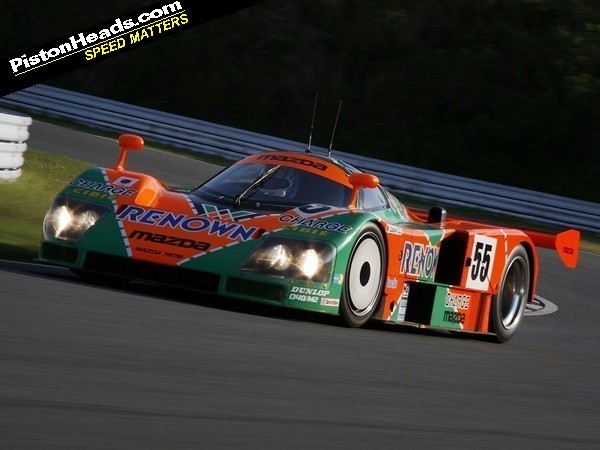
From the throngs of racers on show this year it's nigh on impossible to pick. How do you separate a Porsche 956 from a McLaren MP4/5? Both iconic cars in their own right.
One thing they and nearly all other crowd favourites have in common, however, is that they were massively successful in period. Which prompts another important question for us PHers: what makes a great race car?
A summation of factors that constitutes this elusive recipe is not going to fit into 1,000 words or less, so we'll set the debate rolling and ask you to pick it up in the comments. But for the minute, here are a few points that hit us harder than a 917/30 Can-Am on full boost.
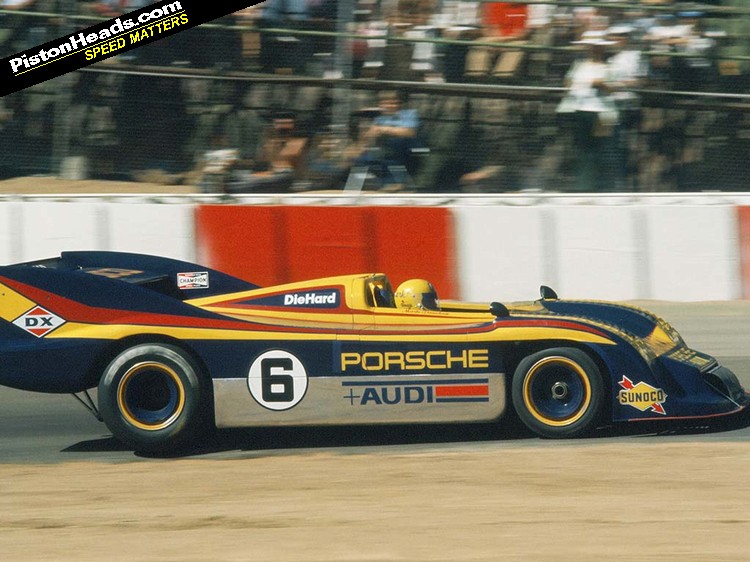
Are scary amounts of power mandatory?
In fact, Can-Am is not a bad place to start for our first ingredient: performance. Sounds stupid, doesn't it? A healthy power output is a given for a good motorsport product, but the way in which it's delivered makes a massive difference, too.
1,100hp from a boosted flat-12 driving the rear wheels made for undercracker-soiling slides - and that was just for the spectators, never mind heroic Mark Donohue and his colleagues who had to wrestle them from the cockpit.
Other approaches deliver just as spectacular results though. Take the much more linear 3.0-litre V10 F1 era, the motors revving themselves into oblivion with a 20,000rpm redline.
Now we're moving into a new era of motorsport technology with massive hybrid assistance delivering an instant power boost in Formula One and sportscar racing. Although the method of making and deploying power is different (the engine is dead, long live the "power unit"), the fact that it's still a major requirement hasn't changed. The Mercedes-Benz W05 and the Toyota TS040 prove it - both have the most powerful engine in their respective series and both have been by far the quickest vehicle in each championship this year.
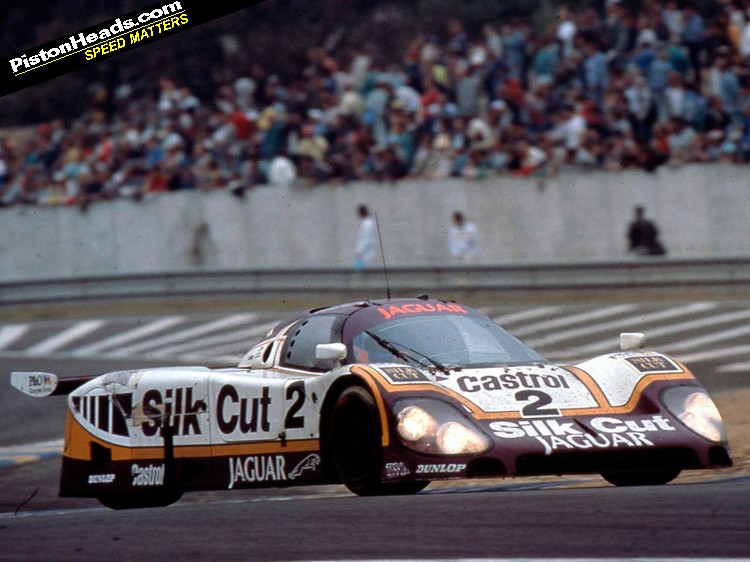
Memorable liveries always help the cause
It's not solely down to power though. Pirelli really nailed it with the old "power is nothing without control" slogan. Tired, maybe, but true. It sounds obvious to say a balanced chassis is a must for a great race car - but look how many over the years haven't always possessed it.
The original 917 long tail with its dodgy high-speed aero, the Mercedes-Benz CLR, with its even dodgier high-speed aero, and early turbocharged 911s - all were tricky to drive for one reason or another and featured unwanted handling traits, but all were still great race cars. Probably because of it.
Developing a chassis that's balanced and forgiving (a relative term) at maximum attack, so a driver can push the car to its absolute limit - even beyond it but having chance to bring it back, too - is the holy grail. Balancing a car at 90 per cent is relatively easy. Balancing a car at 100 per cent isn't. That's the difference between a Red Bull RB9 and a McLaren MP4-28.
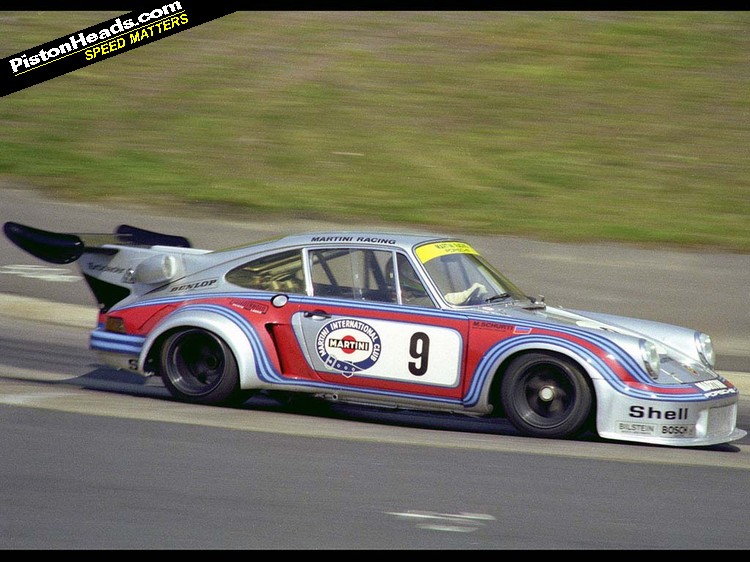
Then we're onto the 'character' issue...
What makes a great race car from a driver's perspective is often different to that from a fan's perspective. A lairy, hairy early turbocharged 911 making shapes might not feel quick or clean from the driver's seat, but it makes people cackle - and it's this character that can elevate some poor-performing competition cars to iconic bedroom wall material.
Rarity or uniqueness can do it, too. Mazda's quad-rotor 787B only won Le Mans once, but the single-minded approach with that engine installation and the frankly flipping ear-bleedingly nuts noise the thing made - completely different to anything in the field and, importantly, anything since - that helped cement its place in the great racers' hall of fame.
The Lotus 49B with its towering rear wing, the Brabham BT46B fan car, the Audi R10 and, in more recently, the DeltaWing - all have sported some sort of technical innovation or difference to the norm at the time, which created character that won't be forgotten.
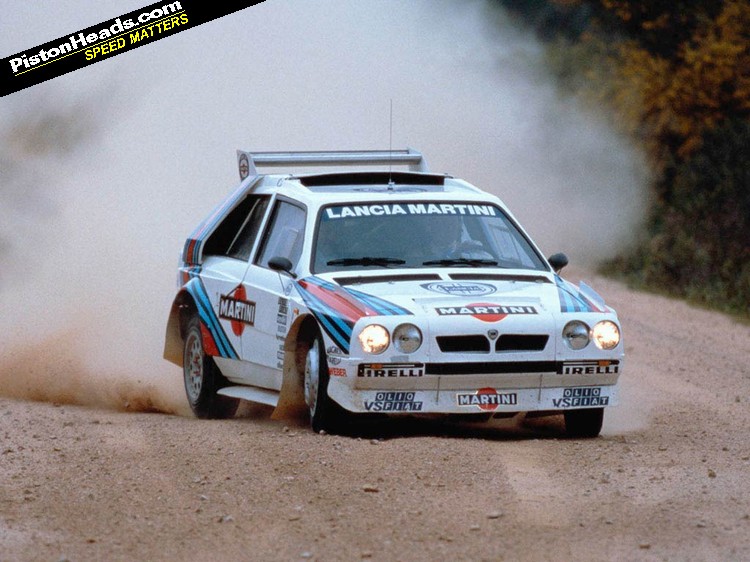
Lancia and Martini a match made in heaven
Colour schemes can make a car iconic or forgettable long-term. A Gulf-liveried 917 is a thing of beauty that has endured for 40 years and more, and will continue to live on as a brilliant piece of branding and design - with the "Intelligent Performance" painted 919 Hybrid I think Porsche has missed a trick. It's just a bit too plain.
It's amazing how fags and booze slapped on the side of car can turn it into a thing of beauty, too. Take a Rothmans Porsche 956/962 - white, red, blue and gold has never looked so good.
Or anything with a Lancia badge and Martini sponsorship, from LC2 to Delta S4. Or anything from Woking in Marlboro colours. Or anything from Coventry with a yellow and purple Silk Cut livery. You get the picture.
Of course, the overall lines of the car are massively important, too, and almost dictate how the colour scheme will work - Aston Martin's Lola B09/60 and AMR-One efforts being a case in point. Back-to-back Le Mans prototypes with the same livery, one like Megan Fox rolling on rubber, the other more like the Elephant Man.
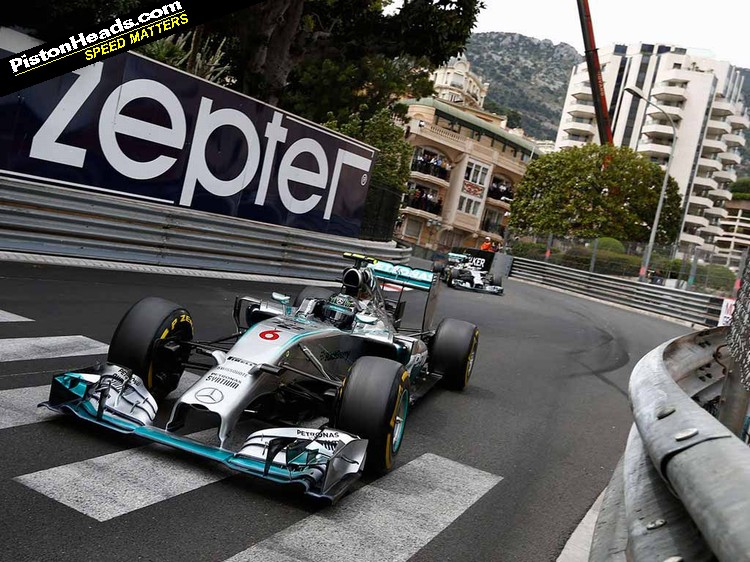
And what noise should a great racing car make?
There's an elephant in the room that hasn't been broached yet: noise. For me it's an integral part of a great racing car. A Corvette is defined by it, an Audi R18 is defined by a lack of it, but both are great racing cars because of their respective approaches to decibel output.
For me more of it is preferable, but that's personal. So over to you to tell us what makes a great racing car in your book...


The livery is iconic and specific, being as it is really synonymous with only the one marque - Gulf shares Ford, Porsche and Aston Martin heritage, Rothmans Porsche, Williams and several other car an bike manufacturers, Marlboro spans McLaren and in diluted form Ferrari in F1 as well as Penske in Indy, several rally cars and no end of others, Martini is enshrined on Porsche, Lancia, Williams and others... But think Orange and Green Renown and everyone always thinks of howling Mazdas.
The car is uniquely famous for only one thing - not simply winning LeMans, but the first and so far only Japanese car to do so. As such it is truly and undeniably a historic artefact in a way that can never be taken away.
And nobody who has ever heard it will ever forget the noise.
If Mazda ever sold that car, can anyone even imagine the price that it would command?
Loeb was by far the more successful and consistent driver, but none of his cars will ever attain the iconic status of the Subaru which is revered in large part because of its gung-ho and slightly wayward driver.

Cheers,
Matt
The livery is iconic and specific, being as it is really synonymous with only the one marque - Gulf shares Ford, Porsche and Aston Martin heritage, Rothmans Porsche, Williams and several other car an bike manufacturers, Marlboro spans McLaren and in diluted form Ferrari in F1 as well as Penske in Indy, several rally cars and no end of others, Martini is enshrined on Porsche, Lancia, Williams and others... But think Orange and Green Renown and everyone always thinks of howling Mazdas.
The car is uniquely famous for only one thing - not simply winning LeMans, but the first and so far only Japanese car to do so. As such it is truly and undeniably a historic artefact in a way that can never be taken away.
And nobody who has ever heard it will ever forget the noise.
If Mazda ever sold that car, can anyone even imagine the price that it would command?
AND you can still buy half the engine for 2 grand and drive it on the road!
M

While it's not as pretty as the MP4/14 or MP4/13 and it also didn't deliver championships like its predecessors did, just listen to it:
McLaren fast laps start at around the 26min mark
Porsche 917 Gulf colors
Group C Jaguars Silk Cut colors
Rothmans 956/962 Porsche
Mazda 787B
Toyota Celica GT4 Castrol colours
Lancia Delta S4 Martini
Merc 190 Evo DTM car in that D2 privat scheme
Alfa Romeo 155 V6 DTM in Martini or Jagermeister
555 Subaru Imprezza
Lotus Type 79/78/76/49
Ferrari 333sp in MOMO scheme
Porsche 935 Moby Dick Martini
Sauber Mercedes C9/C11
I could go on and on
Gassing Station | General Gassing | Top of Page | What's New | My Stuff