
Audi to use GRP springs
UPDATE: They could be quite similar to the Renault items after all
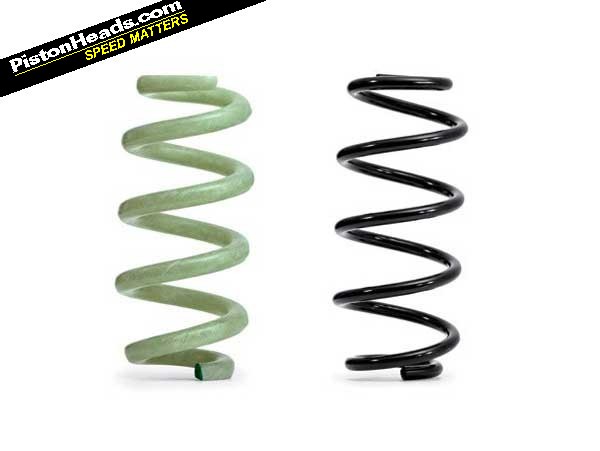
Original story, has reported 30/06/2014:
Is Renaultsport out on a bit of a personal quest to wind up Dr Hackenberg and the other engineering titans at the VW group? Nicking the FWD 'ring record and moral high ground from SEAT probably rankled, the Megane 275 Trophy-R's use of composite springs among the much publicised technology that enabled it to do so. Slightly taking the gloss off Audi's announcement today it'll be using similar components on an as-yet unnamed 'mid-size model' later this year.
The Megane's composite springs from French firm Allevard Rejna are among the features setting the limited-run special apart from the regular 275 Trophy. Renault claims corrosion resistance and a subsequent longer lifespan alongside a 2kg weight saving as key advantages, saying it is "once more demonstrating its avant-garde approach with this solution, which is new on this type of vehicle." On Allevard's Sogefi Group parent company website it claims additional advantages, including environmental benefits from less energy intensive production, reduced susceptibility to catastrophic failure and even improved NVH.

Damn those pesky French again
How are they constructed then? Over to Audi. "The core of the springs consists of long glass fibres twisted together and impregnated with epoxy resin. A machine wraps additional fibres around this core -- which is only a few millimetres in diameter -- at alternating angles of plus and minus 45 degrees to the longitudinal axis. These tension and compression plies mutually support one another to optimally absorb the stresses acting on the component. In the last production step, the blank is cured in an oven at temperatures of over 100 degrees Celsius."
The press release continues, "The GFRP springs can be precisely tuned to their respective task, and the material exhibits outstanding properties. It does not corrode, even after stone chipping, and is impervious to chemicals such as wheel cleaners. Last but not least, production requires far less energy than the production of steel springs."
So there you go. Faster, smoother, greener and safer it seems the cure to all our motoring ills wasn't electric motors after all - it was composite springs. Who knew?


It's not like Audi have never been innovators of new technology, they just seem to be the butt of a lot of PH jokes now.
For me the slightly ironic thing about the Corvette is yes it has composite materials - to make leaf springs, an unusual mix of high and low tech.

 at the end of my post.
 I didn't expect the very next reply to be explaining the truth behind the leaf springs!


Gassing Station | General Gassing | Top of Page | What's New | My Stuff