
Porsche Cayenne (958) | PH Used Buying Guide
The second generation Cayenne, built 2011-2018, cemented the SUV's class-leading reputation

Key considerations
- Available from £15,000
- Practical and versatile family car with pedigree
- Big choice of petrol, diesel or hybrid power
- Great quality, few issues
- Turbos are very fast indeed, but drink fuel
Search for a Porsche Cayenne here
OVERVIEW
The car that saved Porsche. That's what folk say about the Cayenne now, but it's certainly not what they were saying about it when it was launched in 2003. Although the Cayenne was a Porsche/Volkswagen partnership based on the Touareg, it was supposed to be based on the Mercedes ML until M-B demanded shares in Porsche as a deal sweetener. That killed off the Mercedes hookup and Porsche was able to concentrate on building its own V8 engine to power a Touareg-based car.
It's fair to say that the reception to the first 955 Cayenne was 'mixed', and we're not just talking about diehard marque fans who could hardly countenance a four-door Porsche, let alone an SUV. The Germans knew the score though. They knew that their range had to become much broader if buyers were to stay within the brand as their lives, priorities and needs changed.
Back in '03 you'd be forgiven for thinking that somebody in the styling department had heard that word 'broader' and thought that was the design brief, because the first Cayenne was quite a shock when it rumbled into the light. The design team was headed by Brit Steve Murkett, but Ferdinand Porsche (who was a big advocate for SUVs) insisted on playing his part in the gestation too. Story goes that he put up a design of his own, but Murkett's was the one the board picked. Makes you wonder what Butzi's one looked like.
The blobby phase one shape has been carefully refined and sharpened over two more iterations, and today we can see that this highly capable four-wheel drive family Porsche with on-brand performance has stood the test of time pretty well. Sales have certainly proven the wisdom of that decision to get into SUVs because two decades on they dominate the balance sheet, the Cayenne being the second most popular Porsche after the Macan, outselling the third-place Panamera by a factor of nearly two to one.

The gen-one 955 Cayenne (2002-2010) had petrol motors in four capacities, taking in 250hp 3.2 and 290hp 3.6 versions of the VR6 pinched from VW, three versions of Porsche's own 4.5 V8 (turbocharged and NA), and four versions of the big daddy 4.8 V8 (ditto), culminating in the 542hp 4.8 Turbo S. There was also a 240hp 3.0 V6 turbodiesel.
Today's MLB-platformed gen-three Cayenne is powered by a choice of three turbocharged petrol V6 and V8 engines. Two of these can be had with electric assistance to provide five options in total, from a 335hp 3.0 turbo V6 to the monster 671hp 4.0 twin-turbo V8 hybrid. The Coupe version launched last year (2019) is the neatest reconciliation yet of the big styling gap that the first Cayenne rather dumbly established between itself and the 911.
The Cayenne we'll be concerning ourselves with today however is the one in the middle, the gen-two 958 that was announced at the 2010 Geneva show and that was on sale from 2011 to 2018. Although the inspiration for the front lights came from the Carrera GT, the gen-two Cayenne is mainly beholden to the Panamera for most of its good stuff, sharing its engines and electronics and benefiting greatly from the saloon's fresh new cabin design.
Although the 958's base engine, to start with at least, was still the old 3.6 VR6 lump persuaded up to just short of 300hp, the gen-two was in every other sense a big step forward. Unsurprisingly, size was up, but weight was down both physically by around 250kg (thanks to a greater use of lighter metals such as aluminium and magnesium and the removal of the low-range transfer case) and visually through the slopening of the front and rear screens.
Losing the low-range box reflected the long-suspected reality of the luxury 'off road' market, which was that very little off-roading was going on in it. If you did need to do the odd bit of it, the sophistication of the chassis - which could boast technologies such as Porsche Dynamic Chassis Control (PDCC) and Porsche Active Suspension Management (PASM) - was more than adequate compensation.
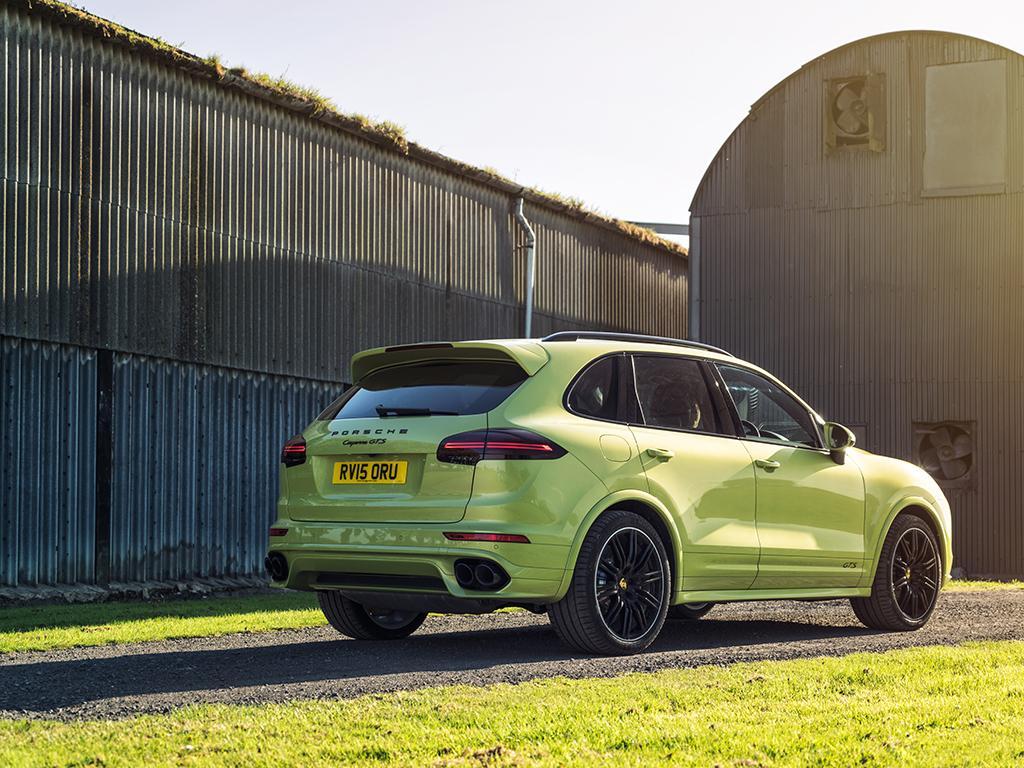
The drivetrains were heavy duty too. In the pre-refresh 2010-14 gen-twos, moving up from the straight Cayenne's 3.6 VR6 would take you to a 4.8 V8 with 395hp/369lb ft in the Cayenne S, 414hp/380lb ft in the GTS, 493hp/516lb ft in the Turbo, and 542hp/553lb ft in the Turbo S. The base 3.6 was the only model available with a manual gearbox, a 6-speeder that was dropped from the range in the 2014 refresh.
After 2014, that base VR6 carried on unchanged in terms of performance but it became around 20g/km cleaner-running. The S and GTS models switched to a new 3.6 twin-turbo V6 which in the S produced 414hp and the same 369lb ft that the old V8 S had, but now it peaked at a subterranean 1,350rpm instead of 3,500rpm. The GTS went up to 434hp and 443lb ft, max torque again arriving at a much lower 1,600rpm. The Turbo and Turbo S stuck with the 4.8 V8, producing 513hp/553lb ft and 562hp/590lb ft respectively.
There was also an S Hybrid combining a supercharged Audi 330hp/325lb ft 3.0 V6 (as seen in the S4) with an electric motor, and, from 2014, a 410hp/435lb ft plug-in S E-Hybrid version based on the same engine that could run on electricity alone for 22 miles. For diesel fans there was a 3.0 that began life in 2010 with 237hp/406lb ft at 2,000rpm, went to 242hp with a 1,750rpm torque peak in 2011, and then on to 258hp/428lb ft in the 2014 refresh, which also saw a new 380hp 4.2 litre V8 S Diesel join the range.
You can see from all the engine options available that buying a gen-two Cayenne isn't as simple as plumping for the nicest looking car with the best history. Before you get to that stage you'll first have to decide which model you want. Have a look at the bottom-to-top stats range in the spec box below, mosey through the power choices in the text above to see what sort of area you'd like to be in, and then check out the main piece for general buyer caveats. We can't cover all of them in the space we've got here, but we'll try to give you a decent overview.
SPECIFICATION - PORSCHE CAYENNE 958 (2010-2018)
Engine: various (see text above)
Transmission: 8-spd automatic (6spd man option in base model), all-wheel drive
Power: 296hp@6,300rpm (3.6) - 562hp@6,000rpm (2014-on Turbo S)
Torque (lb ft): 295@3,000rpm (3.6) - 590@2,500-4,000rpm (2014-on Turbo S)
0-62mph: 7.5 secs (3.6 or diesel); 4.1sec (2014-on Turbo S)
Top speed: 143mph (3.6); 176mph (2014-on Turbo S)
Weight: 1,995kg (3.6); 2,235kg (2014-on Turbo S), 2,500kg (S Hybrid)
MPG (official combined): 25.2 (3.6), 38.2 (3.0 diesel),
Wheels: 8x18 (3.6); 10x21 (2014-on Turbo S)
Tyres: 255/55 (3.6); 295/35 (2014-on Turbo S)
On sale: 2010 - 2018
Price new: £00,000
Price now: from £15,000
Note for reference: car weight and power data is hard to pin down with absolute certainty. For consistency, we use the same source for all our guides. We hope the data we use is right more often than it's wrong. Our advice is to treat it as relative rather than definitive.
ENGINE & GEARBOX
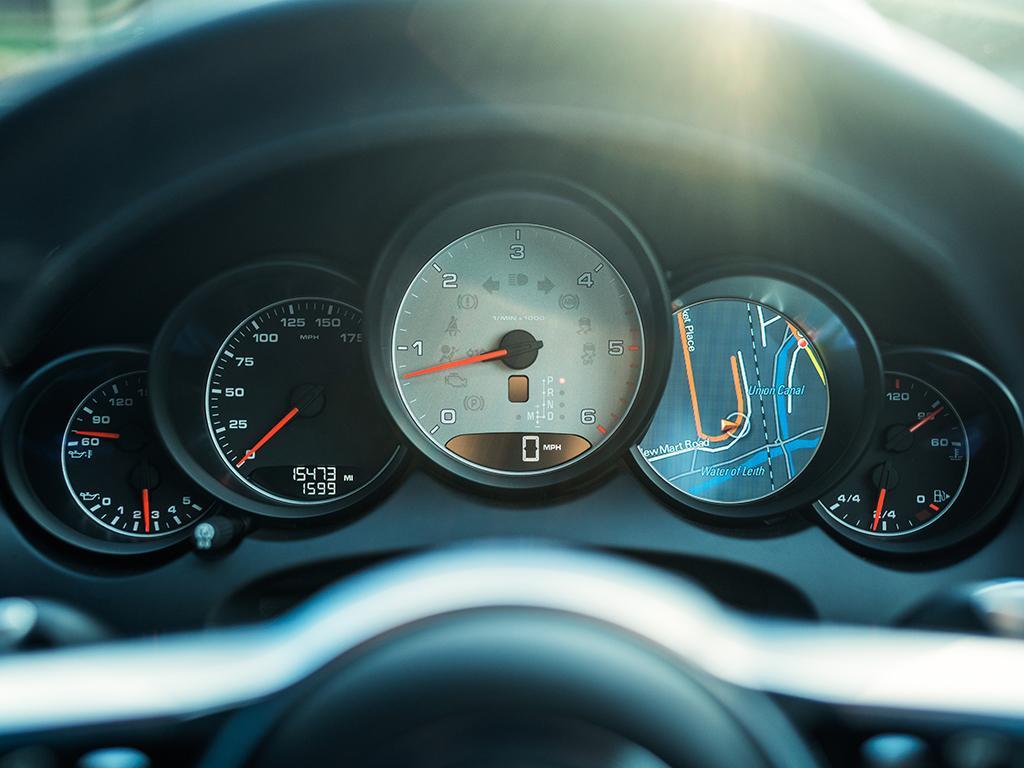
Basic petrol and diesel Cayennes will do the 0-62 dash in the mid-seven second range. The V8 beast in the S Diesel knocked a full two seconds off that, making it as fast as a GTS. In the big petrols, the Cayenne Turbo would beat a standard 911 to 62mph and the Turbo S could hang on to a hard-driven Carrera S, in a straight line at least. What we're saying is that you've got every chance of having your practical cake and eating the performance cherry on top. Or something.
From a mechanical reliability perspective there aren't many known problems. The worst was Variocam adjuster bolts shearing off on 2011-model V8s. In the worst case scenario this could mean a new engine at circa £30,000. There was a recall on this, in the US at least. Keep an eye on the oil condition and keep your ears open for odd noises.
Bore scoring as a result of inadequate lubrication on startup was a thing on gen-one V8s, particularly in cold climates, and that didn't disappear entirely on the gen-two 958s. Generally speaking though most of the stuff that went wrong on 955s, like leaking coolant pipes, was resolved on the 958.
Fifty-four Cayenne and Panamera Turbos were recalled in the summer of 2012 to fix faulty turbochargers that could produce very bad running or very good fires. There was another recall in early 2015 for petrol and S Hybrids built between March 2011 and May 2012 to put dodgy injector rails right, and all Cayennes were hauled into dealers in March 2016 to check a brake pedal circlip.
We mentioned earlier that you could get a 6-speed manual gearbox in pre-2014 base-model Cayennes. The other Cayennes had either 6- or 8-speed conventional-auto Tiptronics that weren't as urgent as the PDK you got in other Porsches, but they were eminently well suited to normal driving. After 2014 all Cayennes had the 8-speed Tip with steering wheel mounted buttons or paddle shifters. There have been reports of worn control valves on Cayenne autos.
Power was transmitted in four directions through an electro-mechanical centre diff that could allocate full power to either axle, with ESP sensors to brake any wheels that were losing traction. Some owners experienced problems with lurching in 2nd or 3rd gear which could be improved by changing the 'lifetime' trans fluid, but sometimes a new transfer case was needed. Petrol Turbos are more associated with this than diesels or hybrids.
Buyers could tick a box for a torque-vectoring rear diff (which was standard on the Turbo S, along with dynamic chassis control) if they wanted the facility to alter side-to-side power distribution between the back wheels.
Cayennes were expensive cars when new, and heavy ones too. Even the lightest tipped the scales at around two tonnes and the hybrids added the weight of three grown men to that. Running costs will be a regular reminder that you're in Porsche country. Your biggest expenses, if you intend to use a Cayenne as it can be used, will be on tyres, brakes and fuel. The basic diesel will hit mpg numbers in the mid thirties but the mid-20s that were officially claimed for the 500hp+ Turbos are somewhat tougher to achieve. Luckily UK-spec cars came with fuel tanks that were 15 litres bigger than the European-spec 85-litre offerings.
As regards servicing, Porsche specifies 12 months or 9,000 miles for an oil change on petrols and 5,000 on diesels, with intermediate servicing every 2 years or 18,000 miles and major services at 4yrs/36k. These are all on a 'whichever comes first' basis, so depending on mileage and engine type, you could be booking the car in for attention more than once a year. Brake fluid is meant to be changed every two years.
Electrical gizmos abound so don't be shy about testing every single button, of which there are many. Cayennes do not suffer weak batteries gladly.

CHASSIS
Driving manners are quite a subjective thing, but taken as a whole range it's difficult to think of a contemporary luxury SUV that drove as well as the gen-two Cayenne. It had double wishbones at the front and a multi-link setup at the rear, with adaptive air suspension on the Turbo and S E-Hybrid. Considering the height and heft of the car the body control is top-notch and the steering accurate. The weird electric steering on the weighty Hybrid kills quite a bit of the fun but given the closeness of the Cayenne's relationship with the Touareg, it gives you pause to think about what the VW could have been like with the right fettling.
The GTS is particularly entertaining, albeit firm-riding. Other models deliver a much better ride quality than the exclusively steel-sprung gen-one cars, and the step up from gen one to gen two is even clearer with air suspension. Older cars on air may at some point require some reconditioning work on the pump. As noted earlier, the gen-twos lost the low-range transfer boxes of the gen-ones but there's more than enough chassis talent (and body clearance) to tackle most stuff short of Eastnor Castle or the Rubicon Trail.
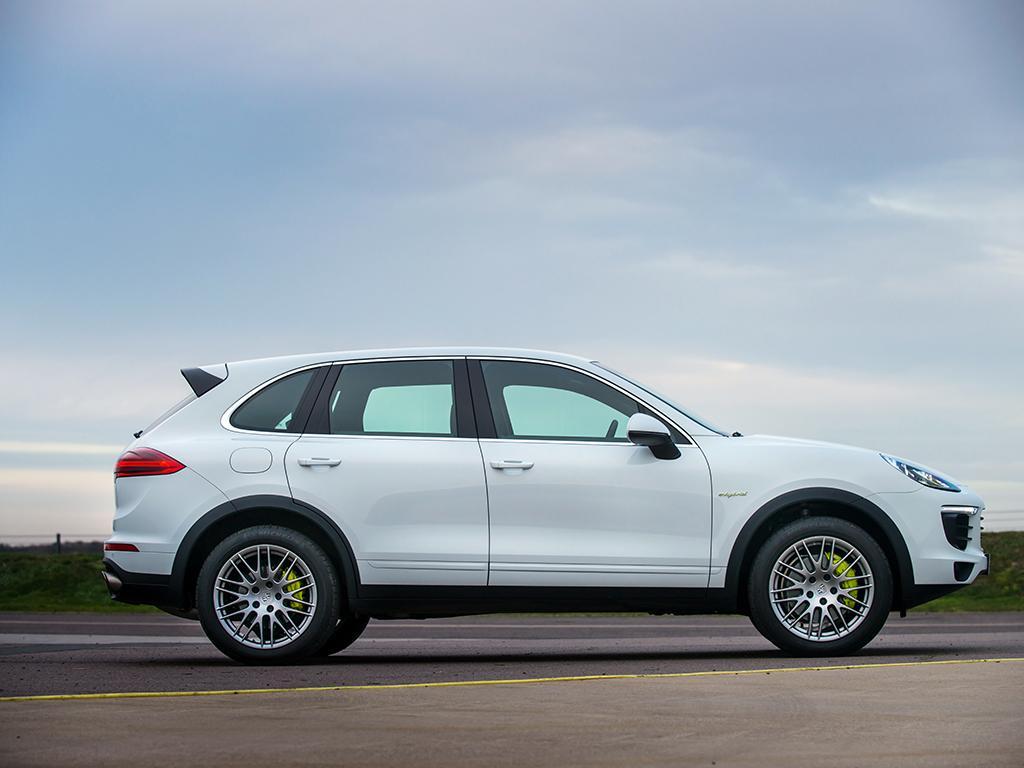
If you're looking for a Turbo or a GTS, yellow brake calipers mean that a car has the expensive carbon-ceramic brake upgrade, which is a good thing for used buyers as the punishing up-front cost that you've avoided is offset by the long-lasting nature of this kit which you will enjoy. Of course it could also mean that the seller has been busy with a pot of yellow paint, so be on the lookout for that sort of jiggery pokery. Standard wheels were 8x18s going up via 20s on the GTS to 10x21s on the Turbo S.
BODYWORK
Despite their size Cayennes have always been a popular choice for urban environments so they will often bear parking and trolley scars to both the bodywork and the wheels. Bi-xenon headlights were standard fit on all gen-twos, moving up to adaptive on the GTS and LEDs on the Turbos (adaptive on the Turbo S). There was a recall in early 2012 to fix wobbly headlight mounts.
INTERIOR
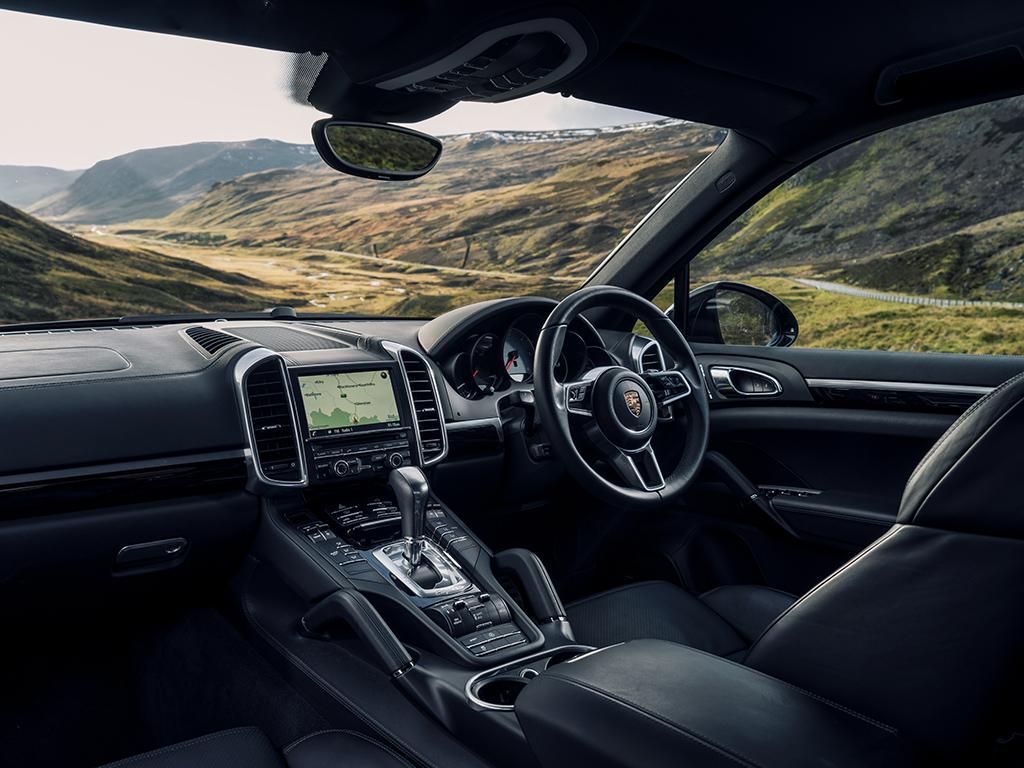
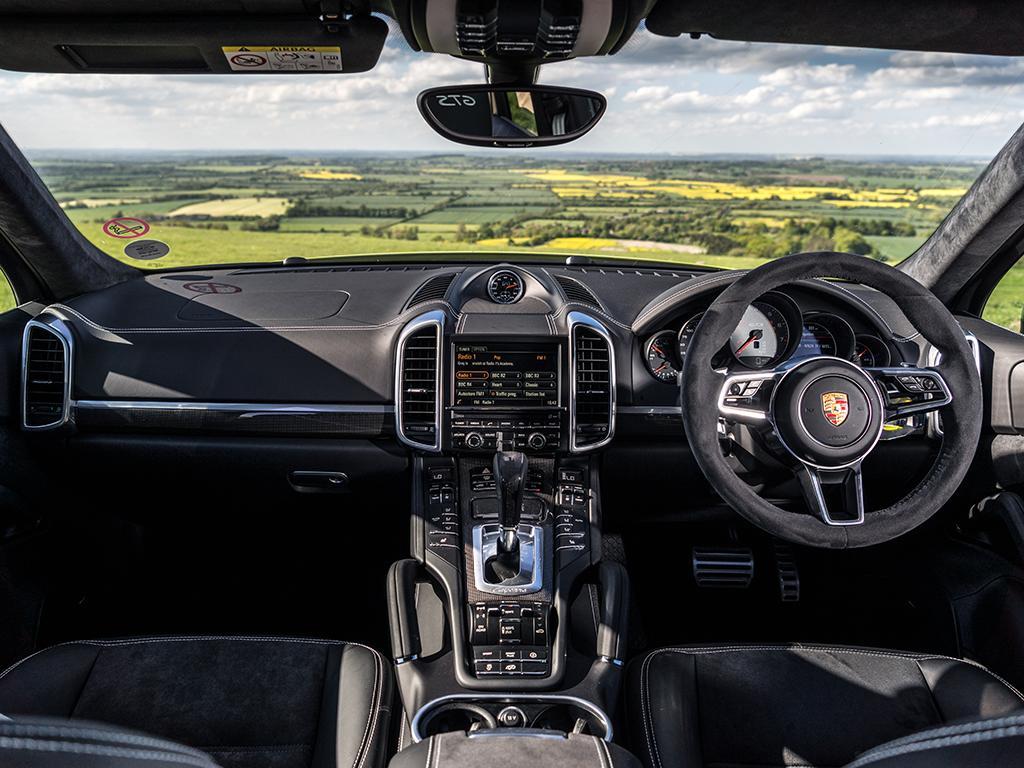
If you're a fan of good interior design or sumptuous materials, the great news is that you'll find both in a Cayenne. The only slightly bum note was an analogue speedo that wasn't easy to read in a hurry, but at least there was a digital backup. Otherwise there was very little to complain about other than a shortage of space for your left leg.
If you and any of your family members are on the tall side, interior space could be a problem as there's surprisingly little legroom for such a big car, even if the seats themselves are comfortable and headroom is good. The Q7 and even the conventional M-B E-Class Estate will beat it on boot room.
All gen-two Cayennes came with dual-zone climate control, cruise (with an adaptive option), stop-start, powered leather, LED running lights, electrically adjustable folding and heated wing mirrors, parking sensors and Porsche's Communication Management infotainment system with sat nav (not as good as the rival systems from other German premium marques), Bluetooth, USB connectivity, DAB radio and a 7.0in touchscreen display.
Cayenne S and S Diesels gained stainless steel pedals, a four-pipe exhaust system and Porsche's active four-wheel drive system, while the GTS got Alcantara upholstery, a bodykit, and LED foglights. Turbos had auto-dim mirrors, 18-way sports seats, heater elements in all the seats and a Bose stereo, while the Turbo S had two-tone leather and carbon fibre trim pieces.
Even with all that standard fare, the range of options Porsche offered from new means you're unlikely to find two used Cayennes that are the same. The nature of this type of beast is that new buyers didn't want to skimp, so thinly-specced cars are as common as frost in July. As the used buyer you'll get all the value of heavily-specced cars without having to pay extra for it.
Some owners have noticed fragility in some of the trim, specifically the vent sliders and the window buttons. The flat buttons on the main centre console can crack. Glovebox and centre cubby lids and the cupholder assembly can all rattle annoyingly.
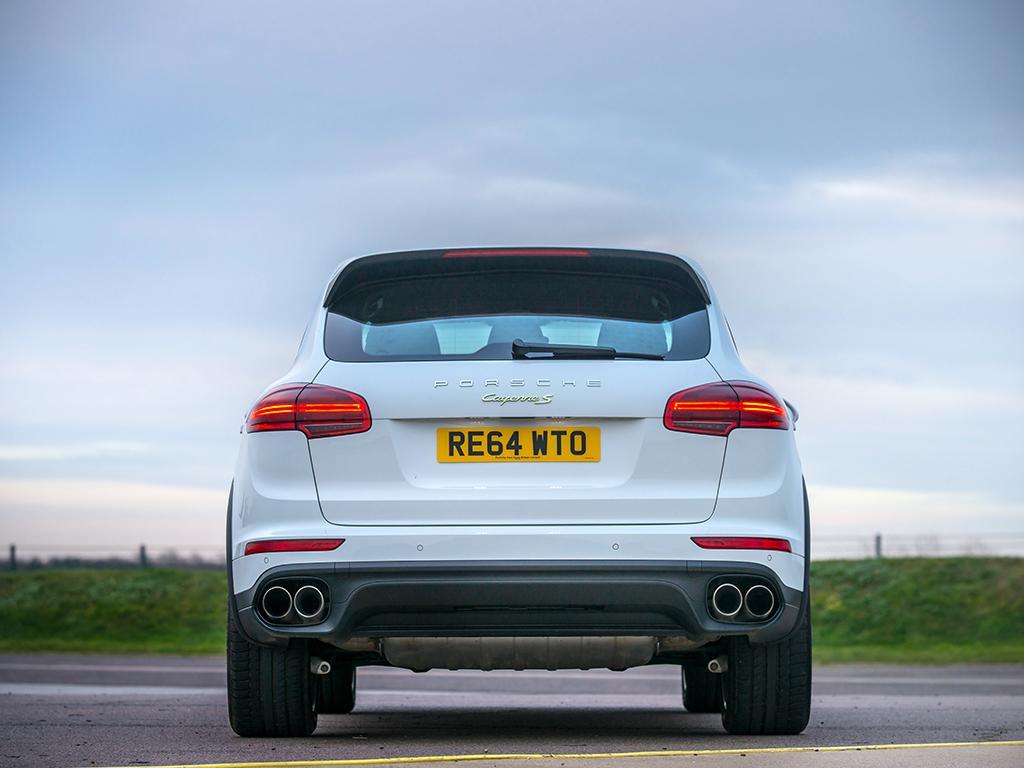
VERDICT
Nobody really needs a Cayenne. After all, anything you can do in one of them you can easily do in the right spec of BMW X5 or X6, Merc GLE, Q7, or Range Rover Sport. Thing is though, none of them are Porsches. For some, only a Porsche will do. Anyone who needed a practical, beautifully built and versatile family car that was also built to Porsche engineering standards found the answer to their prayers in the Cayenne.
The first model was no beauty, but it did two key jobs: it proved that Porsche could easily mix it with the big boys in the incredibly competitive SUV sector, and it paved the way for successively more handsome iterations to carry on the good work and cement the Cayenne's place in Stuttgart history.
So, which Cayenne is best? Good luck deciding that one. They're all great in different ways. If you're not a black pump hater the diesels will fit just about every bill and the actual bills will be bearable to boot. For Brits this was the preferred option, with four out of five gen-two Cayenne buyers going down the diesel route.
Another slightly more left-field choice that's well worth considering is the S Hybrid. It offers a beautifully smooth drive with a clutch-decoupling system that opens up the highly pleasurable world of off-throttle 'sailing' at speeds of up to 97mph, although it will be dearer to fuel than the diesel models as the petrol engine will come into play more often than you might like. The plug-in E-Hybrid could deliver cheaper motoring if that's a priority.
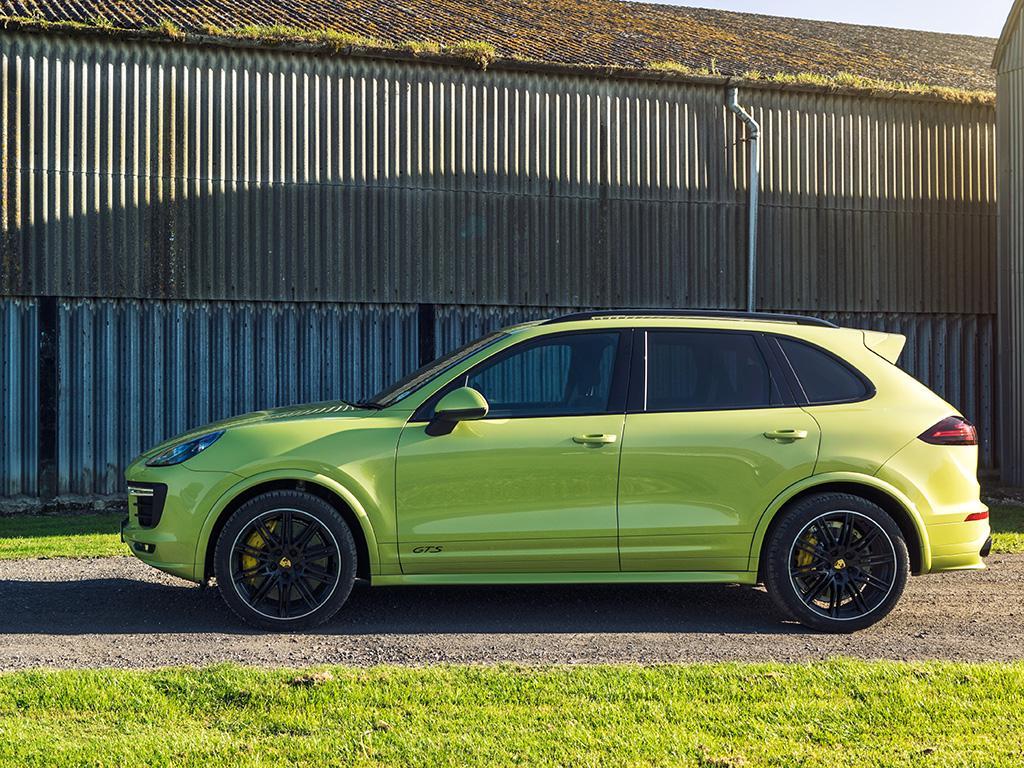
If you believe that every Porsche should run on petrol, the 414hp/434hp (pre- and post-'14) GTS is a tempting choice, combining the sporty appearance of the Turbo with nearly as much performance and better economy. The Turbo S has the most street cred. For a time it was the world's fastest SUV, but if you plan on enjoying that gunslinger reputation you'll pay for it with mpg figures in the mid to low teens, even with stop-start and cylinder deactivation tech in play.
The 80 percent bias towards diesel Cayennes in the UK is obviously reflected in the selection on PH Classifieds, with plenty of 3.0 oilburners on offer at interesting prices. We found this clean green machine with pano roof belying its 97,000 miles at £15,994 among a host of similar cars at under £20k.
If you like the idea of the big V8 diesel (and why wouldn't you, they're stonking) here's a one-owner 2014 76,000-miler on 21in alloys for under £22,000.
Want to join the 500hp+ club? This attention-grabbing red on red 2013 Turbo has 87,000 miles, a barrowload of extras including ceramic brakes, and a sub £29k price tag. At the top end of the 958 tree you'll need £86k for this 2018 Turbo S in white with red and just 7,000 miles recorded. A 440hp turbo V6 GTS like this 2016 63,000-miler in grey could be just the ticket. Yours for a few pounds under £38,000.
Search for a Porsche Cayenne here


Only 5000 miles until an oil change for a diesel? Was this supposed to read 15000??
He had ummed and ared about the Porsche warranty extension prior which cost him close to 2.5k for 2 years cover - but boy was he happy he took it.
All works carried out on Porsche Reading.
I really enjoyed my 2 days with it.
It's impressive how Porsche manage to make such a big car genuinely feel like a sports car.
It may have run on the devils juice, but it was effortlessly fast and for a diesel it didn't sound too bad either.
I was impressed with the fit and finish of the cabin, despite the current shape Cayenne just coming out and being leagues ahead.
The only thing I disliked was the gearbox, which is Porsches Tiptronic auto which seemed strange to me when all other Porsche models get PDK. Supposedly it is for towing purposes.
My dad had an X5 at the time and the Cayenne felt like a definite step-up in terms of quality but the actual aesthetic design of the interior was worse in my opinion. Dad's X5 was stolen, unfortunately.
When he priced up a replacement, he realised that the 3rd gen Cayenne was a fair chunk cheaper than the X5 of the (roughly) same spec. Neither brand would give him any discounts either.
Whilst the 3rd gen looks a lot better and has a beautiful interior, I actually prefer the 2nd gen car. I find buttons so much easier to use that the stupid touch panels current cars have. I don't know what it is about it but I wish he'd gone for the X5 or bought an older gen Cayenne.
He is happy with it though, which is all that matters.
Only 5000 miles until an oil change for a diesel? Was this supposed to read 15000??
Apart from that, it was a really nice car.

M
Currently trying to work out what to replace the Disco Sport with when it ends its lease. Going to buy used outright this time and trying to push Mrs PB's notional Tiguan budget into something like this instead.
Tbh, I'd rather a Macan. But these are cheaper to get into and hybrid appeals. I have nothing against diesel, but the Disco's shown us that diesel doesn't like us!
As much as I'd love to scratch my Porsche itch with a 911/Boxster, the realities of 2 kids and a dog suggest buying a Porsche I can use all the time makes more sense right now.
I regularly watch the stuff that noresevecarsreading list for a bit of fun and the black 60-reg hybrid that ended the other day was a nice-looking thing. Would have been just the trick if it wasn't 8 or so months too early for me.
Currently trying to work out what to replace the Disco Sport with when it ends its lease. Going to buy used outright this time and trying to push Mrs PB's notional Tiguan budget into something like this instead.
Tbh, I'd rather a Macan. But these are cheaper to get into and hybrid appeals. I have nothing against diesel, but the Disco's shown us that diesel doesn't like us!
As much as I'd love to scratch my Porsche itch with a 911/Boxster, the realities of 2 kids and a dog suggest buying a Porsche I can use all the time makes more sense right now.
I regularly watch the stuff that noresevecarsreading list for a bit of fun and the black 60-reg hybrid that ended the other day was a nice-looking thing. Would have been just the trick if it wasn't 8 or so months too early for me.
However there is now a transmission specialist in Stoke with a good rep offering a rebuild service on these for a fraction of the cost, can’t comment how good that are but have no reason to doubt it’s not a better solution.
The uprated, naturally aspirated 4.8-litre V8 engine delivers 309 kW (420 hp) and maximum torque of 515 Nm. The benchmark sprint from 0 to 100 km/h is completed in just 5.7 seconds. Top speed comes in at 261 km/h.
It comes with the Sports exhaust which sounds fantastic. So much so that I thought it was fake noise like the BMWs. When driving normally, it is not intrusive. Stick your foot down and it comes alive. I play the Holland tunnel into NYC like a church organ every time I go through. I am convinced the police will be waiting for me at the exit one day. In an underground car park in Manhattan it triggered a car alarm just on start up. Speaking of car parks, the valets do keep it up front for me which reduces wait times. One car park in Brooklyn refused to park my car due to insurance costs so I street parked it instead.
"Gas Mileage" - How much does it drink? Well, even considering the US gallon is 20% smaller than the UK gallon it still drinks like a drunken sailor. I can make 22-24 mpg(adjusted to UK) on a long run. But, in reality it is 19mpg normally and 2-3mpg through tunnels. (It is impossible to go through a tunnel without the sun roof open and sport mode on.) I considered the Hybrid model and the Porsche dealer told me that he would rather me not buy a car from him than sell me one. That was indeed the case as I bought my car privately in the end and had it serviced by the dealer.
Servicing costs - $900 for an oil change. $2-3k for the 40k service. Service intervals are different out here to the UK.If buying second hand, check the major has been done and you get 40k miles until the next wallet draining trip. $5k for new brakes. I drew the line at the brakes and fitted better than OEM for a few hundred dollars myself.
I also considered Range Rovers but the reliability was hideous. Range Rover owners are a forgiving group. When I asked on this forum the responses were "No problems except X, Y, Z..... that is normal for any car". Nope, that is not normal and is reflected in JDPower results.
One of the issues you will face in the UK is Porsche warranties. If you are running the correct tyres (brand and model) but they are not N-rated, then Porsche may reject your warranty request for anything. In the US the dealer did not give a st. I picked up my car at 32k miles and it had been serviced outside of the network from 20k miles. After a week of ownership a CEL came on and I could only think "my wife was right". I took it to the dealer expecting the worst. He came back to me with the old "Do you want the good news, or the bad news?". The good news was that despite the gap in service and it wearing Nankang tyres which were terrible, it was still under warranty. I had just assumed it would have been voided. There was an issue with the front wiring loom and it needed to be replaced.
Also, look out for the hands on the clock. They have a habit falling off and my replacement was $800 but covered under warranty. When checking the Auto trader pictures later I saw the hands had been off all along. Porsche told me "We make great cars but st clocks"
The GTS in the US comes by default with many options checked. Mine does have the 21' wheels which do not look ridiculous and were extra. The Nankang tyres would wheel spin into 4th with slightly damp conditions. Driving in the snow was more like skiing. On my birthday soon after buying the car I came back to a puncture in the right rear and a puncture in the left rear. Instead of fixing I replaced with Continental DWS. They have transformed the grip and now in snow my car is incredible when you consider the wheels. For example, last year I was stuck behind a Golf who got so frustrated with the lack of grip he had that he blew up his engine. I was still able to drive normally.
My car came with a K40 radar detector installed by the dealer. It offers both front and rear coverage and is installed extremely discretely. I imaging that is not an option in the UK and its slightly odd out here as it makes the car illegal to drive in several states. I have not visited them yet though. It does show how the rules are applied differently out here.
My car did not come with 4 zone climate which is standard in the Middle East. I wish it did as it is a cheap option and my kids complain about being too cold in Summer because the air con is too good. The boot is not huge and I cant put my bike rack on the back because of the spoiler. It would have been advantageous to have the tow hitch which I have considered retro fitting.
Mine is now getting on a bit. It does not show that in wear but in technology it was. I installed Apple Car play into the PCM which has brought it up to date. Vastly better for about $400. The dealer sends me letters all the time, "Upgrade your GTS to a new S for $70k". I have told them I am not willing to spend $70k to downgrade my car! They still try. But, while it continues to fit my needs and be reliable, there is nothing out there I would change it within reason so it has stayed the longest of any car I have owned and I can't see a time when I will swap it out.
It’s big and fast...it’s very big!
We have a custom exhaust system that is v loud and I blacked out the windows....ok so it’s now a drug dealer special.
I love ours...the Range Rover is too pretty for shooting and fishing and I’m scared of scratching it. The Porsche is a hooligan and even my 5’ 90lb wife loves it!!
It's a great car and I would have kept, but ULEZ killed it and I got murdered on trade in.
It is strangely easy to park, probably easier than my 3 series, as the back is very flat, and the cameras are great.
Interior is fantastic quality wise, although a button fest
You do feel the weight off the line and when manouvering at low speed
Once up to speed it's feels effortlessly quick
Makes a nice sound for a diesel. GTS sounds incredible. I think those are from 30k
If I was in the market for another SUV this would be top of the list.
At a periodic service an OPC service manager suggested to me that a high proportion of 958s have had / will have the transfer case replaced.
A large proportion of those jobs will fall in the 3 to 6 year period i.e., just outside the initial warranty.
He suggested that if the average failure time came into the warranty envelope Porsche would be forced to proactively recall.
He could have been talking out of his ar5e but then a month later the transfer box fell out of the bottom of my Turbo S and the £4k bill was picked up by my OPC approved used warranty.
Transfer box failure on an AWD SUV? Sounds not fit for purpose
Gassing Station | General Gassing | Top of Page | What's New | My Stuff