
VW Golf GTI (Mk1) | PH Heroes
The original front-wheel-drive hot hatch is homing in on 50 years-old - time to get reacquainted

Rather like the Ferrari F40 or Jaguar E-Type, it often feels like we know everything about the Mk1 VW Golf GTI. Decades of reverential praise mean it's hard to know what to say without fear of repeating what's already been said countless times before. And yet 2021 marks another momentous year for the long-running hatchback. Having celebrated its 45th anniversary with the recent Clubsport 45, the next big birthday for the Golf GTI will be 50 in 2026. There aren't many cars that can claim half a century of unbroken production - or the unstinting popularity that has unwritten virtually every generation launched.
There's a broader point to consider about the GTI's starting point, too. For the Mk8 Golf the three-door car has been dropped, and it would be staggering if manual outsold DSG Golf GTI. Cars like the Clubsport and R can only be bought with an automatic. With that in mind, is the original a timeless throwback, or now just an impossibly dated relic? Can it really still entertain when the modern hot hatch has reached a level of power, adhesion, responsiveness, rigidity and technological brilliance unimaginable in 1976?
Some history, first off, because we could probably all do with a refresh. After a motor show debut in 1975, what was once the Sport Golf project went on sale a year later with a 1.6-litre engine, 110hp and just the four gears - but crucially a kerbweight of only 840kg. A fifth gear would follow, as would a torquier 1.8-litre engine, and UK sales of the Mk1 began in 1979. From then until some point in the early 1990s when the original cabriolet finally went off sale, around 460,000 GTIs had been built. VW management had originally commissioned a run of 5,000 cars to test demand...


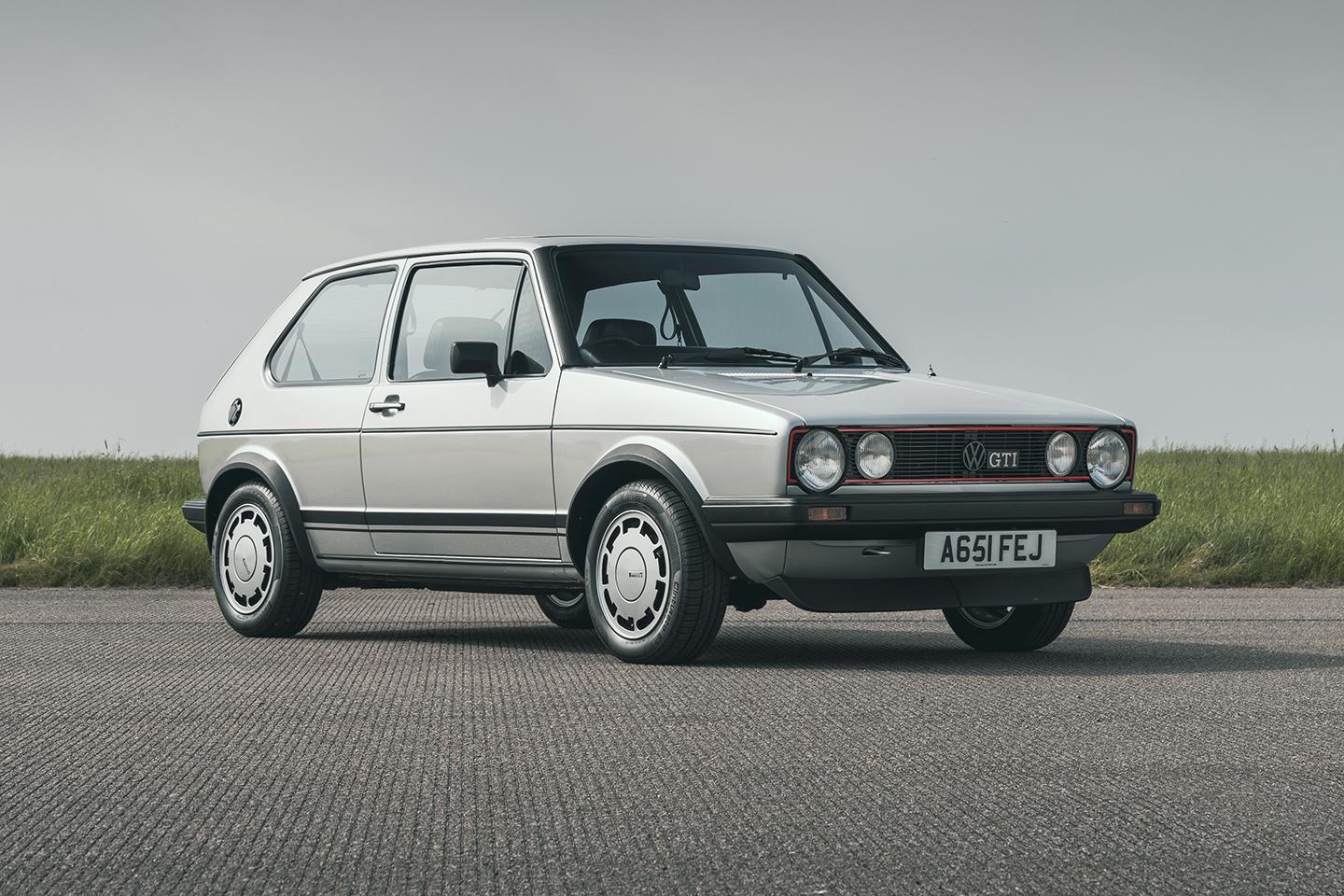
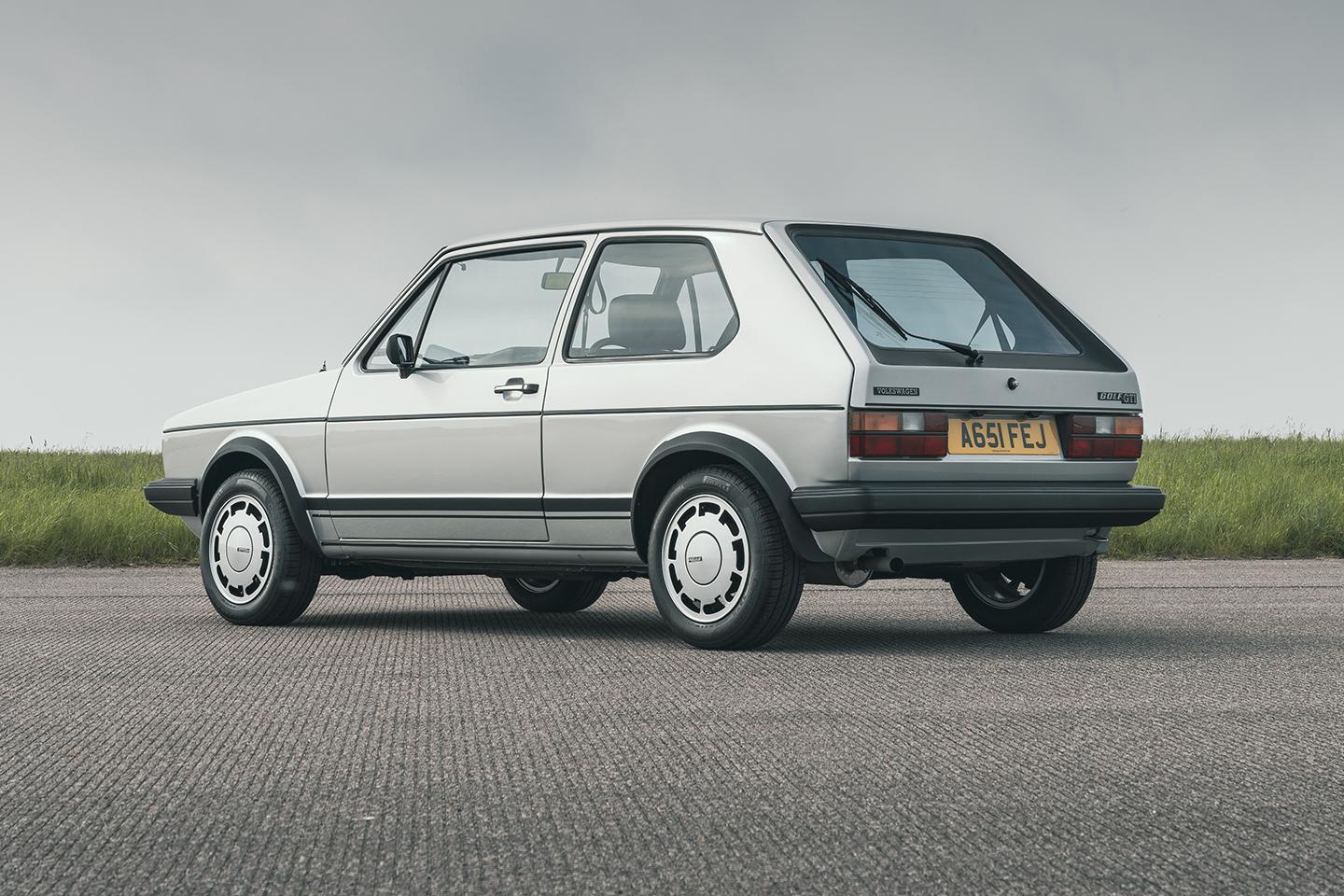
VW UK's heritage fleet Mk1 GTI is a 1983 Pirelli Edition, meaning the 1.8-litre engine and the P-spoke wheels that would become iconic in time. On an A-reg, it's from the end of Mk1 production, with the larger, heavier Mk2 Golf going into production the same year.
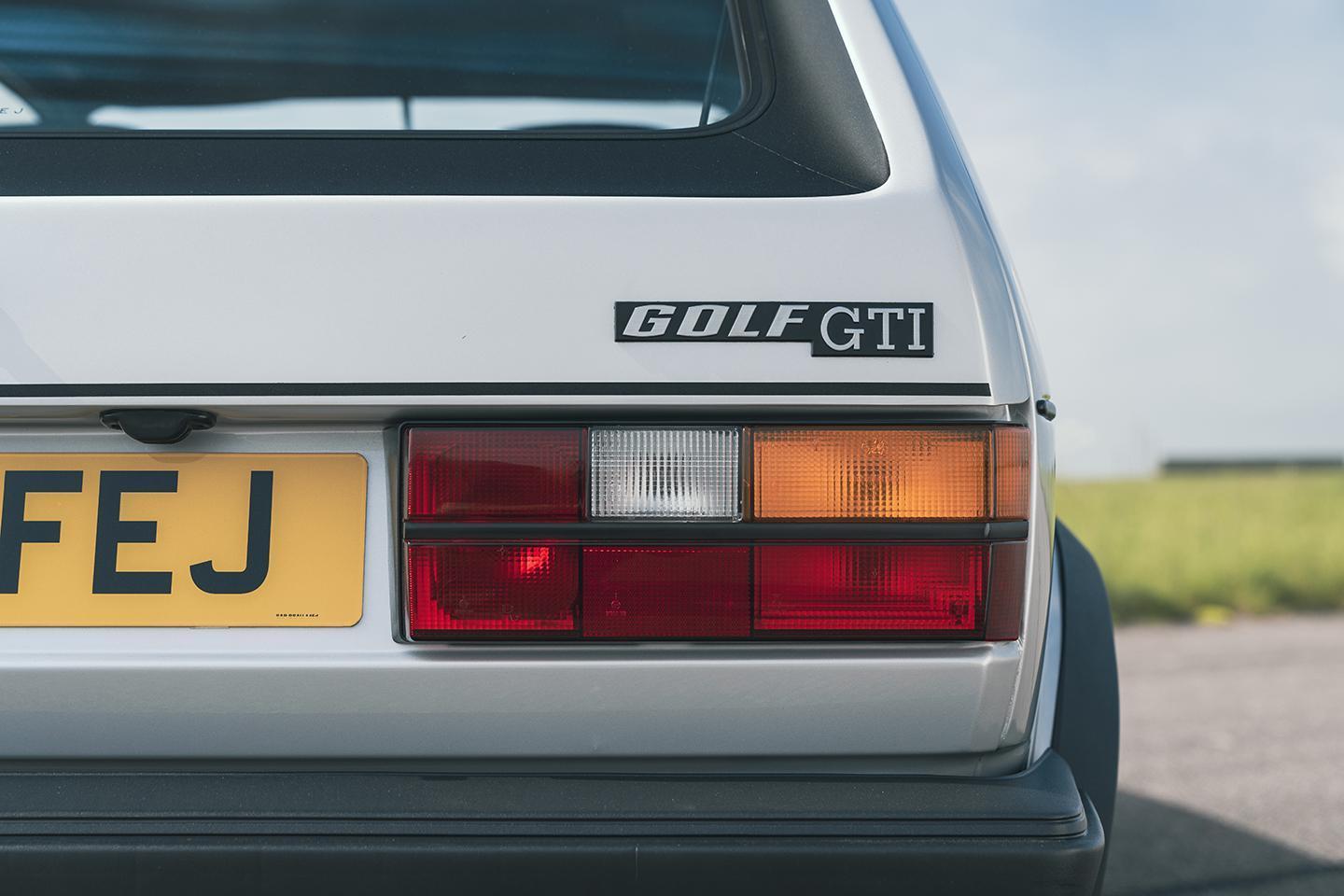
It's a well-worn tradition in these sorts of stories to mention the shock at seeing a car so small being called a Golf. But, frankly, we've lived with bigger Golfs for such a long time now - and the line so often trotted out about the Mk1 being Polo/Up-sized - that you expect a tiny car. And that is what you get. The bigger surprise is just how good the GTI still looks for a car designed in the 1970s. Predictably, numerous details date it - small wheels and a vast glasshouse, most notably - but like the best industrial design there seems not a wasted millimetre. The Golf is taut, handsome and stylish, even now, which is probably why so many trademarks were carried through to later generations. Still, there's nothing like being reminded in person just how nicely proportioned the first one really is.
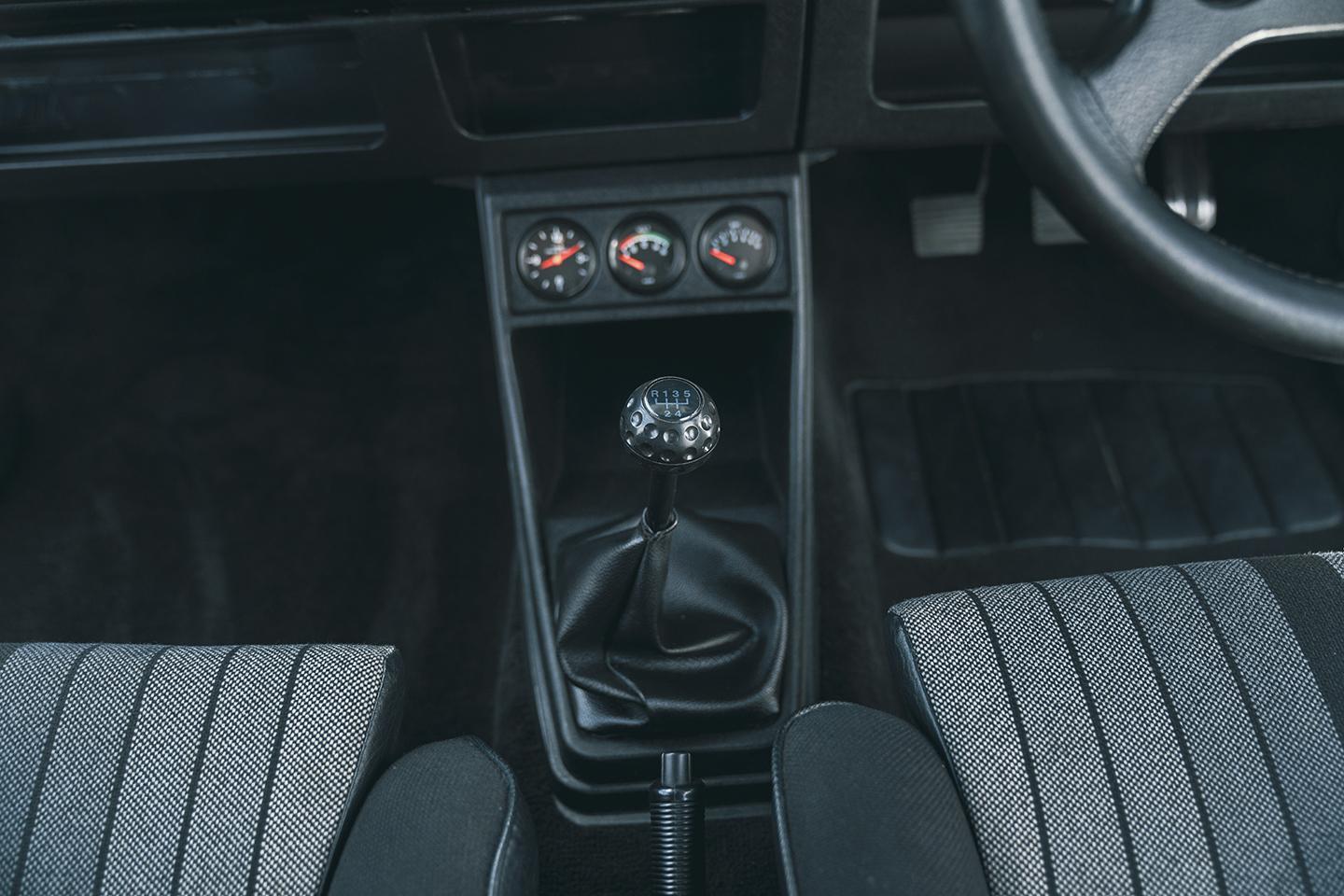
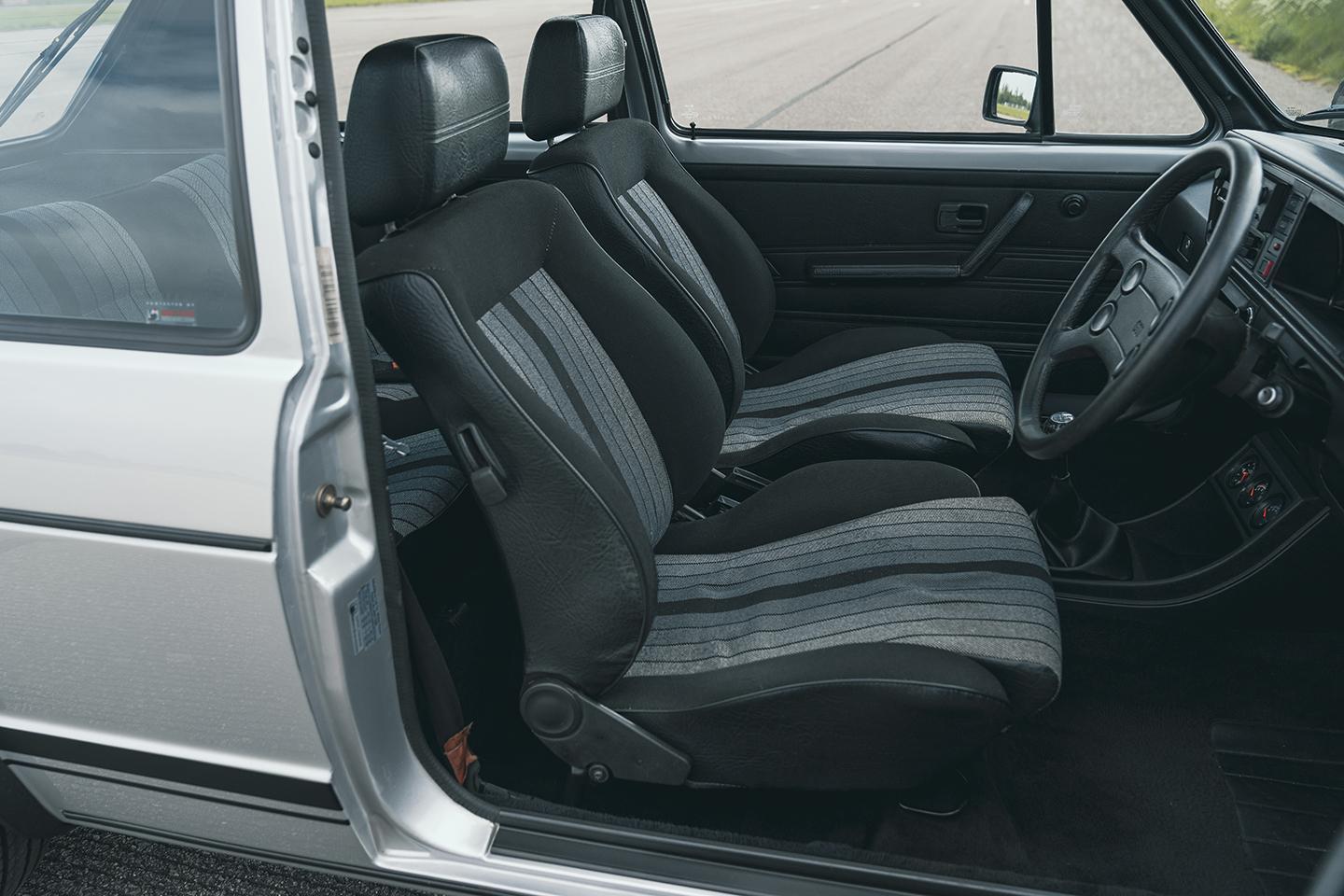
Same goes for inside; a Mk1 now seems basic to the point of being spartan, but we knew that. What's more relevant is how durable it all seems, and how contemporary it all feels from a driving perspective. Again, that sounds reductive, but no so long ago 40-year-old classics had a choke, the structural integrity of a Jenga tower and wouldn't work on the days of the week Countdown is on. The (admittedly very well-kept) Golf starts on the key, a taller driver can get comfy and it all just makes brilliant ergonomic sense, with those archetypal dials straight ahead, the speedo reading to just 120mph and tacho going red just after 6 - perfect.
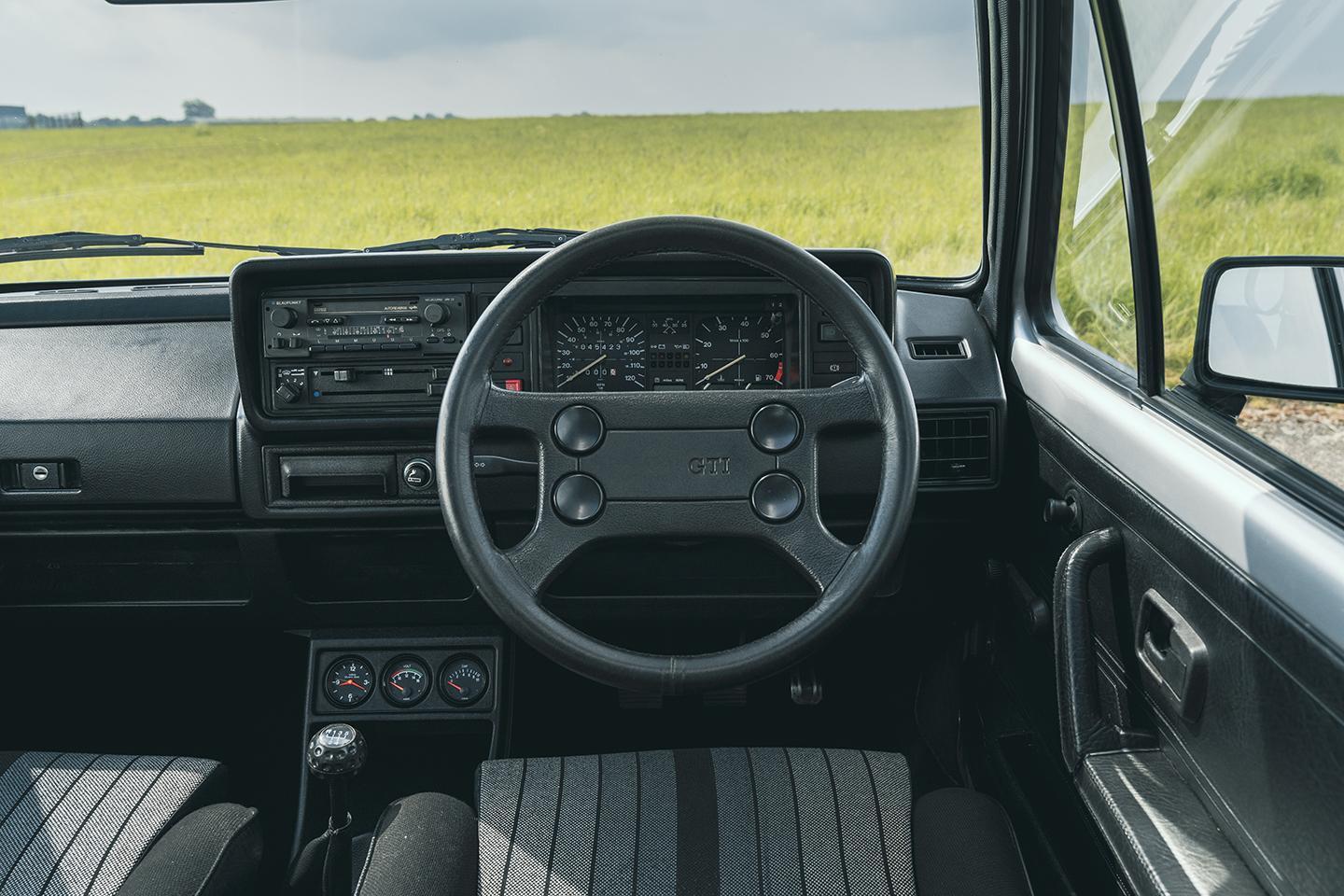

On the road that feeling of toughness and dependability is carried through. Plainly it is not the same driving experience you'd find in a newer Golf, but on the other hand you'd have no reservations about putting this into regular use, which is probably why those for sale now are often showing chunky mileages. It has the performance to sustain a modern pace, brilliant visibility and an ability to soak up the vagaries of a road surface better than might have been expected from a chassis in its fifth decade.
Hero status is not bestowed for those virtues, however. The Mk1 GTI finds itself in the hallowed hall of fame thanks to driving fun. Not until the Mk5 (and perhaps not even until the Mk7 Clubsport S) were reputations and expectations so utterly confounded by a humble Golf. Even in 2021 the 1.8-litre four-cylinder feels gutsy and willing, ensuring the little Golf strolls along confidently. Even allowing for a reluctance to rev and a very long gearbox throw, you'll soon find the Golf rasping along at a decent speed. In a world of Cortinas and Allegros, it must have seemed searingly fast. In a world of 400hp hatchbacks, brakes that don't do much braking help the Golf feel quicker than it probably is.
The corners are where the GTI really shows off its genius. Lower and stiffer than a standard Golf of the time, the Mk1 is predictably quite soft nowadays, though with its appetite for apexes is retained. That the steering lacks assistance only draws you into the process more; the Golf corners like a car even lighter than it is, bounding this way and that without concern and often with abandon. Its size makes even country lanes feel exploitable, the engine's cammy bark perfectly matched to the chassis' ability and your expectations. It goads you on, and into an easy grin.
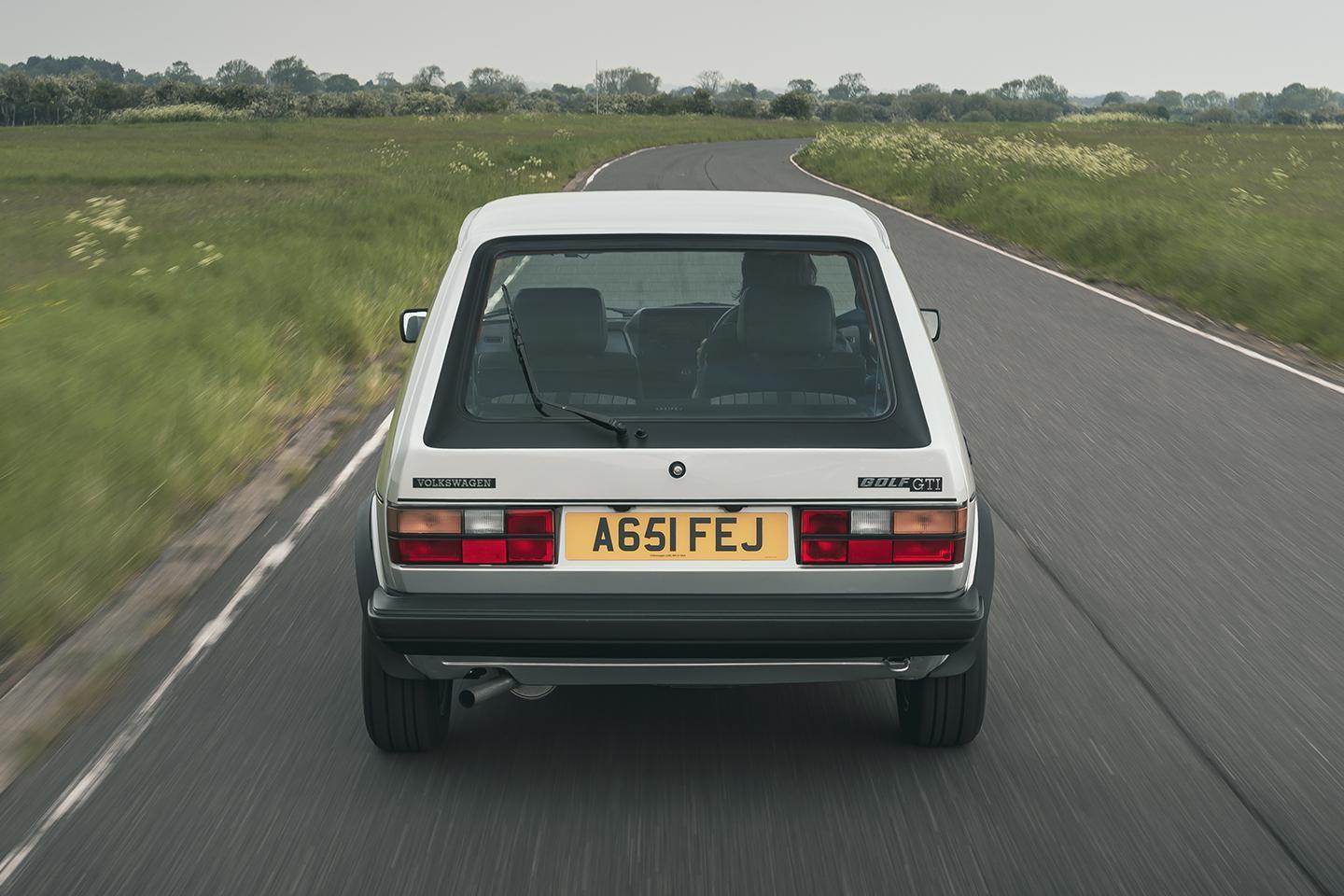
If that's not at the nub of hot hatch appeal, it hardly seems worth fathoming what is. For something old, basic and not that fast, the GTI has an uncanny ability to encourage the driver at every opportunity. Par for the course in a classic without a roof or with a big engine, perhaps - but a pleasant surprise when it's summoned up by a fairly ordinary VW hatchback. One that still feels usable, too. Every roundabout is there to scoot around, each straight a chance to stretch a gear and hear the exhaust parp in approval, made all the more audible because the window will have to be down. The advancement of four-wheel drive systems and dual-clutch gearboxes and torque vectoring notwithstanding, the Mk1 is a timely reminder that raw, uncomplicated fun is still a mighty asset to have in the speeded-up hatchback's arsenal. It was the segment's original virtue, after all.
Which is partly why the cars are now so highly prized. While we'd love to say that the appreciation enjoyed by the Mk1 in the past decade or so has eased off, the very best cars are still commanding big money - this one is £36,500. At least in the Golf's case (which isn't always guaranteed with some classics) it isn't hard to see why prices have risen, the combination of performance, style and good old-fashioned fun being easy to admire. Given what else is out there, perhaps it isn't quite £30k of hot hatch fun, but then those cars won't be a Golf GTI; they'll be imitators. Don't expect those feelings to get any less fervent as its 50th birthday approaches.
SPECIFICATION | VW GOLF GTI MK1
Engine: 1,781cc, four-cyl
Transmission: 5-speed manual, front-wheel drive
Power (hp): 112@5,800rpm
Torque (lb ft): 109@3,500rpm
0-62mph: 8.2sec
Top speed: 114mph
Weight: 860kg
MPG: 36.7
CO2: N/A
On sale: 1979-1984 (UK)
Price new: £7,156.07 (1984, now £23,522 adjusted for inflation)
Price now: from £10k



That being said, I think the Mk V was also one of the highlights of the entire run thus far from a design standpoint.
Not sure id say the same about the V, I feel it is ageing quite quickly tbh. Although technically and dynamically one of the worst, the Mk IV anniversary I had is ageing so well.

It was pretty basic but such an eager, up for it little car. Every trip an adventure. Bit like a bigger, faster, better original Mini in character. Certainly wasn't unwilling to rev, or tall geared. Rather the opposite.
It's alsi one of Guigaro's finest shapes. Timeless. The p slots haven't aged as well though. They were the wheels to have in the 89s but look a bit odd now.
A truly legendary car - that set the game for the following 50 years.
Alas I've never driven one, but would love to have the chance.
That being said, I think the Mk V was also one of the highlights of the entire run thus far from a design standpoint.
Not sure id say the same about the V, I feel it is ageing quite quickly tbh. Although technically and dynamically one of the worst, the Mk IV anniversary I had is ageing so well.
I walk past a V every day and wonder why they got a child to dray the light clusters on it. It's formless.
Guess I'm just stuck in the industrial design era of the '70s.
Was my third car, after a MK1 1.6 GT Capri and a MK3 1.6LS, felt so fast and nimble after a Capri.

Had another a few years hence but it was a bit of a dog by then, that was a 1.8 but had been tuned by GTI Engineering and bored to 1.9.
Brakes always let them down, mainly as it had a Heath Robinson linkage between the pedal and the servo that wasn't great when new and with age and wear didnt get any better, the brakes weren't really up to the performance either and quite easy to fade, especially if they werent looked after, and the gear linkage was nearly always dreadful until you got the kit from VW to recondition it.
MK2 was a better car all round really and had several of them, but never quite as good looking, but then they brought the MK3 out which made it look a whole lot better.
Its funny, have kind of gone round the houses and ended up with the nearest modern equivalent to old hot hatches, a Fiesta ST.
At the time it was the fastest car I’d ever owned (I’d have been around 19/20 years old) although I perhaps didn’t realise the significance of the car
I remember that it felt so light on its feet and genuinely quick compared to my previous car (a Fiesta SuperSport which felt asthmatic but comparison), so much so that I was tempted by a Mk2 1.8 16v.
I went down the RS Turbo route and although that was fast (and I had mine ‘chipped’, as it was back then, to 150bhp) I always felt like a second class citizen compared to my friend who had the Golf.
And therein is the crux of the matter for me, the fast Fords (of which I owned many) always felt slightly ‘council estate’ compared to the Golf counterparts which were more upmarket.
Just a last thought, the GTi highlighted in the article for sale, is it really ‘worth’ £30+k? Hmmmn
It's worth noting though that, in period, every true Vee Dubber preferred the Mark 2. In the early 80s, everybody wanted a Mark 2. Even tougher built - and it had brakes : ) - and the nicely cammy twin cam version (which of course you had to cane - many feather-footed testers didn't, so often missed the point).
More generally, in relation to all the fun hatches of the early 80s (Golfs, 205s, Toyota Twin Cams, 16V Astras etc), we have this naive belief in linear progress, but it's a misplaced
belief. Some things are of course better about all new cars - e.g., safety, performance, rust-proofing and mpg.
But pretty much all the stuff I value - authentic engineering noise (not piped-in s
 te), compliant suspension, comfort, slick manual boxes, adjustable handling, visibility (remember visibility ... now you have reversing aids even on little hatchbacks, because you can't see out the back), throttle response, steering feel - all disappearing down
the Swanee
We get pixels instead of proper switches that you can operate
un-sighted (therefore much safer anyway) because the touch screen is far cheaper to produce (and appeals to snowflakes); we get electric steering (which is worse than hydraulic, but it's cheaper - even though, ironically, they now spend millions in R&D trying to make a crap electric steering system deliver a synthetic version of what any old hydraulic system already can do); and we get a cheap little on-off button in place of a proper handbrake (so now we can't even do proper
handbrake turns or have fun in the snow). We also get crashy
suspensions (because it's chav-fashionable); boring wide tyres with too much grip (because the snowflakes can't cope with cars that move about on the road); and irritating piped-in engine noise in lieu of a nice after-market intake.
Not sure id say the same about the V, I feel it is ageing quite quickly tbh. Although technically and dynamically one of the worst, the Mk IV anniversary I had is ageing so well.
Mk V on the other hand looks far more organic and less jarringly angular to me.
To each their own I guess.
It's worth noting though that, in period, every true Vee Dubber preferred the Mark 2. In the early 80s, everybody wanted a Mark 2. Even tougher built - and it had brakes : ) - and the nicely cammy twin cam version (which of course you had to cane - many feather-footed testers didn't, so often missed the point).
I think folk thought that the 16 Valve Mk2 would be like the 8 valve but more so, but it was a different thing and took some acclimatisation and adjustment after how the 8 valve felt to drive, The power delivery between them was markedly different, the 8 valve perhaps more suited to some like you say, to extract the extra performance from the 16 valve took a bit more commitment but it was there. 8 valve I preferred round town, 16 valve once things opened up a bit.
Nice engine but, oh my god, the brakes were a shock after other stuff I’d driven. Also the clutch cable tried to saw its way through the bulkhead after a few months so had to get that fixed
It was a nice engine and remember girls seemed to love it but I never really ‘gelled’ with it and found it a bit ‘understeery’ in corners and went back to another RS
Took the 205s/309s/Astra 16vs to get me into fwd
Wished I’d had a Mk2 as stated by other posters
I would have loved one of these back in the day but alas I was too young and poor to afford to either buy or insure one. However a few years later I got a big bumper 8v mk2 and absolutely loved it. It was the sort of car that didn't really impress if you only ever drove it round the block, but on any A or B road would come alive. Mk1 or 2 - brilliantly designed and executed.
A truly legendary car - that set the game for the following 50 years.
Alas I've never driven one, but would love to have the chance.
MGB is fine as a useable classic now but the Golf was a revelation in 1979!
Gassing Station | General Gassing | Top of Page | What's New | My Stuff