
Skoda Fabia vRS (Mk1) | PH Used Review
The turbodiesel trailblazer is now almost 20 years old - has time been kind to it?

Back then...
If the phrase had existed back then, Skoda in the early 2000s might just have claimed the energy of a start-up. Yes, the brand had been around for a very long time and the VW money had been flowing for a while - but Skoda was only just beginning to upset the establishment in a way that's become all too familiar. Buoyed by the success of the early Octavia and Fabia, the manufacturer channeled its newfound confidence into performance variants of both. The 180hp Octavia vRS arrived in 2001, making the Golf GTI look a bit silly in the process, followed a couple of years later by this, the Fabia vRS.
It shook up the market by offering something that hadn't been offered before, the 1.9-litre TDI unit reflecting diesel's increasingly popularity, but also Skoda's faith in doing things a bit differently. In a segment that included the SportKa, Mini Cooper and Citroen C2 VTS, its 130hp and 229lb ft were mighty figures. Rivals may have been lighter, nimbler, and blessed with similar power output, but the Skoda's enormous turbo torque ensured incredible performance with very little effort.
That the vRS also modestly yet stylishly improved the Fabia's look and still offered great value - £12,380 was more than £2k less than a Polo with the same engine - won it even greater acclaim. Let's not forget that 2003 was the year that saw VW's V10 TDI emerge, and Alfa selling five-cylinder JTDs, and BMW's remarkable twin-turbo, straight-six 535d was just around the corner. In the same way that now every week seems to see a different plug-in hybrid launch, so the early 2000s were characterised by a plethora of boastful diesel models. The vRS was the ideal fit for its time.
The combination of low price and high performance meant a cult following swiftly developed during its four years on sale. A Limited Edition signed off the diesel vRS in 2006-2007 (and is collectible nowadays), only for Skoda to completely change tack with the next fast Fabia. Out went the diesel to be replaced by a supercharged and turbocharged 1.4-litre petrol, plus a mandatory DSG. For an assortment of reasons, that didn't prove so popular. And with no sign of another vRS Fabia in sight, let alone a diesel one, the original remains unique.


Nowadays...
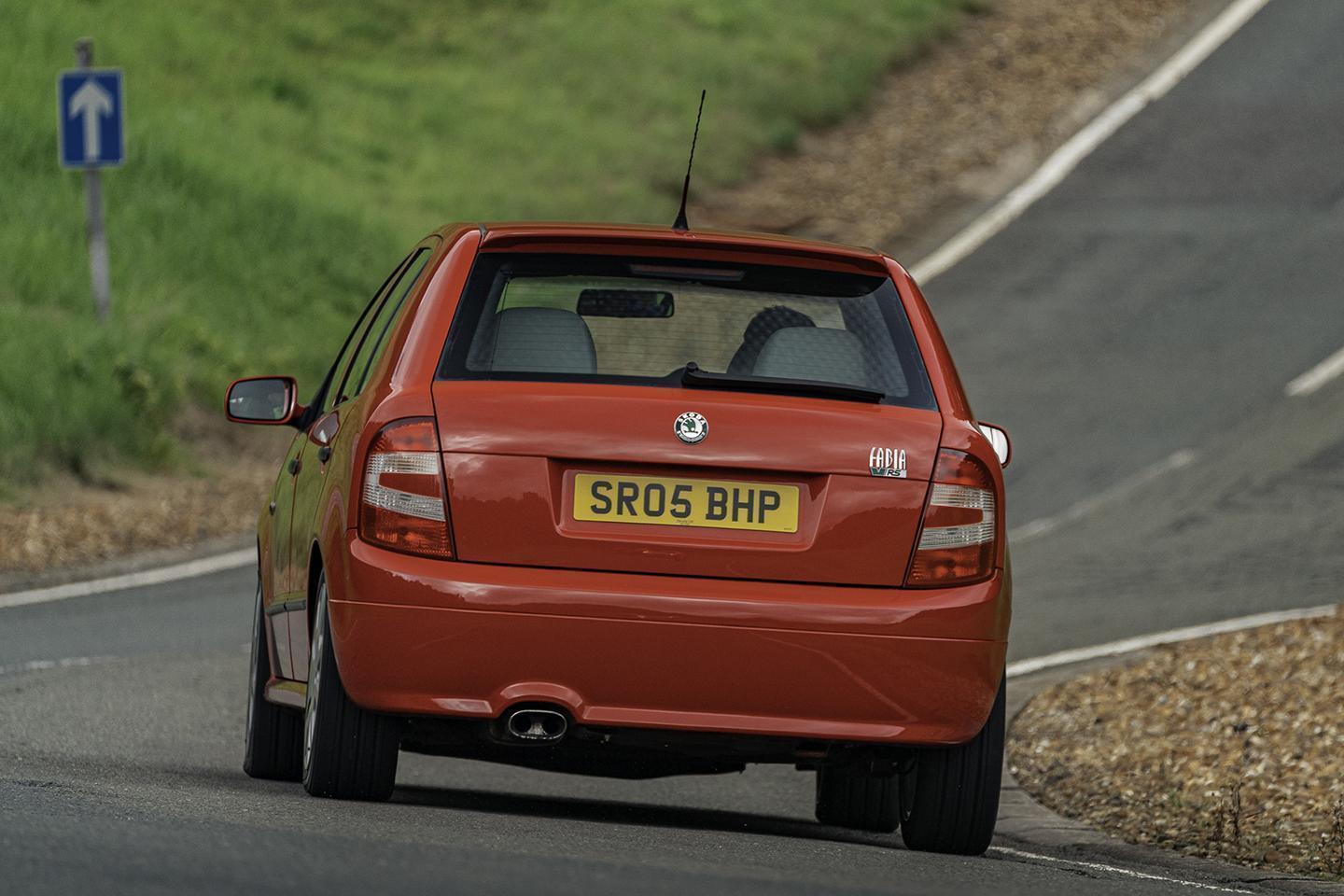
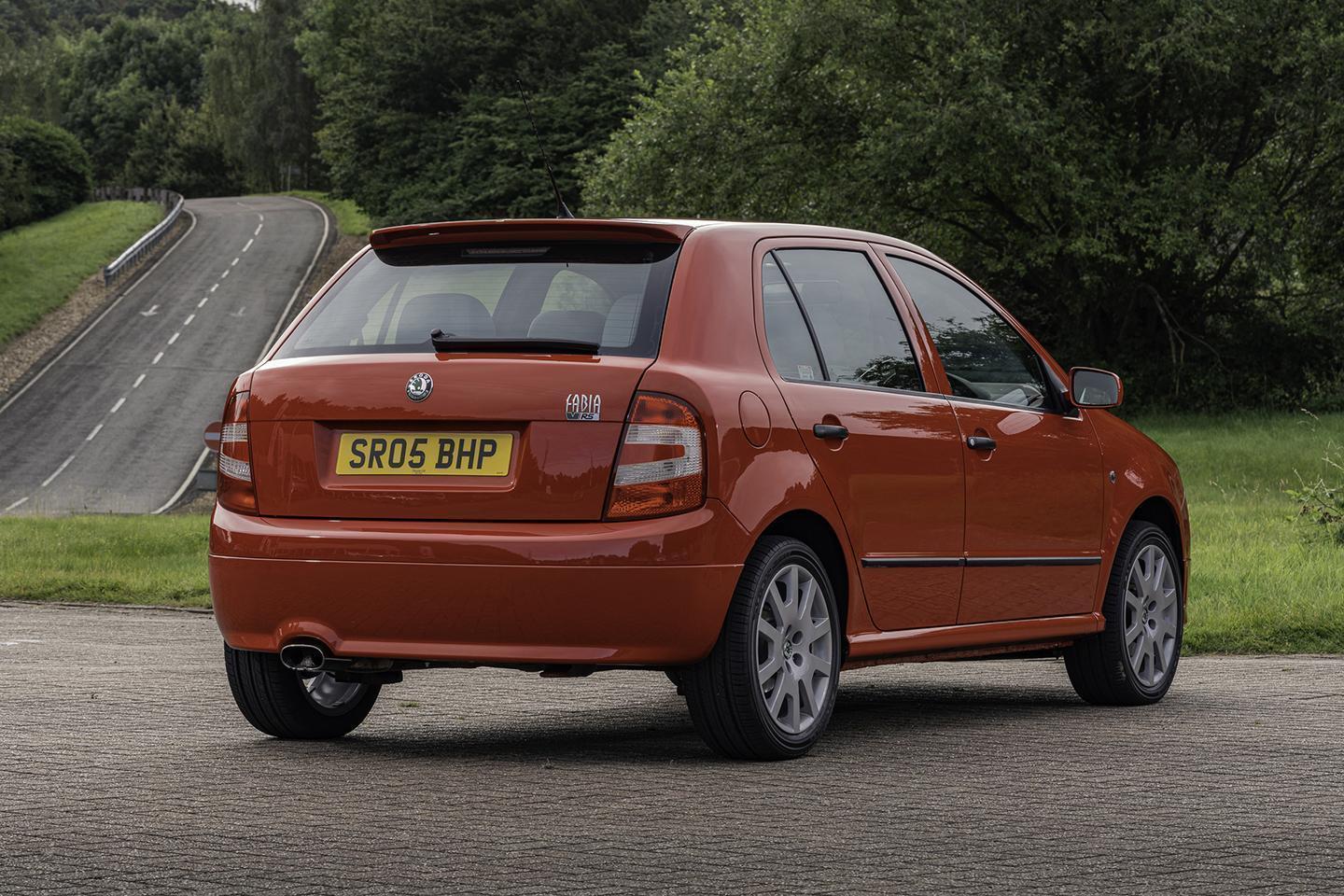
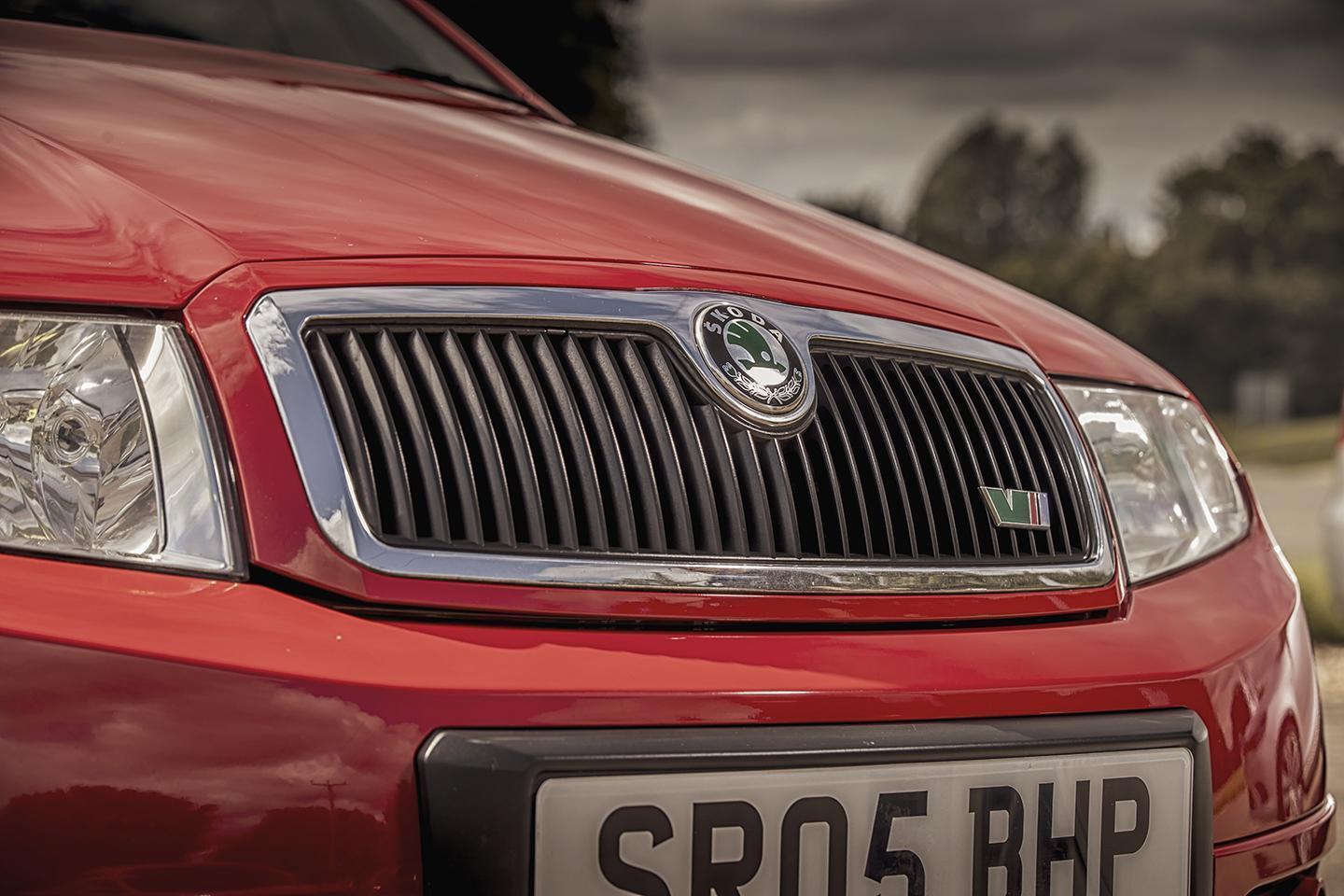
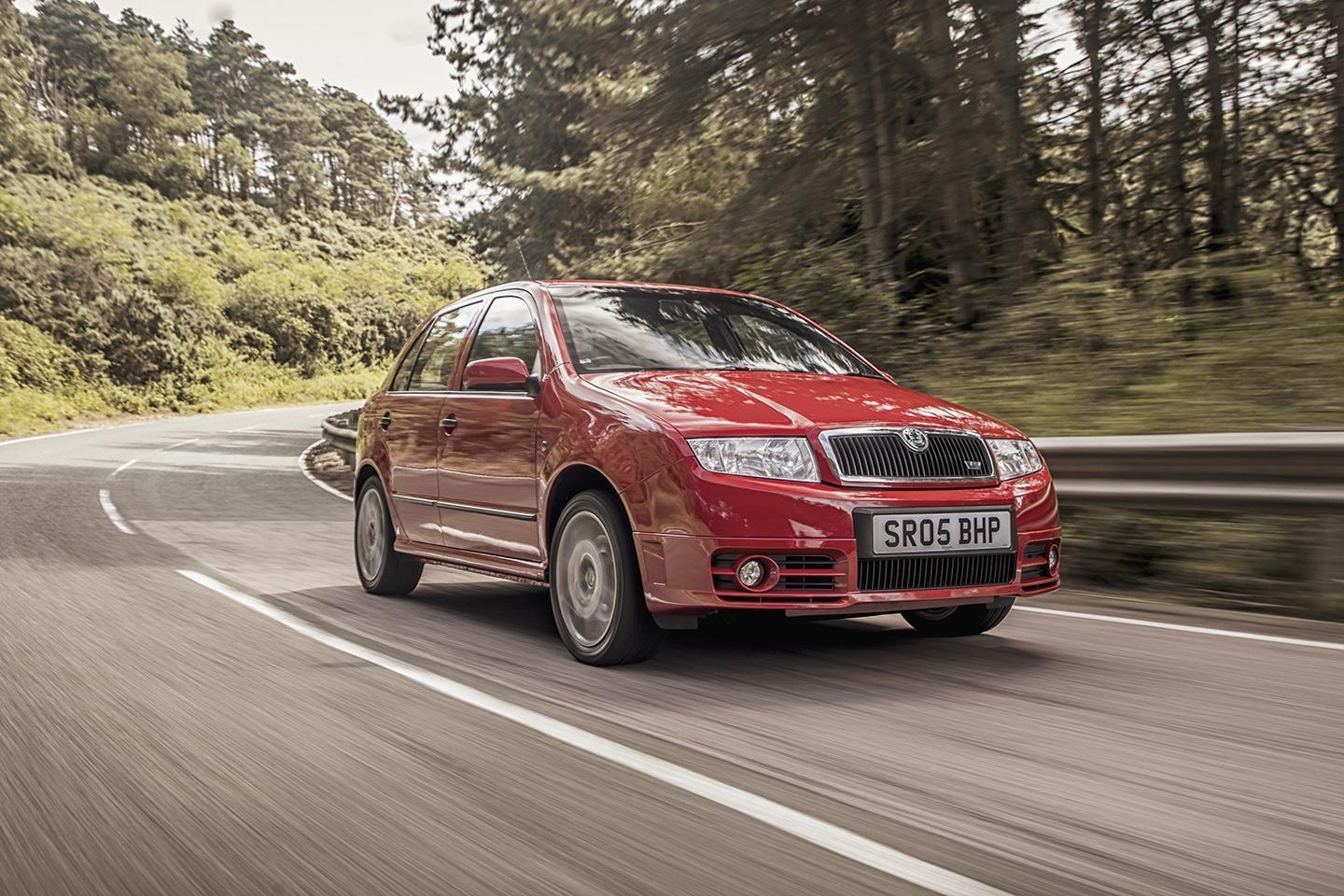
For a basic shape launched more than 20 years ago, the Fabia still looks good. Not as edgy or as attention grabbing as modern taste would dictate, but well proportioned and handsome. What was criticised at the time for being too modest a makeover actually looks nicely judged today, with the larger alloy wheels and green calipers just about sufficient to mark it out. The interior is similar; it's fairly basic - check out the blank switches - but done well, still feeling solid. Which is infinitely preferable to showy, illogical, and poorly assembled, especially when even the youngest cars are now nearly 15 years old.
The vRS starts with a clatter - this isn't a whisper-quiet diesel by any stretch of the imagination. It does improve as the engine warms through, however, and there's a lot to like about the 1.9-litre unit despite a rather agricultural introduction. While there's the clear appeal as a used prospect around great durability and decent fuel economy - the car's obvious selling point at the time - it's also worth bearing in mind how fast the Fabia still feels. Peak torque is made at just 2,000rpm, which means the vRS is shoved along hard from very few revs, the mid-range still seeming strong even by modern standards. It tails off beyond 4,000rpm, but not until surprising you with gutsy, determined performance through that gear. A fairly slick six-speed manual, and sensibly spaced ratios, add to the experience; maybe you won't be chasing the redline in every single gear, but there's fun to be had in selecting a ratio higher than you normally might and feeling the burly performance build and build. These old PD diesels are easily tuneable, too.
The vRS doesn't handle badly, either. Clearly it's not a Renault Sport Clio, with a balance led by the big lump up front, but the steering has the natural feel that hydraulic systems often show up in newer electric racks, and good grip as well. With the easy-access torque on tap, the Fabia vRS is a simple car in which to carry a good amount of speed. The brakes seem up to task, too. That said, it's easy to overwhelm a front axle burdened not just with healthy torque but weight, too. An overambitious entry speed or premature throttle application will see it wash out, with not much to be done about it but to cool your boots. Go buy a 182 if outright finesse is your bag - but they won't be as cheap as the Skoda...

Should you?
Value really counts in the Fabia's favour now, just as it did all those years ago as a new car. The durability of the vRS and its suitability for just about every journey is borne out by the amount for sale with chunky six-figure mileages - they are the norm rather than the exception. The suitability for tuning means there aren't many standard cars around, but they do come up - from just £2,000 as well. Somewhere nearer £4k buys one with fewer than 100,000 miles. If the cambelt and water pump haven't been done recently, factor that into your offer, as it's a substantial and important job.
There's also the elephant in the room to consider: the Fabia's old school diesel engine. In just a couple of months' time it'll cost £12.50 a day to drive a car like this in a large chunk of London, from Putney to Walthamstow and Acton to East Ham. However much you love your £3k Skoda, that's going to be hard to justify if it's a regular occurence. And a low emission zone that penalises diesels seems unlikely to stop at London.
But for those outside of the capital and large cities, the Fabia vRS remains as recommendable as ever. It's cheap to buy and shouldn't cost a lot to run, fast as standard and very easily made quicker, and decent to drive with affordable improvements out there. Diesel has never been for everyone, leave alone in 2021, yet seldom has it seemed more appealing than when powering the quirky little Skoda.
SPECIFICATION | SKODA FABIA VRS (2003-2007)
Engine: 1,896cc, four-cyl diesel
Transmission: six-speed manual, front-wheel drive
Power (hp): 130@4,000rpm
Torque (lb ft): 229@1,900rpm
0-62mph: 9.5 secs
Top speed: 128mph
Weight: 1,220kg
MPG: 52.3
CO2: c. 140g/km
Price new: £12,380 (2005)
Price now: from £2k
Search for a used Fabia vRS here



Glad the elephant in the room was addressed (diesel), as a resident of Greater London on the edge of the extended ULEZ zone, I sadly would never consider a used one of these. I suspect that many enjoyable performance diesel cars of this era will end up scrapped as a result.
As someone who lives away from ULEZ low emission zones, one of these would make a lot of sense to me. With its supple ride and mid range poke, it would be quite a weapon on the winding country lanes just a few miles down the road from my house. So tunable too. For me, the Mk1 Octavia and Mk1 Fabia VRS' are still the most appealing VRS models Skoda ever made.
The gear ratios are long, which works well with the torque - it means that you feel as if you’re holding each ratio for longer like a petrol revving out, and the peak torque doesn’t feel so narrow. Also means that at 60 in sixth it’s just ticking over so is very good on fuel.
Standard brakes are easily (and cheaply) swapped for TT 312mm setup, which is a good step up in ability. Bolt on solution.
A remap really does make them move, like all PD 130s. Economy barely affected, though obviously wear is increased on clutch, tyres etc depending on driving! Easy to hustle quickly on country roads, the understeer is not as bad as you’d think (with good tyres).
The cheap ones seem to have disappeared since I got mine, so there is a bit of demand for them despite being Euro 3. Tax is cheap, currently. Insurance is not - far more per year than my 225 8N TT.
Cambelt wasn’t overly expensive.

Also had the aforementioned Clio 182 a few years later... Very different cars, but both brilliant - The vRS was great at eating up the miles on A-Roads, but the 182 was better in the twisty bits...
 This does only have 5 gears though...!


Amazing car, very robust and the engine was a peach. Pulled hard from 1900 revs and never stopped pulling. I think mine was remapped by the previous owner as it kept up with a same age EP3 type r haha. I was going to replace with a much newer 120d, but it felt so lethargic in comparison I didn't bother.
Due to its remap is did like to eat clutches And flywheels though...
Would happily buy one again! Loved it.
However, it's also a car before DPFs and the reason it gets such a great combination of power and economy is partly because there are no concessions for the environment. It's a dirty, stinky car that pumps out a load of particulates and, for that reason, should be consigned to history.
It's a 'no' from me.
The downsides were traction, accelerating from low speeds on cold (and especially wet) days spun the wheels very easily, and when I took it to the Lake District the weight of the engine really showed up the handling. They handled well up to 8.5 tenths but then it was just too front heavy.
I always liked the basic interior as it reminded me of 1980's VW's, solid but basic and no flash. The seat trim wore easily if you were not careful.
Ran mine 4 months a year with winter tyres on steel wheels and along with the electronic locking diff (ABS really) it was phenomenal in snow. It was owned at the same time as a 1.4 TDi Polo. They made a characterful pair.
I've considered getting one as a project for years, they just never seem to dip under 2k. Very good cars.

A more modern version with a lot more chassis sophistication and far better trimmed would be a Volvo C30 D5; 180bhp as standard, 220bhp remapped, but with a far wider power band and better engine note due to the 5 pot engine. Absolutely hilarious little cars.
I've considered getting one as a project for years, they just never seem to dip under 2k. Very good cars.
Would like to try a completely stock one, but I suspect they are harder to find than an owner of one who doesn't vape
https://www.autotrader.co.uk/car-details/202106183...
1) 55MPG average.
2) 80k miles in 4 years almost fault free (one light bulb went
).3) Wonderful on the motorway - quiet, comfortable seats, decent range, plenty of torque.
4) As someone said, the actual 0-60 was around 7 seconds, not the 9.5 Skoda quoted, 7 seconds was reasonably quick for the time.
After I got mine, 5 other friends / acquaintances got one too as the sheer value for money spoke for itself.
Both then and now, people were snooty about the handling and rightly said that they didn't handle as well as a Renaultsport Clio. But you could still have fun on a twisty road, Skoda had done a decent job given how heavy the PD engine was. As a cheap daily driver, it was brilliant.

It's MOT wasn't renewed in 2019 with over 175k miles and it having been Barried, a fate which has befallen many of them...
Gassing Station | General Gassing | Top of Page | What's New | My Stuff