
British Army lurches toward electrification
Babcock International has been handed cash to explore EV propulsion in Army vehicles. Good luck with that
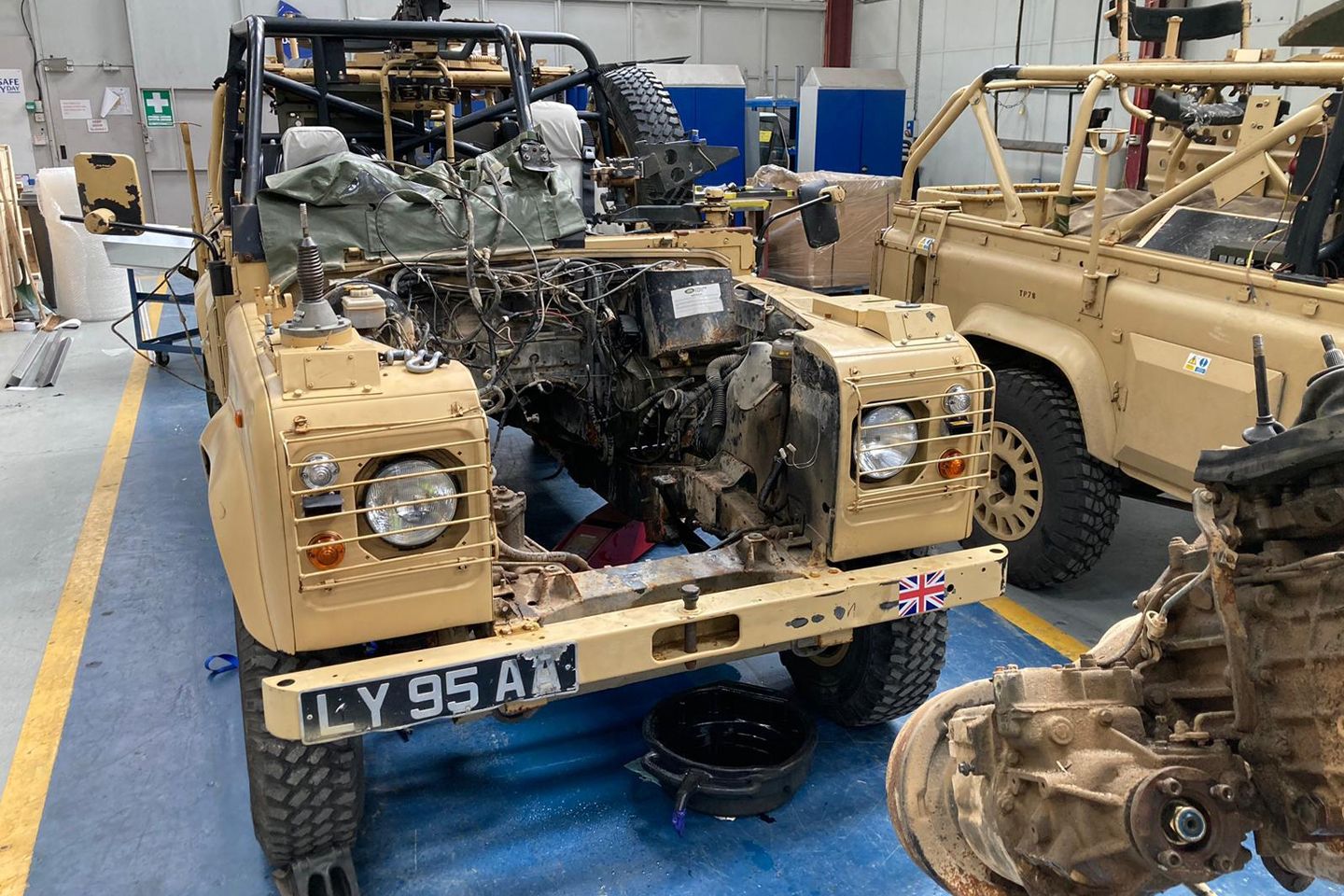
There’s no escaping electric vehicles at the moment. It’s the hottest of hot-button issues. Everything from push bikes to articulated lorries is being aggressively bent over for battery insertion - whether they are obligingly well suited to it or not. The affliction has even reached the wags who hand out investment cash at the Ministry of Defence, resulting in a one-year contract for Babcock International to help the British Army ‘understand the Defence application and constraints of electric propulsion’.
Specifically, this will include partnering with Electrogenic (an EV engineering firm) to parachute a likely familiar cocktail of batteries and electric motors into four in-service Army Land Rovers (two armoured ones, and two general duties ones) and then hand them over to the Armoured Trials and Development Unit to see how they handle the stress and strain of battlefield scenarios. More broadly, it is said to be all about helping the MOD to prepare ‘for the shift to electric vehicles from 2030 and the UK in reaching its goal of net zero carbon emissions by 2050’.
Of course, common sense would suggest that the MOD is currently about as well prepared for a shift to electric vehicles as a synchronised swimming team is to chainmail bathing suits. After all, it specialises in moving very heavy things over very large distances, two things that are mostly beyond the remit of current battery technology. Moreover, it likes to do things on a spectacular scale - Wikipedia suggests the British Army owns 6,781 MAN SV trucks and 6,609 Land Rover Wolfs (i.e. Defenders). Wholesale conversion to electric power hardly seems likely. Or cost-effective. Or sensible.
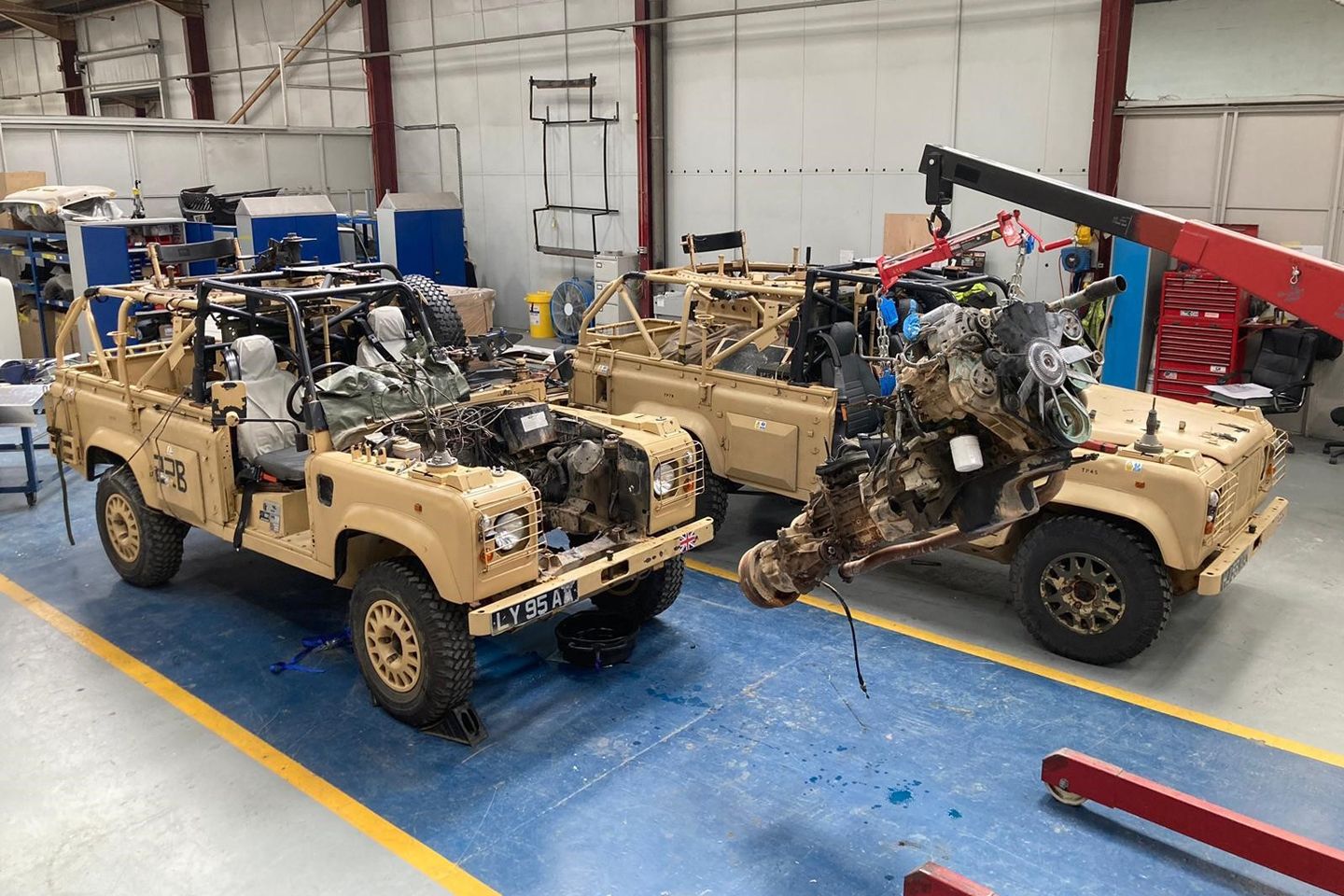
While there is excitable mention in Babcock's press release of enabling ‘the British Army to extend the life of its Land Rovers as diesel becomes obsolete’ (newsflash - diesel fuel isn’t going anywhere, and if it did, the Army would grind to a halt quicker than you can say ‘Ajax’), the contract awarded by Defence Equipment and Support (the procurement wing of the armed forces) is presumably more about sticking a PR-friendly toe in zero-emission waters than seriously committing an entire camouflaged leg.
Speaking on behalf of the Armoured Trials and Development Unit, Corporal Bryan Munce sagely noted: “ATDU is supporting Defence to fully realise the strengths and weaknesses of electric vehicle technology through Project LURCHER. Mobility performance, exportable power, signature and cost reduction are just some of the considerations we will explore while partnering with Electrogenic and Babcock. In understanding what could enable our forces, it also informs MOD of potential threats to be cognizant of, to enhance our strategic approach.”
Firstly, hats off to whoever came up with Project LURCHER as a name. Secondly, the ATDU could do a lot worse than spending the first day canvassing the opinion of the people awaiting their turn at the nation’s Ionity chargers - particularly for weaknesses related to climate, charge times and, y’know, unwieldy infrastructure. Thirdly, if you’re reading this Babcock, PH would be more than happy to join up (for an afternoon) to sample an all-electric Defender on Salisbury Plain. Battle-ready or not, it is almost certain to be hoofing at the fun stuff.


I could imagine this could evolve into a hybrid solution for extended range that's all.
The writer comes across as someone who is very familiar with the inner workings of the MoD and its contracts. Keep up the work, it makes me chuckle!
I could imagine this could evolve into a hybrid solution for extended range that's all.
The writer comes across as someone who is very familiar with the inner workings of the MoD and its contracts. Keep up the work, it makes me chuckle!
The Americans are also experimenting with solid hydrogen stores where the fuel can be released by the addition of water. This apparently has a front line advantage due to being less flammable than liquid fuels and potentially easier to transport to the front line.
And of course, I imagine logistics remain just about the most important element and the military does need to test whether batteries can work better than diesel.
But the most obvious initial use has to be for moving small amounts of kit and people when noise must be kept to a minimum?
The other factor the US military had an interest in was heat signatures of such equipment not just quietness?
I've written to my MP protesting at this ludicrous nonsense.
Did people write to the Navy to complain about the testing of barrel rifling on canons? Or engines in sailboats?
Stuff needs to be tested and it cost money.

We'll still destroy things and kill people, but do it in an eco-friendly way.
Let me think for a moment;
SAS is silently gliding towards the enemy who at blissfully unaware of the impending doom coming their way.
Until the EVs run out of electrickety, at which point new battery packs are brought in by several ever-so-slightly noisy Chinooks
Pity the poor Operatives who then have to remove the old pack and stick in a new one under fire from said enemy
Methinks that someone somewhere in the corridors of power is making £millions out of us idiots…
Getting the fuel to the vehicles operating at the front line in Afghanistan was not easy or cheap, reducing reliance on diesel to a fuel which be produced locally would have some operational advantages.
I've written to my MP protesting at this ludicrous nonsense.
Wherther the UK military is able to in less than 100 years when their current brilliance is limited to robbing peter to pay paul, constantly and consistently will provide much humour over the next 30 years.
One thing is for certain, they won't be converting knackered and old Land Rovers in volume.
Gassing Station | General Gassing | Top of Page | What's New | My Stuff