
New Taycan smashes EV Nurburgring saloon record
No name yet for mega Porsche Taycan, but a lap time within 2.5 seconds of a Rimac...
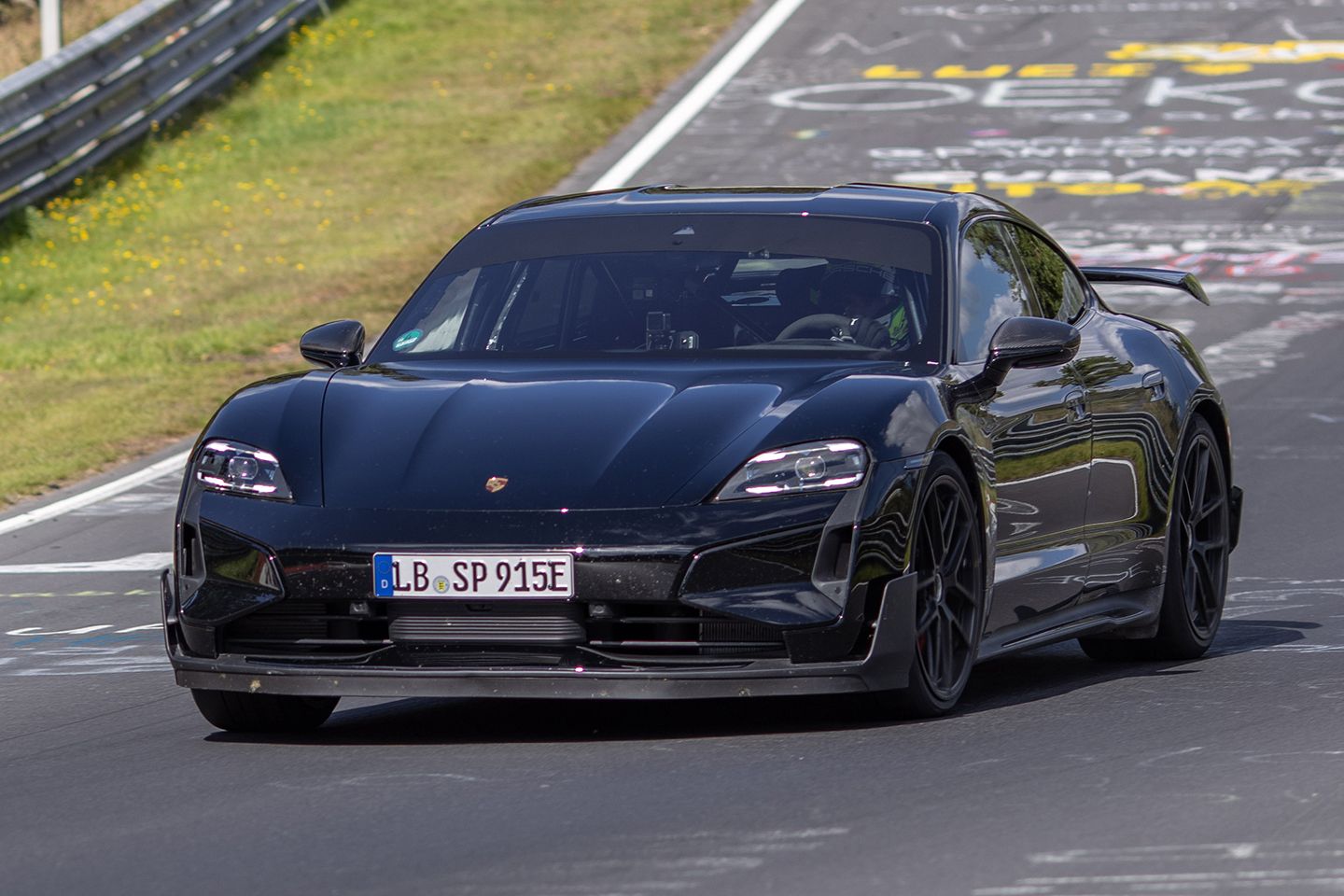
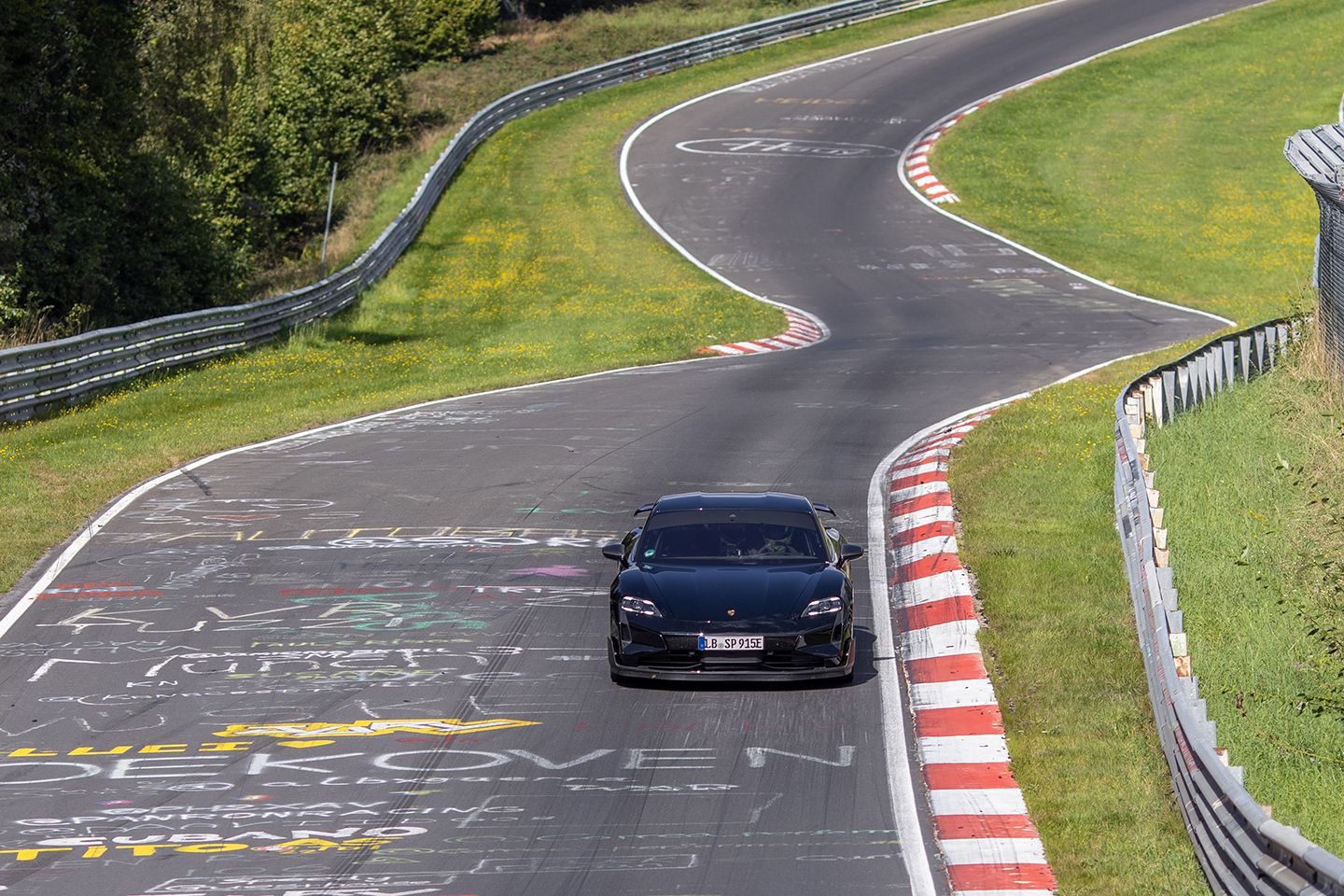
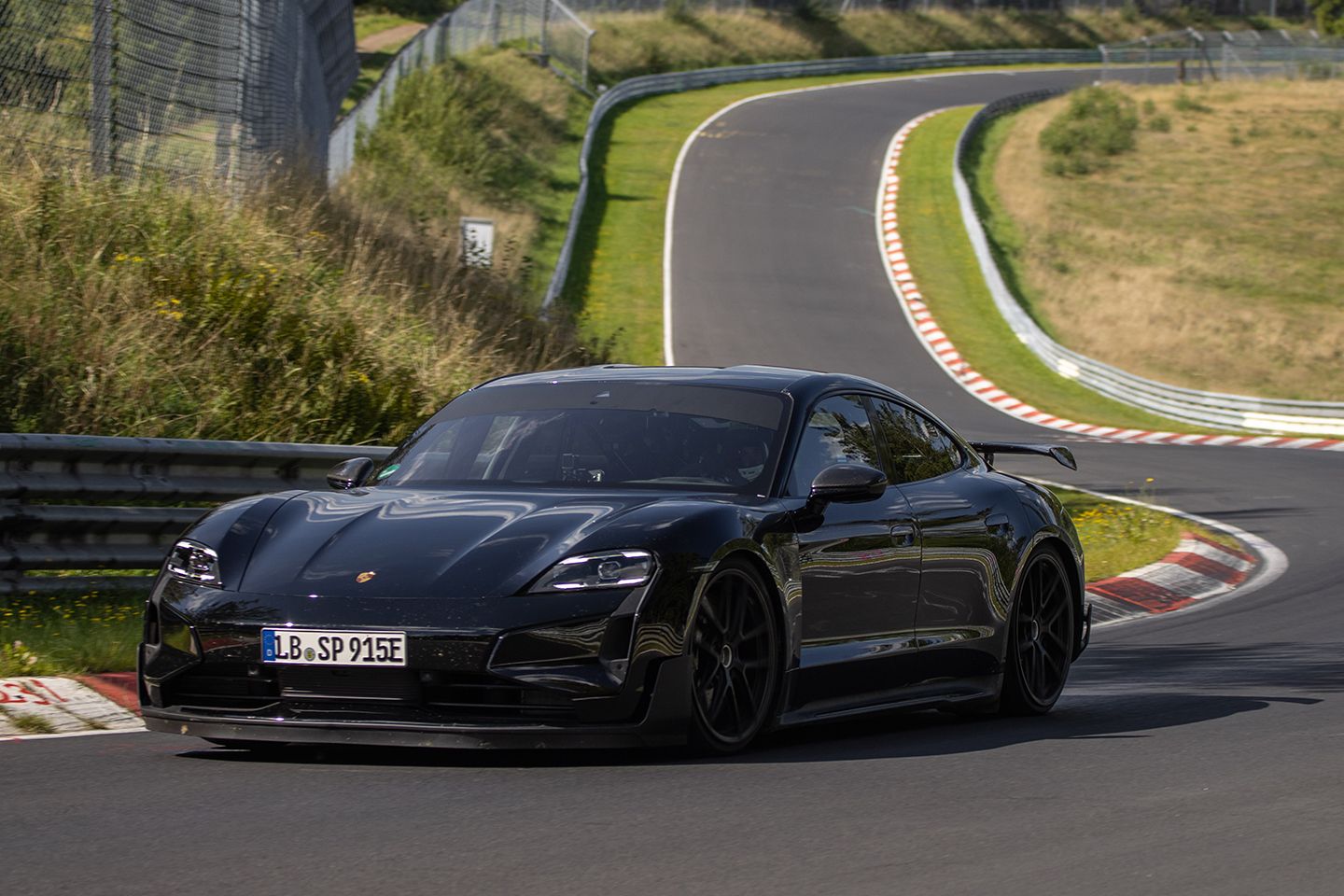
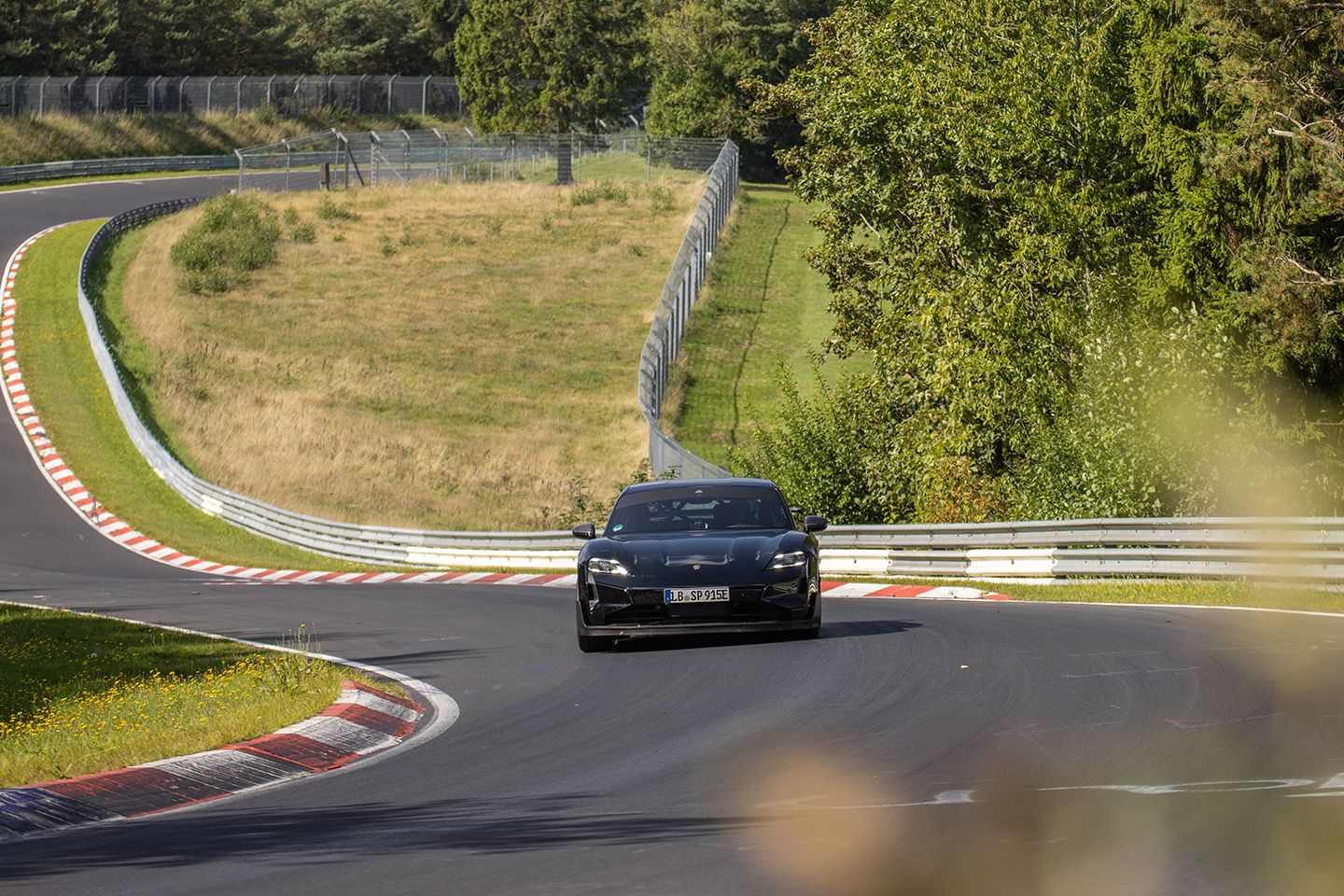
We’ve become familiar over the years with Porsche conjuring up Nurburgring lap times bordering on the unbelievable. From the 918 Spyder lapping under seven minutes to GT3s embarrassing cars with hundreds more horsepower, Porsche knows what it’s doing when it comes to really racy road cars. Now that extends to the Taycan EV as well: a new model has just lapped in 7:07.55.
You read that right. Just ten seconds off that 918 Spyder lap, within a fraction of the Rimac Nevera (7:05.298) for fastest production EV ever, and a huge 26 seconds faster than the previous Turbo S with performance pack, this is an obscenely fast Taycan. It’s taken almost 18 seconds off the previous best time set by a Model S Plaid Track Package last year. We’ve all heard enough by now of events being unprecedented, though surely nobody (outside of Porsche at least) expected such a leap to be made.
While the lap time is official, there’s precious little info about the Taycan itself just yet. Porsche describes it as a ‘pre-series’ model, so presumably it’ll enter production at some point - it isn’t really Porsche’s thing to produce one-off record breakers. Compared to a Turbo S this car is notable for the body kit, with both rear spoiler and front splitter more aggressive than standard. They will surely have helped with high-speed stability on a circuit where that can really pay dividends. (Porsche says the gap between old and new is so large that this one finished its lap 1.3km ahead of the Turbo S.)
We don’t know how much power this car makes just yet. Having 915 in the number plate would surely be too obvious a giveaway for horsepower, though clearly this Taycan must be significantly more potent than a standard (761hp overboost, 625hp otherwise) Turbo S given time laid down. How close exactly to 1,000hp it’ll be remains to be seen.
“Twenty-six seconds is half an eternity in motorsport. Lars’ (Kern, driven for both Taycan attempts) lap time of 7:07.55 minutes on the Nordschleife is sensational, putting the Taycan in the same league as electric hypercars,” said head of the Taycan model line, Kevin Giek. “And the impressive thing about it is that over several laps, Lars clocked almost exactly the same time.” Sadly there’s not a video of Kern’s exploits just yet, though one is said to be coming in mid March. Which will presumably be when we find out a little more about just what this incredible Taycan actually is.


The cars that will be available in 2035 will be so much better tan those of today.
Still seems fast I assume this will just add to the number of used unsold EVs out therr
The cars that will be available in 2035 will be so much better tan those of today.
Still seems fast I assume this will just add to the number of used unsold EVs out therr
How many unsold EVs are there and can you post the numbers for iCE as well for reference.
I've never had a new car that has depreciated anything like that %age, and I've been buying new cars since 1975.
Fair bet most people would rather a new Taycan (and every other EV) could comfortably get 600-800 miles per charge, rather than chasing Rimac performance,
Taycan with Performance battery: electricity consumption combined 26.4 kWh/100 km (NEDC); 23.5 – 19.6 kWh/100 km (WLTP)
Taycan with Performance battery Plus: electricity consumption combined 27.0 kWh/100 km (NEDC); 23.9 – 20.4 kWh/100 km (WLTP)
Taycan 4S with Performance battery: electricity consumption combined 25.4 kWh/100 km (NEDC); 24.0 – 19.8 kWh/100 km (WLTP)
Taycan 4S with Performance battery Plus: electricity consumption combined 25.8 kWh/100 km (NEDC); 24.1 – 20.4 kWh/100 km (WLTP)
Taycan Turbo: electricity consumption combined 26.0 kWh/100 km (NEDC); 23.6 – 20.2 kWh/100 km (WLTP)
Taycan Turbo S: electricity consumption combined 26.0 kWh/100 km (NEDC); 23.4 – 21.9 kWh/100 km (WLTP)
More performance = same range. In fact, more powerful models are often more economical due to additional regenerative braking


I've never had a new car that has depreciated anything like that %age, and I've been buying new cars since 1975.
We had something called Glasses guide which was considered the go to pricing reference in the trade.
If you were buying new cars back then you would also be aware that fleet buyers would get 25-30% discount compared to normal retail prices and when sales targets needed to me met individuals could get 15% easily and sometimes more.
When the 911 991 first came out a mate bout one for just over £100K a couple of months later he was offered a rather lucrative contract in The ME. Porsche gave him the princely sum of £74K.
There was also a significant difference between trade in and selling back. Trade in values were higher as it was offset against the large profit margin on new cars.
Gassing Station | General Gassing | Top of Page | What's New | My Stuff