
2024 Le Mans 24hrs | PH Review
The 24 has always been the greatest motor race in the world. This year it again backed that claim up...
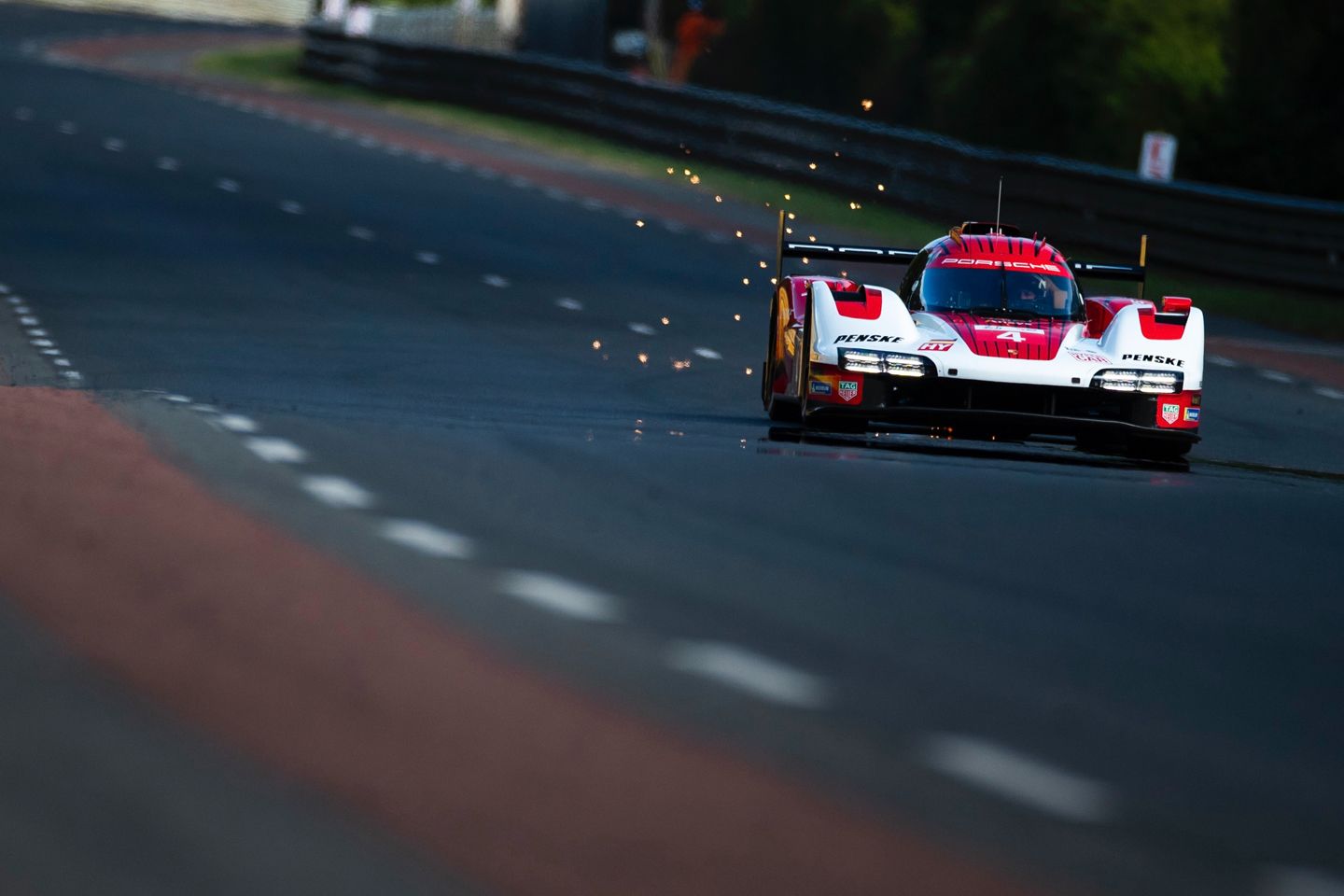
Anyone who saw last year’s 100th-anniversary epic will know just how incredible the 24 Hours of Le Mans spectacle has become. A grid brimming with supersonic hypercars, sudden downpours throwing the pecking order out the window and Ferrari’s first outright win at the Circuit de la Sarthe in 58 years. If this year’s race was to get anywhere close to topping it, it’d need even crazier weather, an expanded roster of hypercars and a rejig of the GT class to spice things up.
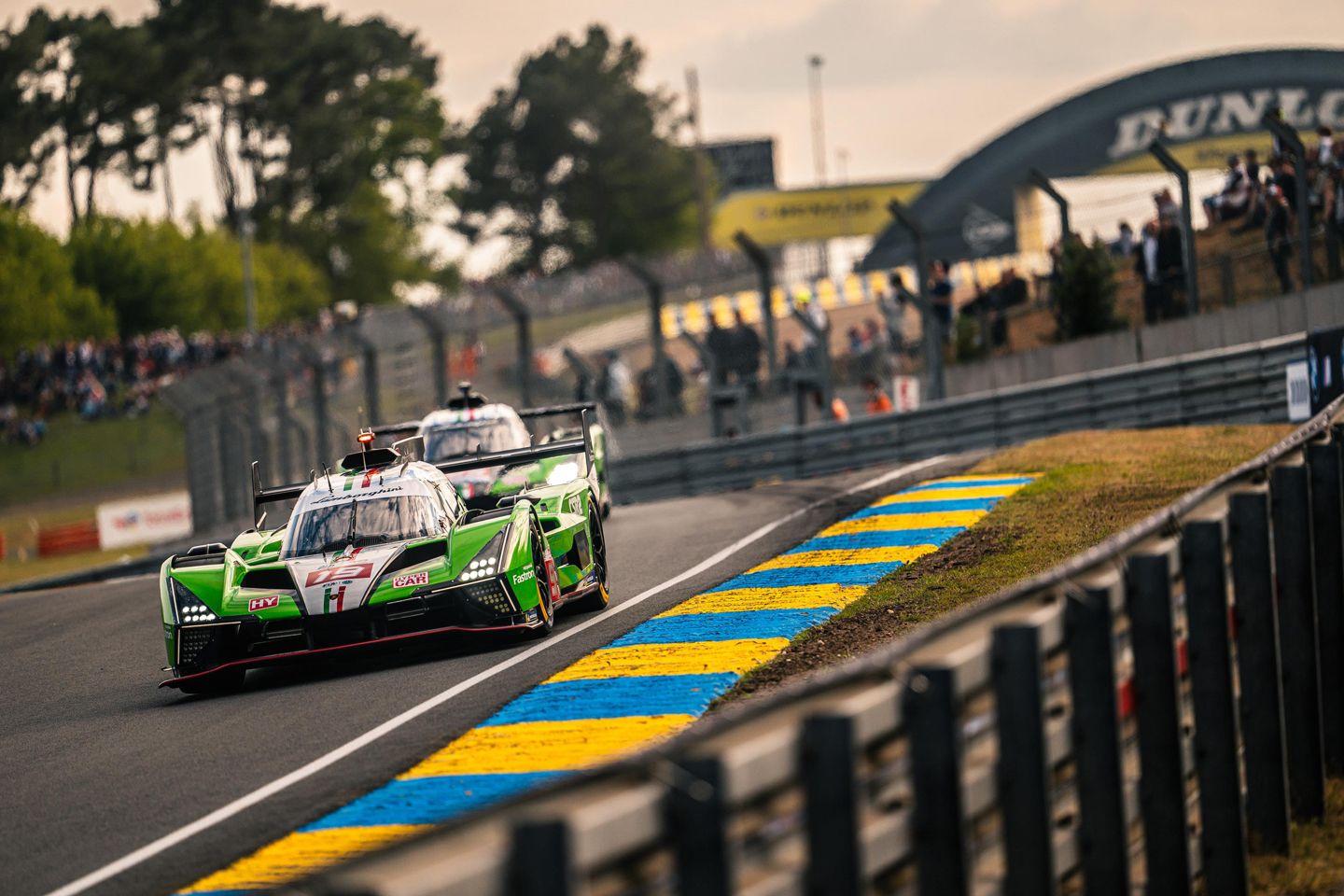
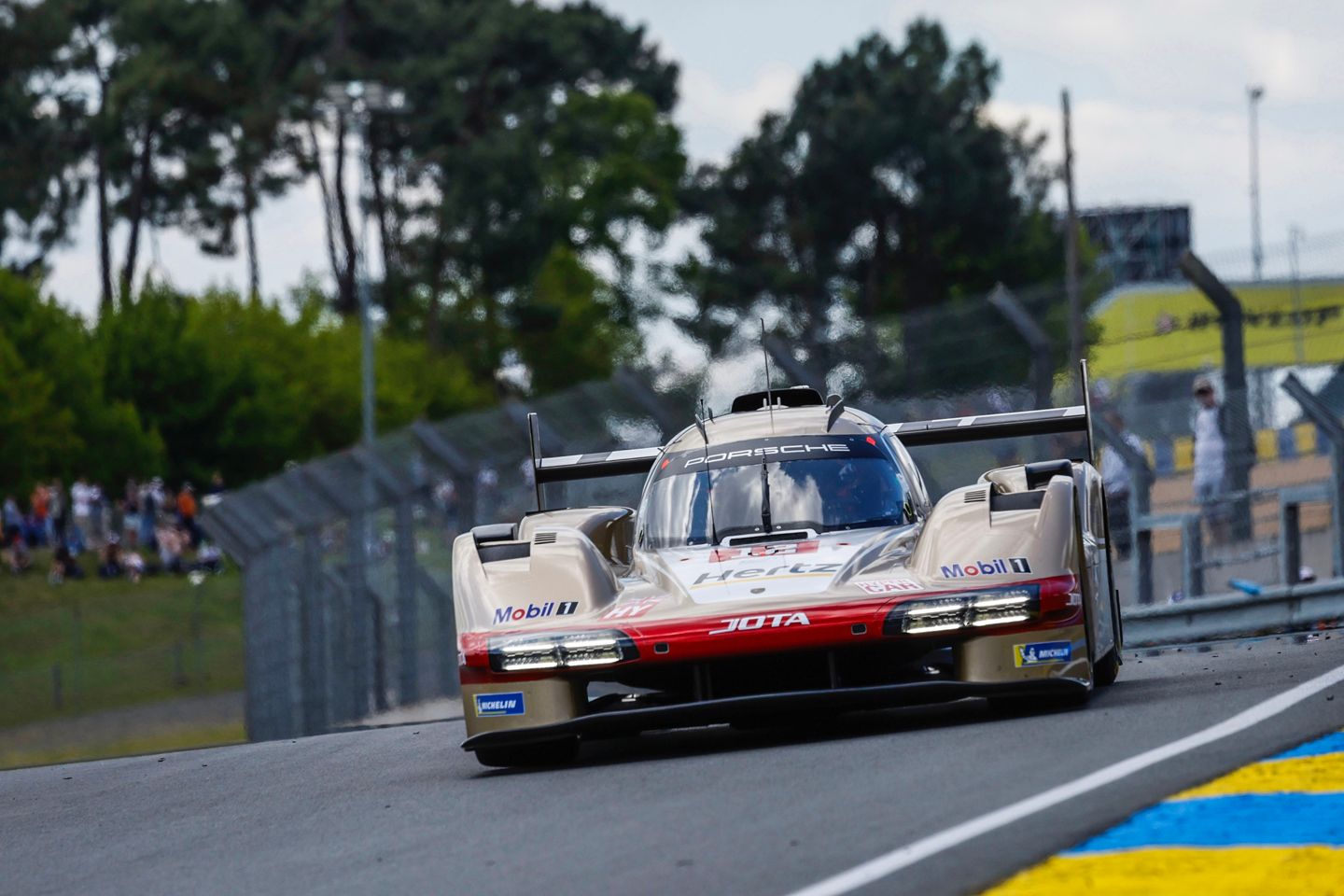
Good thing all three were nailed in ahead of the Le Mans weekend then. Four new manufacturers joined the grid for this year’s race, with Alpine, BMW and Lamborghini all fielding two challengers while fledgling supercar maker Isotta Fraschini arrived with a sole Tipo 6 LMH-C. Elsewhere, German privateers Proton entered its first Le Mans in the top class with a Porsche 963, British squad Jota added a second gold 963 to its lineup and Ferrari a third 499P in the form of the ‘privately-run’ yellow AF Corse. The returning Toyota team, the factory Penske Porsches and the gloriously loud Cadillacs brought the hypercar field up to 23 entrants, comfortably the biggest grid of top-tier challengers for decades.
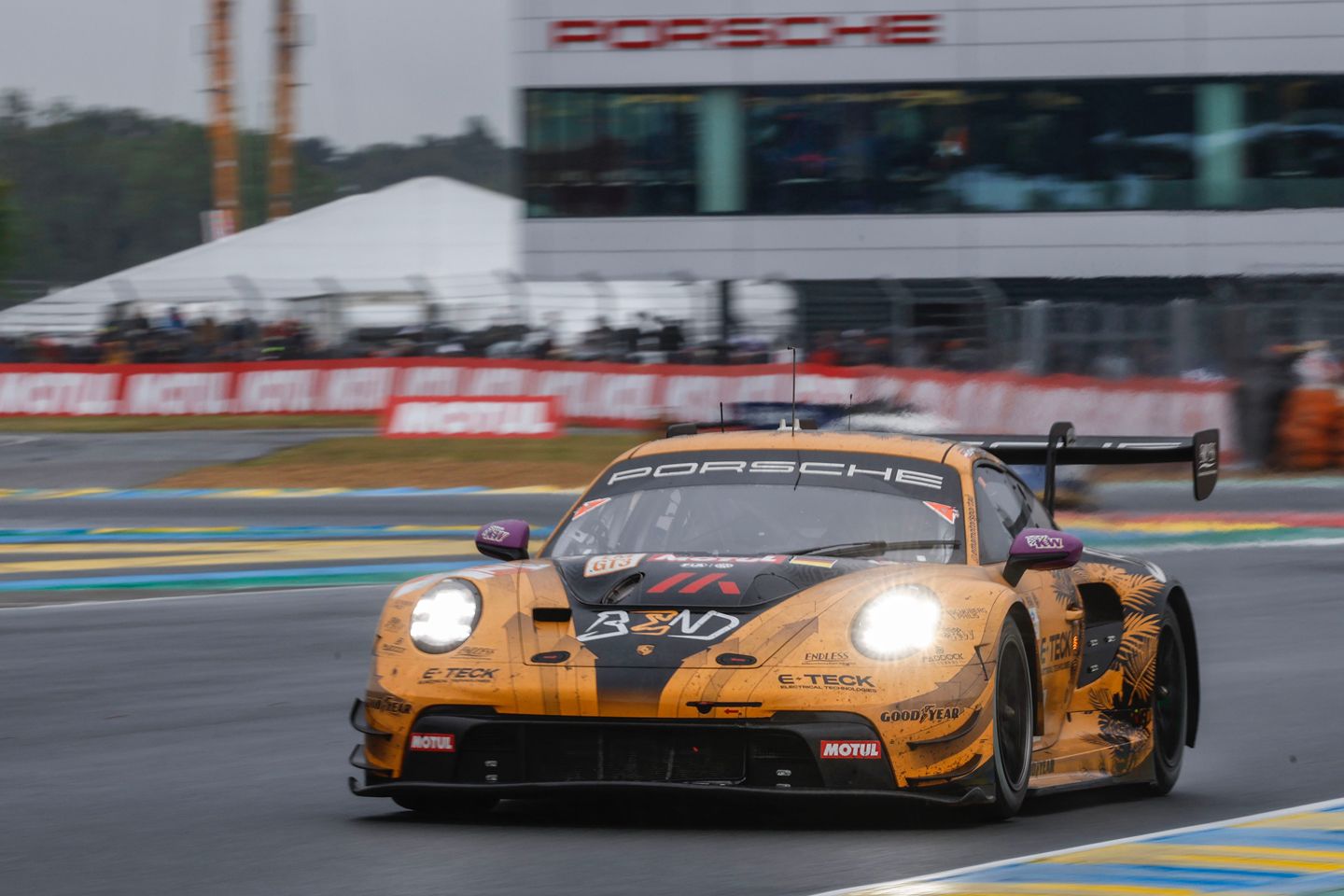
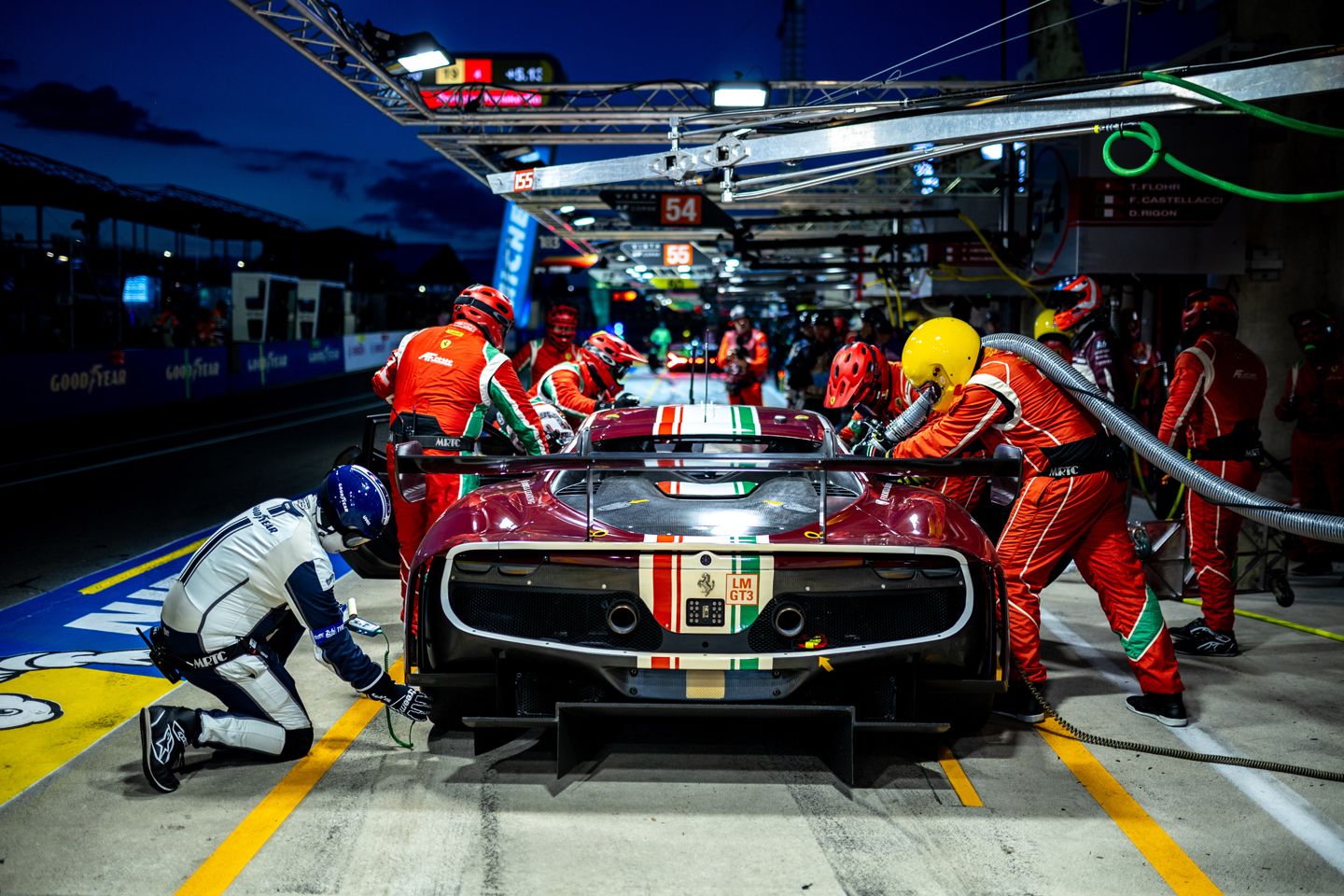
Further down the field, past the same-spec LMP2 machines padding out the mid-pack, was the new-for-2024 LMGT3 class, replacing the wonderful (but incredibly expensive) GTE machinery. As the name suggests, GT3 cars have now made their way into the World Endurance Championship with a purely Pro-Am division. Manufacturers have to make the call on which teams represent them in LMGT3, but there’s no official factory support per se. So while, for example, Manthey was chosen to run Porsche’s GT squad, it’s the amateur driver who brings the backing and, as a result, the cars run different liveries to the Grello machines fielded at the Nurburgring 24 Hour. A bumper LMGT3 grid brought the total entries to 62 for the race (no NASCAR this time, sadly), and all the weather apps reckoned it was going rain throughout the weekend. So it had all the makings of a belter.
Friday
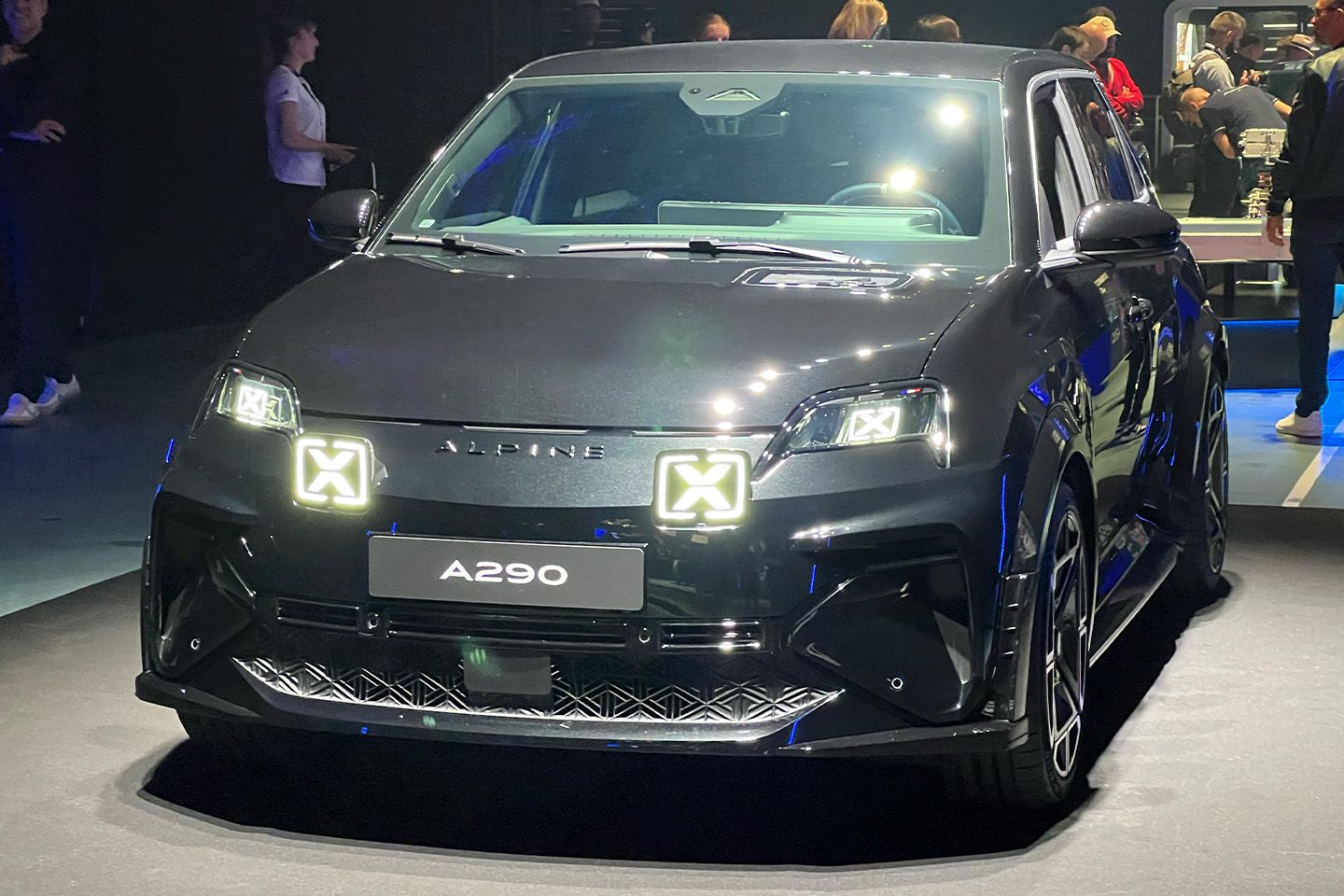
Before the track action began, Alpine kicked off the long weekend with the launch of the new A290. The French marque is making a big song a dance about its return to the premier category in endurance racing with its ultra-cool A424 hypercar, and thought the 24 seemed a fitting place to unveil its new electric hot hatch. The key stats are impressive: 220hp in the top-tier GT Performance version and a range of up to 236 miles for the 180hp models. Crucially, it’s not just an R5 with the wick turned up, with new adaptive dampers, beefier brakes and a 60mm increase in track width among the key changes. We’ll have to wait a little longer to see what it’s like on the road, but here’s hoping it serves as a more affordable alternative to the Ioniq 5 N - minus the Hyundai’s faux gears.
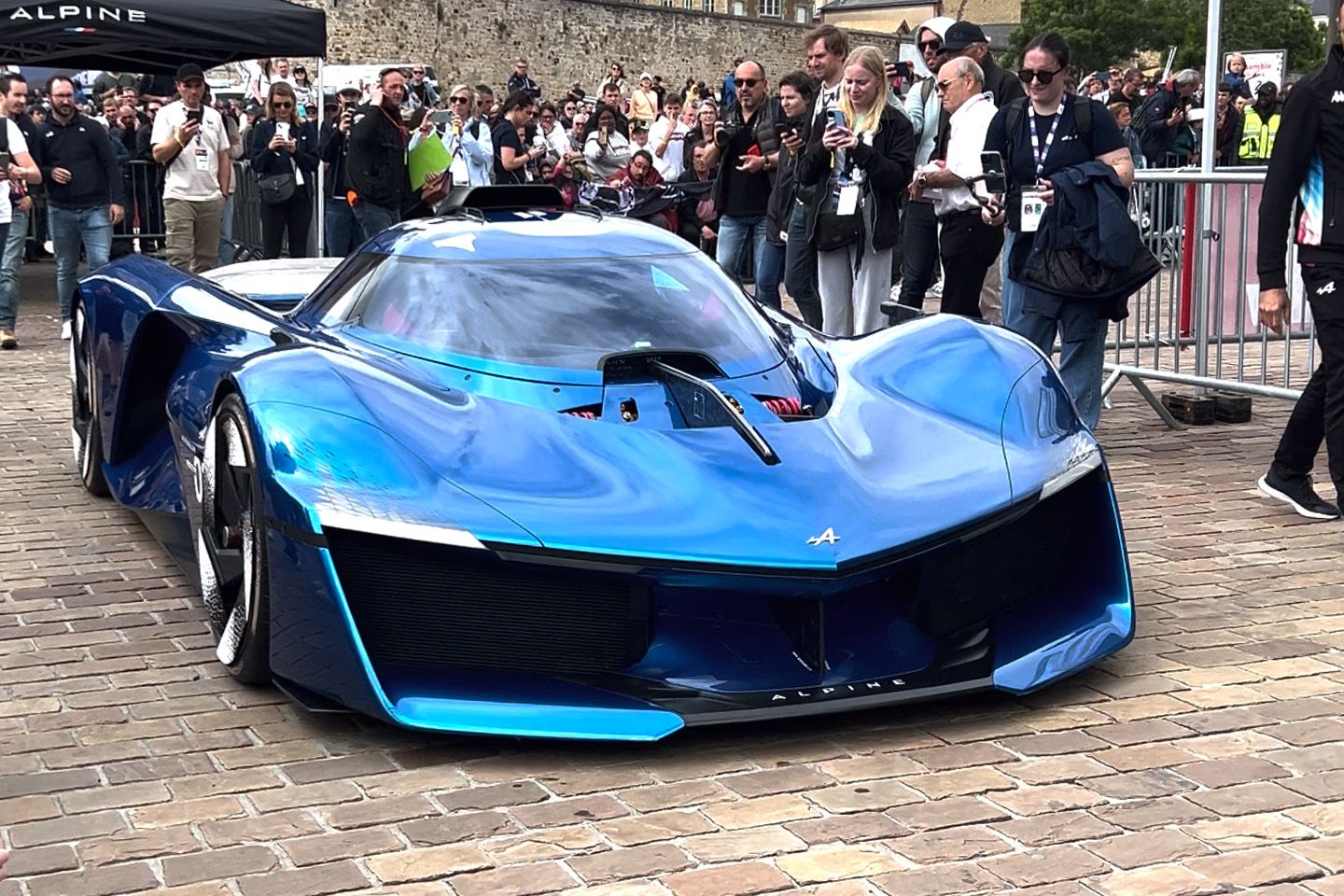
From one Alpine to another, with the Alpenglow (sorry, Hy4 concept) starring in the driver’s parade. The original from two years ago looked like every other concept that eventually winds up on the pile of discarded design studies, but here it is in a slightly more representative form moving under the power of its 2.0-litre, 340hp hydrogen combustion engine. The morning after, it would take to the track for a quick demonstration. It really does sound magnificent, too, almost V8-like, though the plan is to unveil an updated version with a hydrogen V6 later this year. Here's hoping Alpine can make it work.
The parade itself is a must if only to appreciate just how important the 24 Hours of Le Mans is. The whole city is taken over by it, with thousands of fans lining the streets while drivers throw out caps, wrist bands and other motorsport tat. Toyota ace Kamui Kobayashi nearly took a few eyes out with his exuberant picture card-throwing skills, while MotoGP legend Valentino Rossi apparently handed out Father’s Day present gold with signed caps. By which point I was at the pub. Sorry, Dad.
Saturday
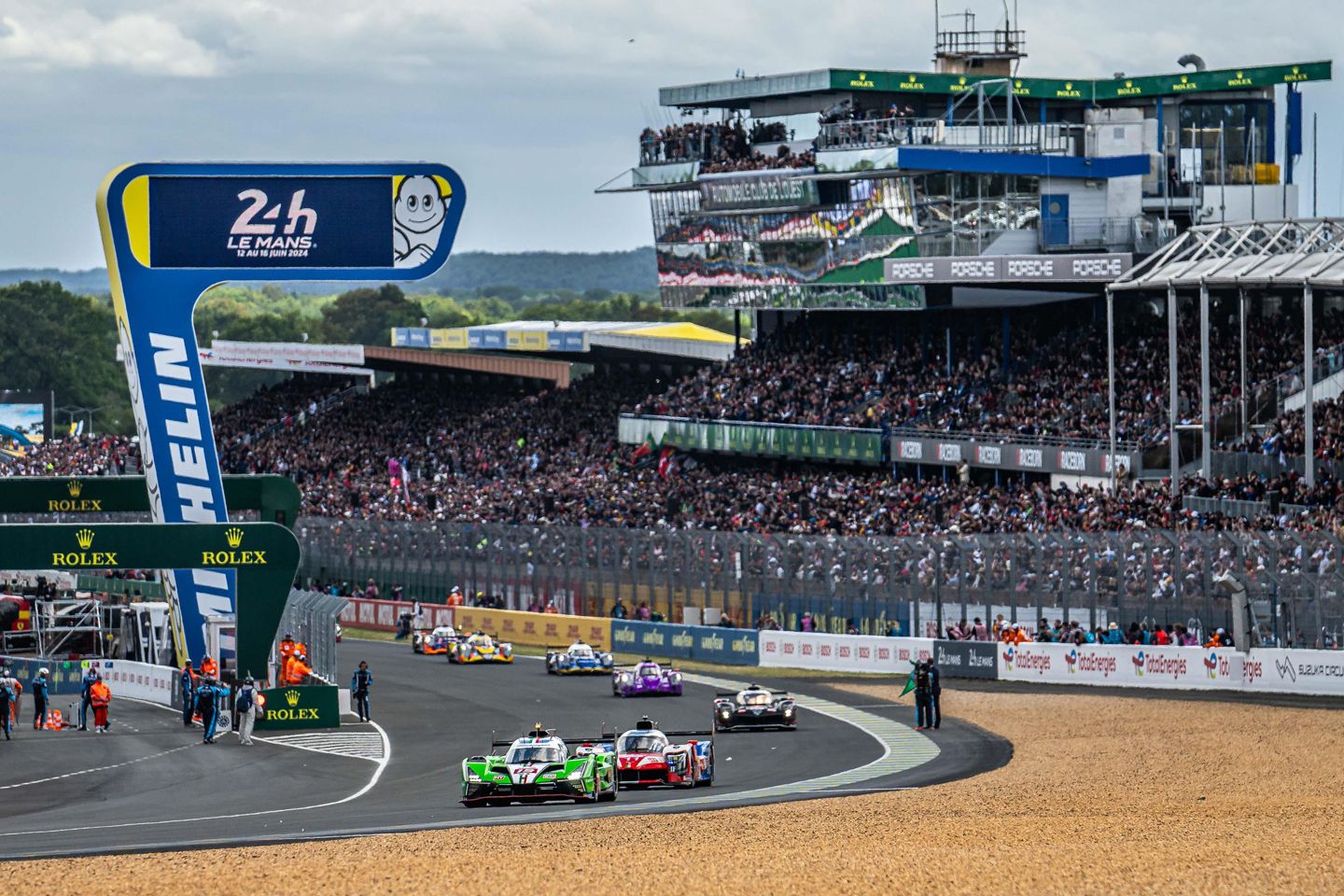
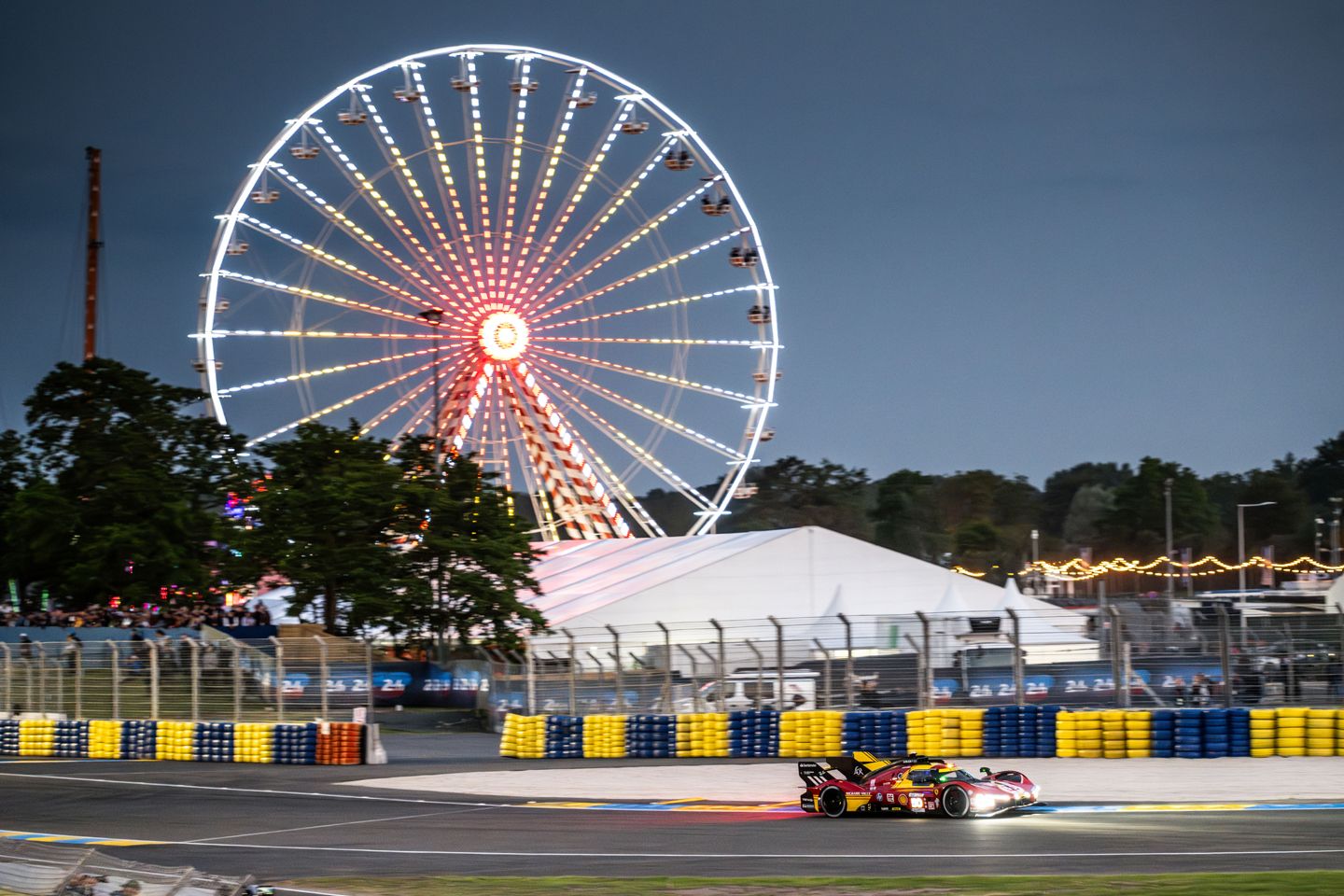
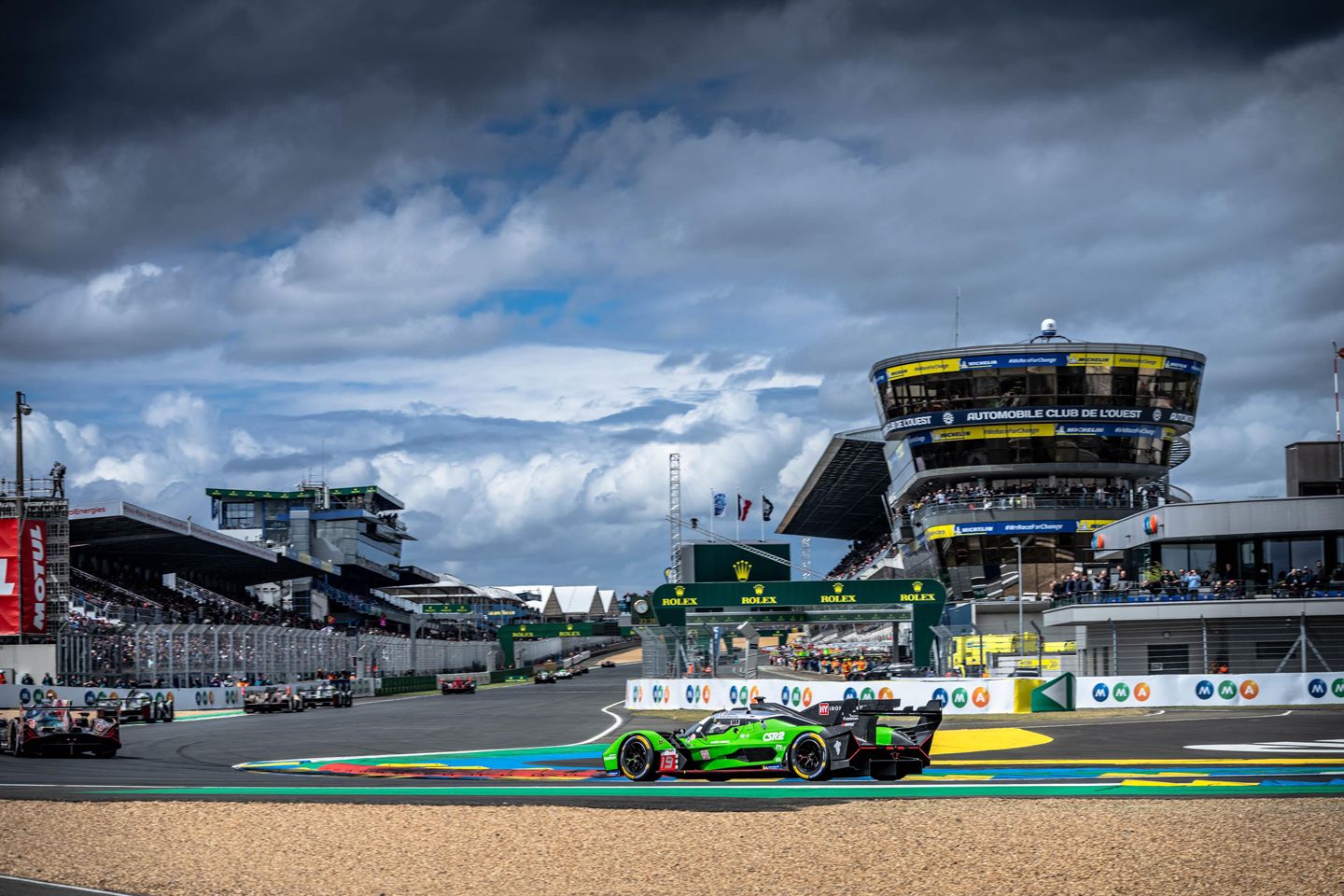
Race day of the 24 Hours of Le Mans has all the anticipation and pomp of a Formula 1 title decider, turned up to 11. It’s a real carnival-like atmosphere, with airhorns blaring from the heaving grandstands long before the race gets underway. French football hero Zinedine Zidane, this year’s flag waver, entered the circuit in a presidential-style motorcade, though he used a slightly less glamorous Renault Rafale for his track entrance. Cue rapturous applause from the crowd. An hour before the start, the grid is cleared and the cars are wheeled back to the pit wall like the sprint starts of old. With ten to go, the cars begin their parade lap and the start finish straight falls silent for the last time for the next 24 hours.
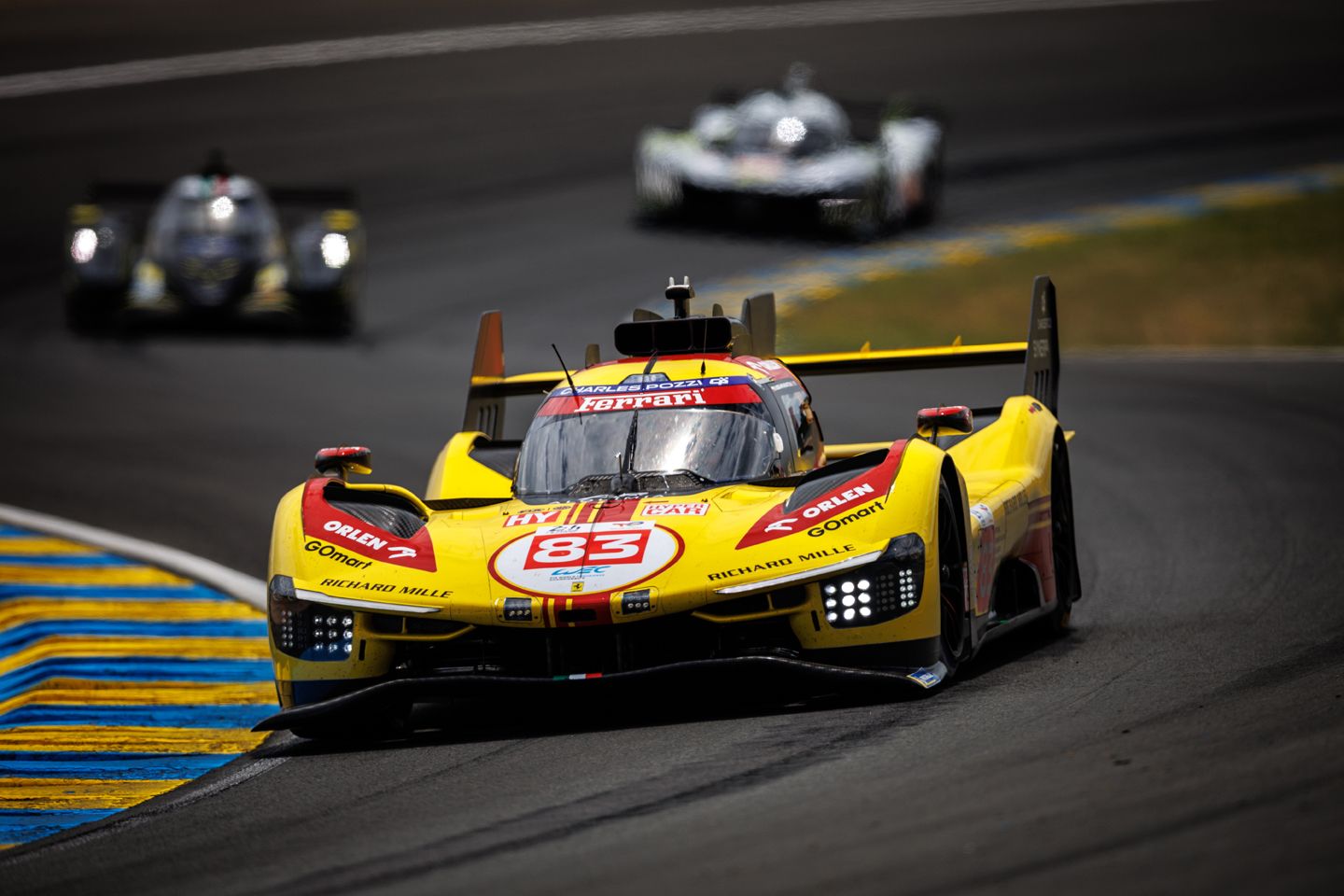
Bang on the hour, the pole-sitting 6 Porsche charged towards the Dunlop chicane as the second-placed, yellow-nosed 3 Cadillac fell behind the 50 Ferrari, which ultimately ended the lap as leader of the pack. Not that track position is all that critical in Le Mans, where passing is easy and the elements can throw a curve ball at any time - which it duly did. A rain shower early on sent the strategists into meltdown, with some teams opting for wet tyres while others stayed out in the hope of the weather promptly clearing up. The latter proved the correct call, promoting the yellow 83 Ferrari into the lead by some margin.
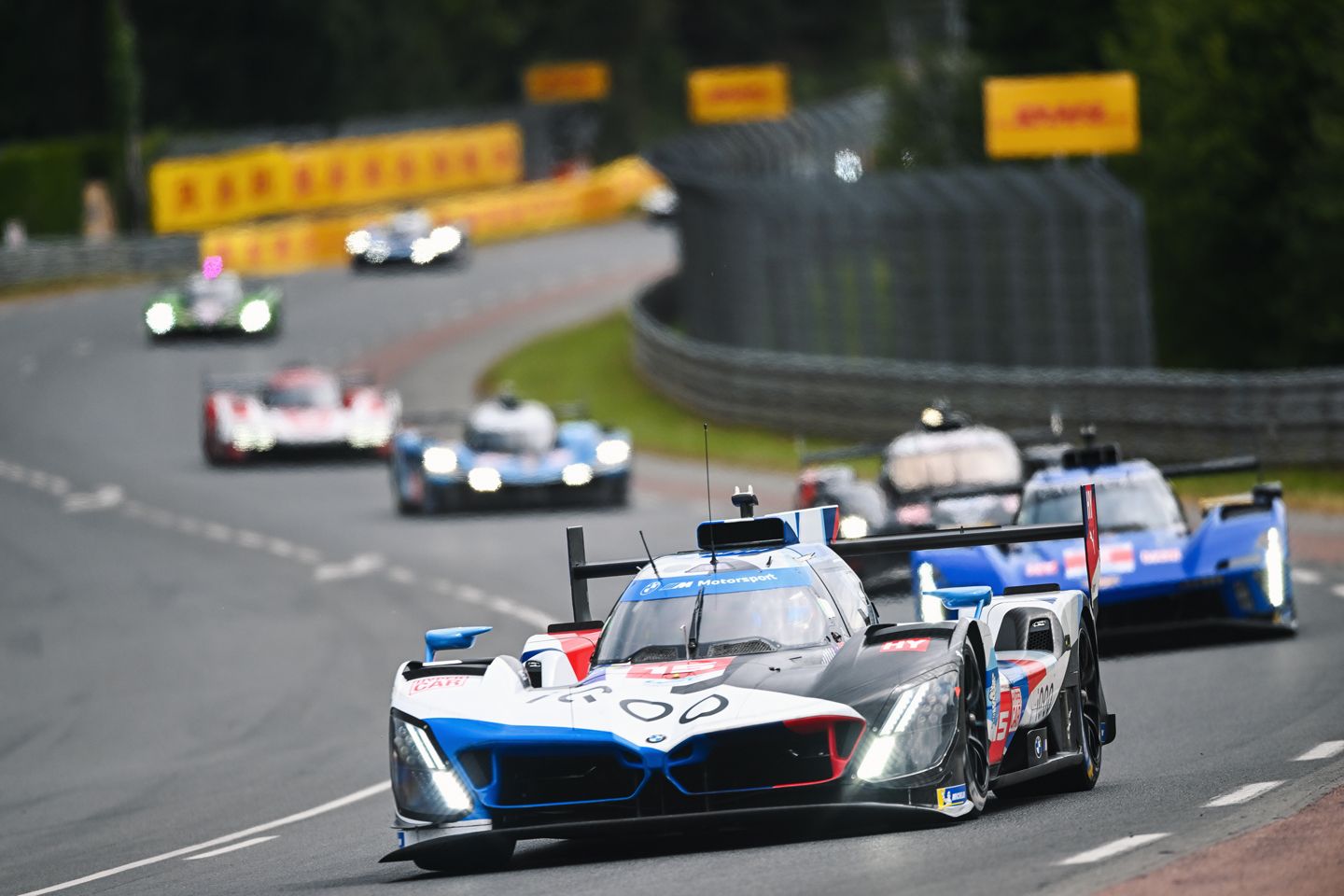
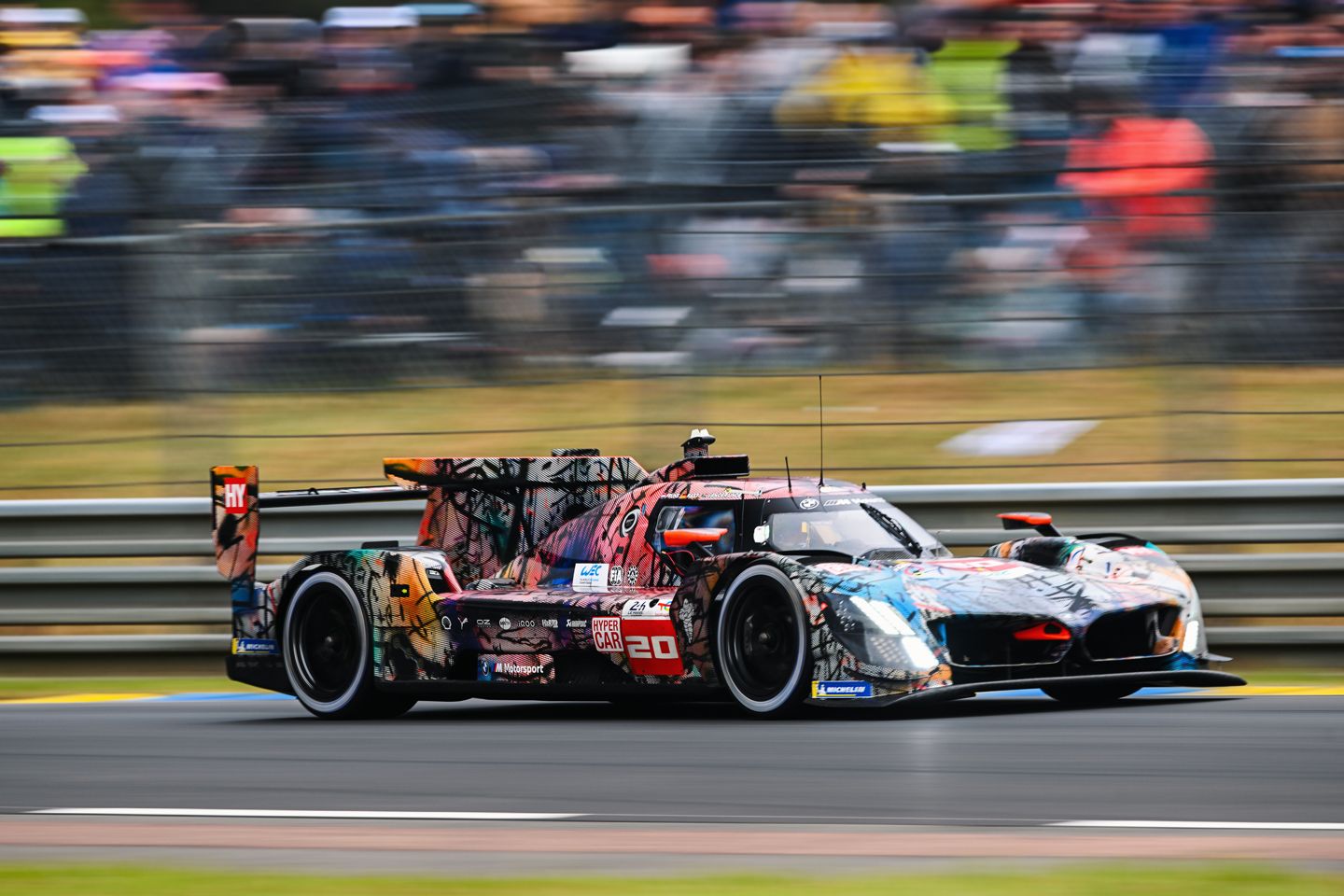
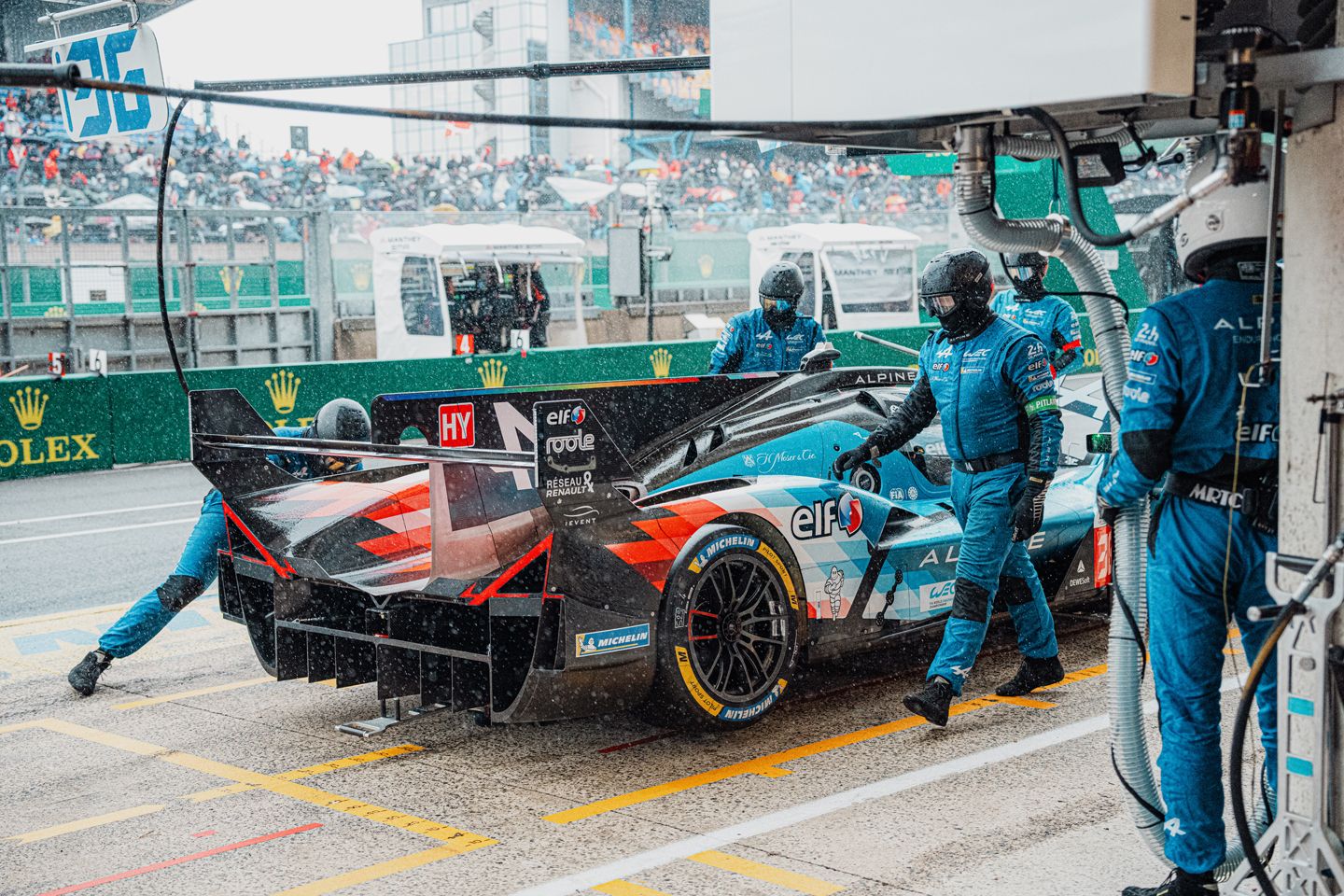
Dry running followed for much of the afternoon, but that didn’t put a stop to the drama. The 20 BMW art car found the wall early on, with the 15 suffering a nasty high-speed accident on the Mulsanne after being carved up by Robert Kubica in the 83 Ferrari. BMW wasn’t the only team with a double DNF, with Alpine losing its two cars after arguably its strongest showing of the year. The 35 car expired in a cloud of smoke at Arnage and the 36, piloted by Mick Schumacher, was pulled into the pits with similar engine issues. A tough end for both teams on their debut, but Le Mans never takes prisoners.
Sunday
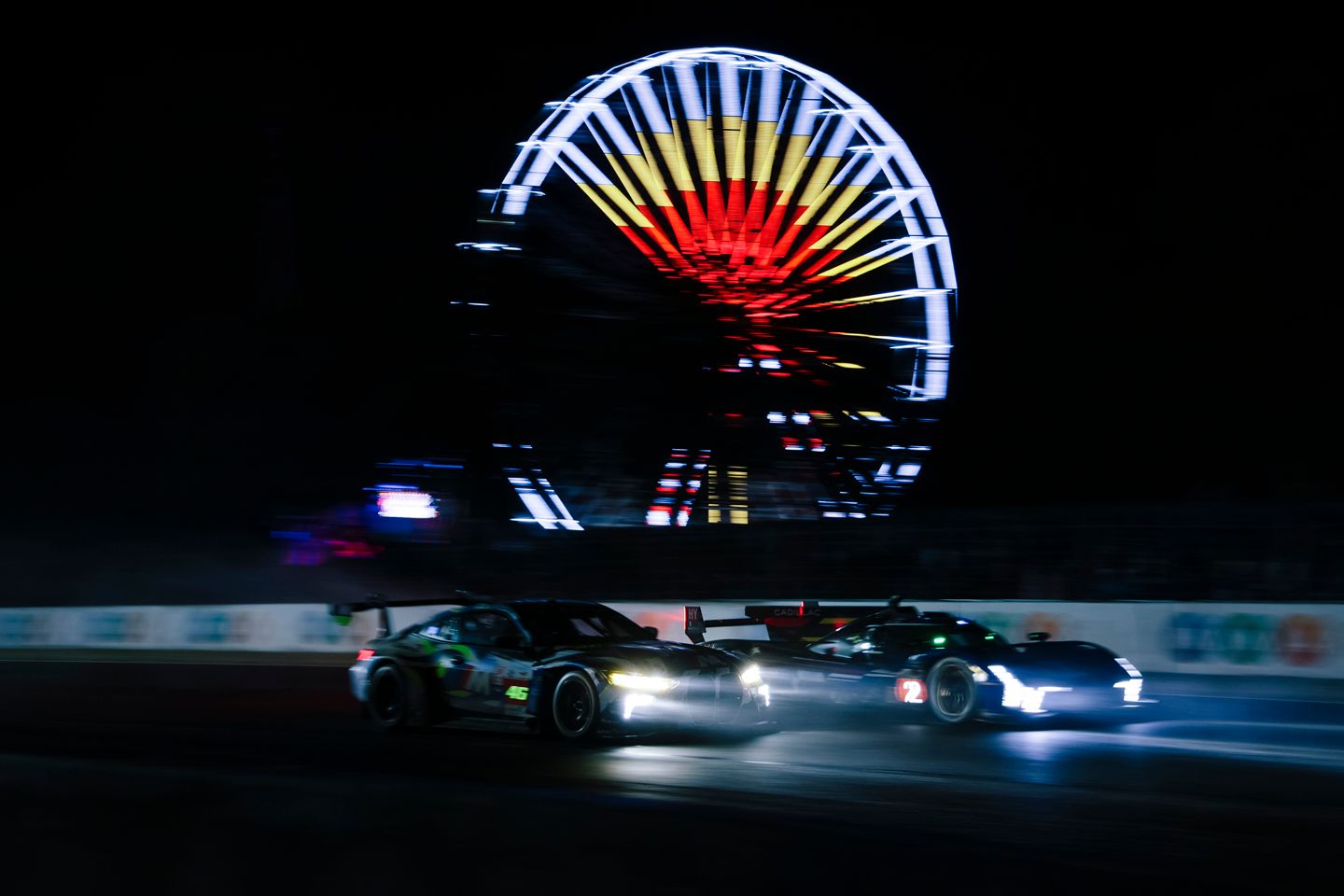
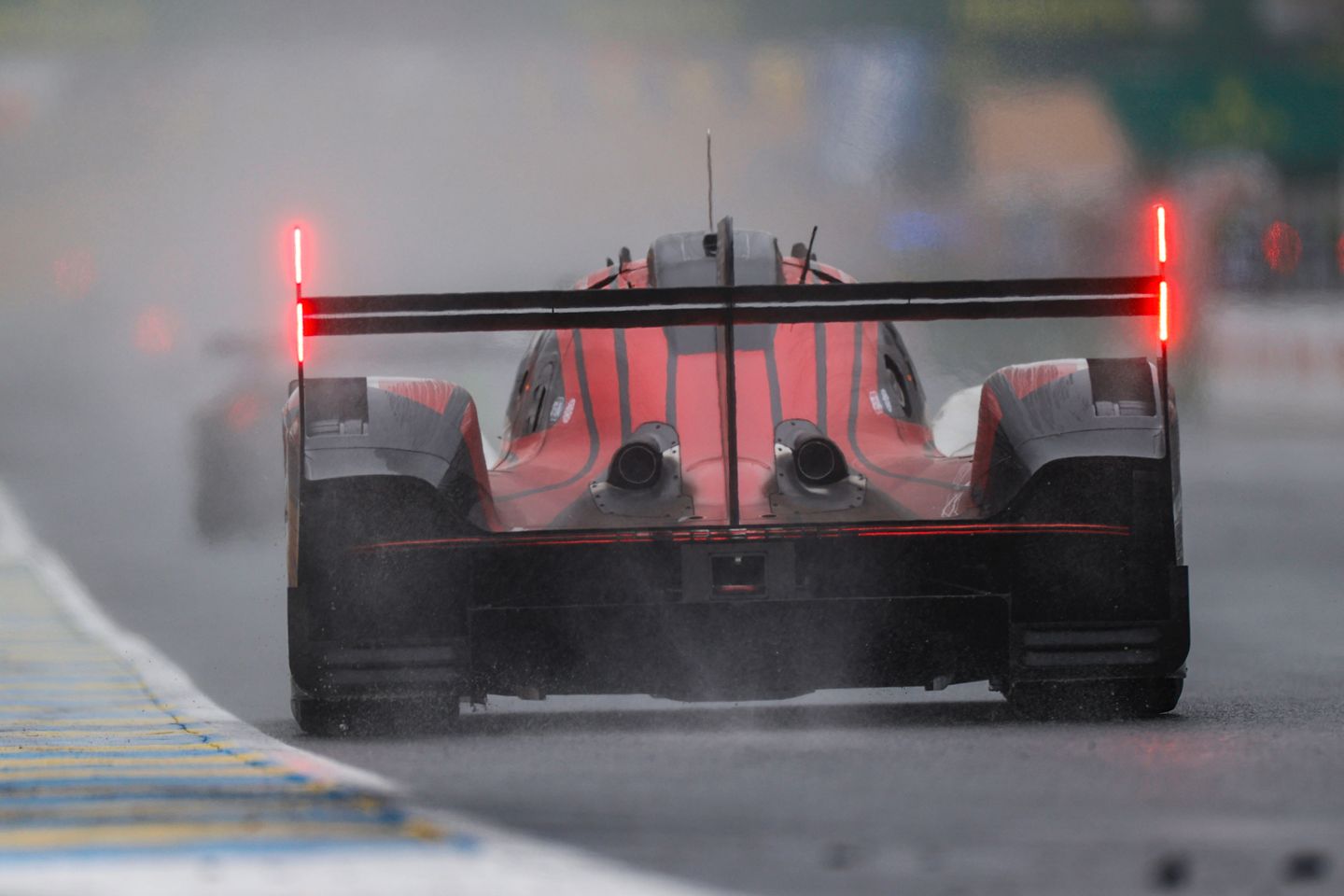
Just like the Nurburgring 24 Hour race a couple of weeks ago, a good chunk of the night running was held under safety conditions due to tropical storm levels of heavy rain. Nearly seven hours of the race were spent behind safety cars, with some drivers asking their engineers to put one of their teammates in due to sheer boredom. Unlike at N24, conditions improved enough to restart the race later in the morning, with half of the remaining hypercar runners on the lead lap and within sight of the leader. With seven hours to go, it was anybody’s race.
Surprisingly, the blue-nosed 2 Cadillac held the lead for a good chunk of the morning, showing the rest of the ultra-efficient hypercars how it’s done with 5.5 litres of naturally aspirated American muscle. You can hear it coming a mile off, and its deep NASCAR-like noise seems completely at odds with its prototype proportions. It’s comfortably the fan favourite, too, although the arrival of the Aston Martin Valkyrie, complete with screaming Cosworth V12, will no doubt give it a run for its money at next year’s race.
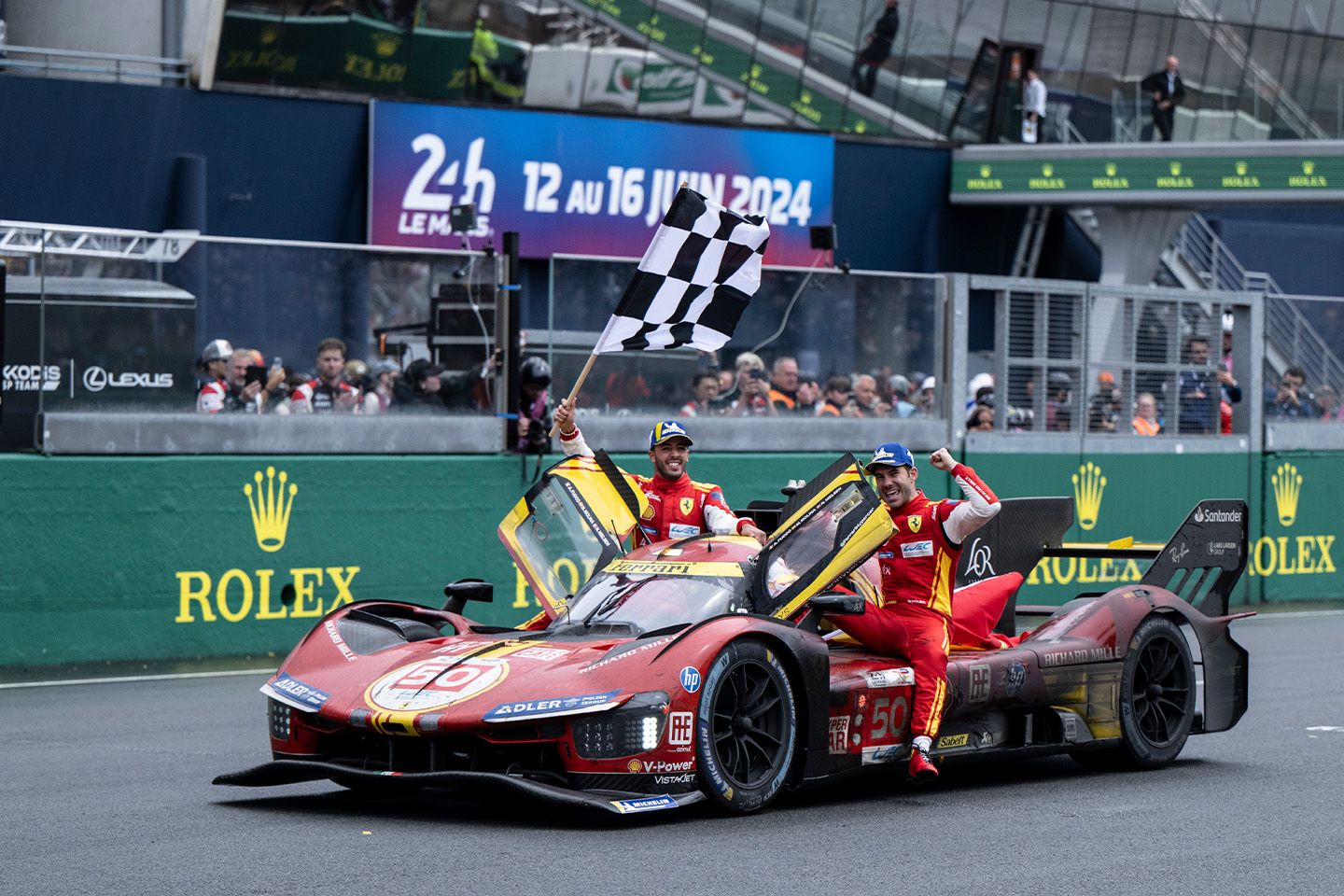
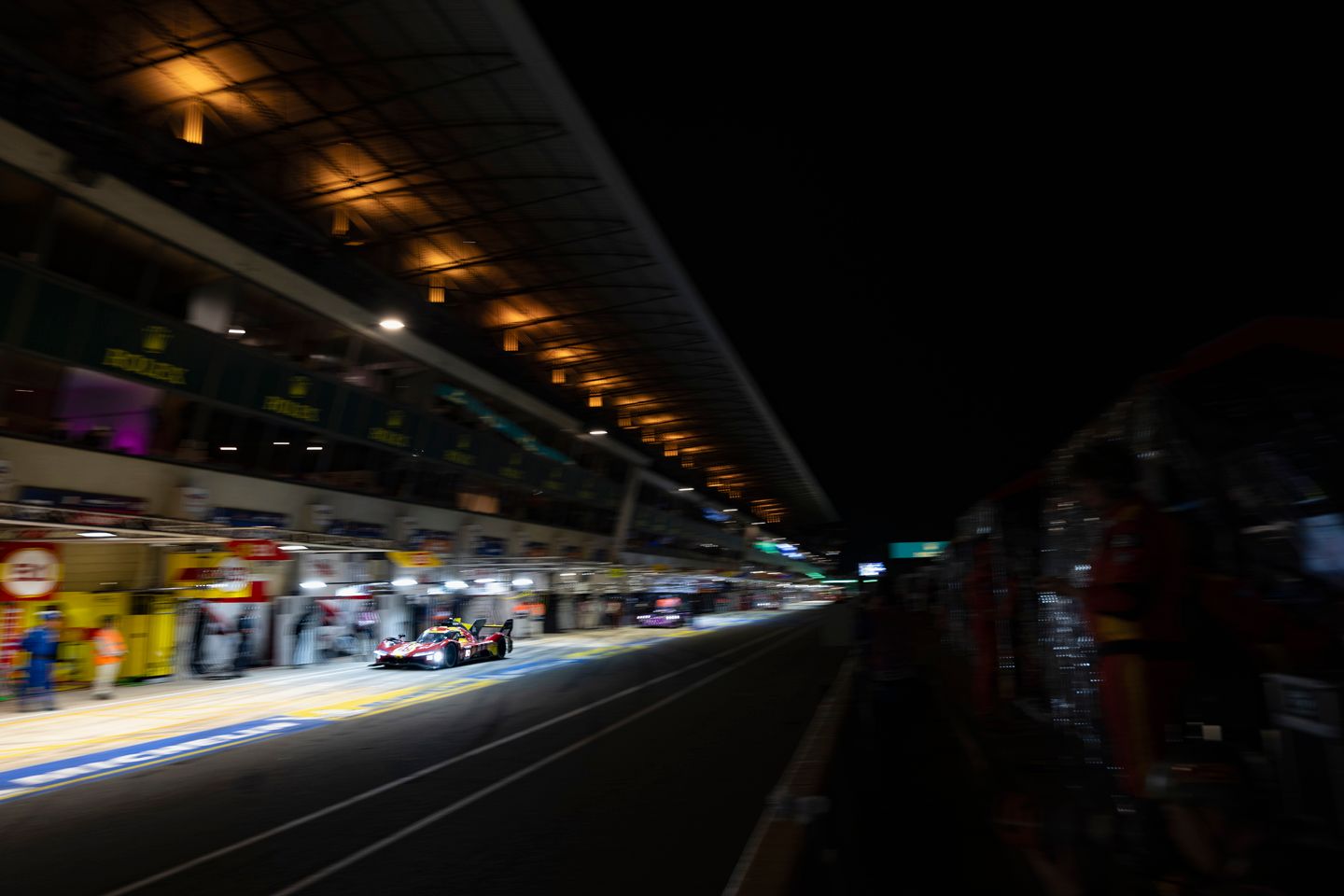
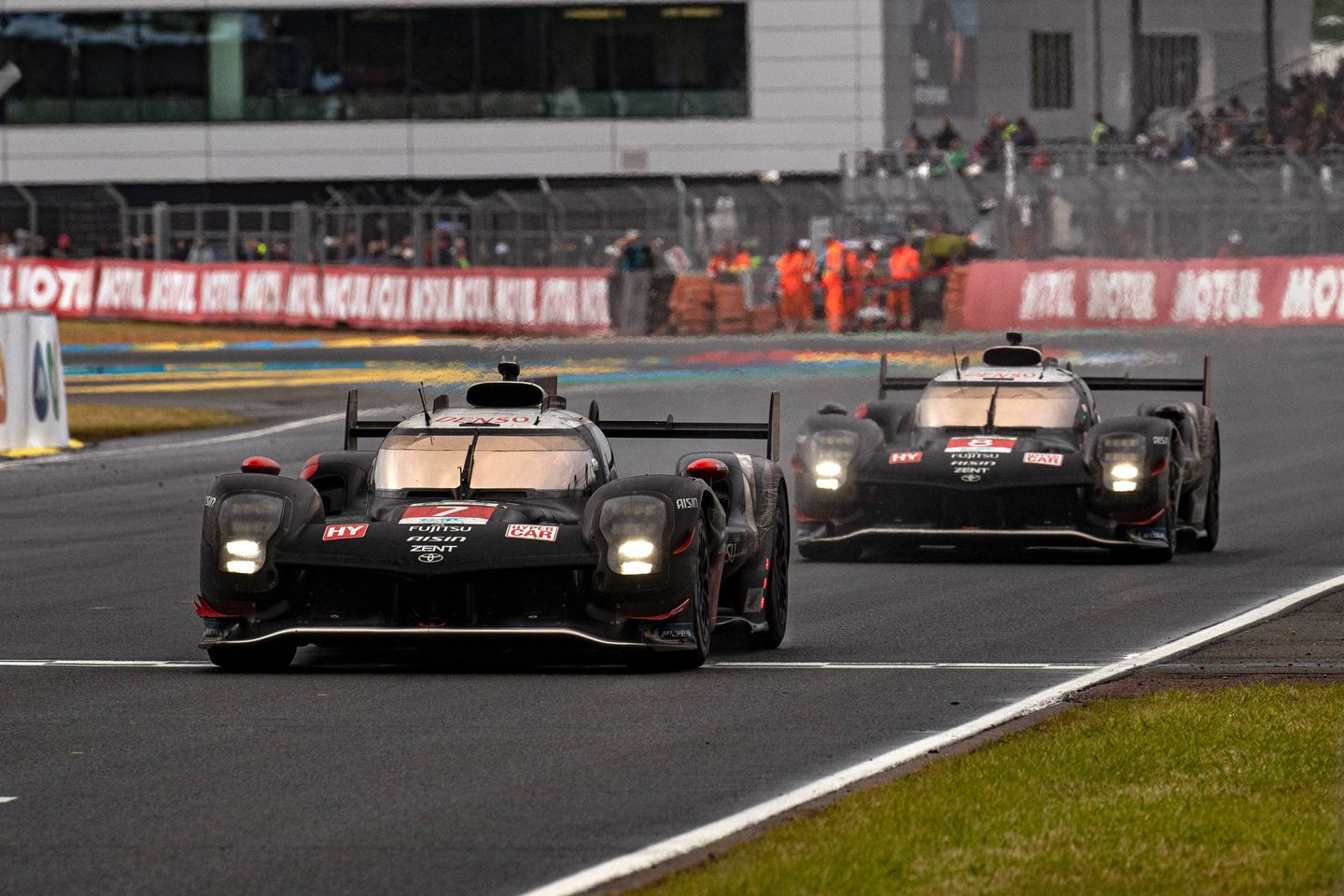
Unfortunately for team Caddy, it just couldn't keep pace with the big guns. The 7 Toyota, which started 23rd and last in class, piled the pressure on the 50 Ferrari in the final couple of hours for the win, and it looked as though the pendulum had swung the Japanese team’s way after an open passenger door forced the leader to pit. Little did we know that this put Ferrari on the winning strategy, albeit via some serious fuel saving in the closing laps that briefly brought the Toyota back into play. With just two per cent of energy (that’s battery level and fuel combined), the 50 crossed the line to take Ferrari’s second win on the bounce. Perhaps not the underdog win Le Mans sometimes serves up, but an utterly spellbinding race that had me constantly searching for the nearest live feed. With so much manufacturer support, Le Mans is unarguably enjoying a golden era, and with the hypercar regs extended to 2029, it looks set to stay that way for years to come.


Great to see so much competition this year - it was sooo close between the top 7 cars for quite a long period with only 5 hours remaining. Here's hoping that the 'Hypercar' class continues to be excellent next year.
Peugeot were also completely nerfed with the updates after Spa when they were vaguely competitive. Same story for the Iron Lambos.
Even so - and despite with the 4+ hour night safety car for the rain - this 24 hour race was again far more absorbing and interesting than 2 hour F1 races get these days.
There was such good coverage as well - live timing on the ACO website, running commentary on Autosport and simultaneous live feeds on You Tube from the 2 AF Corse Ferraris and the 2 Gazoo Racing Toyotas - you could have 4 tabs open and flick back and forth for real time on board footage - brilliant stuff. The view switched from through the windscreen to towards the driver from time to time. When Nielsen was forced into the pits with a loose door from the lead with an hour to go, you could see the desperation in his eyes, just pure emotion. Great footage.
There is a clip of Kevin Estre qualifying the Porsche on pole - great stuff - he's got a load of opposite lock going into the Dunlop chicane on the brakes. Incredible skills.
https://www.youtube.com/watch?v=Deae5KlU7y0
According to Autosport, telemetry from the cars showed 21,000 overtakes took place during the race. You're never going to get that in a lifetime of watching F1.
Also the cars handle so poorly they cannot race in rain that wouldn't trouble GT3's. Over 4 hrs behind a safety car for rain shows something is very wrong.
Transparent and limited BoP for production based cars is a necessary evil, but has no place being used for Prototypes designed to a certain set of regulations. LMDh shouldn't even be there, but it does add to numbers and brands (not manufacturers) so I get that, but there should just be a one off seasonal BoP to vaguely balance LMH and LMDh that's it, not between individual cars and not getting changed in between sessions.
Personally I want to see the best, fastest, best prepared and most reliable car win. Having a 14sec gap and lots of cars on the lead lap is meaningless if that's been artificially managed through constantly changing BoP and rules that unfairly negate track position and a lead built up.
However perhaps modern technology has killed real racing. There were some reliability issues but not like the old days. Cars are so reliable that largely removes that variable. If you had freer regs it costs too much for the bean counters. And admittedly it is a spectacle seeing three difference brands (not manufacturers) racing nose to tail half way through a 24 hr race after a safety car has allowed them to all bunch up.
Do away with the new safety car merging stuff and don't allow LMDh or make them the new LMP2 (which is now effectively just a spec category!). That would be better.
If Porsche had won, that would have given them their 20th win as a manufacturer, with a car that they didn't design or manufacture themselves. What a load of rubbish.
Well done Ferrari and Toyota.
Also the cars handle so poorly they cannot race in rain that wouldn't trouble GT3's. Over 4 hrs behind a safety car for rain shows something is very wrong.
Transparent and limited BoP for production based cars is a necessary evil, but has no place being used for Prototypes designed to a certain set of regulations. LMDh shouldn't even be there, but it does add to numbers and brands (not manufacturers) so I get that, but there should just be a one off seasonal BoP to vaguely balance LMH and LMDh that's it, not between individual cars and not getting changed in between sessions.
Personally I want to see the best, fastest, best prepared and most reliable car win. Having a 14sec gap and lots of cars on the lead lap is meaningless if that's been artificially managed through constantly changing BoP and rules that unfairly negate track position and a lead built up.
However perhaps modern technology has killed real racing. There were some reliability issues but not like the old days. Cars are so reliable that largely removes that variable. If you had freer regs it costs too much for the bean counters. And admittedly it is a spectacle seeing three difference brands (not manufacturers) racing nose to tail half way through a 24 hr race after a safety car has allowed them to all bunch up.
Do away with the new safety car merging stuff and don't allow LMDh or make them the new LMP2 (which is now effectively just a spec category!). That would be better.
If Porsche had won, that would have given them their 20th win as a manufacturer, with a car that they didn't design or manufacture themselves. What a load of rubbish.
Well done Ferrari and Toyota.
Agree that there should never be 4 hrs of Safety Car in one block: if the cars / drivers can't handle rain something needs to change. Tyre tech is as good as it's ever been. What next - no driving while it's dark?
Regarding best, fastest etc car winning - don't forget about driving talent. I love to see a slower car out-performing a faster one because the drivers are better, something than stands more chance of happening over 24 hrs than it does in a 2 hr Grand Prix, for example.
I think I largely agree about technology changing the face of motorsport (I won't say "killing racing" as you have). The actual, physical driving is much easier than it was, with modern driving aids, but offset by the higher speeds and the demands brought on by that. Le Mans is now a 24 hr sprint - incredible. One thing that annoys me is the number of incidents you see where cars drive into each other during overtaking, which I put down to a combination of reduced lateral visibility due to HANS devices and seat design etc, and a lack of ownership of the problem - drivers are paid to win, not look after the car.
That said, it's still the greatest race in the world. I haven't been since Johnny Herbert won in the screaming Mazda 787B in 1991 so I'm overdue a visit

Any links about the Porsche, interested about that car being "fake".
It's been used in various guises for a long time to allow differing cars to compete with varying degrees of success. Back in the '80s in F1 for example it was used to balance naturally aspirated cars against smaller engined turbos. However the balance wasn't right and everyone used turbos.
On the upside it's supposed to allow for more variety and different technologies to compete on an equal footing. On the downside as the poster above said it can make racing feel very artificial. Imagine if in the 100m sprint Usain Bolt was made to wear heavier and heavier shoes until the other runners could keep pace with him. Would it be more competitive? Yes. Would it be a better race...?
Peugeot were also completely nerfed with the updates after Spa when they were vaguely competitive. Same story for the Iron Lambos.
Also the cars handle so poorly they cannot race in rain that wouldn't trouble GT3's. Over 4 hrs behind a safety car for rain shows something is very wrong.
Personally I want to see the best, fastest, best prepared and most reliable car win. Having a 14sec gap and lots of cars on the lead lap is meaningless if that's been artificially managed through constantly changing BoP and rules that unfairly negate track position and a lead built up.
The ‘best, fast, most reliable car’ is always the one that has the most money spent on it, it always has been that way in racing. Whilst I agree that BoP is not perfect it will keep a lot of brands at the top level for much longer, and therefore far more interesting mix of cars on the grid for us to support and enjoy.
The dangerously low visibility was the reason for the long safety car period and ACO are adamant that no Le Mans will be red flagged - any other race would have been stopped. As a bonus though, I got a good sleep in my tent while the safety car was out!

Gassing Station | General Gassing | Top of Page | What's New | My Stuff