
Honda e | PH Used Buying Guide
Honda's electric city car was award-winning and very likeable. But surprisingly short-lived...
Key considerations
- Available for £14,000
- Single electric motor, 35.5kWh battery, rear-wheel drive
- Characterful exterior styling, great interior design
- Nippier than you might think, great urban ride quality too
- Most early problems have been sorted but it can be rattly
- Could be a clever buy if your daily mileage is low enough
This time we’re looking at the bold but ultimately unsuccessful electric vehicle that went by the name of Honda e. We have to call it the ‘e’ here rather than the ‘E’ because that’s what Honda called it. It looks funny on the page, electronic or paper, but there it is.
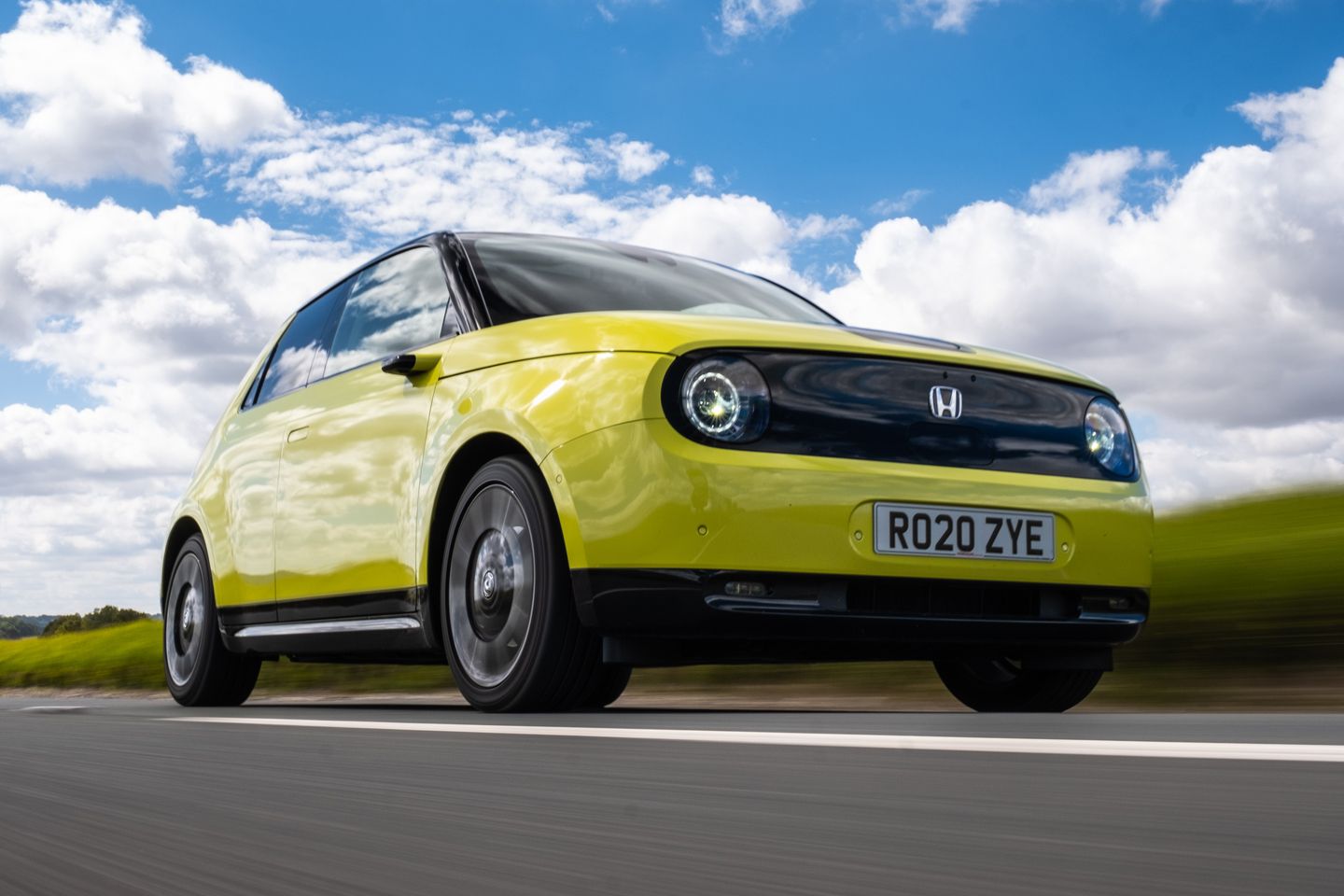
The minimalist design of Honda’s three-door Urban EV Concept, as it was called in 2017, was meant to reflect the idea of bringing simplicity to urban mobility, easily connecting occupants to everyday life, that sort of stuff. It was also supposed to put you in mind of a 1970s Civic but you had to screw your eyes up somewhat to get that connection. Assuming you wanted to in the first place.
Still, the pre-production e Prototype shown at Geneva in 2019 got everyone excited. It had that concept-that-could-become-real look about it. Inevitably, the production version shown at Frankfurt later that year chopped away quite a bit of the Urban EV’s styling originality and edginess, the addition of two more doors not helping, but there was still plenty of good will coming the e’s way when the first UK cars were put to the test.
Those putting their goodwill up were largely rewarded by the reality of the drive when the cars appeared in the UK in 2020. Our Matt had a go in one and he rather liked it, as you can see here. He was far from alone. Although there was meant to be a basic 100kW/136hp model arriving in 2021 which it was thought might account for 20 percent of e sales, we couldn’t find a single one of them on the UK used market in December 2024, so we’re guessing it didn’t turn up. Hence we’ll be focusing on the Advance which took power up to 113kW/154hp and threw in quite a few desirable features like premium audio, automatic parking and the like.
There was also a Special Edition model whose power and performance stats were identical to the Advance’s, but again we saw none of those for sale at the time of writing, so we’re thinking that one didn’t make it to the UK either. If we’re wrong on either or both counts no doubt a forum poster will put us right.
The Advance model’s 154hp and its useful 232lb ft of torque (the EV’s traditional superpower) gave it a 0-62mph time of 8.3sec, as compared to the 9.0sec of the basic 136hp model. The single motor was at the back, the 35kWh lithium-ion battery lived under the cabin floor, and the various fluids and charging gubbins sat up front, a balanced layout that allowed Honda to claim 50/50 front/rear weight distribution along with the EV’s usual low centre of gravity.
It may have escaped your attention but in mid 2023 Honda announced the end of e production for Europe from early 2024, having stopped it in Japan (where it cost the same amount as an FL5 Civic Type R!) in 2022. It never went on sale in the US. By the end Honda had managed to sell just 12,500 cars worldwide, half the number they were hoping for. It wasn’t massively surprising really, given the claimed range which was low at 137 miles at a time when other manufacturers were bandying around numbers of 200 miles plus, and the price, which for the Advance was high at £32,160. By 2023 the e had gone up to £37k, presumably in hopes of clawing back some of the high costs incurred in the creation of a dedicated EV platform for this one vehicle.
Happily, a used Honda e can now be snapped up for under £14,000. For that sort of money you’ll see dealer cars with up to 40,000 miles on the clock, but you’ll also see the odd private car with half that mileage. So, £14k or less for a 20,000-mile example of a rare, interesting and very characterful Honda EV. Is it just us, or does that sound like good value to you? Maybe there are problems we don’t know about. Let’s try to clear the fog of ignorance by taking a closer look.
SPECIFICATION | HONDA E ADVANCE (2020-on)
Engine: single-motor electric
Transmission: 1-speed, rear-wheel drive
Power (hp): 154@6,500rpm
Torque (lb ft): 232
0-62mph (secs): 8.3
Top speed (mph): 90
Weight (kg): 1,527 (Advance on 16in wheels, 1,542 on 17in)
Range (WLTP): 125 (Advance on 17in wheels)
CO2 (g/km): 0
Wheels (in): 17
Tyres: 205/45 (f), 225/45 (r)
On sale: 2020-24
Price new (2020): £32,160
Price now: from £14,000
Note for reference: car weight and power data are hard to pin down with absolute certainty. For consistency, we use the same source for all our guides. We hope the data we use is right more often than it’s wrong. Our advice is to treat it as relative rather than definitive.
ENGINE & GEARBOX
The e was an easy car to live with. Two drive modes – Normal, and Sport, which amped up the throttle response, acceleration and steering – were controlled by an old-school rocker switch in the centre console. Like most electric cars the e felt quicker, especially off the line, than either the bald figures or the Honda’s playful appearance suggested. In fact it was about half a second quicker from nought to 62mph than the VW Up GTI, a well respected ‘pocket rocket’. It took the Honda just 3.0sec to jump from 30mph to 50mph.
The pedal weights were nicely judged and the rate of decel for the single pedal control was adjustable via a paddle on the steering wheel. Unlike some EVs, the e car would come to a complete stop if you left the brake pedal alone.
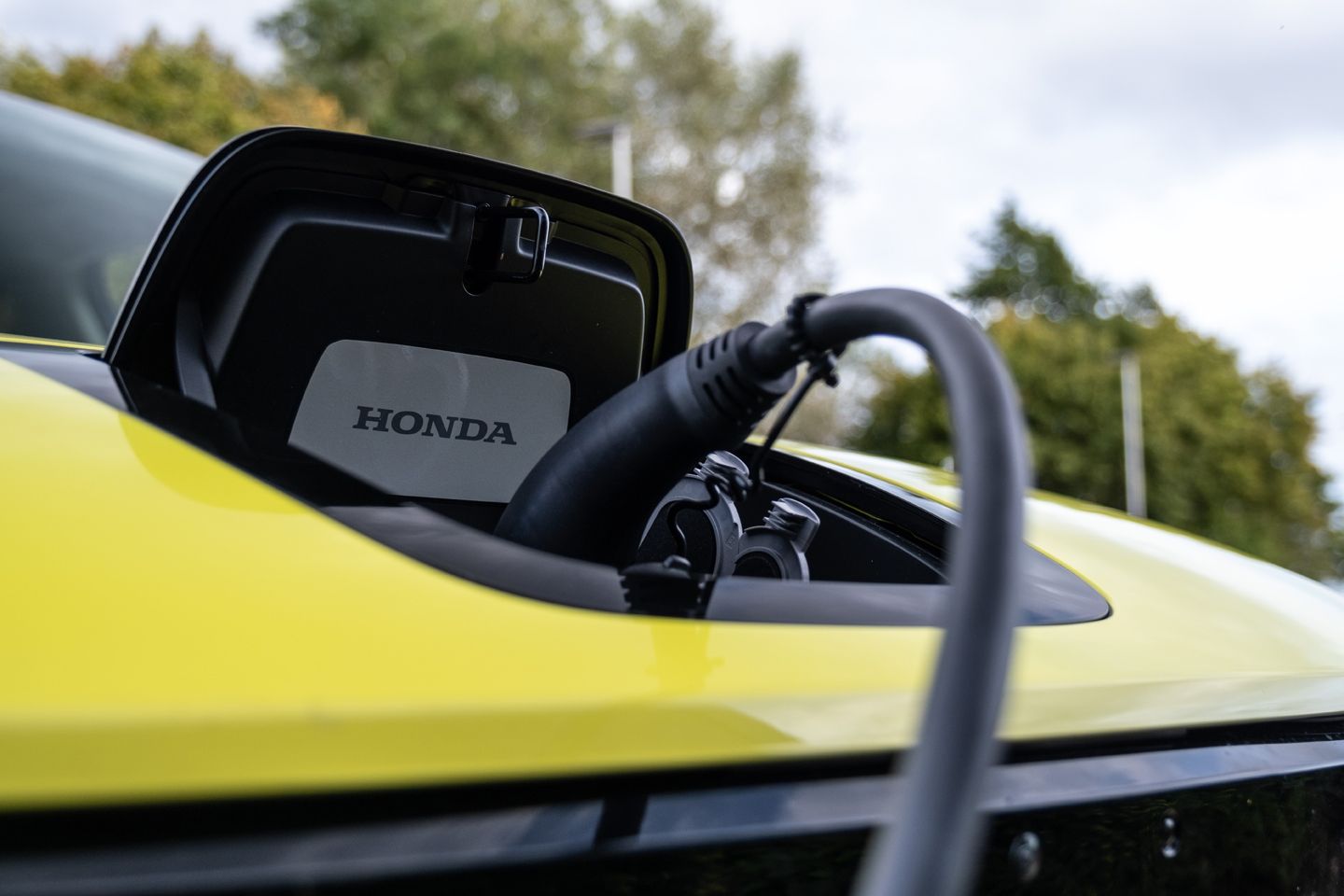
Charging was via a port under a toughened glass section of the clamshell bonnet. Underneath the larger bonnet were the usual screenwash and brake fluid reservoirs, plus less familiar items such as the coolant reserve tanks for the IPU (Intelligent Power Unit, Honda’s catchall name for the main battery modules and 12v DC-DC converter) and the PCU (Power Control Unit) which integrated inverters for the motor and generator.
The only potential worry with the top-mounted port was it filling up with leaves, sweetie wrappers or whatever other unsavoury items might be flying round in the British atmosphere. You could buy an accessory bag thing that gave this under-cover area some protection while the flap was up. While we’re here, some owners received warnings about the main bonnet being open when it wasn’t.
30 minutes on a rapid charger brought the 35.5kWh battery up to 80 per cent capacity, while a Type 2 7.4kW charger like Honda’s Power Charger would take 4.1hrs to lift it to 100 per cent from the first appearance on the dash of the ‘low battery’ notification. There were some problems with some cars failing to take a charge from public units, triggering a ‘red light of doom’ on the port, but Honda issued a software update in mid-2024 which seems to have made a big positive difference – once the update had ‘taken’ anyway. Some dealers had problems with it crashing. Owners availing themselves of Tesla superchargers often found they would brick the Honda and generate a £1,000 repair bill, but after the ’24 update they were getting fast, full and generally fault-free charges from Tesla poles for around £8.50.
The main battery’s relatively small size meant you could achieve acceptable charging through a domestic 3-pin plughole. The e’s 12v battery, which was also quite small, has been known to fail through drainage if you leave the car parked for more than a few days. Again a software update has reportedly eased this problem.
The e’s ‘fuel economy’ could be between 3.5 and 4 miles per kWh, but it could also drop to 3 or less at sustained speeds of over 60mph, or in cold weather, despite a thermal management system that heated or cooled the battery to optimise the range in low or high ambient temperatures. The ‘range left’ predictor seemed pretty accurate, to early road testers anyway, but over time it acquired a reputation among owners for being a bit guessy.
Honda EV batteries come with an 8-year/160,000km (100,000 mile) warranty that guaranteed at least a 70 per cent useable capacity up till then. Five years of servicing was included. Obviously vehicle duty in the UK is £0.
CHASSIS
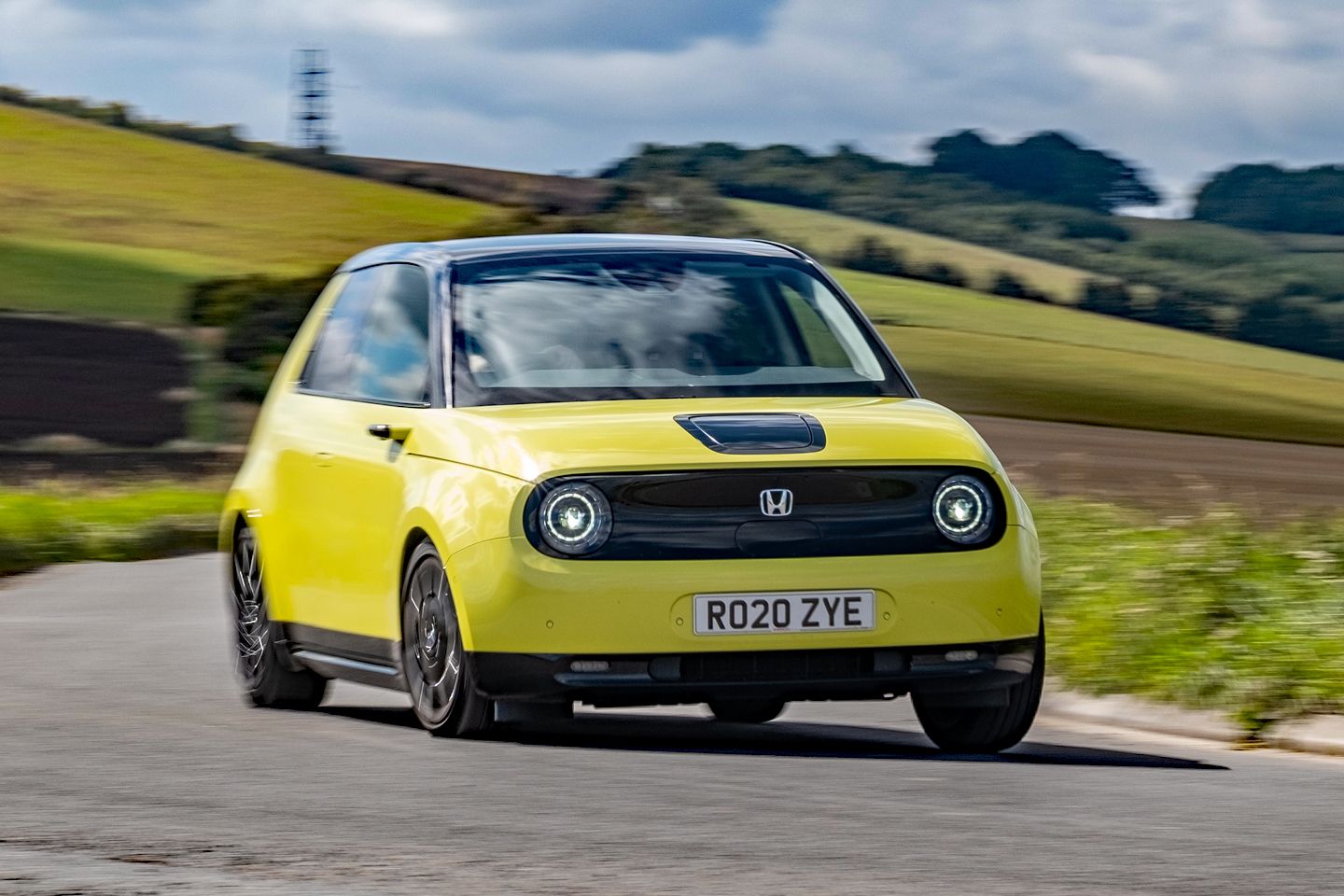
The 50/50 front/rear weight distribution and rear-wheel drive that we mentioned earlier might sound more relevant to the handling of a more powerful car, but even on a city-oriented car like the e the benefits of good suspension – independent front and rear, McPherson struts with forged aluminium knuckle and lower arms – were clear enough. The Honda dealt with potholes with remarkable disdain. Ride quality was really good for the size of the car. The side benefits of such a layout – good space efficiency and a London taxi-rivalling turning circle of under nine metres – were also definitely worth having.
The electrically-assisted Variable Gear Ratio steering was very light but it did weight up a bit in Sport mode. The Mini Electric handled more precisely on faster roads where the Honda might bob a little, but where it mattered, in towns and tight environments, it was nimble and biddable. You soon learnt to understand and accept its limitations.
Adaptive cruise control was standard on the Advance, as were (unusually for an EV) Michelin Pilot Sport 4 tyres that were bigger at the back than at the front.
There has been a problem for some owners with the brake servo/pedal simulator, where the brake pressure sensor wasn’t communicating properly with the pedal. That resulted in poor feel and could ramp up the physical input needed to stop the car. The master cylinder, servo and feel simulator module was constructed as a single item that cost the best part of £3,000, if you could get one: at one point it was on back order for several months. More than one UK owner came up against resistance from the Honda dealer network in terms of warranty cover for this.
BODYWORK
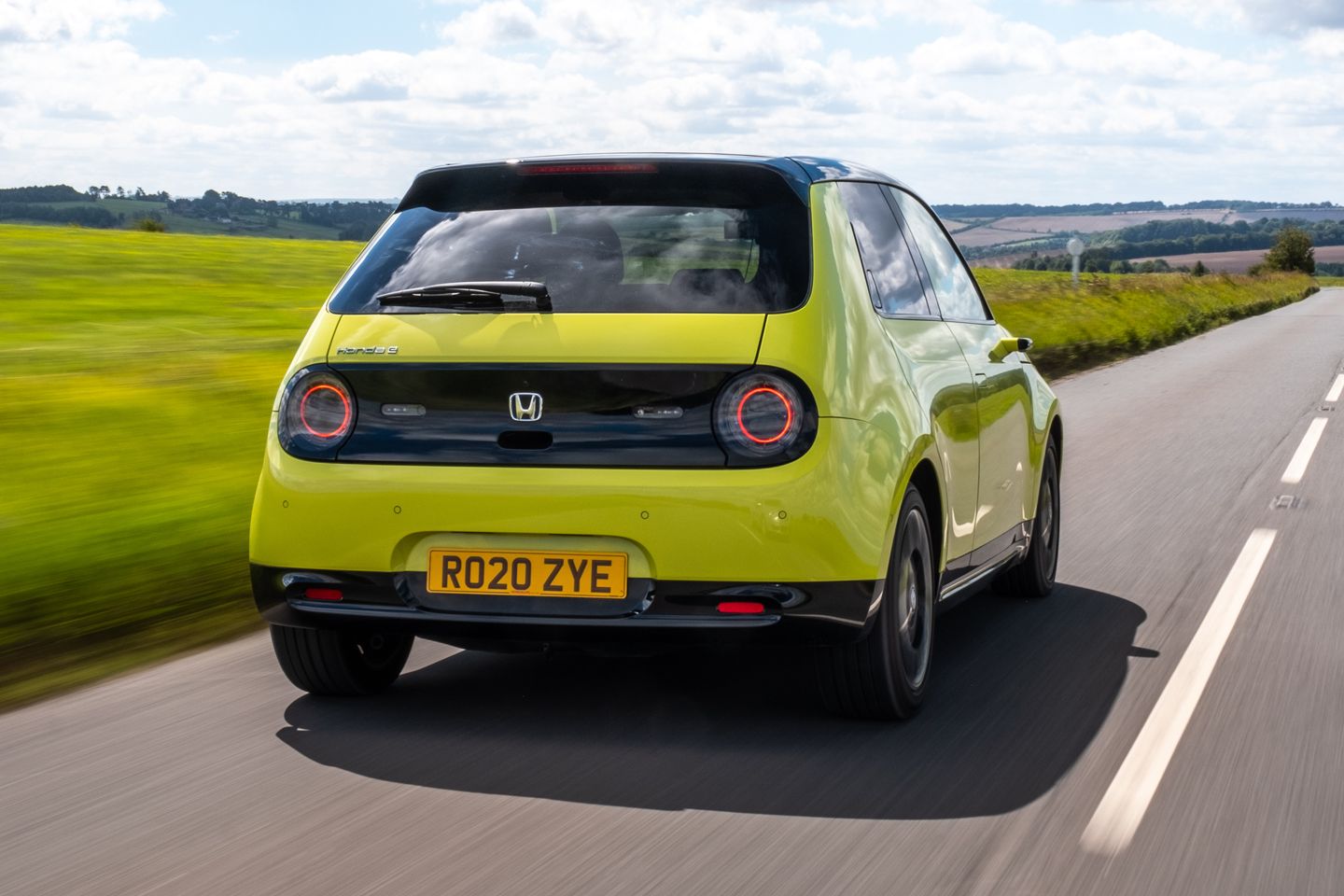
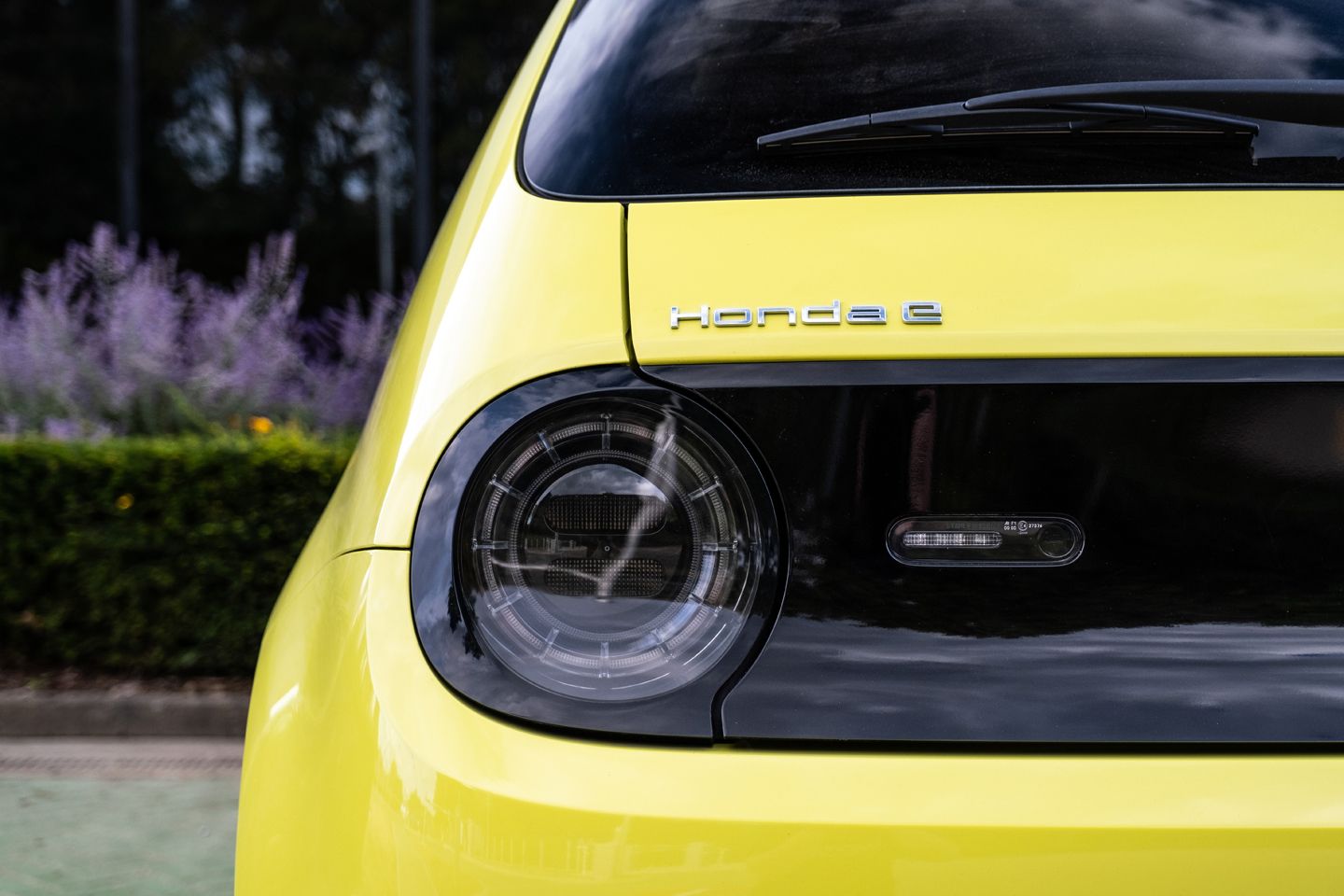
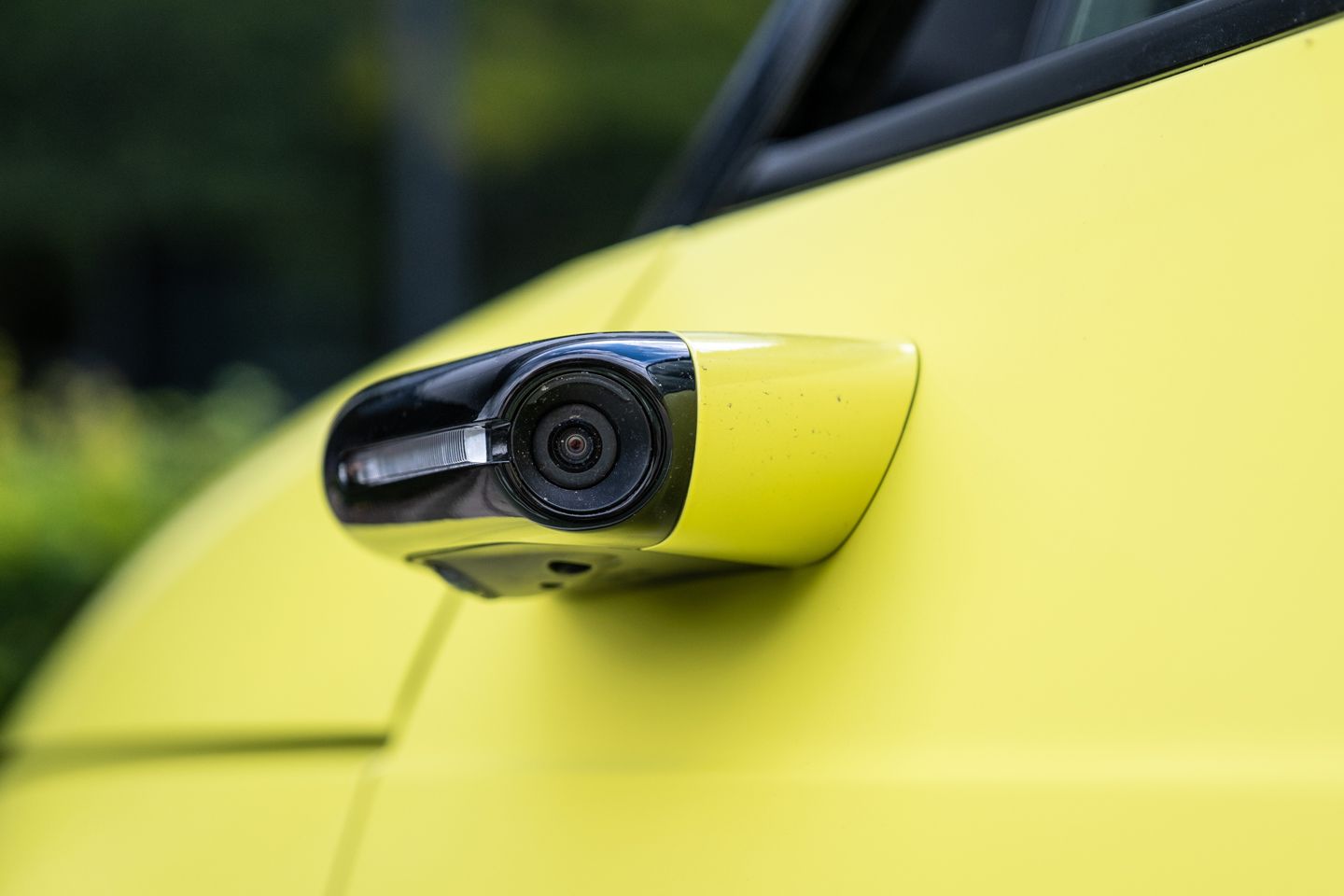
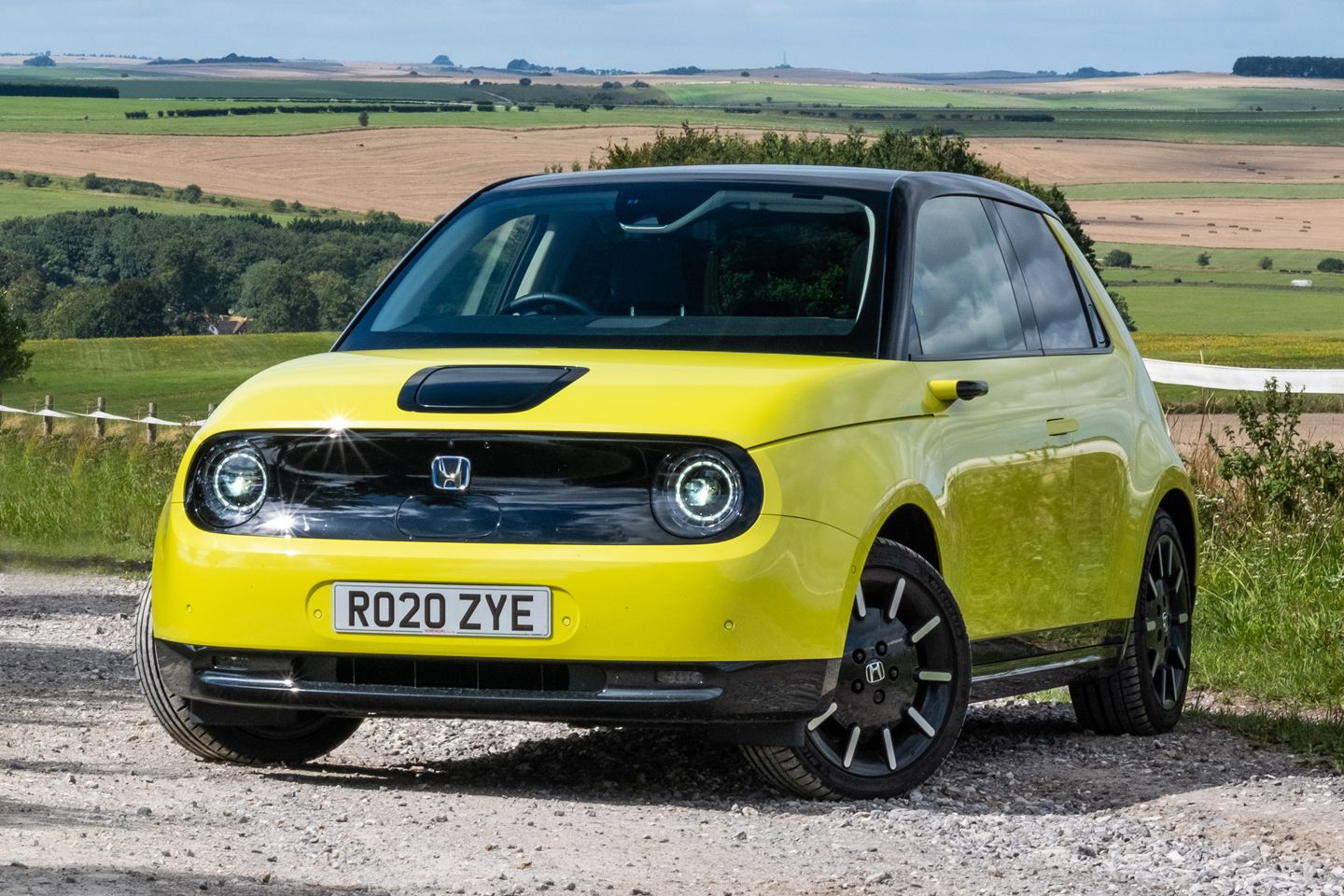
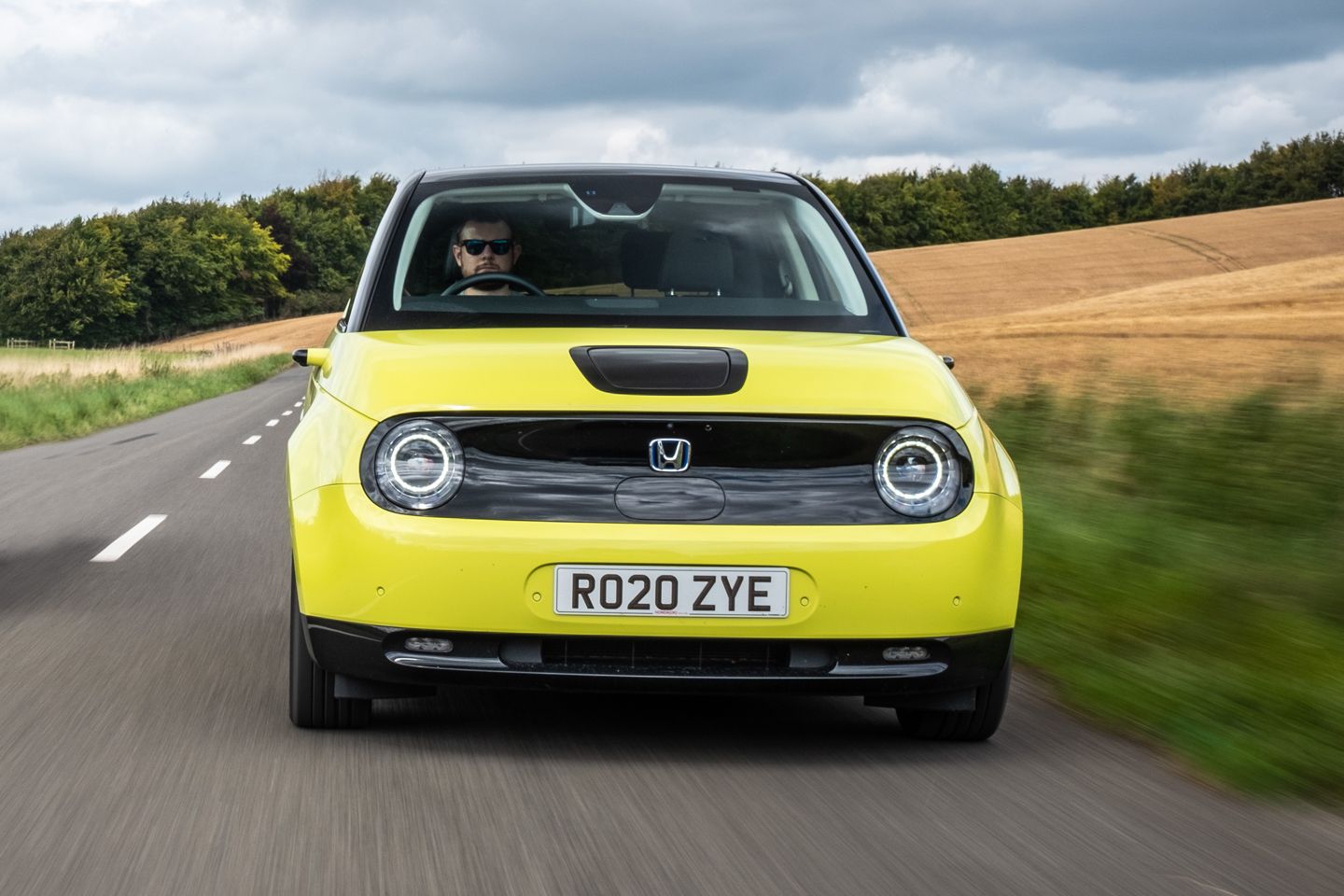
The e was all about clean surfacing, gentle curves, friendly round light assemblies and an airy, glassy cabin with frameless windows. All es had black roofs to contrast with the jolly range of body colours.
The e was billed as a four-seater, which was fair. At a casual glance you might make the mistake of thinking that the e was a two-door car, like the concept, because the rear doors weren’t at all obvious with door handles concealed in the C-pillars. You might even think it had no doors at all, what with the front handles being flush-fit items, a first-in-class feature according to Honda. Quite a few of these failed to pop out as they were supposed to, either because you weren’t using your fingers in the right way or as a result of either cold temperatures or the buildup of muck over time.
Land Rover owners will testify that problems with pop-out door handles are far from unique to Honda. If you had confidence, patience and no fear of breaking delicate clips, you could dismantle the e’s door and clean and relubricate the workings yourself. Or you could just pay £350 a side for new handles.
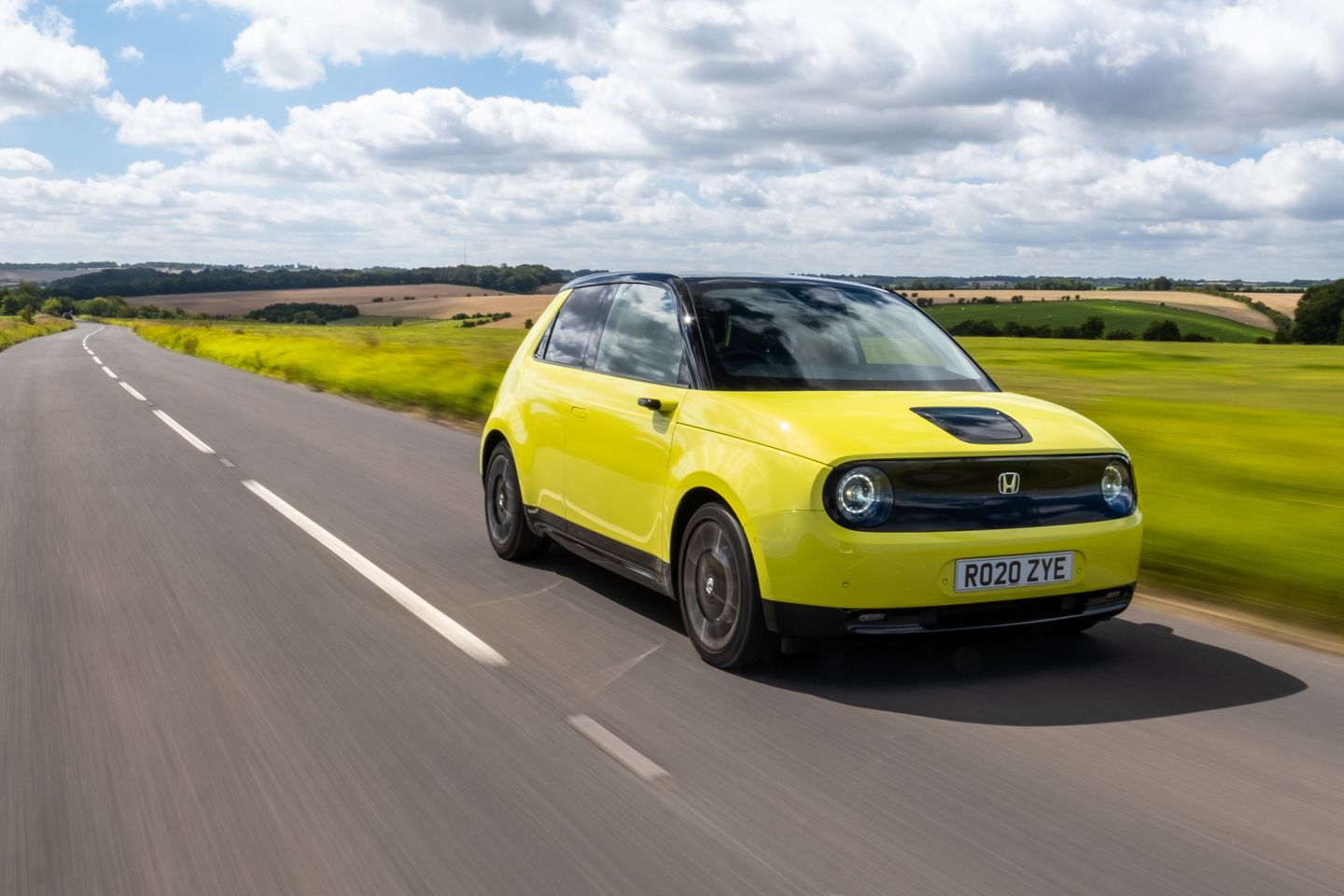
Owners of Honda es never had to replace a door mirror knocked off by an angry cyclist because the car didn’t have any. Instead it had Honda’s SCMS (Side Camera Mirror System) cameras to relay images to the six-inch angled screens at either end of the dash. The cameras didn’t protrude beyond the maximum width of the car (i.e. the wheel arches) and reportedly improved efficiency and range by nearly four per cent. The system worked brilliantly, with significantly reduced wind noise, no distortion in wet weather (the lenses were coated to repel water), and no blind spots. Even the most cynical drivers were quickly won over by it.
This next bit should strictly speaking go in the Interior section, but while we’re in looking backwards mode we may as well mention that the rear-view mirror doubled up as a display for the central rear camera, allowing you to dispose of any inconvenient human beings who might be sitting in the back seats obscuring your normal mirror view.
We were wondering into which section, Body or Interior, we should insert the fact that the front screen was heated, but it looks like we’ve put it in here.
Boot capacity was far from huge at 171 litres, which was about 50 litres smaller than an electric Mini’s, although this did grow to 571 litres with the back seats down, or 861 litres if you wedged stuff in right up to roof level. There was no noticeable lip to get it over and the aperture was conveniently large.
Lighting front and rear was by LED, with programmable options including a welcome lighting sequence as you walked up to the car. You could get the charging port behind the high-strength glass cover to join in on the welcome lighting fun. Otherwise it was blue while charging, or red if something had gone wrong. Some e owners have had problems with their front windows not going all the way up when the door was closed.
INTERIOR
You sat quite high in an e. This gave you good visibility through the generous glass areas. Honda reckoned that the generous wheelbase provided passenger space comparable to that of cars in the segment above. That didn’t ring entirely true if you were on the wrong side of six feet tall and trying to squeeze yourself into the back. The high floor didn’t help you there. The back seat folded down but it wasn’t split-fold, reducing the car’s flexibility somewhat if you had (say) three bods in the car including yourself and some flatpack furniture to get home.
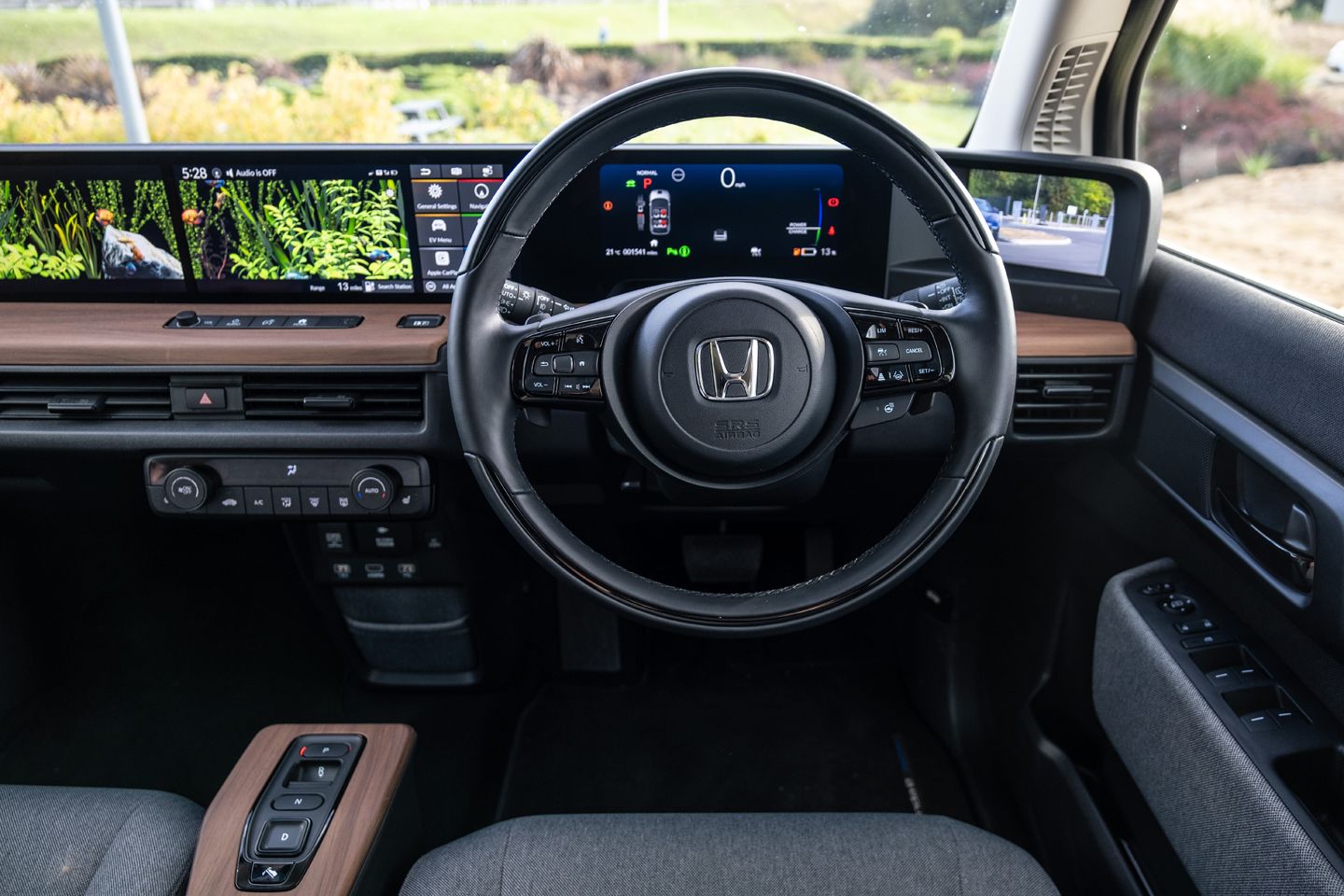
Climate control was standard, as were heated front seats, heated leather steering wheel and a panoramic glass roof. For some, the steering wheel looked a bit generic. For others it was reminiscent of the wheel in Honda’s fantastically brave gen-one Insight, albeit with the bottom spoke missing. Quite a few other EV manufacturers are going in for squared-off wheels these days, and it’s not hard to imagine one of those looking good in the e’s cabin, but if you like Honda’s nod to its mould-breaking Insight then it’s a winner.
The most striking aspect of the e’s cabin of course was the Honda Dual Screen, two 12.3-inch pinch-and-swipe screens which along with three others (the two mirror screens and the 8.8-inch driver display) ran right the way across the dash. Passengers could play around with ‘their’ screen and then hand over the display to the driver. You could use them to look at regular stuff like navigation, DAB audio, camera, range, energy usage and regen, or you could replace all those with a view of a two foot-wide aquarium. Not just a view either, it was interactive: you could adjust the quantity of fish in there and even drop in some virtual food pellets for them to swim over and gobble up.
Putting the My Honda+ app on your smartphone gave you remote access to battery status and charging data and the facility to start or stop charging remotely. You could also create weekly charging schedules on your phone to send to the car. If you’d forgotten where you’d left it, the car that is, Honda’s Car Locator function would find it. Apple CarPlay and Android Auto were both present. As long as you had My Honda+ installed, Android let you lock or unlock the car by tapping your phone against the B-pillar, handy if you’d misplaced the key. There have been some reports of poor sat-nav performance. This wasn’t always cured by replacing the GPS antenna. In at least one case Honda UK was laying the blame for it at Apple CarPlay’s door. We believe that other car manufacturers have gone down this route when similar problems have occurred.
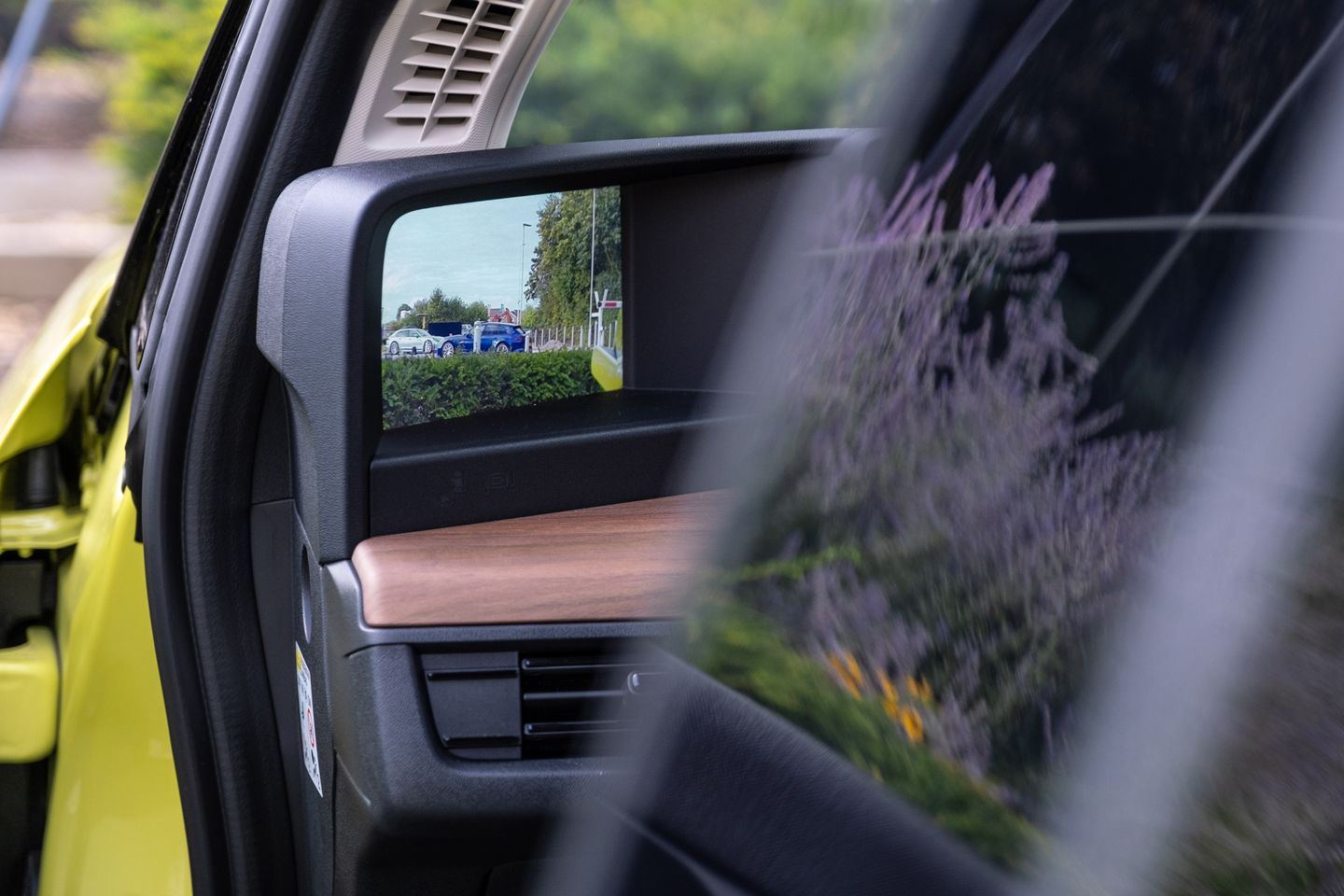
Matt wood-u-like trim pieces and tweedy sofa fabrics created an engaging, lounge-like ambience that neatly blurred the line between the car and a modern flat. Thankfully Honda didn’t go down the VW route of doing away with anything knob-like in the cabin, so you still had physical controls for the heating. You selected your direction of travel and your driving mode from a neat bank of buttons in the ‘wood’ panel between the seats.
The Honda Personal Assistant was designed to develop a greater understanding of the human voice as time passed by, helping it to deliver more accurate responses. There were four USB ports, two at the front and two in the rear, plus an HDMI port for content streaming while waiting for the car to charge. There was even a three-pin plughole to connect up your PlayStation for gaming while-u-wait.
When you pressed the Parking Pilot dash button the car would start looking for a suitable space. Having found one it would then park itself without you having to bother with the steering wheel, throttle or brake. The Advance came with a 376-watt premium audio with seven speakers, one centre speaker, a 75w subwoofer under the back seat and a radio antenna hidden in the C pillar. Door pocket storage was a bit miserly but there was redemption of sorts in the central cubby which came with movable dividers, a beautiful solution. Simple but clever. That could be Honda’s motto.
Less clever was the absence of a heat pump, so if you wanted to maximise your mileage you would be turning off the heating. Perhaps the most annoying problem with the e, however, was the number of rattles that could manifest themselves. Electric cars are by nature quiet in operation, so any random noises will seem disproportionately loud/annoying. The most commonly mentioned locations for rattles were the steering wheel (usually when it was turned) and the overhead switch unit by the rear-view mirror. Passenger doors and sunroof blinds were also mentioned in this context. It was all a bit surprising for a Japanese-built Honda, a firm more normally associated with scrupulousness than slapdashery.
PH VERDICT
Some said that the e was never meant to be a high seller, and that it was just a testbed for Honda’s EV tech. Hmm, well, maybe. This is an odd one. In 2020 Honda was predicting that, by 2022, all of their mainstream models in Europe would be ‘electrified’, three years ahead of their previously announced goal of 2025. Honda’s definition of electrified turned out to include hybrids. The UK range at the end of 2024 consisted of six hybrids, one plug-in hybrid and one petrol (Civic Type R).
Honda also said that by 2030, car development would be centring on three pillars of electrification, automation and connected services. Their UK website talks about new tech they’ve created for an advanced charging system and the ‘thin, light’ 0 Series models with low-degradation batteries that will grow to a seven-car range by 2030, but following the disappearance of the e, the only new, fully electric Honda you can buy in the UK right now is the awkwardly-named and slightly underwhelming e:Ny1 SUV. That starts at £40,600, but the lack of interest in it is shown by prices for used examples that are already down to as little as £24k. That could get you a 2023 e:Ny1 with delivery miles.
Leaving those future plans aside, the e represents an interesting used option right now. The market will probably be as small as it was for the aforementioned, now 25-year-old (!) first-generation Insights. In fact, there’s likely to be a significant crossover between those two groups.
Might it be that the EV market will divide itself between those who must have the biggest range, just because they can, and those who are more relaxed about a smaller range, knowing that it’s all they actually need? If that happens and you’re in the second of those two groups, a used e should look more appealing at the end of 2024 than a new one did in 2020. Sure, the e’s range is small, but then so is the daily mileage that the vast majority of ordinary UK motorists do, and the e’s fast charging capability is no worse than that of most other EVs. Used Mini Electrics with the 32.6kWh battery are slightly cheaper than the Honda, mileage for mileage, but they’re more common and (some might think) not as charismatic as the e. Plus of course they only have three doors, not five.
The arrival in late 2024 of the electric Dacia Spring, offering the same sort of range as the Honda and at more or less the same money new as the cheapest used e, might depress the Honda’s used values even further. That’s good news if (say) you’re a rural type who can always park within an extension cable’s distance of your house and you’re OK with the Honda’s range, because the e should prove to be a very pleasing and peaceful car to bumble around in. It has a useful turn of speed when you need it and more than acceptable driving manners. You do need to be able to put up with random rattles though. That was a weird one because the e looked so nicely put together.
As we went to press in in December 2024 the most affordable e on PH Classifieds was this 25,000-miler from 2020 at £13,990. If you fancy the idea of a concept-car type of colour, here’s a yellow 14,000-miler from 2021 at £15,500. Just for the craic, someone decided they’d like to put a carbon fibre widebody on an e along with quite a few other mods including distressed leather seats (Corbeau carbon fibre ones at the front), 19-inch wheels and aftermarket suspension, wheels and brakes. They’ve now decided they’d like to sell it, so if you want to be different here it is at an asking price of just under £35k.


 Absolutely what an electric city car should be. Shame (albeit understandable) about the price.
Doesn't score many points in objective tests but I bet it's a great ownership proposition as a local runabout.
Zero problems apart from the drivers door handle sometimes making the window drop a few mm - replaced under warranty - plus a few rattles that come and go. Honda pick it up, service it and bring it back - that’s been our only contact with the dealer in 2.5 years apart from them attempting to promote the utterly boring ENY one.
It’s good fun to drive - more sporty than the original Leaf and Kia Soul and just as reliable, and the interior is always a talking point with new passengers. It also has a fish tank app so you can sit and feed tropical fish. There are no fart noises.
Cameras for mirrors are a mistake and an utter PITA - the view is fixed so a slip road entry needs a full over the shoulder movement rather than just moving your head to check the blind spot in the mirror. Even parking is affected because of that fixed view.
Range is 120 in summer, and as low as 80 in the depths of winter. We’ve never charged anywhere apart from our 10 amp granny charger - if you can cope with the range and the ‘mirrors’ it’s a great car.
I’ve seen one where they owner had lowered it and painted the lower panels body colour - that made a huge difference to the way it looks.
Will be a complete nightmare to run second hand. Now obsolete, very few sold, will be very difficult to get parts for as time progresses. No network of specialists out there to sort out the inevitable issues. Honda dealers will wash their hands of it as soon as they can.
To me it’s only got shed value now let alone in 3 or 4 years time. It should be in the shed section.
Very sad to see a once great engineering company, Honda, getting things so wrong.

Mod note: spam removed...
No! ... not 'just because they can'; more like just because it's a necessity with the present infrastructure! This isn't a ego massaging exercise. I'd had enough of my EV with constant range anxiety, nowhere claimed range. The journey you are on isn't always the problem, it's working out the one or two after that.
This Honda was an opportunity missed, the design guys did their work well but at a time when city/short commute/school run - mind you who not many with kids these days who don't feel an SUV is de rigeur - range still needed more than this car provided without a charge every day. Perhaps less emphasis on the cabin tech and more on real world usabilty by Honda would have helped sales.
As a former Honda owner I'm disappointed they've lost their innovative edge in the smaller car sector over the last decade or so.
Reminded me of a cross between a FIAT 127 and the NSX's chassis, it that makes sense.
The absence of ears sticking out means one can terrify/awaken brain-dead SUV drivers on country lanes.
The accessory central arm rest would be welcome for lateral location.
Rattles/creaks are a Honda thing - with the Leg End, largely due to the differing cold-weather thermoplasticity of the Japanese tree and the plastic bits onto which it's clipped. Thin strips of Velcro are the solution.
And yes, a 13A three-pin gets it back to a usable level in a reasonably short time.
However, the range was the only reason I didn't buy one - it just wasn't enough to fit into life, unfortunately.
Ended up ordering a new Up! GTI, which I love and on the flip side, has much better residuals, so in effect has cost far less to run than the E.
On the range potential issue. For Japan ranges are a lot less. Saw a YouTube program recently on the Nissan Sakura (can't remember who, but it was one of the better known channels) where they mentioned it had been a best seller in Japan for a few years now, yet only had a range of 112 miles. Says a lot about how short the journeys are for many over there. Sure that is a Kei car (and the Honda e is too large and also too powerful) and I assume the big cities are where it sells well do you need to prove you have a parking space before you can buy a car outside of the big cities in Japan ?).
That range is ridiculous same as the first gen e-mini (which we ordered but had to cancel).
Yes the avg daily distance driven is ~18miles in the U.K. However once a month or once a year when someone wants to drive further and can’t then this car fails and simply no longer works. You can make the argument that it would likely only be a 2nd car but then it’s neither cheap or practical enough to justify.
If only it had +200mile range I’d have been a huge fan because I like everything else.
However, I'm concerned that the Up has been faultless, insanely cheap to run and an all-round brilliant car. I'm still hearing some pretty big bills on the Honda (door handles, mirrors, the braking module especially costs thousands to replace) so it's a bit concerning considering in 5 years and 60k on the Up, I've only ever replaced the tyres (still the factory brake pads!)
However, the Honda seems to be selling well and has bottomed out. I've got a watchlist on AT and nearly everything <£15k sells quickly, so I think it's hit the bottom of the curve now.
That range is ridiculous same as the first gen e-mini (which we ordered but had to cancel).
Yes the avg daily distance driven is ~18miles in the U.K. However once a month or once a year when someone wants to drive further and can’t then this car fails and simply no longer works. You can make the argument that it would likely only be a 2nd car but then it’s neither cheap or practical enough to justify.
If only it had +200mile range I’d have been a huge fan because I like everything else.
That range is ridiculous same as the first gen e-mini (which we ordered but had to cancel).
Yes the avg daily distance driven is ~18miles in the U.K. However once a month or once a year when someone wants to drive further and can’t then this car fails and simply no longer works. You can make the argument that it would likely only be a 2nd car but then it’s neither cheap or practical enough to justify.
If only it had +200mile range I’d have been a huge fan because I like everything else.
I do more than those distances up to four times a month. And I do it in rural areas with few, if any, chargers.
As a commuter car, I'm sure it's fine. As your only car... sure. Try driving from Stirling to Cardiff, using public chargers. You'll be having a lot of 'lunches'.
But even if it was only once a year, a 500-mile drive in this thing would be intolerable - you'd have to fully charge four times en route. How long would your journey be?
Like a few EVs - not all by any means, but a few - this is very much only a 2nd (or more) car for the wealthy.
Gassing Station | General Gassing | Top of Page | What's New | My Stuff