
AC Schnitzer: 'Domestic market has collapsed'
Parent company is parting ways with brand, blaming everything from tariffs to an uninspired younger generation
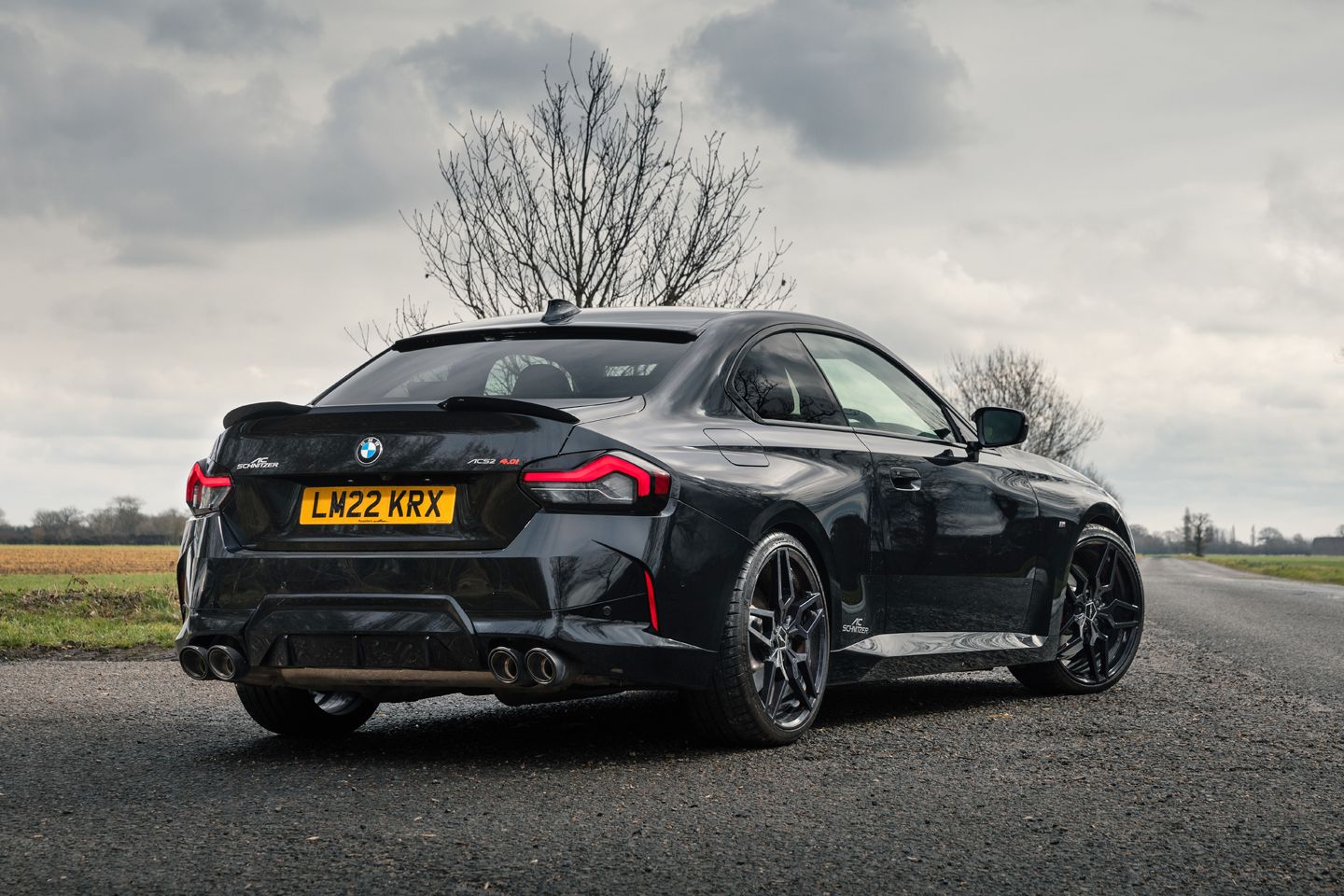
While this is patently a challenging time for OEMs (to put it mildly), the predicament is equally unfavourable for the aftermarket. Folk have less money than ever to spend on cars, so modifications fall further down the list of priorities. And when you consider that new cars are more capable and more complicated than ever, that tends to make upgrades both harder to create and then harder to justify for the customer. Furthermore, even those who do want to take the plunge on modifying, now have an unprecedented amount of choice from the manufacturer, either when ordering or post-registration. We now live in a world where M2 customers can order their car with a wild M Performance Track Kit.
So perhaps it should come as little surprise that AC Schnitzer, previously a giant of the German aftermarket scene, is being offered up for sale by its parent company Kohl Group. This will happen at the end of 2026, as the latter ‘will focus more than ever on the retail and service of vehicles and motorcycles.’ While it is guaranteeing warranty support for the Schnitzer wheels, engine tunes, aero parts and suspension upgrades after the end of this year, don’t expect much new to be announced during 2026. If a buyer cannot be found, this is it for AC Schnitzer after decades in the game, just a few years after Schnitzer Motorsport - serial touring car winners - were wound up in 2021, and with the UK distributor Rossiters having ceased trading in 2024. Losing Alpina (as it’s been known for so long, at least) one year and the Schnitzer the year after really would be a big blow to BMW fans.
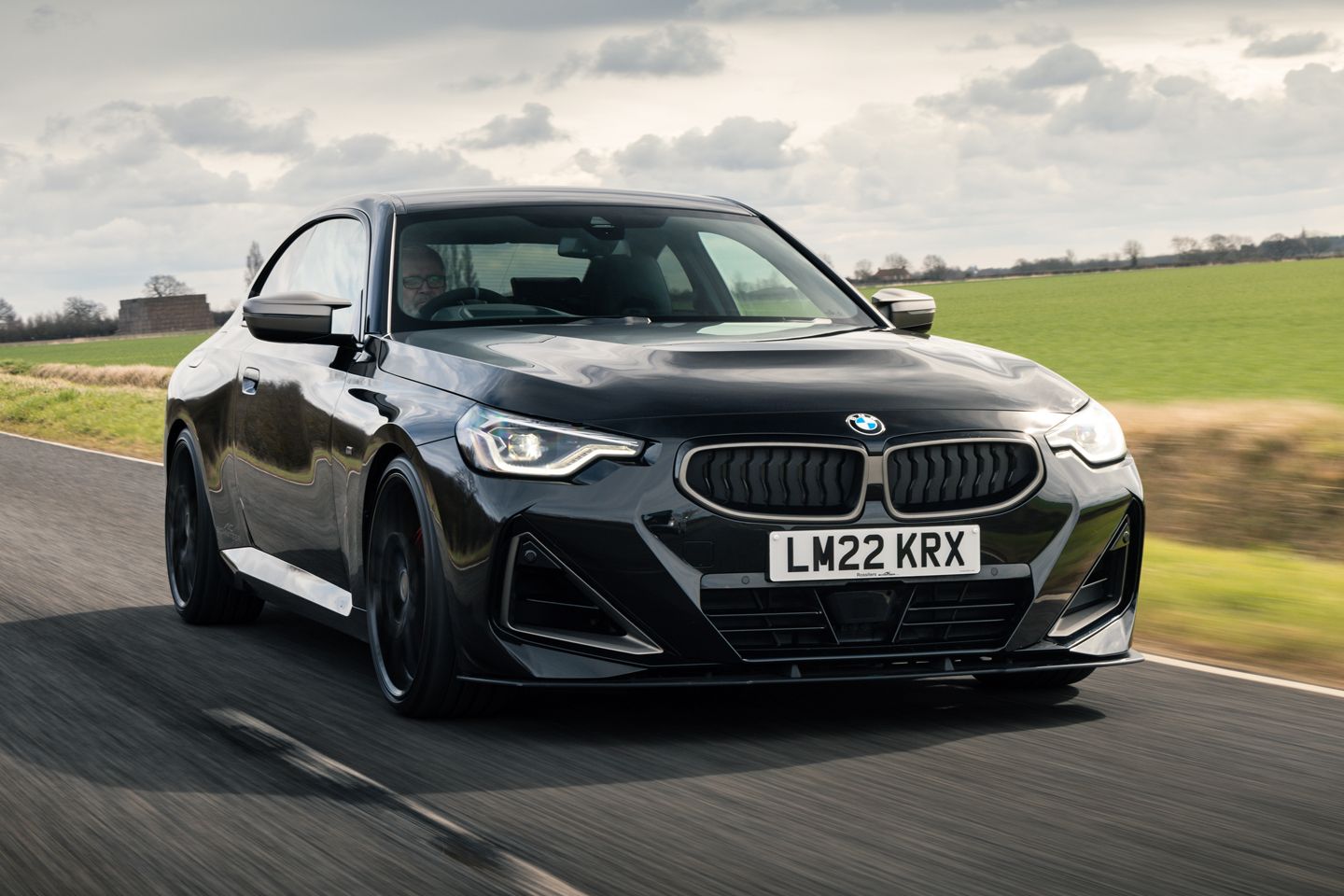
The press release is pretty forlorn, even in the circumstances. As well as the things we’ve come to expect from car companies experiencing a downturn of late - cost of materials, tariffs, a general post-Covid slump - Schnitzer suggests that simply being in BMW’s homeland is holding it back. It points to an ‘extremely long approval process for parts in the German system’ that has caused it to fall behind its competition based elsewhere. Once upon a time, that wouldn’t have been such an issue, with cars and upgrades featured in print magazines that by their nature take a little while to create; in a world of globalised social media, however, being first to the punch on more power, more speed, and more clout is absolutely critical. And Schnitzer has been losing out. “If we can only bring aftermarket parts to market eight or nine months after the competition, that speaks for itself,” said Rainer Vogel, Managing Director of AC Schnitzer.
There are cultural shifts to consider as well, some of which will have affected Alpina also. Even with a wider resurgence of late, the combustion engine is in decline, with fewer new cars to fettle in the familiar way. Those that do exist are sullied by filters, with any changes harder to execute than ever. And everything is more expensive, of course. When BMW launched the now-legendary 3.0-litre B58 engine in 2015, a 340i with that engine cost £38,125; these days, an M340i is £62,425. You’re surely much more likely to contemplate an ECU boost and naughty exhaust on something that’s less than £40k (or depreciated from there after a couple of years) than one that starts at almost £25,000 more.
Interestingly, Schnitzer points to a change in attitude towards car modifying as a reason for the recent decline. ‘It is also true that buyers of vehicle enhancements through aftermarket parts are often portrayed in the media as eccentrics or posers’ is not a line we ever expected to see in a press release. While it’s true to say that a BMW modified in Aachen is a very different proposition to one with an Alpina badge, it’s easy to see where they’re coming from. The way we buy and use cars has changed, and so has our approach to upgrades; typically anything modified, if modified at all, tends to be a bit subtler than it once would have been, even if shows remain well attended. Stickers and 21-inch wheels on a Supra maybe feel a bit old hat now. Perhaps it could be argued that Schnitzer hasn’t evolved with the times as it’s needed to; on the other hand, it’s been pretty hard to predict demand, supply and eligibility of anything automotive recently.
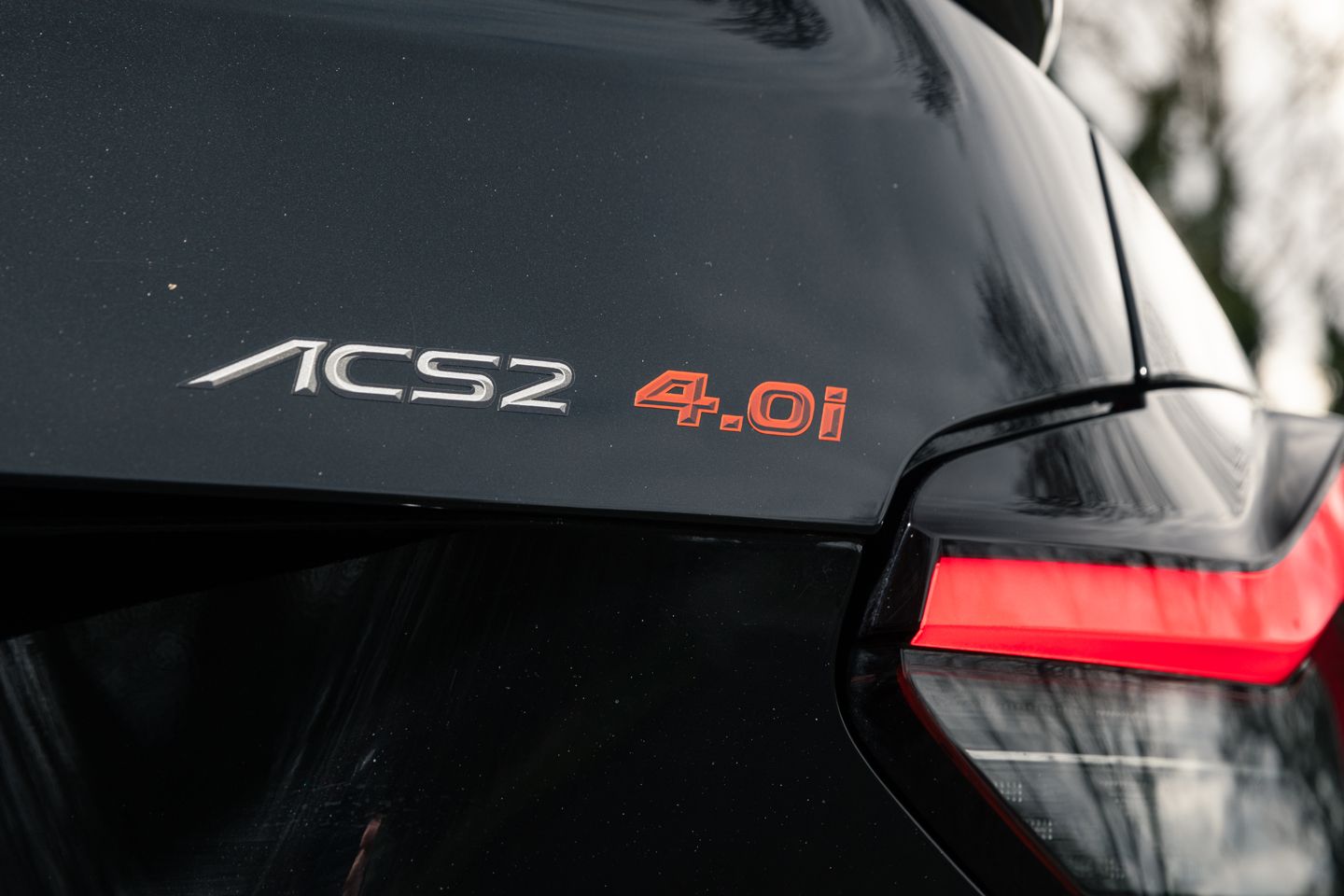
In another fairly frank admission, Vogel added: “It is certainly also true that we - like other tuning companies - have not succeeded in inspiring young customers to enjoy sporty driving with our brand to the same extent as their fathers’ generation did.” Which, actually, feels a bit unfair on Schnitzer and similar outfits; from our experience, the enthusiasm and interest are much as they ever were, but everyone now seems to live busier lives with less disposable income and free time. With cars of any type more expensive to buy and harder to get hold of than ever, so the passion has evolved. Imagine, say, finding a Schnitzer E36 and attempting to restore it now against 20 years ago - the cost of everything would be incomparable.
It’s a crying shame, of course, given the history associated with the Schnitzer brand and the success it has achieved; this is not a situation that makes anyone happy, or could have been envisioned until fairly recently. Summed up neatly by Rainer, who sounds like a pretty sound bloke: “Making a rational decision regarding a business segment that is so emotionally charged is not easy. But as a family-owned business, we always think in terms of the entire Kohl Group and its stable future.” Sadly, BMW tuning isn’t the business opportunity it once was. Nine months to go for a buyer to be found.


Now I couldn't afford to do anything like that, my son has a mortgage and young family so his workaday car has to be his only car and practical.
Successive governments and inflation have sucked most hobby car options out of the game. A C Schnitzer are a niche luxury that has had its time.
Cars are far more boring than what they used to be. There's a lot less choice, and the whole "Speeding is Bad" thing has probably made youngsters not car about getting a Hot hatch and speeding along a good back road.
Friends children say they're not even bothered about learning to drive, and would like autonomous cars instead. Sad really.
Reduced Motor shows
Kit cars are almost non existent now.
You buy a car on line for gods sake never having had to set foot in a dealership picking from available stock.
The rise of Chinese brands with no pedigree being seemingly popular, purchased on price
What could be driving this.....
The removal of the feel/thrill of driving from new cars
The need for instant gratification
War on speed
Telematics/cameras and the fear of your neighbour feeling obligated to grass you up
Cost
I know there are a multiple of reasons and no one element can be cited as definitive but the effect is reduced interest in cars at large. I would also add that younger generations have reduced interest in material things and value experiences more...
There seems to plenty of options for older 911 owners (and MX5s), but it s thin pickings for most others.
Updated components to maintain an improved previous gen models rather than stick on tat and a few big ticket items for the latest version, which already looks pretty modified out of the box.
Also, owners of used cars also have so much more choice in 'go faster' mods now, there's no need to pay a big premium for ACS stuff.
As a result, apart from the ultra-high end, cars aren't the status symbol they might have been back in the day. young'uns now are far more aware of being perceived as cringe than they used to be.
A modified Focus RS just doesn't cut the mustard these days
Reduced Motor shows
Kit cars are almost non existent now.
You buy a car on line for gods sake never having had to set foot in a dealership picking from available stock.
The rise of Chinese brands with no pedigree being seemingly popular, purchased on price
What could be driving this.....
The removal of the feel/thrill of driving from new cars
The need for instant gratification
War on speed
Telematics/cameras and the fear of your neighbour feeling obligated to grass you up
Cost
I know there are a multiple of reasons and no one element can be cited as definitive but the effect is reduced interest in cars at large. I would also add that younger generations have reduced interest in material things and value experiences more...
I'm not sure that the rise of chinese brands (they do have pedigree, just not over here) bought by families after value for money is changing the car modding scene. After all, a family switching from an Audi Q5 to a Chery Tiggo (for example), wouldn't have been modifying the Q5, would they?
Regarding young people and cars, it's not a new trend, and the primary reason was "costs" when a government survey was done several years ago.
"In July 2019, the Department published a data set as part of their National Travel Surveys (NTS0201) on full driving licence holders by age and gender]. The data showed that between 1992/94 and 2017, male ownership of a full driving licence amongst 17-20-year olds reduced from 54% to 29%, and increased to 37% in 2018. Female ownership of a full driving licence amongst 17-20-year olds started an increasing trend from 2004.
The Department also published a data set (NTS0203) on reasons why individuals of both genders and ages are not learning to drive.
In 2018, 46% of young drivers aged 17-20 did not learn to drive due to the costs of learning. The cost of learning is the largest factor for not obtaining a licence for age groups 17-20 and 21-29 in 2018.
The cost of learning was also the leading factor in previous years for these age groups, followed by the cost of buying a car and the cost of insurances."
Source: https://committees.parliament.uk/writtenevidence/1...
So who is still modifying cars? Older people, i.e. those with large amounts of disposable income. That's what Adrian Flux says based upon their own data.
"Most modifications are carried out by 45-54 year-olds (24.79%) and 55-64 year-olds (24.5%).
In fact, 17-24-year-olds only account for 2% of modifications.
When looking at the professions of modifiers, retirees were ranked the highest with 9.3% of the car-altering population having left their jobs.
According to our exclusive data, VWs account for 18.72% of modifications, followed by Land Rovers, which make up 13.16% of alterations.
Alloy wheels are the most popular modification. They’re lighter than standard steel wheels, and are often used to improve ride handling and suspension performance. While they may be associated with the perceived danger-seeking desires of a boy racer, alloys can actually improve the general safety of the car.
Engine changes are the second most popular alteration, which, along with LPG conversions, can change the fuel type to be more environmentally and economically efficient.
Adaptations for disabilities, including changing hand controls and installing ramps, are the third most popular modification – a far cry from the public’s assumption that modifications are ‘reckless’.
As we’ve seen, there is little truth to the ‘boy racer’ persona associated with car modifications. While the public believes the average modifier to be disruptive – loud, cruising around urban areas and hanging out in large groups – the majority are retired men aged 45 installing practical, performance-based features to their vehicle."
Source: https://www.adrianflux.co.uk/blog/2022/06/modifica...
Even increasing legislation and the very quick move to EV has done for the tuning industry for new cars in the EU at any rate.
If they had not been owned by a large corporate, who clearly can't see the wood for the trees, as mentioned, diversifying into putting tuning parts for older BMW's back into production would have been the logical direction to take, maybe a Singer style take on older gen (pre-millenium) BMW's?
Never going to happen under there current parent company ownership though.
In the right market you can still make money out of aftermarket parts, some still make millions from it..
Gassing Station | General Gassing | Top of Page | What's New | My Stuff